Pipe Repair & Pinhole Leaks
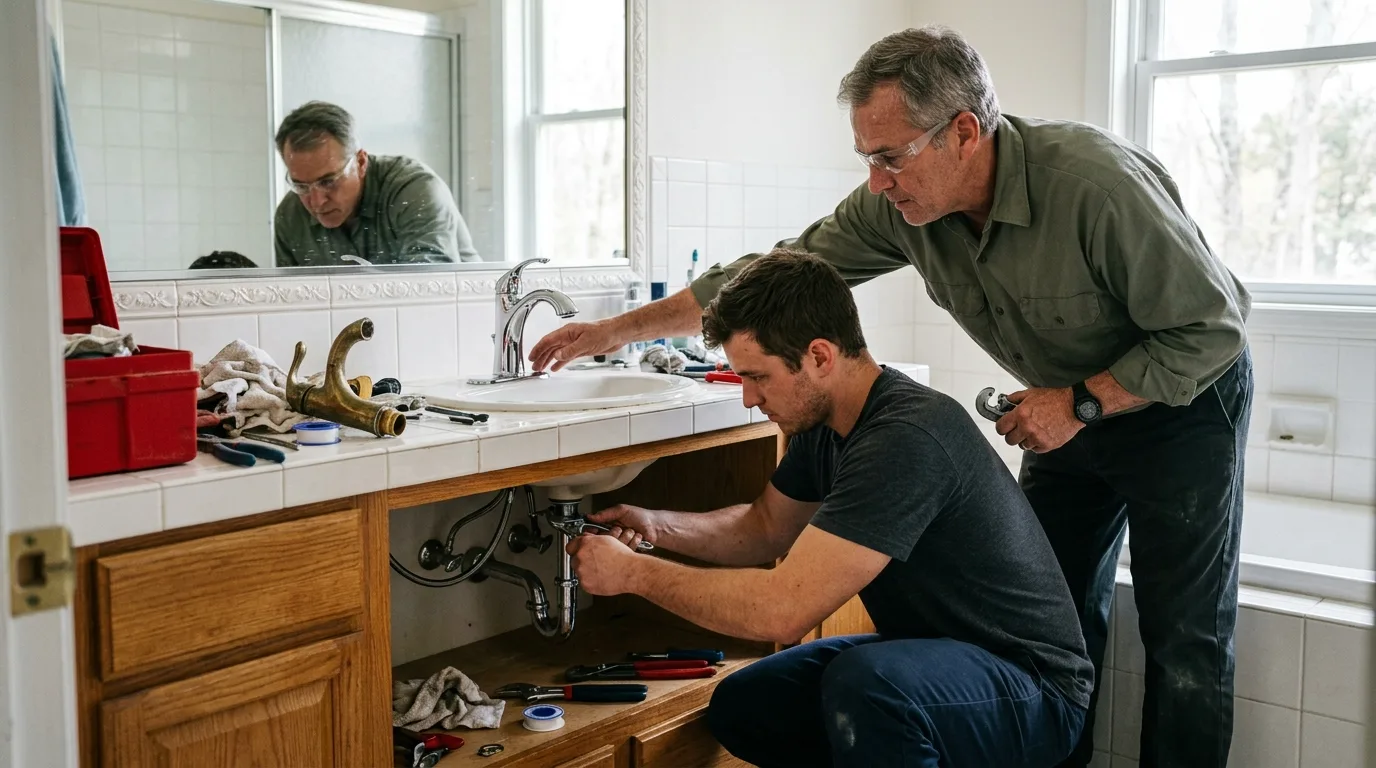
The individual repairs that, in sequence, make the case for a whole house.
RepairsStatic pressure, water quality and pipe material established before anyone quotes a whole house.
Both are legitimate. You get the real trade-offs rather than whichever one the crew prefers.
Repiping goes through City of Buena Park permitting, with inspection before the walls close.
Drywall, texture and paint scope agreed up front, this is where repipe disputes come from.
Is it actually time?
Repiping is the largest routine plumbing job a house ever has, and it deserves scepticism when it is proposed. Plenty of houses with one bad section need one repair. The question is whether you have a pipe problem or a system problem, and there are reliable ways to tell the difference before anybody opens a wall.
The clearest indicator is sequence. When a second and then a third leak arrive within a couple of years, on original material, in different parts of the house, the pipe is not unlucky, it has reached the end of its service life throughout, and every remaining joint is the same age as the ones that failed. The second indicator is water quality: rust-tinted water at first draw in the morning, or after the house has sat empty, means the inside of galvanized pipe is corroding and shedding. The third is pressure that has fallen gradually over years rather than dropping suddenly, which is the signature of interior corrosion narrowing the bore.
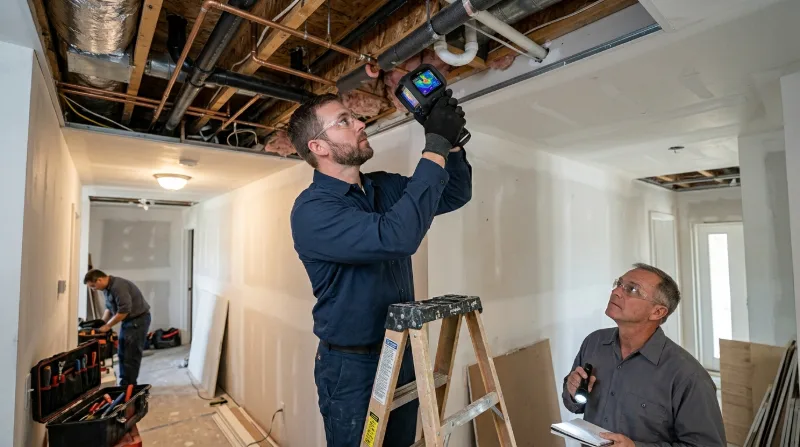
Before you accept any repipe quote, ask for a static pressure reading at a hose bib and a look at exposed pipe at the water heater and under a sink. Those two checks cost nothing, they identify pipe material and condition, and they occasionally reveal that the real problem is a failed pressure regulator, a fraction of the cost of a repipe.
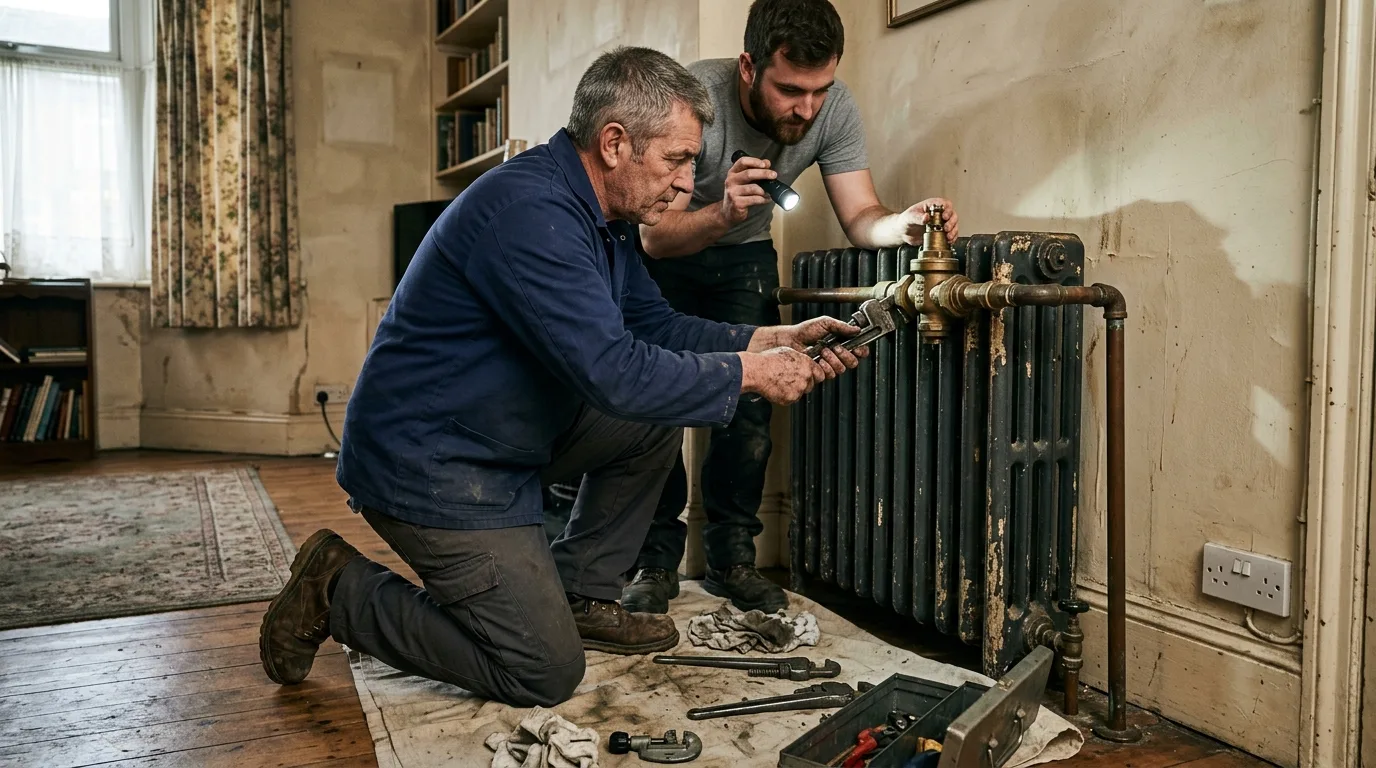
The postwar tracts built here through the 1950s and 1960s were plumbed in galvanized steel or copper, and both have now had sixty to seventy years of hard imported water pushed through them. Galvanized is the more urgent of the two. Its zinc coating protects the steel underneath until it depletes, after which the steel corrodes inward, building up a rough scaled layer that narrows the bore and eventually fails at a threaded joint, which is where the wall is thinnest.
Copper of that era is generally better material, but it is not immortal. Interior pitting from water chemistry and velocity produces pinhole leaks, usually announcing themselves as a damp patch or a tiny spray in a garage or under a sink. Exterior corrosion attacks buried and under-slab runs from the soil side. And in this housing stock, a great deal of the copper is under the concrete, which converts an ordinary pinhole into a slab leak.
Later additions complicate the picture usefully. Many houses here have been partly repiped already, a bathroom remodel that brought in a run of copper, a kitchen extension in CPVC, a slab leak reroute in PEX. A good assessment maps what is actually present rather than assuming the house is homogeneous, because sometimes half the work is already done and the quote should reflect that.
Both are code-compliant, both are used constantly in this area, and the honest position is that either can be the right answer. What differs is the trade-off profile.
Copper is rigid, proven over generations, tolerant of high temperature, and immune to rodent damage. It has no question mark over long-term chemistry. It costs more in both material and labor, because every joint is made individually, and it remains susceptible to the same pitting and exterior corrosion that took out the last set of pipes if the underlying water and soil conditions are aggressive. Repiping in copper and routing overhead through the attic rather than under the slab addresses most of that.
PEX is flexible, installed with far fewer joints, faster to run through existing framing with less drywall opened, quieter in operation, and freeze-tolerant, irrelevant here but not nothing. It resists the scale and pitting that killed galvanized and copper. Its limitations are real: it must be protected from UV exposure, it needs correct support and expansion allowance, rodents can damage it in an attic, and it requires fittings appropriate to the system being installed.
In practice, a great many Buena Park repipes run PEX through the attic with drops in walls, because it minimises drywall damage in a finished house, and use copper for exposed sections, stub-outs and mechanical connections. That combination is not a compromise, it is a sensible reading of both materials.
A typical single-story repipe of a three-bathroom house runs three to five working days, sometimes longer with a complicated layout or a two-story plan. The sequence is consistent.
Day one is protection and access: floors covered, furniture moved away from work areas, and drywall opened at the specific points where drops and connections are needed. A competent crew opens the minimum, in planned locations, rather than exploring. Day two and three are the new runs, a main trunk through the attic, branches to each fixture group, drops down inside walls to stub-outs, new angle stops at fixtures.
Then the pressure test, which is the part worth being present for. The new system is isolated and held at test pressure so every joint is proven before anything closes. Inspection follows, and only after it passes should drywall go back. Finally, patching, texturing and painting, plus the reconnection of fixtures and appliances.
You will be without water for parts of some days. Ask for the schedule up front, and if the property is occupied by anyone for whom that is difficult, say so, good crews can stage the work to keep at least one bathroom live most of the time.
Repipe pricing is driven by the number of fixtures, the number of stories, whether the attic offers a workable route, the material chosen, and, decisively, how much restoration is included. That last item is where quotes diverge most and where homeowners get surprised.
Establish explicitly what "restoration" means in each quote. Drywall patched, or patched and textured? Textured, or textured and painted? Painted in the affected area, or the whole wall to a natural break? Who handles a tile wall behind a shower valve? Who reinstalls a fixture that was removed? Two repipe quotes that differ by thousands frequently differ only here, and the cheaper one is not cheaper.
Four more questions worth asking. Is the permit included, and who schedules the inspection? Will the pressure test happen before the walls close, and can you be there? Are new angle stops and supply lines at every fixture included, or are old stops being reused? And what is the warranty on labor as distinct from the manufacturer warranty on materials?
A repipe opens walls that will not be open again for decades, and there are a handful of items that cost very little while the crew is already there and a great deal afterwards.
Static pressure is the first. If the house runs high, the regulator should be replaced as part of the job, because high pressure is what shortens the life of every fixture, appliance hose and joint in the new system too. Repiping a house and leaving the pressure problem in place is a genuinely common mistake.
Then: an expansion tank if the system needs one, a whole-house shutoff that actually works, hose bib replacement, new angle stops everywhere rather than reusing seized ones, and a softener or filtration loop stubbed in even if you do not install the equipment now. If a slab leak reroute is on the horizon, do it as part of the repipe rather than as a separate project later. And if the drainage side has known problems, this is the moment to have it cameraed, because coordinating the two jobs is far cheaper than sequencing them.
 3–5Working days
Repair or repipe
One leak is a repair. A pattern is a system. This is the checklist a plumber runs through before recommending a whole house.
If you answer yes to three or more, get a repipe priced alongside the repair, the comparison usually makes the decision for you.
Ask for both numbers on one visit. Any plumber confident in the recommendation will give you both.
That is not a run of bad luck. Get the system assessed properly before you pay for another patch on a sixty-year-old line.
Pressure reading, material identification and leak history reviewed before any whole-house quote.
How a repipe runs
Nothing about a repipe should be a surprise. The pressure test is the moment that proves the work.
Pipe material identified, static pressure gauged, fixtures counted and the overhead route planned. Permit pulled.
Minimum planned drywall access, new trunk through the attic, branches and drops to every fixture, new angle stops fitted.
System held at test pressure so every joint is proven, then City inspection, both before any wall closes.
Drywall patched, textured and painted to the agreed scope, fixtures reconnected, and the system flushed and commissioned.
Condos, apartments & multi-tenant
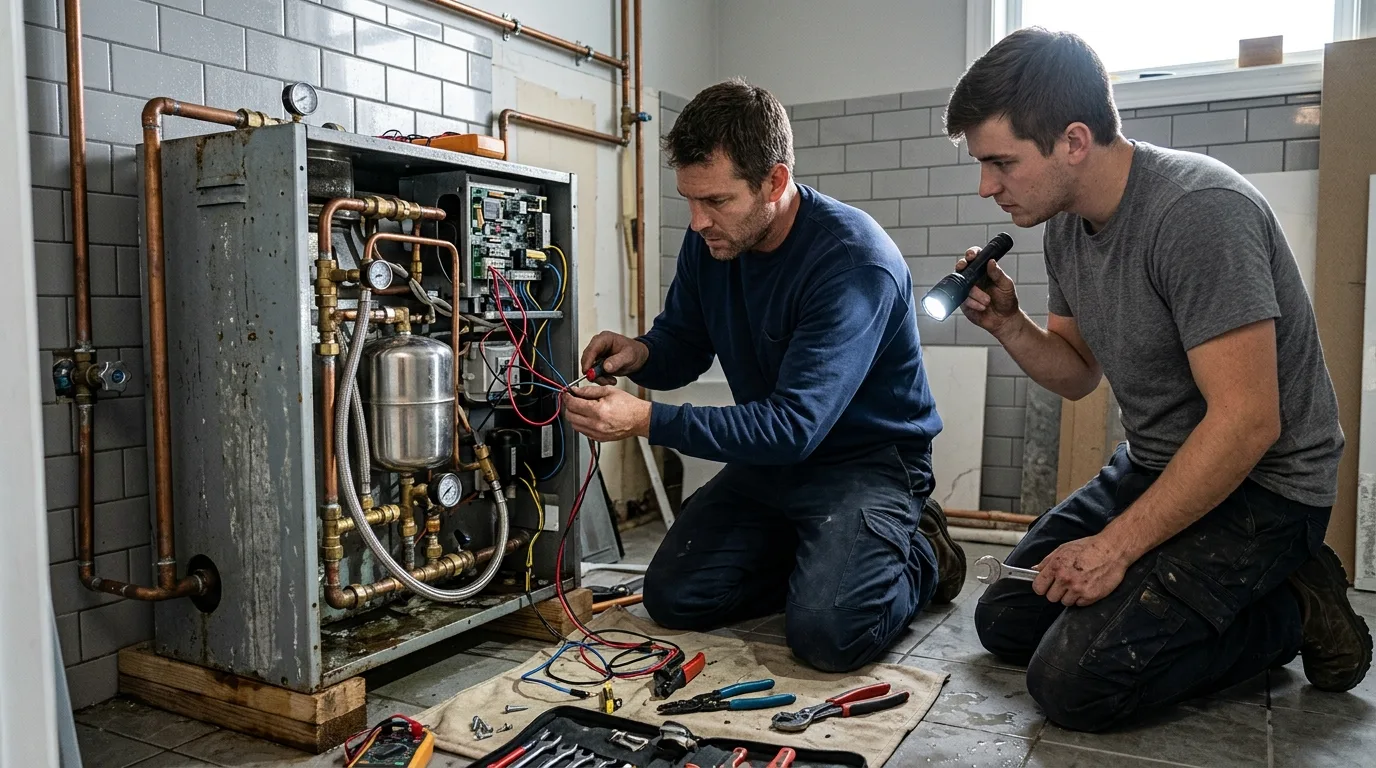
In a multi-unit building, the pipe work is the straightforward part. The difficulty is that shared risers serve stacked units, so the work has to be sequenced vertically, and every unit affected needs notice, access and a realistic window without water.
That means the plan matters more than the crew size: which riser, which stack of units, what hours, what temporary arrangements, and who communicates with residents. Associations and property managers get a far better result when this is planned as phased work with defined zones rather than treated as a series of unit-by-unit repairs.
Property managers and HOA boards: ask for the zone plan and the resident notice schedule with the quote.
Questions we get on these calls
It is quoted per house rather than by a rule of thumb, and the drivers are the number of fixtures, the number of stories, whether the attic offers a workable route, copper versus PEX, and how much restoration is included. That last item causes most of the spread between quotes, one contractor patching drywall and another patching, texturing and painting are quoting genuinely different jobs. Ask each quote to itemise restoration separately so the comparison is real.
A typical single-story three-bathroom house runs three to five working days; two-story and complicated layouts take longer. Most households stay in place. You will be without water for parts of some days, and a good crew will stage the work so at least one bathroom is usable most of the time, but you have to ask for that, and you should mention up front if anyone in the household cannot manage an unpredictable outage.
Both are code-compliant and both are used constantly here. Copper is rigid, long-proven, tolerant of heat and immune to rodents, at higher material and labor cost. PEX is flexible, needs far fewer joints, opens less drywall in a finished house, resists the scale and pitting that killed the original pipe, and costs less to install. Many repipes here run PEX through the attic with copper for exposed sections and stub-outs. If a contractor will only offer one material, ask them to explain the trade-offs of the other.
No, but they will be opened in specific places, at drops, connections and stub-outs. A competent crew opens the minimum in planned locations rather than exploring, and routing overhead through the attic keeps that count down considerably. What matters more than the number of holes is the restoration scope in the contract: patched, textured, painted, and to what boundary. Get that in writing, because it is where nearly every repipe dispute originates.
Yes. Repiping is permitted work through the City of Buena Park and is inspected, and the inspection happens while the new system is exposed, before drywall closes. That sequence is the point. Unpermitted repiping is a disclosure problem at resale and, if the work was substandard, an expensive one to unwind, since verifying it means opening walls again. If a contractor proposes skipping the permit, they are moving risk onto you.
Sometimes, and it can be perfectly sensible, a hot-side-only repipe where the hot lines have failed first, or repiping the original section of a house whose addition was already done in newer material. The caution is that partial work on a system at end of life often means returning within a few years to do the rest at full mobilisation cost. Ask for the partial and the full price side by side, and judge whether the saving survives the second visit.
It is visible where the pipe is exposed. Look at the supply lines at the water heater, under a sink, or at a hose bib. Galvanized is dull gray steel with threaded joints and it will not attract a magnet as strongly as you expect but is clearly steel rather than reddish; copper is unmistakable. A plumber will also gauge static pressure and can cut a short sample from an inconspicuous run to show you the interior, which is far more persuasive than any description of corrosion.
Usually yes, if the cause was interior corrosion narrowing the bore of galvanized pipe, that is one of the most satisfying results of the job. But pressure has other causes, and repiping does not address them. A failed pressure regulator, a hidden leak, an undersized service line from the meter, or a genuinely low supply pressure in the street will all survive a repipe. That is exactly why a static pressure reading belongs in the assessment before anyone quotes a whole house.
A short list of things that are cheap while the walls are open and expensive afterwards: replace the pressure regulator if static pressure runs high, add an expansion tank if the system needs one, fit a shutoff valve that actually works, replace hose bibs, put new angle stops at every fixture rather than reusing seized ones, and stub in a softener or filtration loop even if the equipment comes later. If a slab leak reroute is coming, fold it into the repipe rather than doing it separately.
It removes a significant liability, which in practice matters more than the line item. A buyer in this housing stock who sees original galvanized supply lines is looking at a five-figure future project and will price accordingly, or ask for a credit. A documented, permitted repipe with the inspection record and a labor warranty removes that argument entirely, along with the leak history that would otherwise appear on your disclosures. Keep the paperwork somewhere findable.
Ask for the pressure reading, the material identification and the restoration scope, all three, in writing.
Related work
What leads to it, what sits inside it, and what to fix while the walls are open.
The individual repairs that, in sequence, make the case for a whole house.
Repairs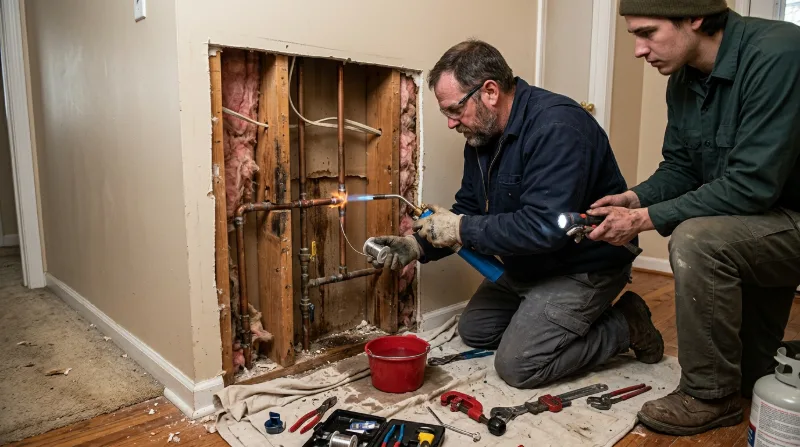
Reroutes are partial repipes, and folding them together saves a mobilisation.
Slab leaks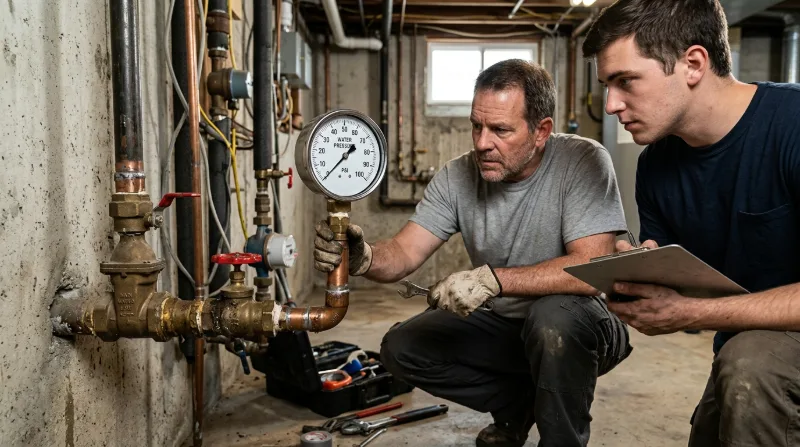
Repiping a house and leaving high pressure in place is the common expensive mistake.
Pressure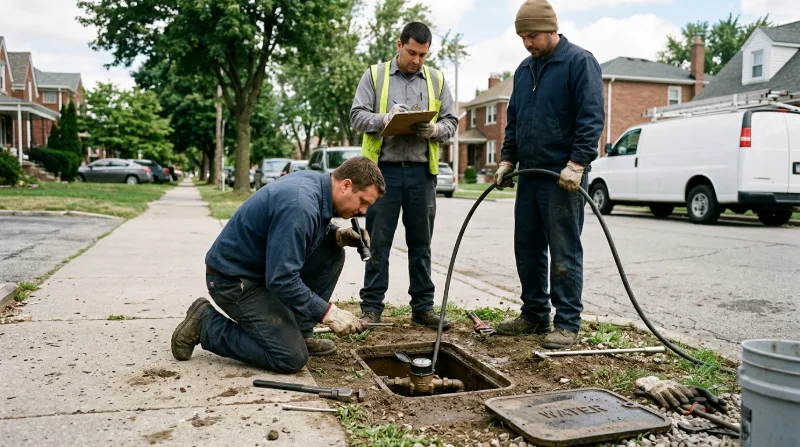
When the restriction is between the meter and the building, not inside the walls.
Service lineOnce, properly
Assessment, both numbers, a permit, a pressure test you can watch, and a restoration scope in writing.
Houses, condos and multi-unit buildings across Buena Park, Fullerton, Anaheim, Cypress, La Palma and La Mirada.