Symptoms mapped first
Scale, staining, taste and odor point at different treatments, they are not one problem.
Sized to the house
Capacity matched to hardness and household demand so it regenerates sensibly.
Installed with a bypass
Loop, bypass and drain done properly, so servicing never means shutting the house.
Honest about limits
Softening is not filtration and filtration is not softening. You will hear which you need.
Name the problem
Scale, taste and staining are three different jobs
Water treatment gets sold as a single product and it is really several. Softening addresses hardness, the dissolved calcium and magnesium that deposit as scale. Filtration addresses particulates, chlorine taste and odor, and some specific contaminants. Neither does the other’s job, and a household that buys the wrong one is disappointed for entirely predictable reasons.
So the useful first step is naming the symptom precisely. White crusting on aerators, shower heads and glass, plus a water heater that rumbles and short fixture life, is hardness. A chlorine taste or smell is a filtration question. Cloudiness that settles is particulate. Blue-green staining points at copper corrosion rather than water content. Rust-tinted water at first draw points at galvanized pipe. That last one has nothing to do with treatment and everything to do with the plumbing, and it is worth ruling out before spending on equipment.
Hard water is the dominant local issue. Imported supply in this part of Orange County carries enough mineral content that scale is the leading cause of premature water heater failure, stiffening fixture cartridges and clogged aerators. That is why this page exists as a plumbing service rather than a lifestyle upgrade.
What hardness actually costs you
The visible symptoms are cosmetic and irritating: spotting on glass and fixtures, crusting on aerators and shower heads, soap that will not lather properly, and laundry that feels stiff. Those are the reasons people call.
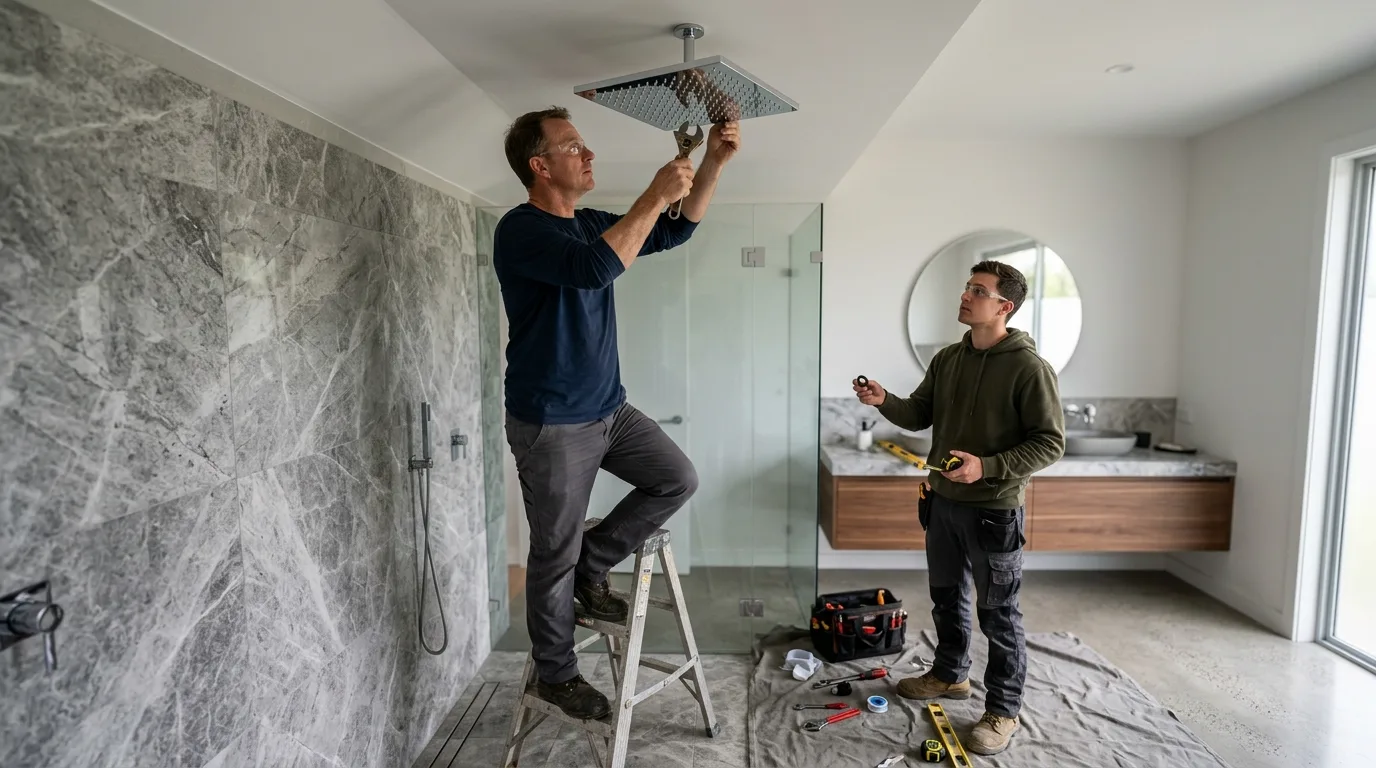
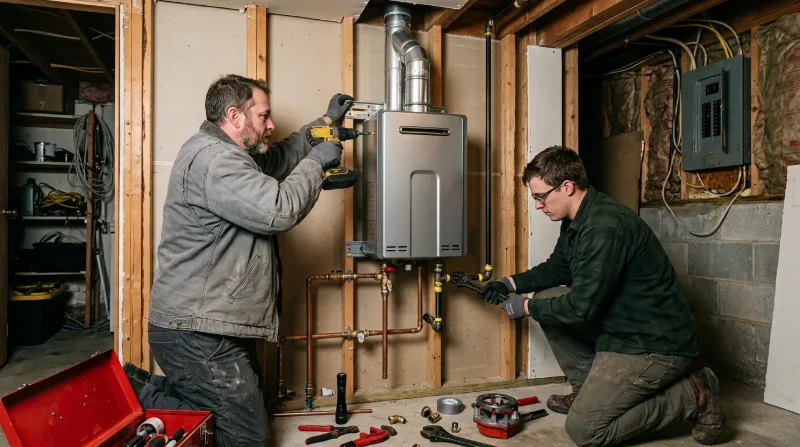
The expensive symptoms are invisible. Scale accumulates on the bottom of a gas water heater and insulates the burner from the water it is heating, so recovery slows, fuel use rises and the tank rumbles. On an electric heater, scale coats the elements and causes early failure. On a tankless unit, it restricts the heat exchanger and drives error codes, which is why descaling is mandatory here rather than optional. Add scaled cartridges, stiff handles, clogged aerators and shortened appliance life across dishwashers and washing machines, and hardness quietly costs a household a meaningful amount every year.
That is the honest case for treatment: not softer laundry, but the equipment. If you have replaced two water heaters in fifteen years and keep replacing the same fixture cartridges, treatment addresses the reason.
Softeners, and how they work
A conventional ion exchange softener passes water through a resin bed that swaps hardness minerals for sodium or potassium. Periodically the bed is regenerated with a brine solution and the accumulated hardness is flushed to drain. That is the whole mechanism, and its implications are worth understanding.
It needs a drain connection for regeneration and a supply of salt, which means somewhere to store and load bags. It uses water during regeneration. Modern demand-initiated units regenerate based on actual usage rather than a timer, which uses considerably less salt and water than older clock-based units, worth specifying rather than accepting a timer by default.
Sizing matters. An undersized softener regenerates constantly, uses more salt and water, and exhausts capacity during high demand. An oversized one costs more than it needs to. Sizing is a function of measured hardness and household water usage, and it takes a short conversation rather than a guess.
Salt-free conditioners are a different category and deserve honesty. They do not remove hardness; they alter how it crystallises so it is less inclined to adhere. For some households that reduces scale build-up acceptably with no salt, no drain and no regeneration. They do not deliver the classic softened-water feel or the soap performance change, and they are not equivalent to a softener. Whether they are right depends on what you are trying to achieve.
Filtration, and what it is for
Sediment filtration removes particulates and protects everything downstream, including a softener. On properties with visible cloudiness or grit, or after any supply work, it is a straightforward and worthwhile addition.
Carbon filtration addresses chlorine taste and odor, which is the most common complaint about the taste of tap water here. Whole-house carbon treats every fixture; point-of-use units under a kitchen sink treat drinking water only, at considerably lower cost.
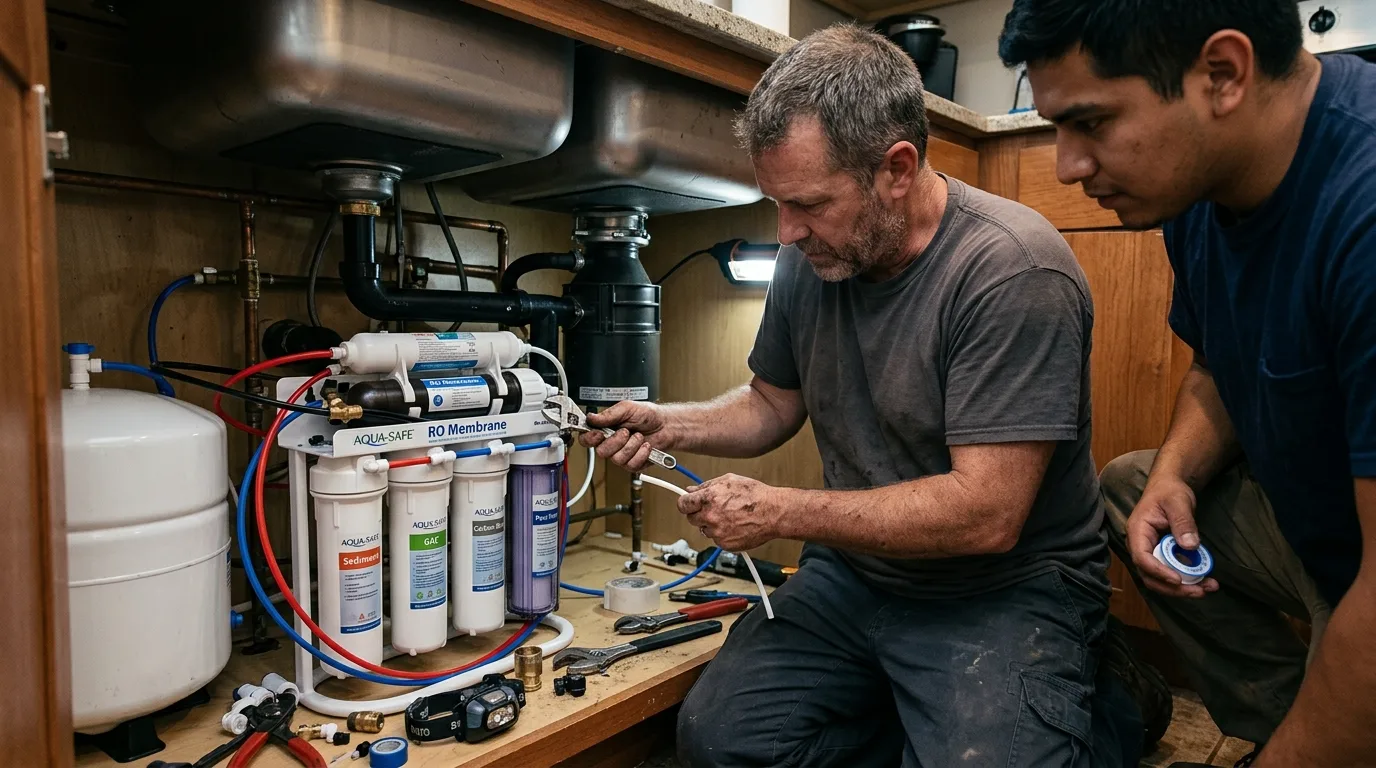
Reverse osmosis at the kitchen sink is the usual choice for drinking and cooking water where a household wants more than taste improvement. It is slow, produces some waste water, and needs its own faucet and a storage tank, which is why it belongs at a point of use rather than whole-house.
What matters most is matching the equipment to the concern. If your issue is scale, a carbon filter will not help. If your issue is taste, a softener will not fix it. And if you have a specific water quality concern, the right starting point is knowing what is in the water rather than buying equipment on a general worry.
Installation done properly
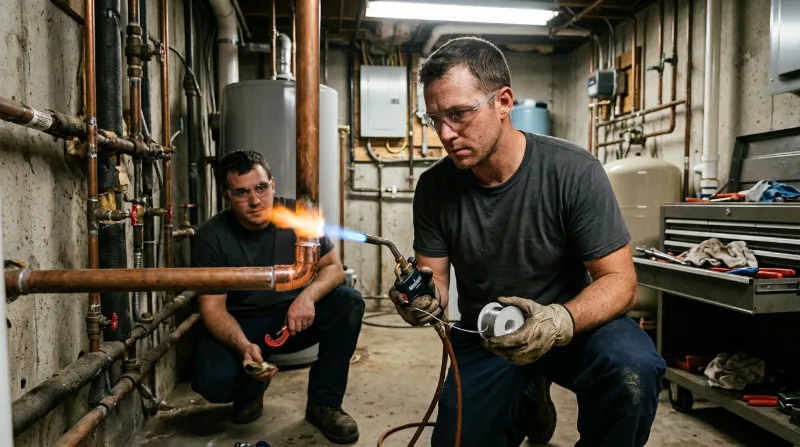
The installation details determine whether the equipment is a pleasure or a nuisance for the next decade. A bypass is essential, a valve arrangement that lets the equipment be isolated and serviced, or removed entirely, without shutting off water to the house. Equipment installed without a bypass turns every future service into a whole-house shutdown.
Location needs to work for both plumbing and use: accessible for salt loading and filter changes, with a suitable drain for regeneration, appropriate for the equipment’s environmental needs, and not somewhere a leak would be catastrophic. Garages are the usual answer here for good reason.
Two plumbing decisions worth making deliberately. Outdoor hose bibs and irrigation are usually left unsoftened, since there is no benefit in softening the garden and it wastes capacity. And a dedicated hard-water line to a kitchen cold tap is sometimes preferred for drinking water. Both are easy to arrange during installation and awkward afterwards.
While the plumbing is open, this is also the moment to check static pressure and the condition of the supply pipe at the connection point. Installing treatment on a system with high pressure or failing galvanized is treating one problem while ignoring a larger one.
Servicing what you already have
Existing equipment fails in recognisable ways. A softener that has stopped softening is usually a control valve fault, a resin bed that has become fouled or exhausted, a salt bridge in the brine tank preventing brine from forming, or a drain or injector blockage. All are serviceable, and a unit that appears dead is often none of those things, it is a bypass valve someone left closed.
Filters need cartridges changed on schedule, and an overdue sediment filter restricts flow enough that people report it as a house pressure problem. Reverse osmosis systems need membrane and cartridge changes and can develop slow production from a fouled membrane or a failing tank bladder.
If you have inherited equipment with a house, it is worth having it looked at once: identify what it is, whether it is functioning, whether it is sized appropriately, and whether it has a bypass. That single visit frequently resolves years of a household assuming their water is being treated when it is not.
 ScaleThe local villain
Match symptom to solution
Which treatment answers which complaint
The most common mistake in water treatment is buying the wrong category of equipment for the symptom. This is the mapping.
Two of these are not treatment problems at all, which is exactly why the diagnosis comes first.
- White crusting, spotting, scaled heaters hardness. A softener, or a conditioner if you want to avoid salt.
- Chlorine taste or smell carbon filtration, whole-house or point-of-use at the kitchen.
- Cloudiness or grit that settles sediment filtration, which also protects a softener downstream.
- Rust tint at first draw not a treatment issue. That is galvanized pipe corroding, and it points at repiping.
- Blue-green staining copper corrosion, which points at water chemistry and pressure rather than a filter.
Get the Symptom Diagnosed
Worth ten minutes on the phone before spending anything on equipment.
Second water heater in fifteen years?
That is scale, and it will do the same to the third one. Treatment upstream is the only place it gets addressed.
Talk About Treating the Supply
Often worth combining with a water heater replacement while the plumbing is already open.
How it goes
From symptom to installed system
Diagnose, size, install with a bypass, and set it up to be serviceable.
01
Diagnose the water
Symptoms mapped, hardness established, and non-treatment causes such as galvanized pipe or high pressure ruled out.
02
Size and specify
Capacity matched to hardness and household demand, with demand-initiated regeneration rather than a timer.
03
Install properly
Bypass valves, drain connection, accessible location, and outdoor bibs and irrigation left unsoftened.
04
Commission and explain
Set up, tested, and the salt, cartridge and service intervals explained in plain terms before we leave.
Questions we get on these calls
Water treatment questions
Hardness in this part of Orange County is high enough that scale is the leading cause of premature water heater failure, stiff fixture cartridges and clogged aerators. Whether you need a softener depends on what is bothering you. If you are replacing heaters early, descaling tankless units, and fitting the same cartridges repeatedly, treatment addresses the cause. If your only complaint is taste, you want filtration rather than softening.
A softener removes hardness minerals, the calcium and magnesium that deposit as scale, using a resin bed that is periodically regenerated with brine. A filter removes particulates, or chlorine taste and odor in the case of carbon. Neither does the other job. A softener will not improve taste and a carbon filter will not stop scale, which is why matching the equipment to the actual symptom matters more than the brand.
They work differently, and the honest answer is that they do not remove hardness. They alter how the minerals crystallise so the scale is less inclined to adhere to surfaces. For some households that reduces build-up acceptably with no salt, no drain and no regeneration water. What they do not deliver is the softened-water feel or the change in soap performance. Whether that trade is right depends on which of the symptoms you are trying to solve.
It addresses the main cause of premature heater failure here, which is scale accumulating on the tank bottom or the elements. It does not eliminate maintenance, flushing a tank annually is still worthwhile, and descaling a tankless unit is still required, though the interval can typically be extended. The strongest case for treatment is a household that has already lost heaters early, since the next one will do the same in untreated water.
A garage is the usual answer here, and for good reasons: accessible for salt loading and filter changes, a suitable drain for regeneration, a sensible environment for the equipment, and somewhere a leak is not catastrophic. What matters as much as location is a proper bypass arrangement, so the equipment can be isolated or removed without shutting off water to the house. Equipment installed without a bypass makes every future service a whole-house shutdown.
It depends on hardness, household water use and how the unit regenerates. Older timer-based units regenerate on a clock whether or not capacity has been used, which wastes both salt and water. Demand-initiated units regenerate based on actual throughput and use considerably less of both. That is worth specifying rather than accepting a timer by default, and it is one of the more meaningful differences between units at similar prices.
Usually. The common faults are a control valve problem, a resin bed that has become fouled or exhausted, a salt bridge in the brine tank preventing brine from forming, or a blocked drain line or injector. All are serviceable. A surprisingly common finding is that the unit is fine and someone has left the bypass valve closed, so the house has been running on untreated water without anyone realising.
Usually most of it, with two deliberate exceptions. Outdoor hose bibs and irrigation are normally left unsoftened, because there is no benefit in softening the garden and it consumes capacity. And some households prefer a dedicated hard-water line to a kitchen cold tap for drinking. Both are easy to arrange during installation and awkward to retrofit, so they are worth deciding at the outset rather than later.
It depends what you want from it. Reverse osmosis at the kitchen sink is the usual choice where a household wants more than taste improvement in their drinking and cooking water. It is slow, produces some waste water, and needs its own faucet and a storage tank, which is why it lives at a point of use rather than treating the whole house. If your concern is only chlorine taste, a simpler carbon filter at the same location costs far less.
Yes, and it is a worthwhile single visit. It establishes what the equipment is, whether it is actually functioning, whether it is sized appropriately for the household, whether it has a proper bypass, and what its service intervals should be. Households frequently discover they have been assuming their water was treated for years when the unit was bypassed, exhausted or salt-bridged the whole time.
Book a Water Assessment
Describe the symptoms, crusting, taste, staining or cloudiness. Each one points somewhere different.
Related work
What treatment protects
The equipment that scale attacks first, and the plumbing questions that come before treatment.
Tankless Water Heater Service
Where treatment upstream meaningfully extends the descaling interval.
Tankless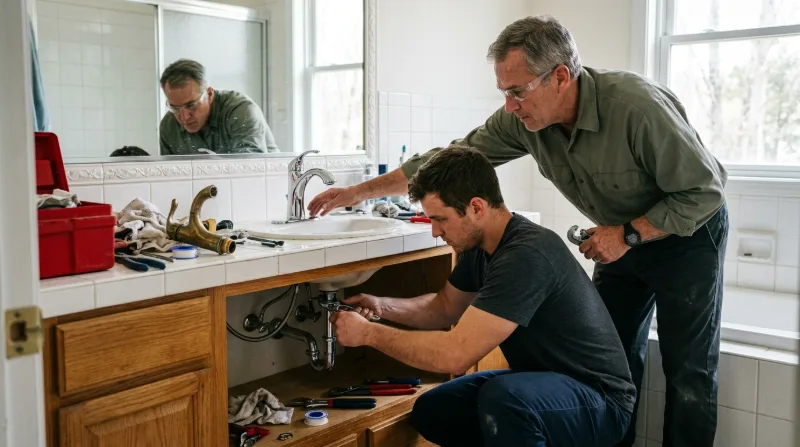
Whole-Home Repiping
Rust at first draw is pipe, not water content, and treatment will not fix it.
Repiping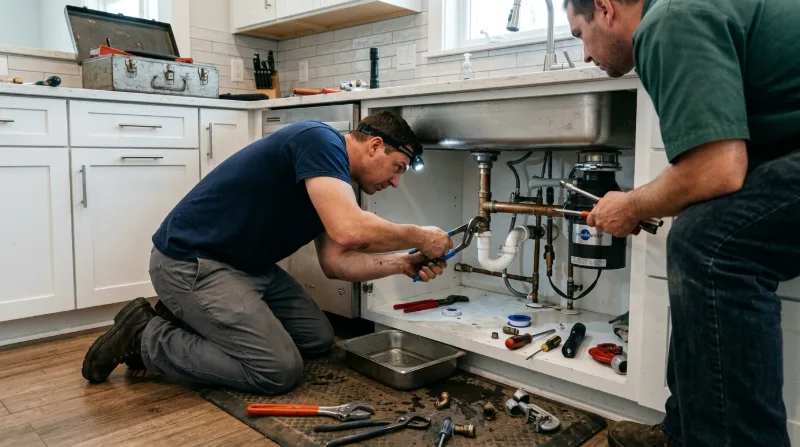
Faucet & Fixture Installation
Cartridges and aerators that keep failing on otherwise good fixtures.
FixturesUpstream, once
Stop paying for scale one appliance at a time
Diagnose the symptom, size the equipment, install it with a bypass, and protect everything downstream.
Plan a Treatment Installation
Softening, filtration and equipment service across Buena Park and north Orange County.