
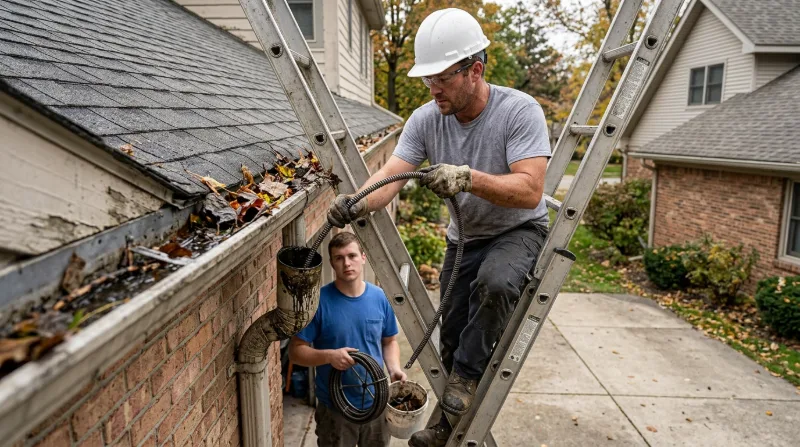
Seven minutes east
A short, uncomplicated run from Buena Park with no freeway dependency in either direction.
Slab leak detection
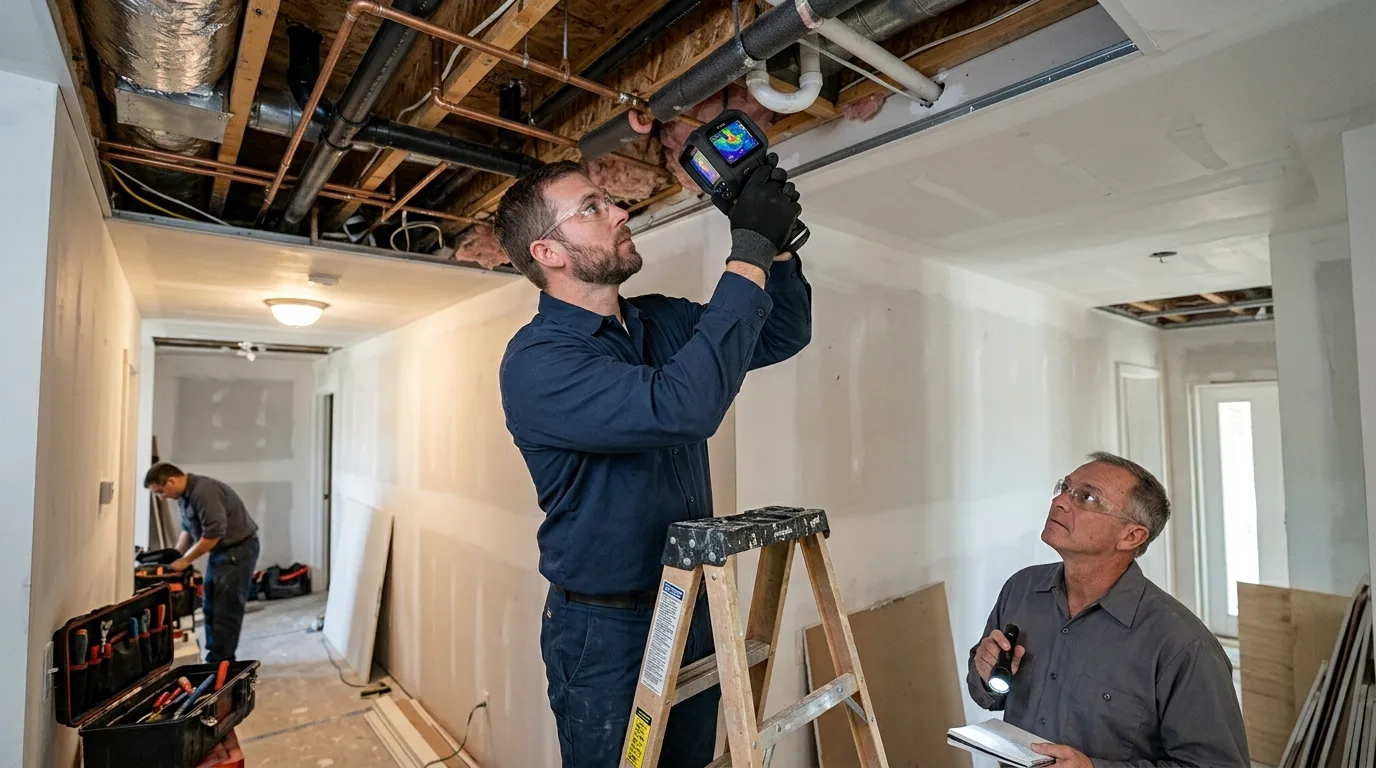
Located acoustically and thermally before any concrete is opened, the standard here, not an extra.
Consistent housing stock
Near-uniform build era means faster diagnosis and fewer surprises behind the drywall.
Agreed before work starts
Written scope at the door. Any change is brought back to you before it happens.
A city built in one decade
La Palma’s uniformity is the most useful thing about it
La Palma is small, tidy and remarkably consistent. Most of the housing went up during the same building period, largely single-family, largely slab-on-grade, and largely to a limited range of plans. For a plumber, that consistency is genuinely valuable: the supply routes are predictable, the water heater is where you expect it, and the failure pattern across the city is close to synchronised.
The relevant timeline is now the second cycle rather than the first. Plumbing installed in the 1970s has generally already had one round of attention, the water heater replaced once or twice, some fixtures renewed, perhaps a leak repaired. What is arriving now is the wave that affects the original in-slab supply, the drainage that has never been inspected, and the pressure regulators that were fitted decades ago and have been drifting ever since.
The other thing worth naming is that La Palma houses are generally well kept. That cuts both ways. Well-maintained houses hide their plumbing age effectively, and homeowners are often surprised that a house in visibly good condition has a pipe problem. Condition above the floor tells you very little about condition below it.
A warm patch on the floor with no obvious explanation is the single most reliable early indicator of a slab leak in a house of this era, because most of them begin on the hot line. It is worth acting on before the flooring tells you.
In-slab supply and how leaks are found
Supply lines cast into or run beneath a concrete slab are out of sight and, for decades, out of mind. When one develops a pinhole, the water has nowhere obvious to go: it saturates the sub-slab fill, warms the floor above if it is on the hot side, and eventually surfaces at a flooring joint, along a skirting board, or outside at the foundation edge. The bill usually climbs first.
Location is done without breaking anything. Acoustic equipment listens for the escape of pressurised water through concrete; thermal imaging picks up the heat signature of a hot-line leak; isolating the hot and cold sides separately establishes which system is losing. Only once the position is narrowed does anyone discuss access, either a small controlled opening directly over the fault, or a reroute through the attic that leaves the slab entirely alone.
Pressure regulators and the fixtures they are quietly destroying
A pressure regulator is a wear item, and a great many in this city are original. When one drifts or fails, the house receives whatever the main is delivering, which is generally well above what domestic fittings are designed to tolerate. The symptoms are diffuse and easy to misattribute: cartridges failing early, fill valves that will not seat, angle stops weeping, a water heater relief valve that drips, and a bang in the pipes when a tap shuts quickly.
Checking it costs almost nothing, a gauge on an outside hose bib, two minutes. Replacing a failed regulator is a short job. Doing neither and replacing fixtures repeatedly instead is the expensive path, and it is the one most households take because the connection between the two is not obvious.
Drainage that has never been looked at
Drain lines in houses of this vintage vary between cast iron and early plastics depending on the phase of construction. Cast iron scales internally and gradually loses bore; plastic holds its diameter but is vulnerable at joints and to root intrusion from outside. Either way, a lateral that has been in the ground since the house was built and has never been inspected is an unknown quantity.
A camera survey is inexpensive relative to what it rules in or out, and on a property you intend to keep, it converts a vague worry into either reassurance or a plan. If the drains have become noticeably slower over a few years across more than one fixture, that is the point at which the survey stops being optional.
 1970sthe decade that built the city
The La Palma call list
What comes in from these streets
Concentrated and predictable, which is what happens when a whole city shares a construction decade.
- Slab leaks on in-slab hot supply lines, located before anything is cut
- Whole-home repiping where repeat leaks make repair uneconomic
- Failed pressure regulators shortening the life of every fixture
- Water heater replacement, second or third generation on most properties
- Sewer camera surveys on laterals never previously inspected
- Fixture and angle stop renewal across kitchens and bathrooms
Have a slab leak located
Bring the water bill history if you have it, the trend is often the clearest evidence.
Water bill climbing with nothing visibly wrong?
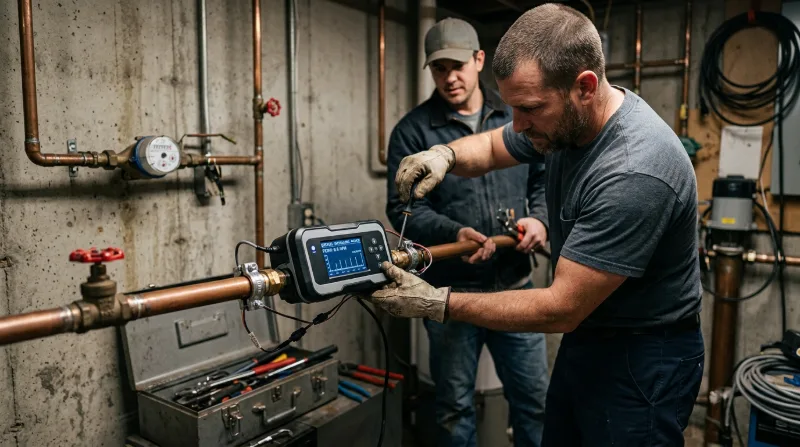
Shut every fixture and watch the meter. If it moves, water is leaving somewhere, and under a slab house that usually means beneath the floor.
Get the meter test done
Detection available seven days · (714) 386-7076
Across the city
Where we work in La Palma
The whole of La Palma, it is compact enough that no part of it is meaningfully further away than another.
- Moody Street
- La Palma Avenue
- Orangethorpe Avenue
- Walker Street
- Denni Street
- Houston Avenue
- Crescent Avenue
- Valley View Street
- Centralia Street
- Civic center surrounds
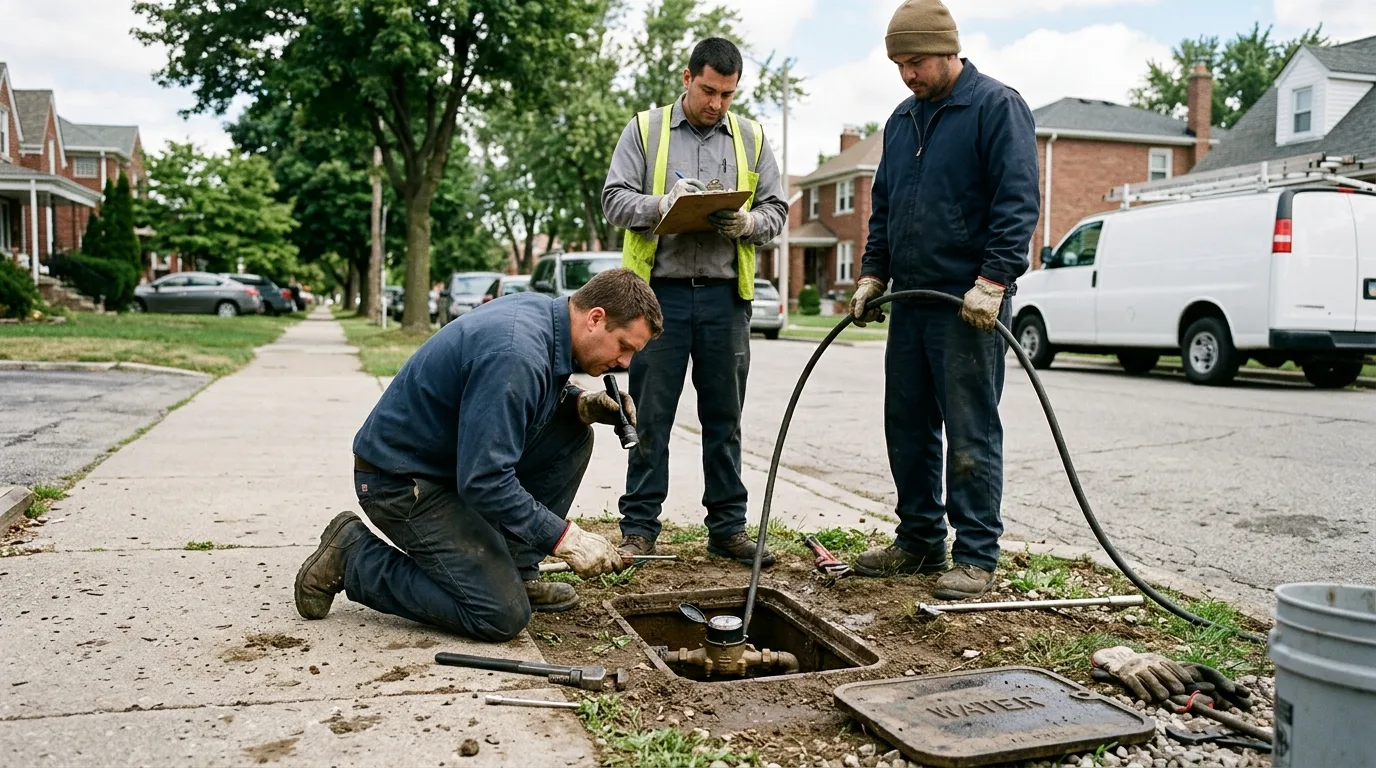
La Palma sits directly east of Buena Park with no significant travel barrier between them, so response times are close to identical to our own city.
La Palma priorities
Services these houses ask for
Supply-side work dominates, exactly as the construction era predicts.
Asked by neighbors on this side of town
La Palma plumbing questions
Two cheap checks are worth doing regardless. Measure the water pressure at an outside hose bib, if the regulator has failed, everything downstream is wearing faster than it should. And note the age of the water heater; if it is past its first decade, plan the replacement rather than waiting for the tank to open. Beyond that, no work is needed on a system that is behaving. The point is to know where you stand, not to do work speculatively.
Acoustic listening equipment picks up the sound of pressurised water escaping through concrete, thermal imaging identifies the heat signature of a hot-line leak, and isolating the hot and cold systems separately confirms which side is losing. Together those narrow the position to a small area. Concrete is only opened once the location is known, and even then a reroute through the attic sometimes avoids opening it at all.
Functionally it is often better. A reroute abandons the failed section and runs new pipe through accessible space, which means no concrete work and no repair sitting under your floor where you cannot inspect it. The trade-off is a small amount of visible pipe in the attic and drywall openings where it drops to fixtures. For a single leak in an otherwise healthy system either approach is reasonable; for a house that has had several, rerouting or repiping is the sensible direction.
Fit a screw-on gauge to an outside hose bib with everything in the house off and take a reading. Then take another late at night, when demand across the network is lowest and static pressure is highest, that second figure is the one causing damage. A regulator that is holding will keep both readings within a sensible band. One that has failed will show the main pressure straight through.
Effectively yes. It is a short, direct drive with no freeway dependency, and the city is small enough that any address in it is reachable quickly. Peak-hour traffic on the surrounding arterials affects it as it affects everywhere, and you will be given a realistic window rather than an optimistic one. Overnight, response here is among the quickest of any area we cover.
It is worth considering, because it converts an unknown into a known before a buyer’s inspector raises it. If the line is sound you have documentation that removes an objection. If it is not, you find out on your own timeline rather than during a negotiation. The same argument applies in reverse if you are buying here: the house may be in excellent condition and the lateral entirely unexamined.
Yes, the whole of north Orange County shares the same characteristics. The practical effects are scale in water heaters, shortened life on cartridges and fill valves, and mineral deposit on aerators and shower heads. Annual heater flushing makes a real difference. Whole-house softening is a reasonable conversation for a household that has already replaced fixtures more than once and is tired of doing it.
Usually, for standard tank sizes, because common replacements are carried rather than ordered. Where it takes longer is when the installation needs bringing up to current requirements, venting, seismic strapping, expansion control or a drain pan that was never fitted, or where you want to change type. Those are worth doing properly rather than quickly, and you will be told which situation applies before anything is committed.
Get a La Palma quote
Build year and whether you have had a leak before are the two most useful details.
Next door
Around La Palma
Neighboring areas covered on the same eastern runs.
La Palma dispatch
A predictable city is an easy one to help
When a whole city shares a build decade, a plumber who knows that decade arrives already halfway to the diagnosis. Call and describe what the house is doing.
Speak to someone about your house
(714) 386-7076 · Answered day and night, all year