Recorded, and yours
You keep the footage, for second quotes, for insurance and for resale disclosure.
Located from the surface
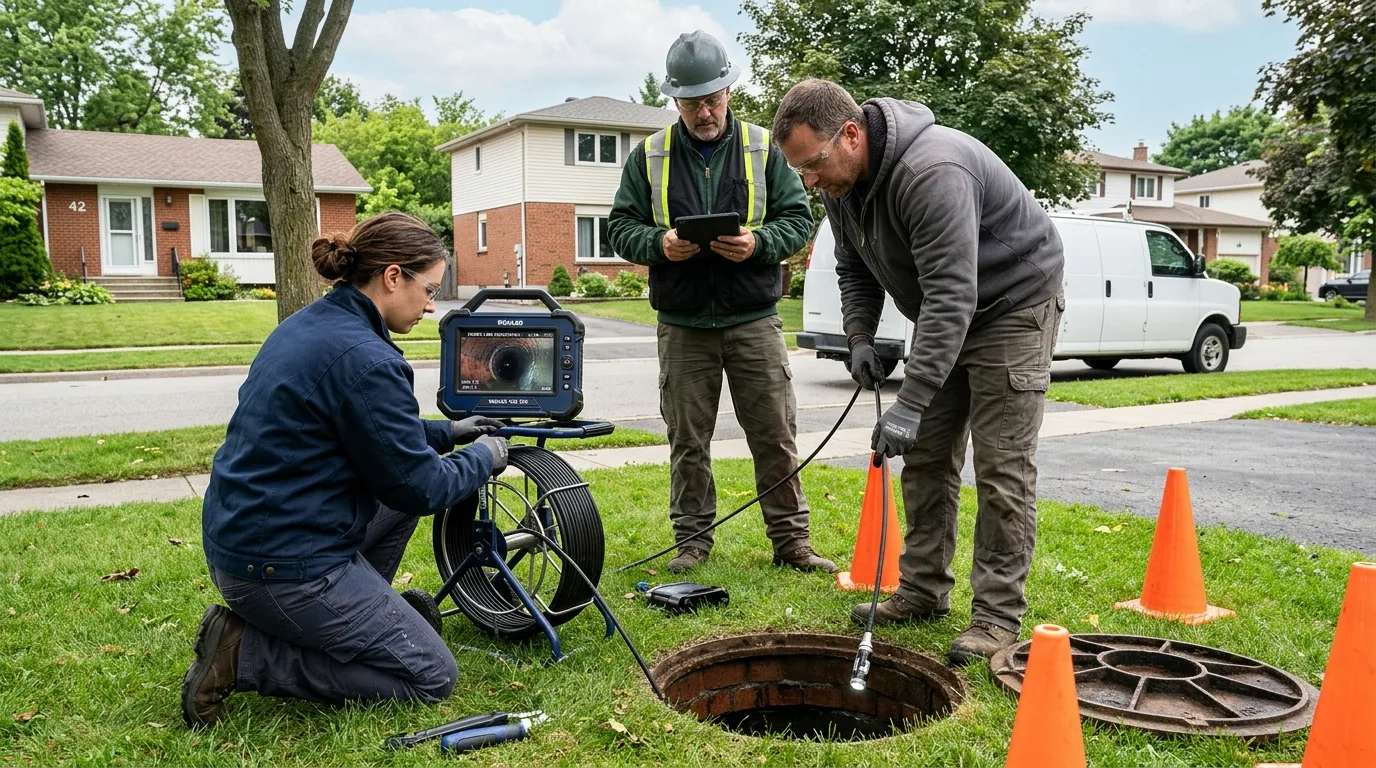
A locator traces the camera head so each defect gets a mark and a depth, not an estimate.
Findings written down
Material, diameter, distances, and each defect named individually rather than summarised.
No repair pressure
An inspection is a service, not a sales call. Plenty of surveys end with nothing to fix.
Why it is worth the money
The cheapest hour in the whole sewer conversation
Everything expensive about drainage work comes from acting without information. Excavating in the wrong place. Lining a pipe that needed replacing. Jetting a lateral that was too far gone to take pressure. Clearing the same blockage four times over three years because nobody established why it kept happening. A camera survey costs a fraction of any of those mistakes and eliminates most of them.
A modern inspection camera is a self-levelling head on a semi-rigid reel, pushed through the line from an access point, with a transmitting sonde inside it. The picture tells you what the pipe looks like. The sonde lets a locator on the surface trace exactly where the head is and how deep, so a defect can be marked on the ground with paint or a flag. Distance is read off the reel counter. That combination, image, position, depth, is the whole value proposition.
What a good survey leaves you with: the pipe material and diameter, a named list of defects, the distance from a known access point to each one, the depth at each, and recorded footage in your own hands. If a contractor shows you a screen and gives a verbal summary without any of that, you have watched a video rather than received a diagnosis.
What the camera finds in this housing stock
On Buena Park properties of the postwar era, a survey typically finds one or more of a very short list. Root intrusion at clay pipe joints, showing as fine hair or a full mass depending how long it has been developing. A bellied section, visible as standing water in a line with nothing draining. An offset joint, where one section has stepped against the next and left a ledge. Scale in cast iron, which looks like a rough tuberculated interior and can reduce diameter dramatically. Cracks, from hairline to structural. And occasionally the ones that end the conversation quickly: a collapsed section, or Orangeburg pipe that has deformed out of round.
The camera also finds the mundane things that explain a lot of misery. A cable head lost by a previous contractor. Wipes accumulated on a joint lip. Grease coating that a cable had bored a neat hole through. A dryer vent or a downspout illegally tied into a sanitary line. A rag from a remodel. It is common for a survey to answer a question the homeowner has been guessing at for years.
What is worth knowing before the visit is that many of these findings are normal for the age of the property and not urgent. An original clay lateral under mature trees with fine root intrusion at two joints is a maintenance situation, not an emergency. The point of the survey is to distinguish between that and a line which is genuinely near failure, and those two look identical from inside the house.
Pre-purchase surveys, and why the seller\u2019s footage is not enough
If you are buying a house in Buena Park built before about 1975, a sewer camera inspection belongs on your due diligence list alongside the general home inspection. General inspectors do not survey laterals, and a standard report will not tell you whether the drain line under the driveway is sound. Replacement of a deep lateral under hardscape is a five-figure item, and it is invisible in every other part of the process.
Commission your own survey rather than accepting footage supplied by the seller. Not because sellers are dishonest, but because you need to know the access point used, the date, the distance covered, whether the camera actually reached the property line, and what was not looked at. A recording that stops at nine meters with no explanation is not evidence of a sound lateral beyond nine meters.
Use the findings as a negotiation item with numbers attached. "The survey shows root intrusion at three joints between six and fourteen meters, at a depth of one and a half meters under lawn, and a written lining quote of a specific amount" is a conversation. "The sewer might need work" is not. And if the line turns out to be sound, you have bought certainty on the single most expensive hidden system in the house.
Access, and what limits a survey
The camera has to get in. The best access is an exterior cleanout, a capped pipe at ground level near the building line, because the reel works from outside and the survey covers the full lateral in both directions. Many older Buena Park properties either never had one or have had it paved over, buried under planting or lost during a landscaping project.
Without a cleanout, a plumber works through a pulled toilet or through the roof vent. Both are viable and both are more work, and the roof route in particular limits how far a camera can travel because of the bends it has to negotiate. If a survey is going to happen more than once in the life of a house, and on an older lateral it will, installing a cleanout is a modest job that pays for itself immediately in reduced access cost.
A few honest limits worth knowing. A line completely full of standing water gives poor imagery, so heavy blockages are usually cleared before or during the survey. Tight bends and small diameters can stop a camera. A collapsed section ends the run at that point, which is itself a definitive finding. And a camera shows the inside surface only, it cannot tell you about the soil, the bedding, or a leak that is not accompanied by a visible defect.
How the findings translate into decisions
Root intrusion at a small number of joints, with the pipe otherwise sound: clear or jet now, then line the affected run when it suits you. Root intrusion throughout a deteriorated clay line: lining the whole lateral is usually better value than repeated clearing, and a spot repair is a false economy.
A belly: lining will not correct it, because a liner follows the host pipe. Excavate and re-lay that section to grade, or accept a maintenance interval with eyes open. A significant offset: same answer. A minor offset can be lined.
Heavy scale in cast iron: descaling and then lining is a common path, provided enough sound host pipe remains to bond to. A collapse or a badly deformed Orangeburg line: replacement, whether by open trench or pipe bursting, because there is nothing left to line.
The pattern here is that the camera does not just identify a problem, it selects the repair. That is why insisting on a survey before a quote is not obstinacy on your part. It is the only way to be confident that the method being proposed is the one your pipe actually needs.
Commercial and multi-tenant inspections
In restaurants, hotels and multi-tenant buildings, camera work does two additional jobs. It maps a drainage system that nobody has accurate drawings for, and it documents condition over time so a maintenance program can be tuned rather than guessed at.
On grease lines, a camera pass before and after each jetting visit shows how much coating is genuinely being removed and how quickly it returns, which is how a sensible interval gets set. On shared stacks and risers, it identifies which zone a recurring problem belongs to before anyone starts opening access panels in occupied units. And on any building where a tenant improvement is planned, knowing the condition and route of the existing drainage saves expensive surprises during construction.
Ask for the footage and a written summary as part of every visit, with dates. Six inspections over three years is a genuinely valuable asset for a facility manager, and it costs almost nothing to accumulate if you request it from the start.
 MetersDistance recorded
Buying a house here?
Put the lateral on your due diligence list
General home inspections do not include the sewer line. On any Buena Park property built before the mid-1970s, that is the most expensive uninspected system on the site.
Commission your own survey and insist on these specifics, because they are what turn a finding into a negotiating position.
- Which access point was used and how far the camera actually traveled from it.
- Whether it reached the property line a run that stops early is not evidence about the rest.
- Material along the whole run clay, cast iron and Orangeburg carry very different risk.
- Each defect located and depth-marked depth is the single biggest driver of excavation cost.
- A written repair quote based on the footage a number, not a caution.
Order a Pre-Purchase Survey
Scheduled inside a normal inspection window, with footage delivered to you directly.
Same blockage, same distance, every time?
That repetition is a defect telling you where it lives. An hour with a camera usually names it exactly.
Put a Camera Down the Line
Available as a standalone visit or combined with a clearing or jetting call.
What the visit includes
How a survey is carried out
Four stages, and the third one is what separates a survey from a video.
01
Gain access
Exterior cleanout where one exists, otherwise a pulled fixture or the roof vent. Line cleared enough for usable imagery.
02
Run the camera
Head pushed through the lateral with distance read from the reel counter, recording throughout in both directions where access allows.
03
Locate and mark
Sonde traced from the surface so each defect is marked on the ground with a measured depth, this is what prices excavation.
04
Report and hand over
Written findings, footage you keep, and repair options quoted against the specific defects rather than in general terms.
Questions we get on these calls
Camera inspection questions
It is priced as a defined service and quoted before the visit, with the main variable being access, an exterior cleanout is straightforward, while working through a pulled toilet or the roof vent takes longer. Some plumbers apply the inspection fee against a repair if you proceed, so it is worth asking. Compared to the cost of excavating in the wrong place, lining a pipe that needed replacing, or clearing the same blockage annually, it is the cheapest useful hour available on a drainage problem.
A typical residential lateral survey takes about an hour once access is established, sometimes less. Add time if the line has to be cleared first to get usable imagery, if access is difficult, or if the property has multiple lines worth surveying. Commercial buildings vary widely with the number of stacks, risers and kitchen lines involved. If you need a firm window, mention access constraints when booking, since setup is usually the variable.
You should, and you should ask for it explicitly when booking. The footage is genuinely useful: it lets you get comparable second quotes without paying for a second survey, it supports an insurance claim, it is disclosure material at resale, and it gives you a baseline to compare against if the line is surveyed again in a few years. Along with the video, ask for a written summary listing material, diameter, and each defect with its distance and depth.
It can find visible defects, cracks, open joints, offsets, holes, but it cannot detect a leak that is not accompanied by something visible from inside the pipe, and it tells you nothing about the soil or bedding outside it. For pressurised water leaks under a slab, the tools are different: acoustic listening, pressure isolation, thermal imaging and sometimes tracer gas. A camera is a drainage diagnostic. If your meter is turning with everything off, you want leak detection rather than a sewer camera.
On any Buena Park property built before roughly 1975, yes. General home inspectors do not survey sewer laterals, so it is the most expensive system on the site that nobody looks at, and replacing a deep line under hardscape is a five-figure item. Commission your own survey rather than relying on footage the seller provides, and specifically confirm that the camera reached the property line. If the line is sound, you have bought certainty cheaply.
The survey still happens, through a pulled toilet or the roof vent. Both work; both take longer, and the roof route limits how far the camera can travel because of the bends it must negotiate. If your lateral is original clay or cast iron, it will be surveyed and serviced more than once in the years ahead, so installing a cleanout is a modest job that pays for itself in reduced access cost the very next time. Ask about it while a plumber is already on site.
It is the finding that most often ends the discussion of repair options quickly. Orangeburg is a bituminised fiber pipe used in some mid-century construction; it deforms out of round under load and delaminates with age. Once it has begun to deform there is no sound host pipe to line against, so replacement, open trench or pipe bursting, is the realistic answer. On the positive side, identifying it early converts a mystery into a plan, and it is unambiguous on camera.
Poorly, which is why blockages are usually cleared first. A line standing full of water gives you murky imagery and hides the pipe wall, and a solid blockage stops the camera entirely. In practice a clearing and a survey are often combined into one visit: relieve the line, then camera it to find out why it blocked. That sequence also means you are not paying twice for access.
Accurate enough to mark a spot on the ground and dig to it, which is the whole point. The sonde inside the camera head transmits a signal that a surface locator picks up, giving position and depth, while distance is read off the reel counter. Expect a mark within a reasonable tolerance rather than to the centimetre, which is why excavations are still opened with some margin. It is dramatically better than estimating from the position of a wet patch.
Yes, and it does more work in that setting. Camera passes map drainage that nobody has accurate drawings for, identify which stack or riser a recurring problem belongs to before access panels get opened in occupied units, and document grease line condition before and after each jetting visit so the maintenance interval can be tuned with evidence. Ask for footage and a dated written summary each time, accumulated over a few years, it becomes a genuinely valuable record.
Schedule a Camera Survey
Ask for the footage and the depth marks when you book, both should be standard, not extras.
Related work
What the survey usually leads to
Sometimes nothing. When it does lead somewhere, it is normally one of these.
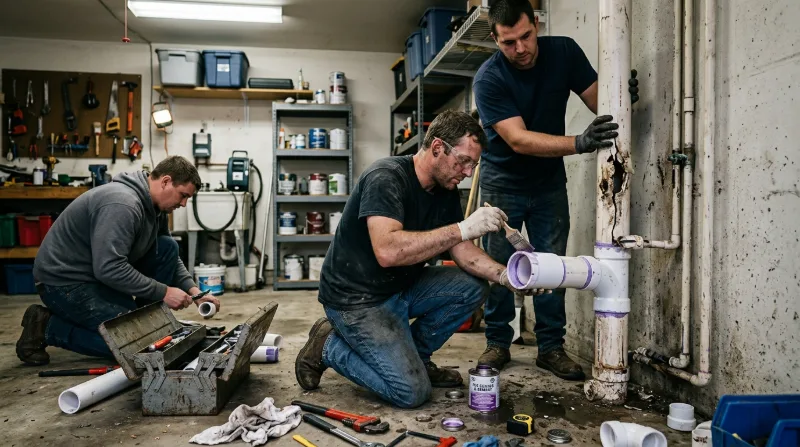
Trenchless Sewer Repair
When the host pipe holds its shape and the driveway is worth saving.
Trenchless
Information first
An hour of looking beats a day of digging
Material, defects, distances, depths, footage in your hands. Then decide what the pipe actually needs.
Reserve an Inspection Slot
Residential, pre-purchase and commercial surveys across Buena Park and north Orange County.