Commercial & Industrial Plumbing
Domestic, irrigation, fire and process systems on one property.
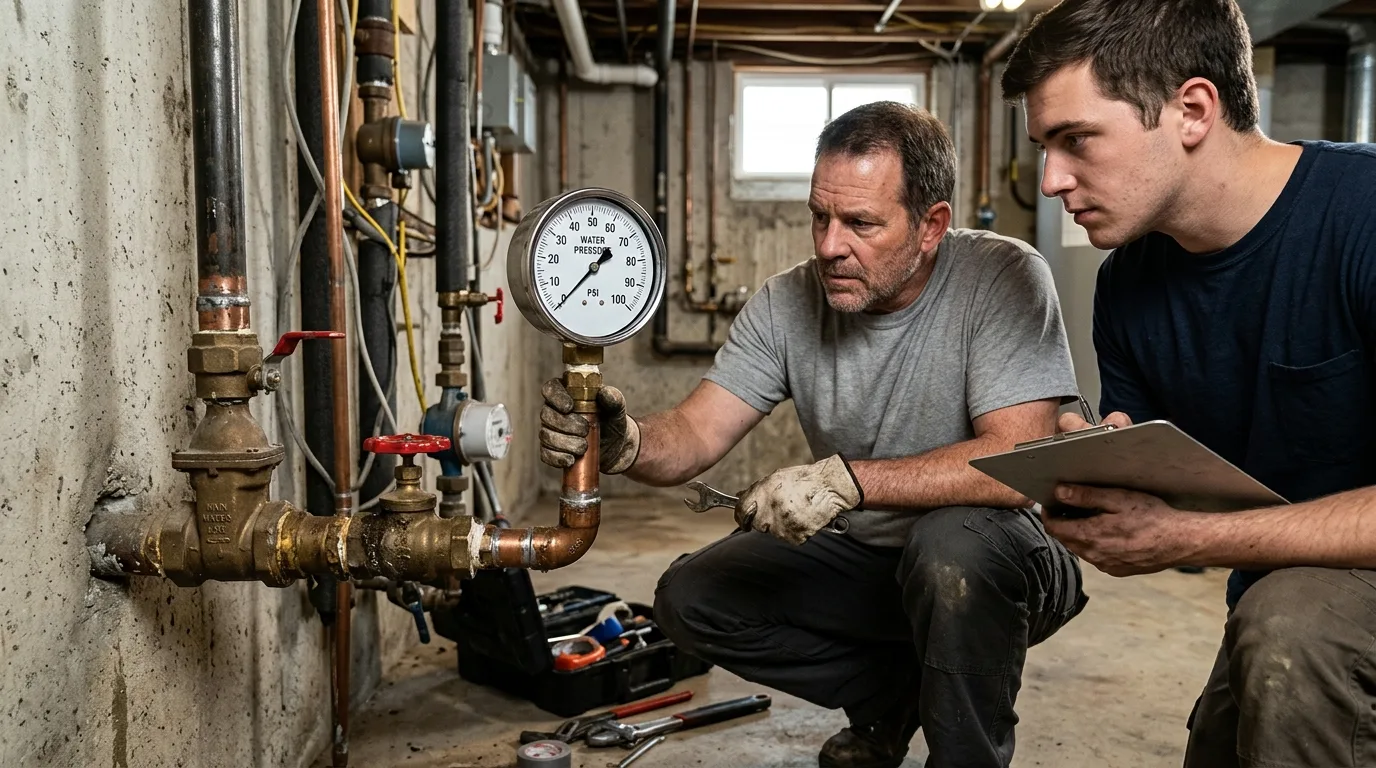
CommercialChecks, relief valves and seats replaced with the correct kit for the assembly.
A relief valve that will not stop usually means fouling, debris or pressure conditions.
Irrigation, fire line, cooling and process assemblies on properties across the city.
What failed, what was replaced, and what the assembly did afterwards, in writing.
What they do
A backflow prevention assembly stops water flowing backwards from a property into the public supply. That reversal can happen when supply pressure drops, a main break, heavy fire flow nearby, or a large draw somewhere on the system, and it can also happen when pressure downstream rises above supply pressure. Either way, whatever is in the downstream system becomes a risk to everyone else on the main.
Which is why these assemblies exist on irrigation systems, fire lines, cooling systems, commercial process water and any connection where a cross-connection hazard exists. They are mechanical devices with checks, springs, seats and in many cases a relief valve, and like anything mechanical they wear, foul and eventually fail.
Testing and sign-off are regulated activities carried out by accredited testers, and the requirements come from the water purveyor and applicable regulations rather than from a plumber. What we do is the repair side: diagnosing why an assembly failed, rebuilding or replacing it, and getting it back into a condition where it performs as designed.
Continuous discharge from the relief valve is the most visible fault and the most common call. On a reduced pressure assembly the relief valve opens to protect against backflow when the differential across the first check falls, so persistent discharge usually means the first check is not holding, typically because debris or scale is preventing it from seating.
Debris is the leading cause overall. Grit, scale, pipe sediment and fragments from upstream work lodge on a check seat and hold it slightly open. On irrigation assemblies, that debris frequently arrives from the system itself, particularly after any excavation or repair upstream.
Then wear: rubber seats and discs harden and take a set, springs weaken, and the tolerances that let the assembly close cleanly are lost. In this water, mineral deposit accelerates all of it. Then freezing damage, which is uncommon here but not unheard of on exposed above-grade assemblies during a cold snap. And then physical damage, assemblies sit outside at ground or waist level, and they get struck by vehicles, mowers and landscaping equipment more often than anyone expects.
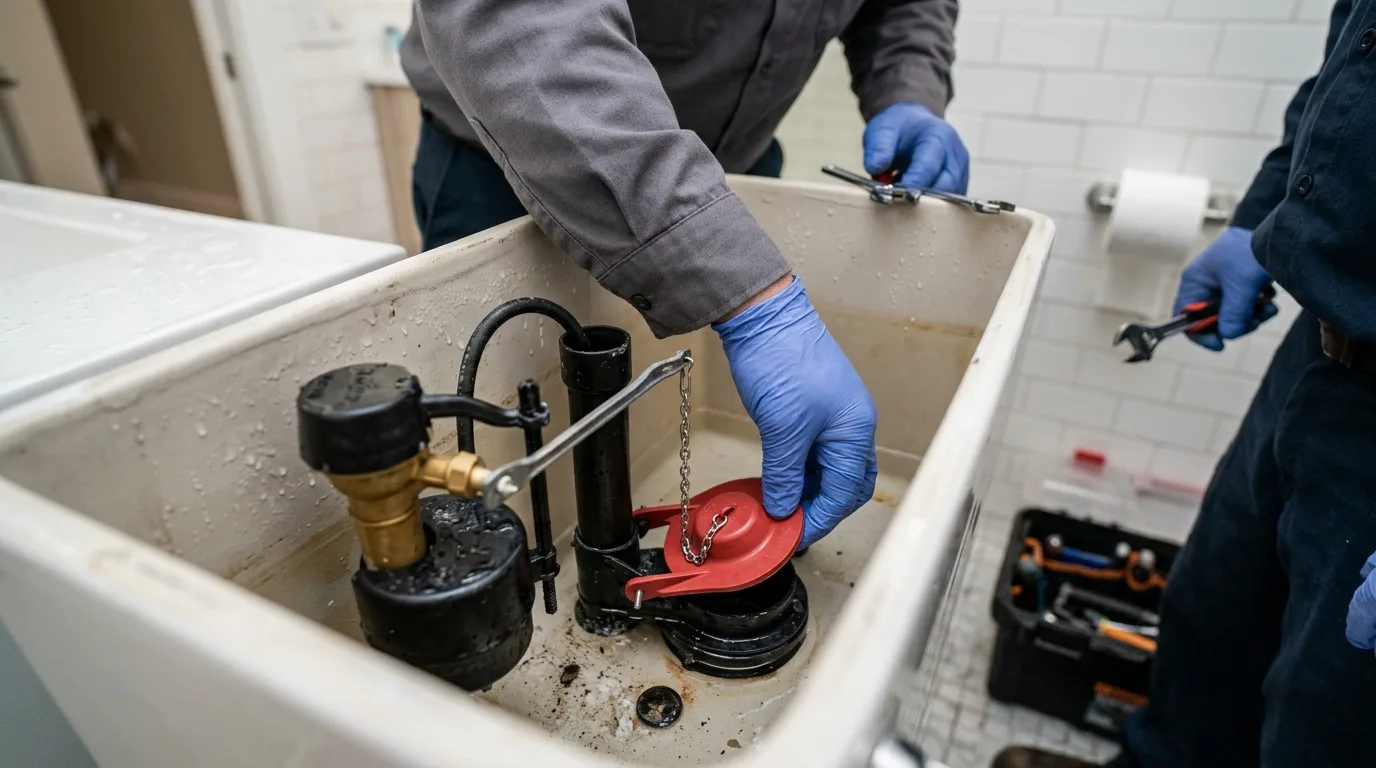
Most assemblies are designed to be rebuilt. Manufacturer rebuild kits contain the seats, discs, springs and seals for that specific model, and a rebuild restores the assembly to its designed performance. That is normally the right answer and the economical one.
Replacement becomes appropriate when the body is damaged or corroded beyond repair, when the assembly is obsolete and kits are no longer available, when it has been rebuilt repeatedly without holding, or when the installation itself is wrong, an assembly at incorrect height, without required clearances, or of a type unsuited to the hazard it is protecting against.
That last point is worth expanding. Assemblies come in types matched to hazard level and application, and installations that predate current requirements, or that were done informally, are sometimes the wrong device in the wrong place. Identifying that is part of a proper assessment rather than something to discover during a failed test.
For most homeowners, the backflow assembly they have is on the irrigation system, and it is the least-inspected piece of plumbing on the property. It sits outside, often partly buried in planting, and nobody looks at it until it is discharging water across a driveway.
Irrigation assemblies fail on debris more than anything else, because the downstream system is full of it. They also suffer physical damage from landscaping work, and they are the most likely to have been installed at the wrong height or in the wrong configuration by someone who was primarily installing sprinklers.
Practical advice: know where yours is and clear the planting away from it so it can be seen and reached. A discharging assembly is wasting water continuously and is telling you something specific about the check inside it, and both facts are worth acting on rather than living with.
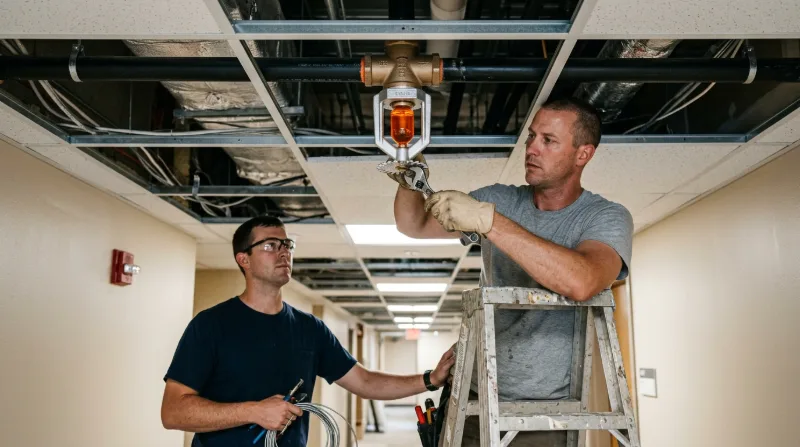
On commercial properties the picture is more involved: separate assemblies for domestic supply, irrigation, fire protection and sometimes process or cooling water, each with its own hazard classification, location and service history. Fire line assemblies in particular are large and have implications well beyond plumbing, and work on them is coordinated accordingly.
For facility managers, the useful discipline is a register: what assemblies exist, where they are, what type and size, when each was last serviced, and what was found. That turns a set of scattered devices into something you can maintain rather than react to, and it makes the annual compliance cycle straightforward instead of a scramble.
Scheduling matters too. Work on an assembly means an interruption to whatever it serves, so domestic supply assemblies in occupied buildings are best handled in agreed windows, and irrigation assemblies outside watering schedules.
If an assembly is discharging continuously, the immediate concern is water loss and whatever the water is running across. Isolating it stops the discharge, but it also stops whatever the assembly serves, which may be fine for irrigation and not fine for a domestic supply or a fire line, so that decision needs to be made with the situation in mind rather than reflexively.
Then get it diagnosed. Debris on a check seat is a cleaning and possibly a rebuild; hardened seats and weak springs are a rebuild; a damaged or corroded body is a replacement. Where a test has failed, the repair should address what the test found specifically, and the assembly should be retested afterwards by a accredited tester as the requirements dictate.
Ask for documentation either way: what was found, what was replaced, and how the assembly behaved afterwards. On a commercial property that record is part of the asset; on a house it is what stops you paying to diagnose the same thing twice.
 DebrisLeading cause
Reading the symptom
Backflow assemblies give fairly specific signals, and each one narrows the fault to a component inside the body.
Worth noting what yours is doing before the visit, it usually determines which rebuild kit is needed.
Photos of the assembly and its data plate let us bring the right kit first time.
That is a continuous water loss and a specific mechanical fault. Both are worth resolving quickly.
Irrigation, domestic and commercial assemblies serviced across the city.
The service visit
Diagnose the specific component, rebuild with the correct kit, and document what was found.
Type, size, manufacturer and model from the data plate, plus the hazard and application it serves.
Which check, valve or seal is not performing, and why, debris, wear, damage or installation conditions.
Manufacturer rebuild kit fitted, or the assembly replaced where the body or configuration is beyond repair.
Assembly returned to service and observed, with findings and parts recorded for your file or compliance cycle.
Questions we get on these calls
On a reduced pressure assembly, the relief valve opens to protect against backflow when the differential across the first check drops, so persistent discharge usually means the first check is not seating properly. The most common reason is debris or scale lodged on the seat, particularly after any upstream excavation or repair. Hardened seats and weakened springs cause the same thing through wear. Either way it is a rebuild rather than an adjustment.
Testing and sign-off are regulated activities performed by accredited testers, and the requirements come from the water purveyor and applicable regulations. What we handle is the repair side: diagnosing why an assembly failed, rebuilding or replacing it, and getting it performing as designed. If your assembly has failed a test, we address what the test found and the retest is carried out by a accredited tester as the requirements dictate.
Most are designed to be rebuilt, using a manufacturer kit containing the seats, discs, springs and seals for that specific model. A rebuild restores designed performance and is usually the economical answer. Replacement is appropriate when the body is damaged or corroded beyond repair, the assembly is obsolete and kits are unavailable, repeated rebuilds have not held, or the installation itself is wrong for the hazard it protects.
For most homes it is on the irrigation system, typically above grade near where the irrigation branches from the supply, often close to the property boundary and frequently obscured by planting. Commercial properties usually have several, domestic, irrigation, fire protection and sometimes process or cooling water, each in a different location. It is worth locating yours and clearing planting away so it can be seen and reached when needed.
Debris is the leading cause: grit, scale, pipe sediment and fragments from upstream work lodging on a check seat and holding it slightly open. Then wear, rubber seats hardening, springs weakening, tolerances lost, all accelerated by mineral content in the water here. Then physical damage, which is more common than people expect since assemblies sit outside at ground or waist level near vehicles, mowers and landscaping equipment.
The repair should address what the test found specifically rather than being a general service. A failed first check, a failed relief valve and a failed second check are different findings with different remedies, and the test report identifies which. In most cases a manufacturer rebuild kit resolves it. Where the body or configuration is the problem, replacement is the answer. Retesting afterwards is carried out by a accredited tester.
Fire protection assemblies are large devices with implications beyond plumbing, and work on them is coordinated accordingly, including with whoever maintains the fire system and, where required, notification before the line is taken out of service. Tell us at the outset that it is a fire line assembly so the visit is planned properly rather than arriving as a surprise, since the isolation requirements are quite different from irrigation.
Yes. Assemblies come in types matched to the hazard level and the application, and the correct type is determined by the requirements applicable to that connection rather than by preference. Installations that predate current requirements, or that were done informally alongside irrigation work, are sometimes the wrong device or in the wrong configuration. Identifying that is part of a proper assessment rather than something to discover during a failed test.
Yes, for whatever the assembly serves. On an irrigation assembly that is straightforward and easily scheduled outside watering times. On a domestic supply assembly in an occupied building, or a fire line, the interruption needs planning and agreement in advance. Tell us what the assembly serves and what your constraints are and the work gets scheduled into a window that suits the property.
Compliance testing follows the schedule set by the purveyor and applicable requirements. Beyond that, practical servicing is driven by condition and history: an assembly that has needed a rebuild once will likely need another eventually, and one in a debris-prone irrigation system more often. For commercial properties, keeping a register of what assemblies exist, where, of what type, and when each was last serviced turns the whole thing from a scramble into a routine.
Send a photo of the assembly and its data plate so the right rebuild kit arrives with the plumber.
Related work
The supply side and the commercial systems these assemblies protect.
Domestic, irrigation, fire and process systems on one property.
Commercial
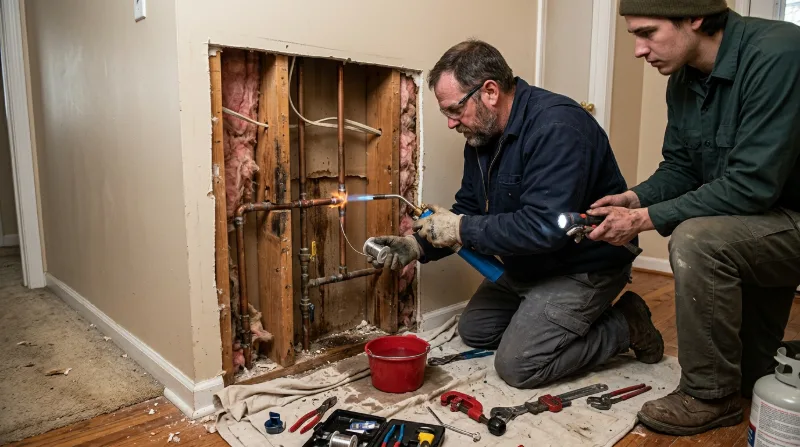
The supply run these devices sit on, from the meter in.
Service line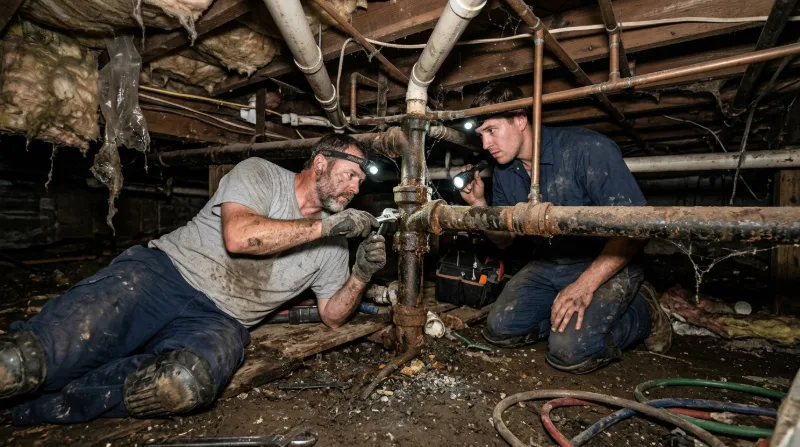
Pressure systems that sit downstream and interact with the assembly.
BoostingRebuilt properly
Diagnose the component, fit the correct kit, and document what was found and replaced.
Irrigation, domestic, commercial and fire line assemblies across Buena Park and north Orange County.