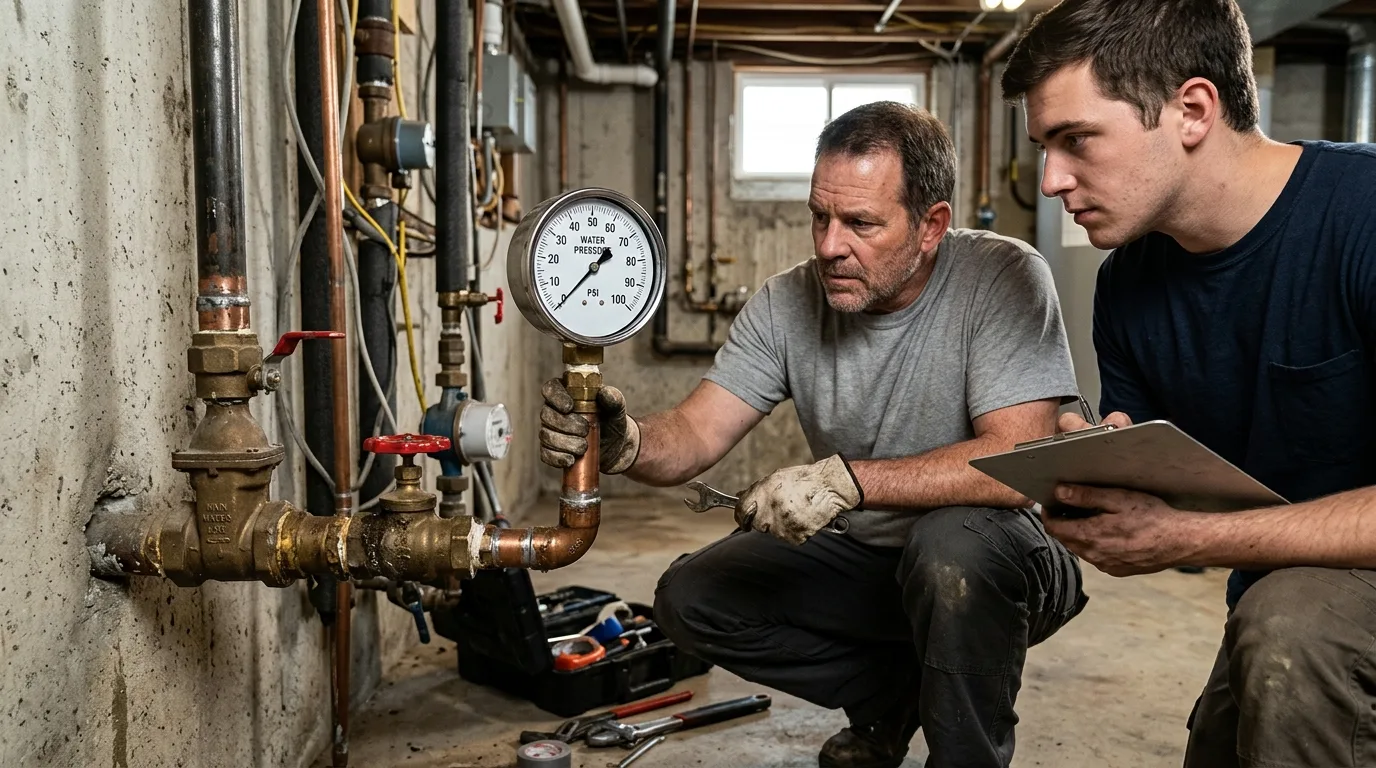
Measured before specified
Static, flow and meter readings first, a booster is the last option, not the first.
Homes and buildings
Uphill lots and upper floors, plus commercial systems serving multi-story buildings.
Sized and controlled
Pump, tank and control strategy matched so it does not short-cycle itself to death.
Protection included
Low-flow and dry-run protection, isolation and serviceability designed in from the start.
Rule out the cheap causes
A booster fixes one problem and hides three others
Low water pressure has several possible causes and a booster pump only addresses one of them. Fitted to any of the others it masks a fault that is still doing damage, and in some cases makes it considerably worse, a booster on a system with a hidden leak simply pushes more water into the ground.
So the sequence is not negotiable. Measure static pressure at the meter to see what the supply is actually delivering. Measure at the house to see what arrives. Measure under flow with two fixtures running. Check the meter with the building isolated to rule out a leak. Inspect the regulator, since a regulator failing by over-restricting is a common and inexpensive cause of poor pressure throughout a house. Only when the supply itself is genuinely inadequate does a booster become the correct answer.
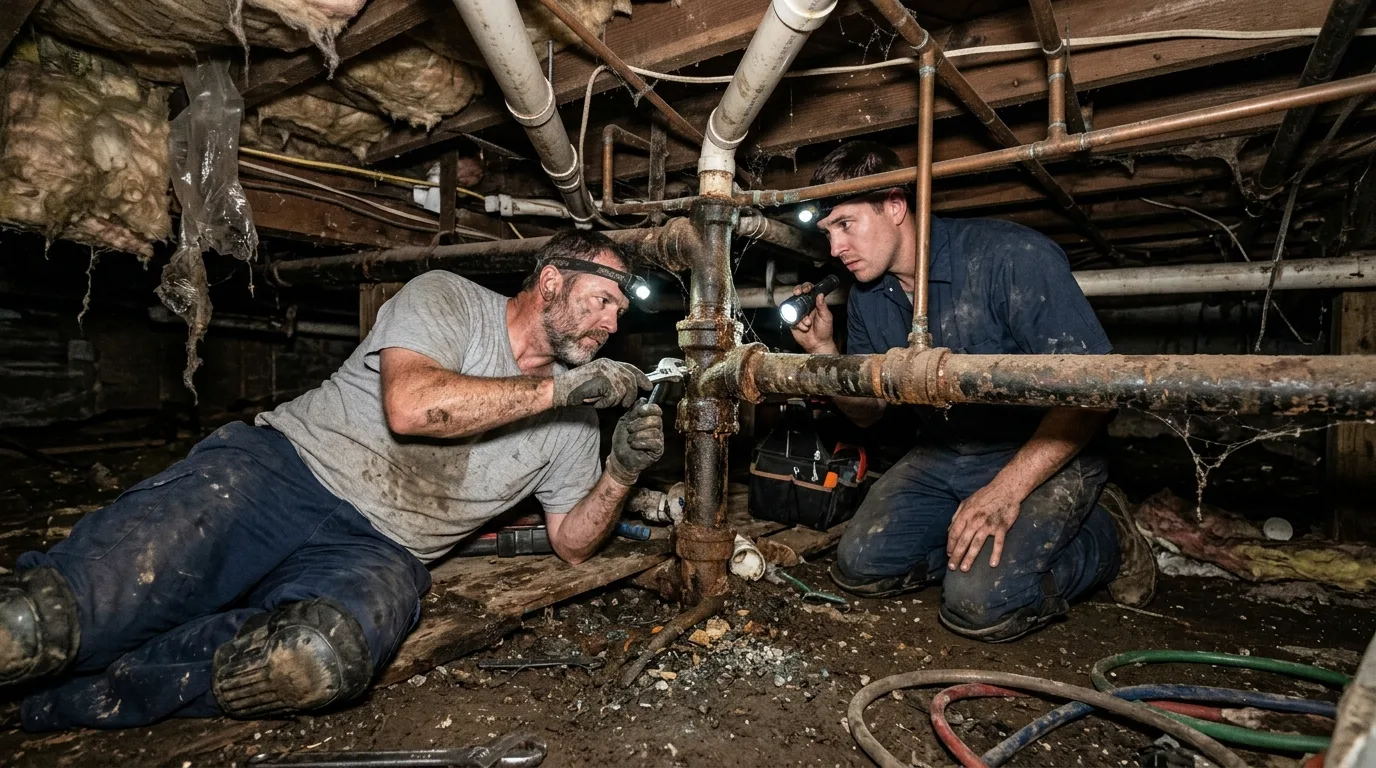
Four cheaper causes to eliminate first: a failed pressure regulator over-restricting; a corroded or undersized service line between the meter and the building; corroded galvanized interior piping that has lost bore; and a hidden leak. Each is measurable in minutes and each is far cheaper to fix than a pressure system to compensate for it.
Where a booster genuinely is the answer
Low supply pressure at the meter. If the street is delivering less than the property needs, nothing inside the house will fix it, the water is not arriving with enough pressure to redistribute. This is the clearest case.
Elevation. Pressure drops with height, so an uphill lot in the Coyote Hills area, a hillside property, or an upper floor in a multi-story building can be genuinely under-pressured even where the supply is adequate at ground level. This is why booster sets are so common in commercial and multi-story buildings.
Long service runs. A property set well back from the street loses pressure to friction over the length of the run, and where upsizing the service line is impractical, boosting is a legitimate alternative.
And high simultaneous demand. A property with many fixtures, irrigation, and an ADU may exceed what the supply can deliver at peak even though it is fine at low demand. That is a flow problem as much as a pressure problem, and the answer often involves storage as well as a pump.
How a residential booster system works
The basic arrangement is a pump, a pressure tank and a control. The pump raises pressure; the tank provides a buffer so the pump does not have to start for every small draw; the control decides when the pump runs.
Control strategy is what separates a system that lasts from one that does not. Simple pressure-switch control starts the pump at a low setpoint and stops it at a high one, which is straightforward and works, but produces cycling and a noticeable pressure swing. Variable speed control modulates pump speed to hold a constant pressure regardless of demand, which is quieter, gentler on the equipment, and delivers a much better experience at the tap. On a system that will run daily for years, that difference matters.
Sizing has two dimensions: pressure and flow. A pump that produces adequate pressure at low flow but cannot sustain it when two showers run is undersized for the property, which is the most common specification error. The calculation needs the number of fixtures, the simultaneous demand expected, the elevation to be overcome and the pressure available at the source.
Protection is not optional. Low-flow and dry-run protection stops a pump destroying itself if supply is interrupted. Isolation valves either side make service possible without draining the system. And a pressure relief arrangement protects the downstream plumbing if a control fails.
Commercial and multi-story systems
In a hotel or multi-story building the pressure system is plant. Duplex or triplex pump sets provide redundancy so one failure does not depressurise the building. Variable speed drives hold constant pressure across a demand curve that varies enormously through the day. Zoning by height means the lower floors are not subjected to the pressure the upper floors need.
The most common complaint in these buildings, weak pressure or no hot water on upper floors at peak, is frequently a pressure system fault rather than a hot water fault, which is why diagnosis has to cover both. A booster that has lost one pump in a duplex set looks fine through most of the day and fails at the peak hour, exactly like a partially failed heater bank.
For facility managers the useful discipline is monitoring rather than reacting: pressure readings at the plant and at the top of the building, taken at quiet and busy periods, tell you whether the margin is adequate before residents do. Add pump run-hours and any fault history and you have something you can plan around.
Repairing existing systems
Existing boosters fail in a small number of ways. A waterlogged pressure tank, bladder failed, so the tank no longer provides a buffer, causes rapid short cycling that will destroy the pump if left. A failing pressure switch or transducer produces erratic control. A worn pump loses output gradually, so the property’s pressure declines slowly enough that nobody notices until it is poor. Air in the system produces noise and unstable pressure. And on variable speed systems, drive faults produce specific error codes.
The most valuable diagnostic on an existing system is the cycling pattern. A pump starting and stopping rapidly under a small draw is telling you the tank has failed, and that is a cheap component whose failure destroys an expensive one. It is worth listening for, and worth acting on immediately.
Where a system is old, undersized or was fitted to compensate for a fault that could have been repaired, it is worth reassessing rather than replacing like for like. Occasionally the honest answer is that fixing the service line or the regulator would let the booster be removed entirely.
What to check before you commit
Ask for the measurements: static at the meter, static at the house, pressure under flow with two fixtures open, and a meter test with the building isolated. Ask what the regulator reading was. Ask whether the service line was assessed for diameter and condition.
Then ask about the specification: what pressure and flow the pump is sized for, what the control strategy is, what protection is included, and how the system will be isolated for service. And ask about noise and location, because a pump that runs daily in the wrong place becomes a permanent irritation.
A booster is a good solution to a specific problem and a poor substitute for a repair. A contractor who insists on the measurements before quoting is the one to trust with the installation.
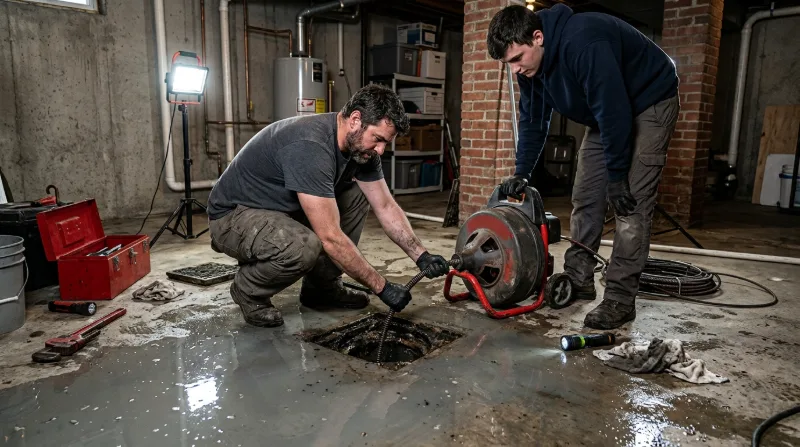
 CyclingThe warning sign
Diagnosing an existing system
Five faults and what each one sounds like
Booster systems announce their problems fairly clearly if you know what to listen for. The first item on this list is the one to act on immediately.
Each of these is a component-level repair rather than a reason to replace the whole system.
- Rapid short cycling a waterlogged pressure tank with a failed bladder. Cheap to fix, and it destroys pumps if left.
- Erratic pressure a failing pressure switch or transducer giving the control bad information.
- Gradual pressure decline a worn pump losing output slowly enough that nobody notices for months.
- Noise and instability air in the system, or a suction-side restriction starving the pump.
- Fault codes on a variable speed drive specific, diagnosable, and usually not the pump itself.
Have an Existing Booster Checked
If yours is short cycling, that is worth a call this week rather than next month.
Upper floors weak at peak times?
In a multi-story building that is often the pressure system rather than the hot water plant. Both should be measured.
Book a Pressure System Survey
Residential boosters and commercial duplex sets, with readings taken at quiet and busy periods.
The right order
Measure, eliminate, specify, install
The first two steps are what stop a booster being fitted to a problem that had a cheaper answer.
01
Measure everything
Static at the meter and the house, pressure under flow, and a meter test with the building isolated to rule out a leak.
02
Eliminate the cheap causes
Regulator, service line diameter and condition, interior piping, and any hidden loss, each far cheaper than boosting.
03
Specify properly
Pump sized for pressure and flow, control strategy chosen, protection and isolation designed in, location agreed.
04
Install and commission
Set up, pressures verified across the demand range, cycling behavior checked, and service points explained.
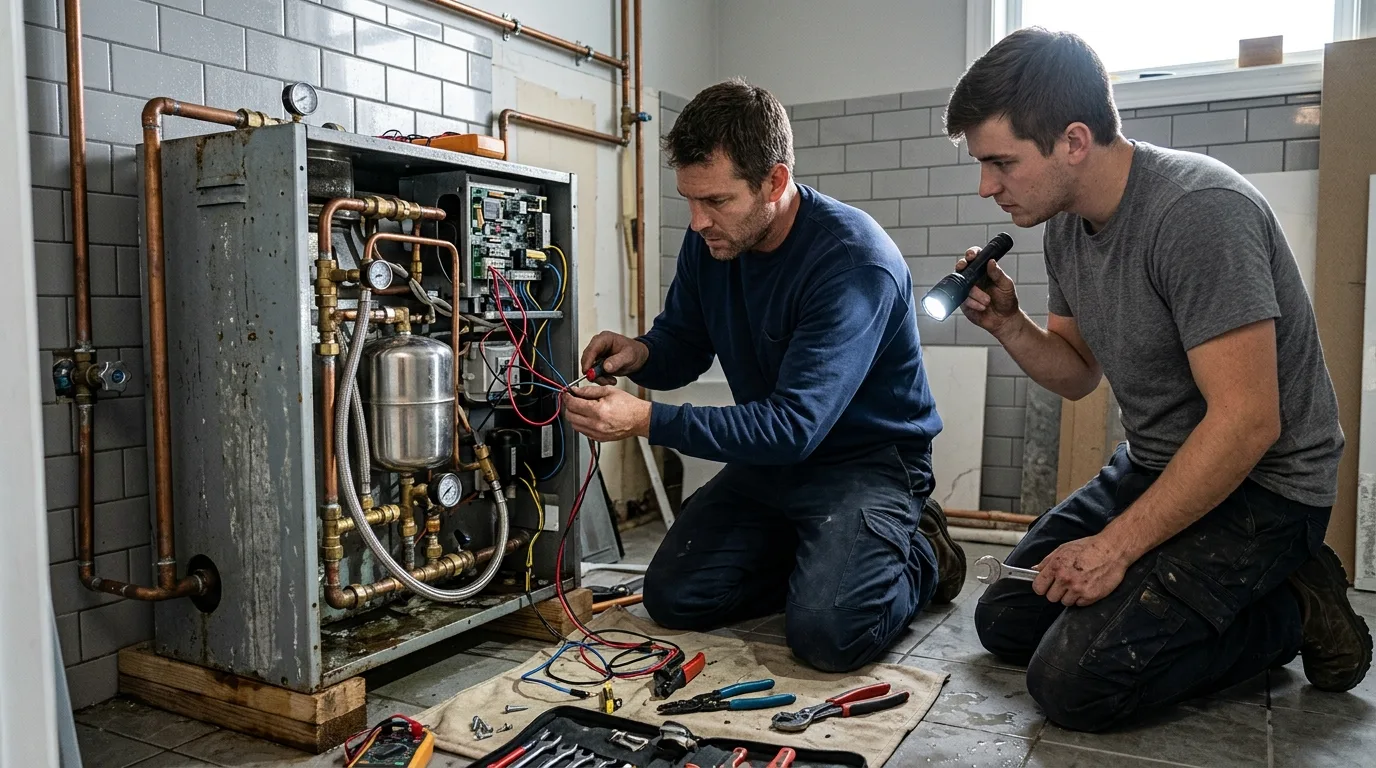
Multi-story & hospitality
In a building, redundancy is the specification
A house with a failed booster is inconvenienced. A hotel with a failed booster has upper floors without usable water, which is a different category of problem entirely.
That is why commercial pressure systems are specified as duplex or triplex sets with variable speed control and zoning by height, so a single pump failure reduces capacity rather than eliminating it, and so lower floors are not subjected to the pressure upper floors require.
- Duplex and triplex sets with alternating duty so one failure does not depressurise the building
- Variable speed control holding constant pressure across a demand curve that swings through the day
- Zoning by height so lower floors are not over-pressured to serve the top of the building
- Pressure readings at plant and at the highest fixture, taken at both quiet and peak periods
Discuss a Building Pressure System
Facility managers: ask for readings at the top of the building at your busiest hour.
Questions we get on these calls
Pressure system questions
Measurement decides it, and four cheaper causes should be eliminated first: a pressure regulator failing by over-restricting, a corroded or undersized service line between the meter and the building, corroded galvanized interior piping that has lost bore, and a hidden leak. Each is measurable in minutes. A booster fitted to any of those masks a fault that is still doing damage, and on a system with a hidden leak, it simply pushes more water into the ground.
When the supply itself cannot deliver what the property needs. That means low static pressure at the meter, elevation to overcome on an uphill lot or upper floor, a long service run losing pressure to friction where upsizing is impractical, or high simultaneous demand that exceeds what the supply can provide at peak. In all four cases nothing inside the building will fix it, because the water is not arriving with enough pressure to redistribute.
It depends on the pressure and flow required, the control strategy, and whether storage is needed alongside the pump. A simple residential pressure-switch system is the least expensive; a variable speed system costs more and delivers a much better experience with less wear on the equipment. Commercial duplex or triplex sets with drives and zoning are a different scale. What you should insist on before any quote is the set of measurements that justify it.
It depends on the control strategy and the location. Pressure-switch systems start and stop, which is audible each time and produces a noticeable pressure swing. Variable speed systems modulate and are considerably quieter as well as gentler on the equipment. Location matters just as much: a pump that runs daily in a space adjoining a bedroom becomes a permanent irritation, so agree the position before installation rather than after.
Almost certainly a waterlogged pressure tank, the internal bladder has failed, so the tank no longer buffers small draws and the pump starts for each one. It is a relatively cheap component whose failure will destroy an expensive one, so it is worth acting on quickly rather than living with. Rapid cycling is the single most useful diagnostic sound a booster system makes.
Pressure falls with height, so an upper floor always sees less than the ground floor. Where the margin is small to begin with, that difference becomes a usable-versus-unusable one. In houses this is often addressed with a booster; in multi-story buildings it is handled by a pressure system with zoning, so the upper floors get what they need without over-pressuring the lower ones. Either way, readings taken at the highest fixture are what quantify it.
It can, if it is fitted without regard for what is downstream. Raising pressure in a system with aged galvanized piping, tired solder joints or old appliance supply hoses accelerates the failures those components were already heading toward. It is another reason the assessment matters: if the interior piping is at end of life, the honest recommendation may be to address that first, and sometimes repiping removes the pressure complaint entirely.
A variable speed drive modulates pump speed to hold a constant pressure regardless of how much water is being drawn, rather than switching between on and off around a setpoint. The result is stable pressure at the tap, much less cycling, quieter operation and longer equipment life. On a system that will run daily for years it is generally worth the difference, and on commercial systems with a swinging demand curve it is effectively standard.
Yes, redundancy becomes the specification. Duplex or triplex sets with alternating duty mean a single pump failure reduces capacity rather than depressurising the building, which in a hotel or multi-tenant property is the difference between an inconvenience and an emergency. Add variable speed control and zoning by height, and pressure readings taken at the highest fixture during your busiest hour, and the system becomes something you can manage rather than react to.
A heater does not create pressure, but a heavily scaled tank or a partly blocked heat exchanger can restrict hot water flow specifically, so if the complaint is only on the hot side, that is worth checking before anything is boosted. Poor pressure on both hot and cold points upstream: the regulator, the service line, the interior piping or the supply itself. Separating hot-only from both-sides is a five-minute test that redirects the whole investigation.
Request a Pressure Survey
Bring any readings you have, meter, hose bib, or the behavior under two fixtures.
Related work
Everything pressure touches
The cheaper causes to eliminate, and the systems a booster interacts with.
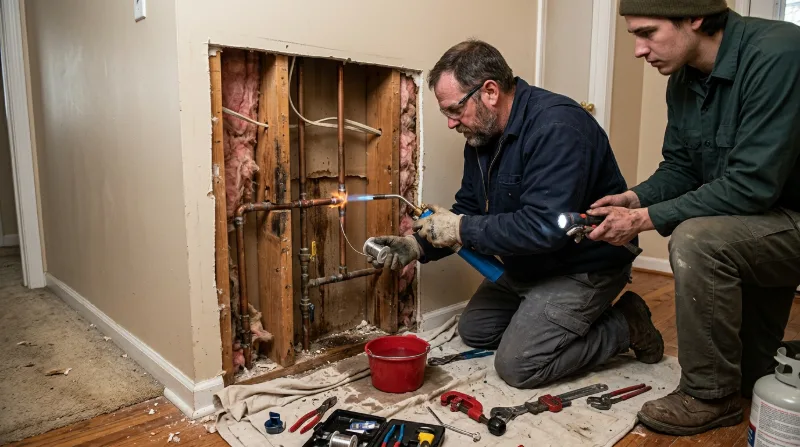
Water Main & Service Line Replacement
When the restriction is the run between meter and building.
Service line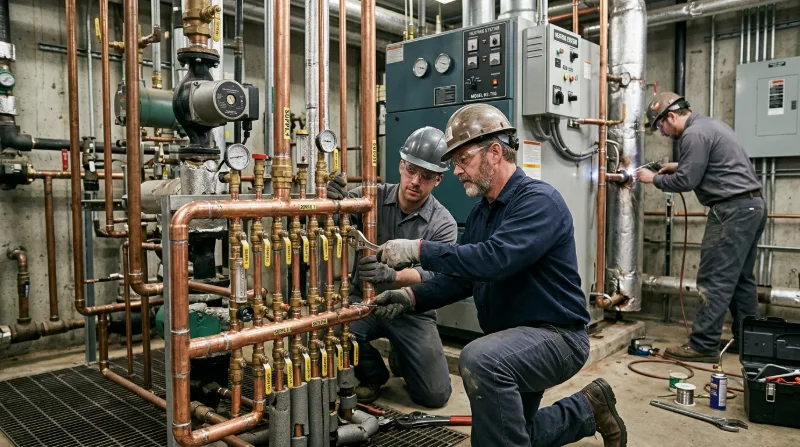
Commercial Water Heater Service
Upper-floor complaints are often the loop or the booster, not the plant.
Plant
Measured, then specified
The right pump for the right problem
Four cheaper causes eliminated first. Then a system sized for pressure and flow, with protection built in.
Start With Pressure Readings
Residential boosters and commercial pressure systems across Buena Park and north Orange County.