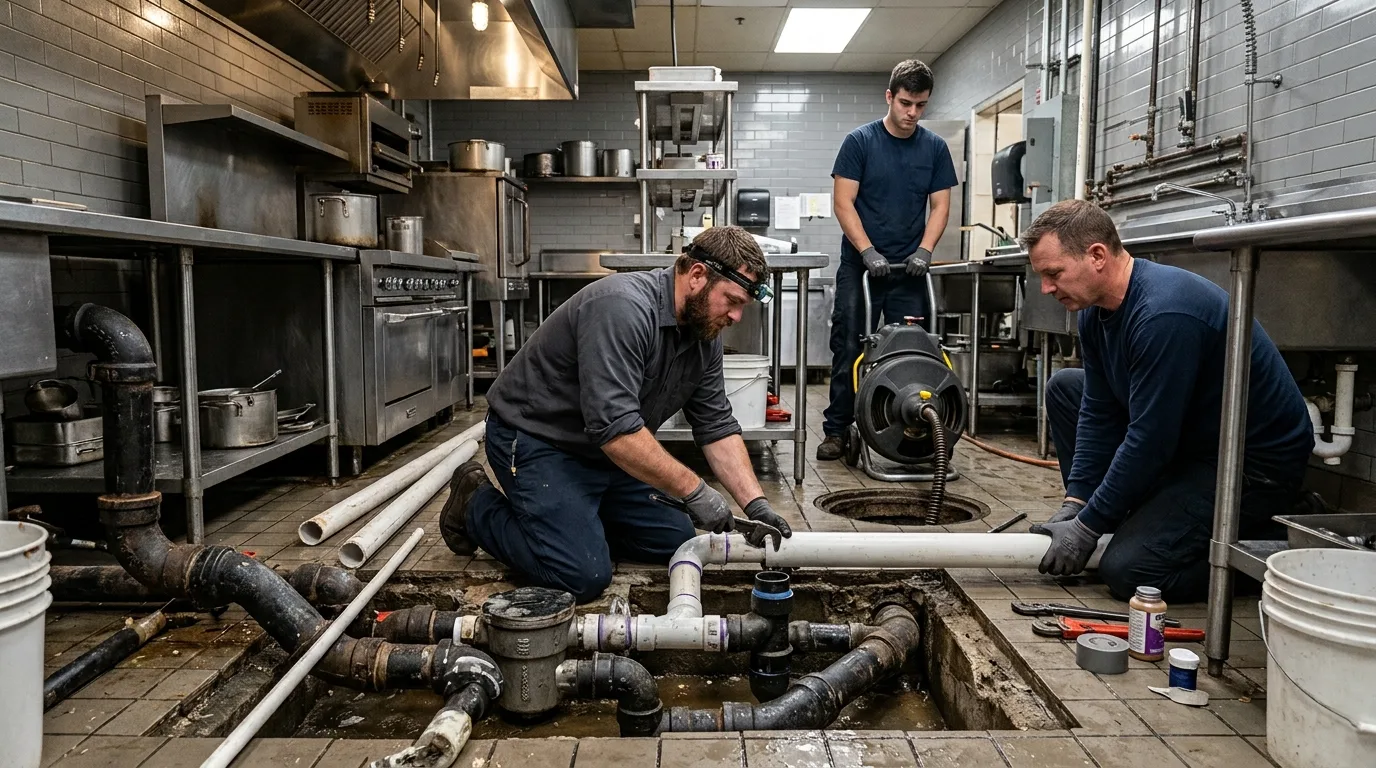
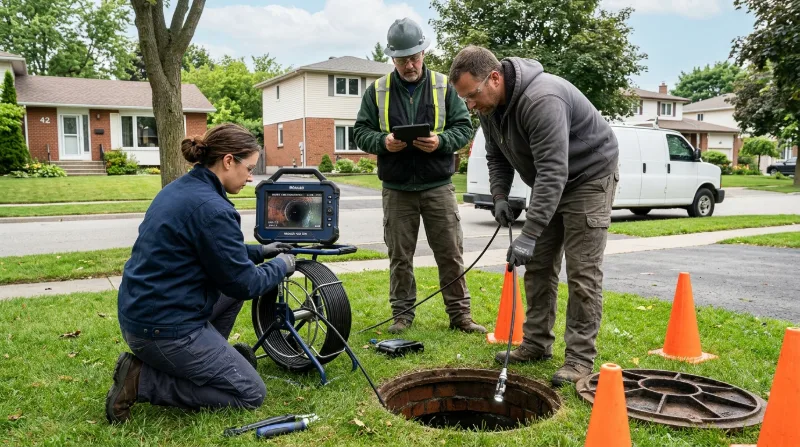
Sewer Camera Inspection
The step that decides whether the line should be jetted at all.
Inspect firstOn any older line the pipe gets inspected first, jetting a failing lateral makes things worse.
Rear-facing jets scour the pipe wall and flush debris out ahead of the nozzle.
Emergency clearing any hour, and planned intervals for kitchens that cannot afford surprises.
A second camera pass shows what the line looks like once it is actually clean.
What it is
Hydro jetting sends water down a drain line through a specialized nozzle at pressures typically in the range of a few thousand PSI, at a controlled flow rate. The nozzle does two jobs simultaneously. Rear-facing jets push against the pipe behind it, which propels the hose forward and drags it around bends without anyone having to force it. Forward and side jets attack the blockage and scour the pipe wall through its full circumference.
That geometry is what separates jetting from every mechanical method. A cable is a line traveling down the middle of a pipe; it removes what it hits. A jetter is a moving wall of water; it removes what is stuck to the inside of the pipe, then flushes the debris downstream ahead of itself so it leaves the system rather than settling into the next low spot. When a plumber says a line was "cleaned" rather than "cleared", jetting is usually what they mean.
Jetting is not automatically the right tool. High pressure inside a badly deteriorated clay lateral, a cast-iron line scaled to a shell, or a pipe with an existing crack can turn a maintenance job into a replacement. That is why on any older Buena Park property with an unknown main line, the correct order is camera first, then decide.
Grease is the strongest case. Fats, oils and greases enter a kitchen drain warm and liquid, then cool and set on the pipe wall in layers. Over a couple of years a hundred-millimetre line can lose most of its usable diameter to a hardened coating that a cable cannot address, because the cable simply bores a channel through it. Water at pressure strips the coating. That is the difference between a kitchen line that behaves for years and one that blocks every second month.
Fine roots are the second case. A cutting head on a cable will chop through a root mass and restore flow, but it leaves hair roots in the joint and the mass regrows from them. Jetting with the right nozzle scours the joint far more thoroughly, which lengthens the interval considerably, though it is worth saying plainly that neither method fixes the reason roots are there. A joint that admits roots is a defect, and at some point the answer is lining or replacement rather than a longer maintenance cycle.
Third: sludge, sand and mineral scale in main lines and long horizontal runs. Cabling in that situation stirs material up and moves it along, where it settles again at the next belly. Jetting flushes it out of the system. Fourth: any line where the goal is to restore capacity rather than just to get water moving tonight, most obviously a main that has begun blocking on a predictable cycle.
A good plumber owns both machines and is not romantic about either. Cabling wins on small-diameter branch lines, where a jetter hose has no business, sink and lavatory arms, tub and shower branches, laundry lines. It wins on solid foreign objects, because a mass of wipes, a toy or a build-up of cotton products responds better to being augered out than to being hit with water. It wins where access is tight, and where there is no practical way to manage the volume of water a jetter puts into a line.
It also wins when the pipe cannot take pressure. That is the honest limit of jetting, and it is worth saying rather than glossing. Buena Park has a lot of original clay and cast iron in the ground, and some of it is one bad decision away from failing. A cable used carefully in a compromised line is the conservative choice; a jetter in the same line can open a crack into a collapse.
This is why the diagnostic question, camera or no camera, matters more than the machine choice. Once you know what the pipe looks like, the tool selection is usually obvious and rarely controversial.
Buena Park is unusual for a city its size in how much commercial food service it carries. The Beach Boulevard entertainment corridor concentrates hotels, dinner-theatre venues and restaurants, and every one of them puts grease down a drain in volumes no house approaches.
For those buildings, jetting is maintenance rather than repair. Lines are jetted on an interval set by actual throughput, a high-volume kitchen may need it quarterly, a lighter operation annually, and interceptors are serviced before they surcharge rather than after. The economics are not close: a scheduled overnight jetting visit costs a fraction of a mid-service closure, and it is the only version of this work that does not risk a dining room being turned away.
A well-run maintenance program also produces information. Each visit records how much material came out and what the camera showed, which means the interval can be tuned and a developing structural problem gets caught while it is still cheap. Facility managers who ask for that documentation get a far more useful picture of their building than a stack of emergency invoices.
Access first. Jetting works best from a cleanout, because the machine and the water stay outside the building. Where there is no cleanout, the plumber works through a roof vent or a pulled fixture, which is slower and messier, and it is a good reason to install a cleanout while someone is already on site.
Then the camera, on any line whose condition is not already documented. Then nozzle selection, which is a real decision rather than a formality: a penetrating nozzle to open a hard blockage, a flushing nozzle to move sludge, a chain or rotary head where scale needs mechanical help. Pressure and flow are set to the pipe material and diameter, not turned to maximum.
The nozzle is worked down the line and then drawn back repeatedly, because most of the cleaning happens on the retrieval pass. Finally the line is flushed at volume and, ideally, cameraed again. That second pass is the part homeowners most often decline and most often regret declining, it is the difference between believing the line is clean and knowing it.
Jetting costs more than cabling on a single visit and less than cabling over three years on a line with a coating problem. The variables are access, line length and diameter, how hard the blockage is, and whether camera work is included before and after. On commercial maintenance contracts, the interval and the number of lines drive the number.
It uses a meaningful volume of water, which is a fair question in Southern California. In practice the volume is comparable to a modest irrigation cycle, and it is worth weighing against the alternative: a line that blocks repeatedly, gets cleared repeatedly, and eventually fails and has to be replaced. Water spent once on cleaning a pipe properly generally beats water spent on the consequences.
Ask four things before booking. Will you camera the line before jetting, and is that included? What pressure and nozzle will you use, and why that one for my pipe material? Will you camera it again afterwards and show me? And what does the result tell us about whether this line needs a repair rather than a cleaning? A plumber who answers all four comfortably is the one to book.
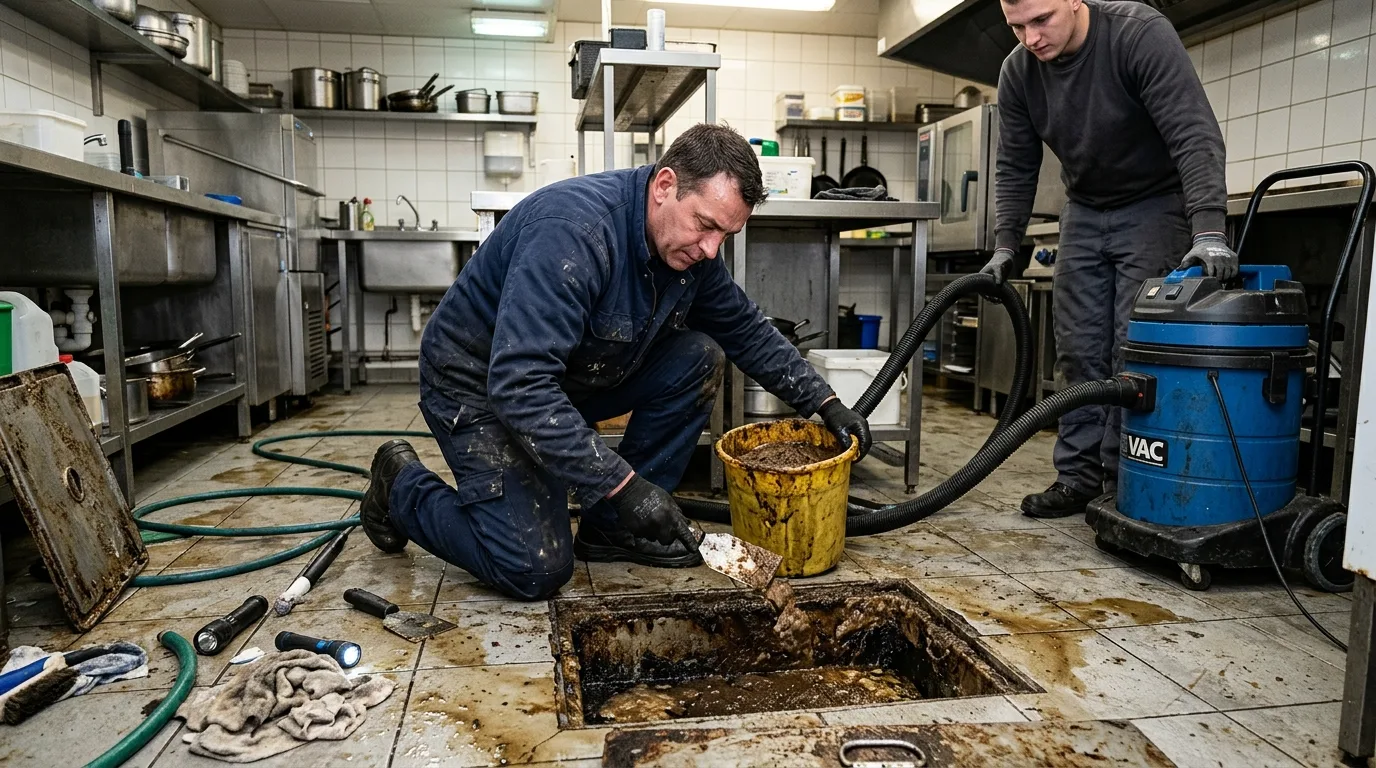 Full boreDiameter restored
Cable versus jetter
Both machines have their place, and the wrong one is not merely ineffective, on a fragile line it can be destructive. This is the comparison in plain terms.
If your line has blocked more than once in a year, the item you want is the second one on this list.
Tell us the blockage history and the age of the property, that usually settles it on the phone.
A third cabling visit is a decision, not an accident. A camera and a jetter answer the question properly.
Available for houses, restaurants, hotels and multi-tenant buildings across north Orange County.
The jetting sequence
The order matters more than the machine. Skipping the first step is what turns maintenance into replacement.
Camera the line to establish material, condition, defects and where the trouble actually is. Jetting decisions follow from this.
Access through a cleanout wherever one exists, with containment. Nozzle, pressure and flow matched to pipe material and diameter.
Nozzle worked down the line and drawn back in repeated passes, because most of the cleaning happens on retrieval.
Flush at volume, then a second camera pass so you can see the finished pipe rather than take it on trust.
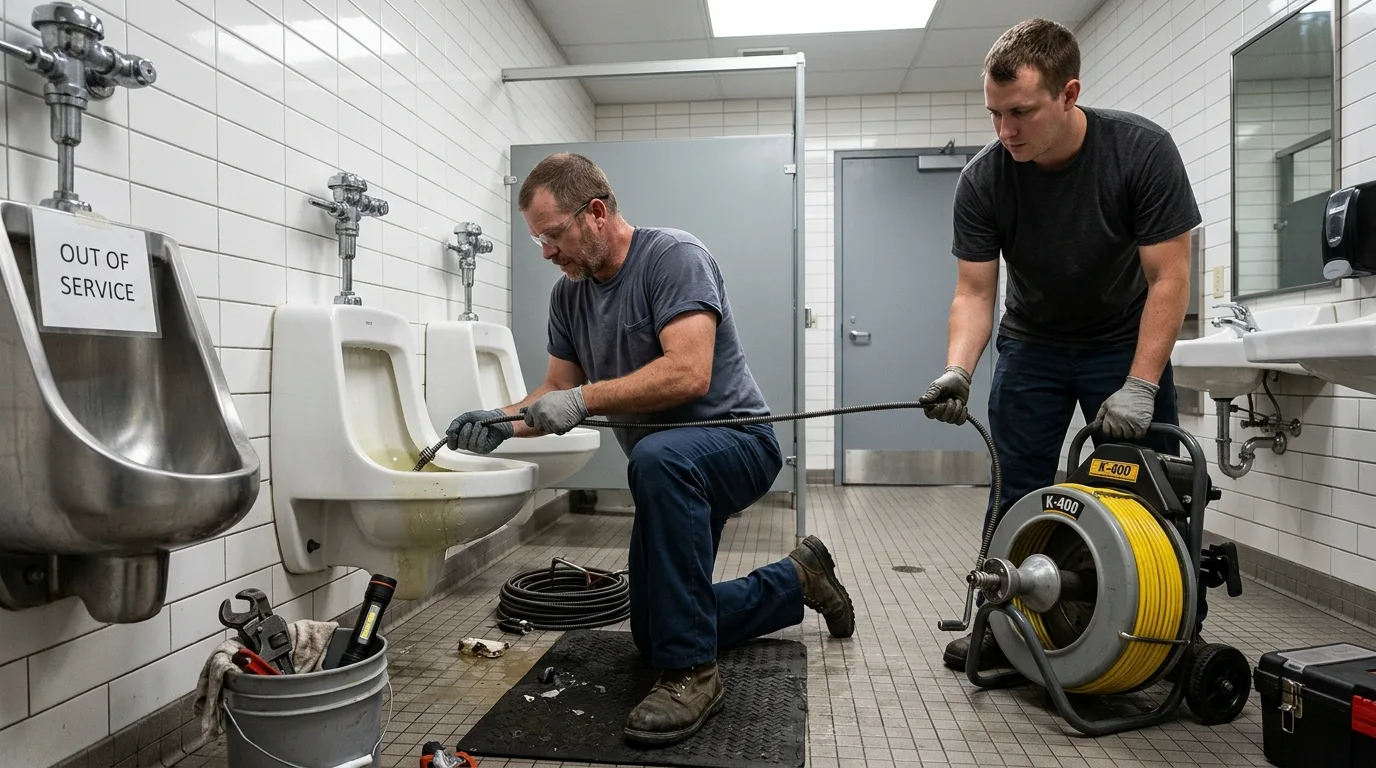
Planned maintenance
The most expensive jetting visit is always the unplanned one, because it arrives with a closed kitchen attached. A maintenance interval turns the same work into a scheduled overnight line item.
Intervals are set by throughput rather than by calendar convention, and they get tuned using what each visit actually brings out. That is the difference between a program and a habit.
Property and facility managers: ask for the camera documentation as part of the contract.
Questions we get on these calls
It is drain and sewer cleaning using water at high pressure through a purpose-built nozzle. Rear-facing jets propel the hose forward through the line and around bends, while forward and side jets break up the blockage and scour the pipe wall around its full circumference. Debris is flushed downstream ahead of the nozzle so it leaves the system rather than settling further along. The result is a pipe closer to its original diameter, not just a channel through the obstruction.
A cable travels down the middle of the pipe and removes what it strikes, which restores flow quickly but leaves any coating on the pipe wall intact. That is why cabled kitchen lines so often block again within weeks, the grease layer that caused the problem is still there. Jetting removes the layer itself. Cabling remains the better tool for small branch lines, solid foreign objects, tight access, and pipes too fragile to take pressure.
On sound pipe, no, pressure and nozzle are selected for the material and diameter, and properly done jetting is gentler on a good line than repeated mechanical cutting. On deteriorated clay, heavily scaled cast iron, or a line with an existing crack or offset, high pressure genuinely can make things worse. That is exactly why the camera comes first on any older Buena Park property with an undocumented main. If a contractor wants to jet a sixty-year-old lateral sight unseen, ask why.
On anything older or unknown, yes, and it is the single most valuable part of the visit. The camera tells you the pipe material, its condition, where the blockage sits and whether there is a structural defect creating it. That determines whether jetting is safe, which nozzle to use, and, occasionally, that you should not be buying a cleaning at all but a repair. On a documented modern line that has simply accumulated grease, jetting straight away is reasonable.
By volume rather than by calendar. A high-throughput commercial kitchen may need quarterly service; a lighter operation may be comfortable annually; a busy household kitchen with a long history of grease might benefit every couple of years. The right way to set it is empirically: start with an interval, record what each visit brings out and what the camera shows, and adjust. A line that comes back nearly clean means you can stretch the interval; heavy material means shorten it.
It clears them far more thoroughly than a cutting head does, because it scours the joint rather than chopping through the mass. But no cleaning method is permanent, because the roots are a symptom of a defect, a joint or crack admitting water and letting fine roots in. Jetting buys you a long interval. Fixing it properly means lining or replacing the affected section so there is nothing for roots to enter, and a camera will tell you whether you are near that point.
A meaningful amount, though in practice it is comparable to a modest irrigation cycle rather than anything dramatic, and it is used once rather than repeatedly. The honest comparison is against the alternative: a line that blocks every few months, gets cleared each time, and eventually fails and has to be dug up and replaced. Cleaning a pipe properly once is generally the lower-consumption outcome as well as the cheaper one.
Yes, and it is common on Buena Park main lines that have started blocking on a cycle. The qualification is the same as everywhere: the pipe has to be in condition to take it. Many houses here still have original clay or cast-iron laterals, some of which are perfectly serviceable and some of which are not. The camera pass sorts them, and it also frequently reveals a belly or offset that explains a blockage history nobody could account for.
A typical residential main line takes a couple of hours including camera work, setup and verification. A branch line is quicker. Commercial kitchen lines vary widely with length, diameter and how much material is in them, an overnight window is standard partly for that reason and partly so the work never touches service hours. If you need a firm window, ask when booking and mention any access constraints, since setup time is often the variable.
Four things. Will you camera the line first, and is that included in the price? What pressure and nozzle will you use, and why is that right for my pipe material? Will you camera it again afterwards and show me the result? And does what you found suggest this line needs a repair rather than a cleaning? Comfortable, specific answers to all four are the best available signal that you are buying the right work.
Tell us the pipe age and blockage history and we will say honestly whether jetting is the right call.
Related work
Jetting sits between diagnosis and repair. These are the services on either side of it.
The step that decides whether the line should be jetted at all.
Inspect first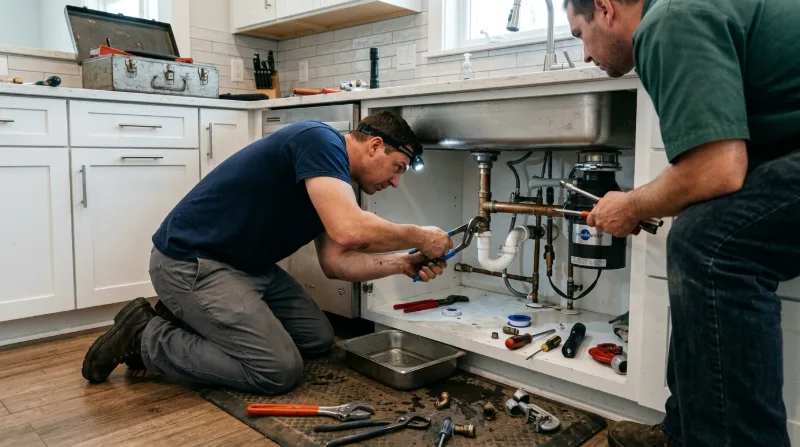
Grease lines, interceptors and shared stacks on a maintenance schedule.
CommercialCleaned, not just opened
If a line has blocked twice, the third cable is the expensive option. Camera it, jet it, and know where you stand.
Residential and commercial jetting across Buena Park, Fullerton, Anaheim, Cypress, La Palma, Stanton and Cerritos.