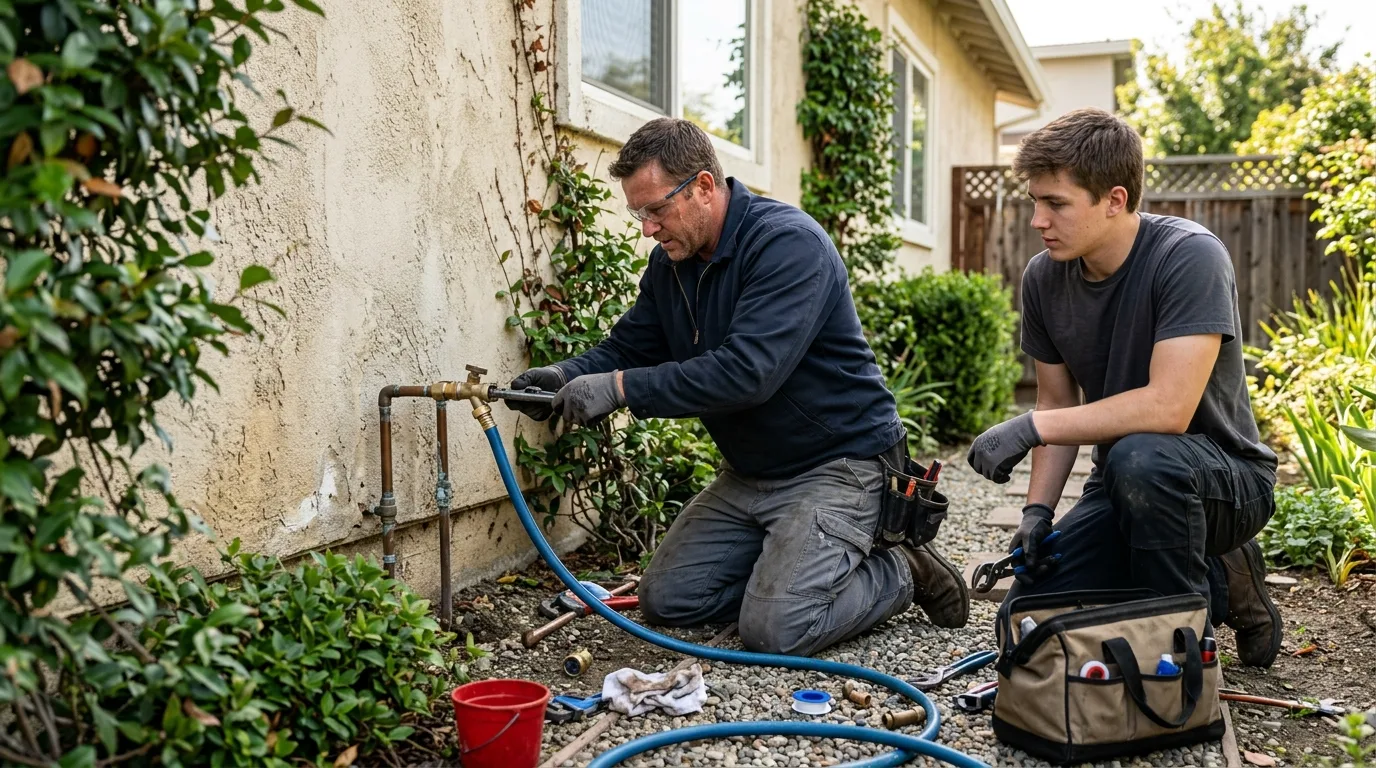
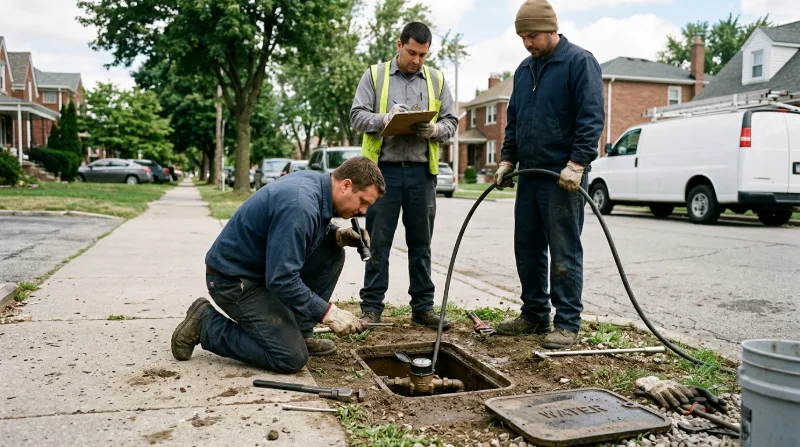
Ceiling leaks located
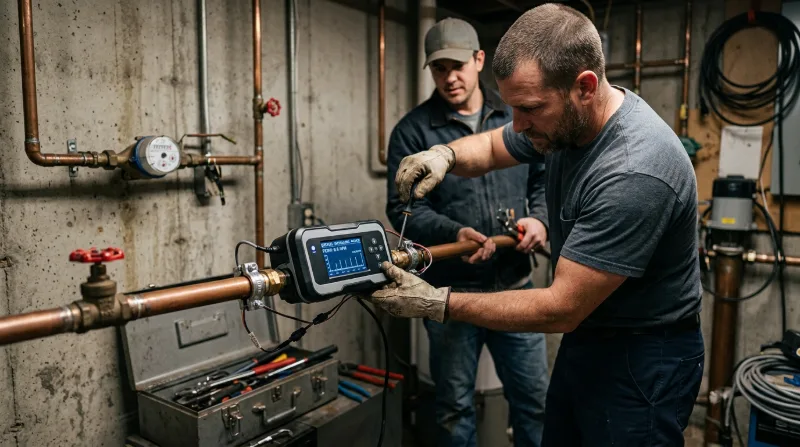
Moisture mapping and thermal imaging find the source before anyone opens the ceiling below.
Pressure managed properly
More fixtures and more height make regulator condition worth checking rather than assuming.
Repipes planned room by room
A two-story repipe is a sequence, not a single day. You get the plan before it starts.
Priced before, not after
Written scope at the door and re-agreed if anything about the job changes.
Larger homes, west of the line
Two stories changes where the plumbing fails and how you find it
Cerritos has a housing stock weighted toward larger lots and two-story homes with multiple bathrooms. That is a meaningfully different plumbing environment from the single-story slab tracts that dominate Buena Park, and the difference is not just scale. In a single-story house, everything below the fixtures is either concrete or crawlspace. In a two-story house, the plumbing serving the upstairs bathrooms runs through the floor structure directly above your living space.
That creates the defining Cerritos problem: a leak upstairs presents as a stain on a downstairs ceiling, usually some distance from where the water is actually escaping, because water runs along joists and subfloor before it drops. Finding it by cutting the ceiling open is slow, destructive and frequently wrong on the first attempt. Finding it by moisture mapping and thermal imaging is quick, and it means one small targeted opening rather than several exploratory ones.
The second consequence of size is fixture count. More bathrooms means more of everything, more angle stops, more cartridges, more supply connectors, more opportunities for a small failure. It also means the water heater is working harder and the pressure regulator is protecting a larger installation. Both are worth checking on a house of this type rather than waiting for symptoms.
A ceiling stain is where the water arrived, not where it started. Before anyone cuts, the moisture should be mapped, the actual source is commonly several feet away and occasionally in a different room.
Upstairs bathrooms and the leaks they hide
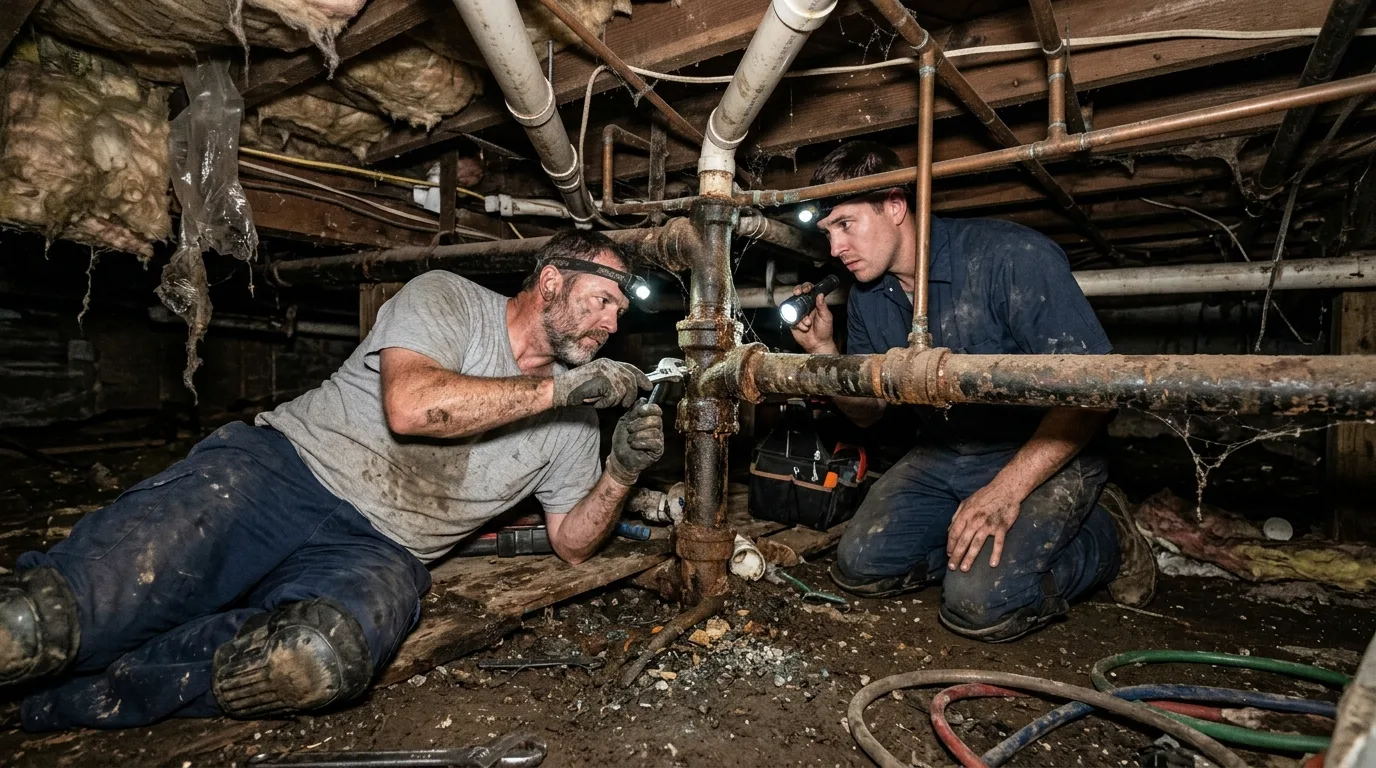
Four sources account for the great majority of upstairs-to-downstairs leaks. The shower pan or its drain connection, which typically produces a slow, use-dependent leak that only appears after a shower is run. The toilet’s wax seal at the flange, which weeps at every flush and is often accompanied by a slightly rocking pan. The tub’s waste-and-overflow assembly, which leaks only when the tub is filled above the overflow. And a supply connection at a vanity or toilet, which leaks continuously regardless of use.
Distinguishing between them before opening anything is largely a matter of pattern. Whether the leak correlates with showering, with flushing, with bathing, or with nothing at all narrows it substantially. That is why a plumber will ask questions that seem unrelated to the ceiling, the answers save an hour and a hole.
Pressure across a larger installation
A bigger house with more fixtures is more sensitive to pressure being wrong, in both directions. Too high and every cartridge, fill valve, angle stop and flexible connector in the building wears prematurely, and there are a lot of them. Too low, particularly at second-floor fixtures where elevation costs pressure, and the upstairs shower disappoints whenever anything else is running.
Both start with a gauge reading at an outside hose bib, taken during the day and again late at night when static pressure is highest. A properly functioning regulator holds both within a sensible band. Where the reading is high, replacing a failed regulator is cheap relative to the fixtures it is destroying. Where flow upstairs is genuinely inadequate and the incoming pressure is fine, the restriction is internal and needs finding rather than boosting.
Repiping a two-story house
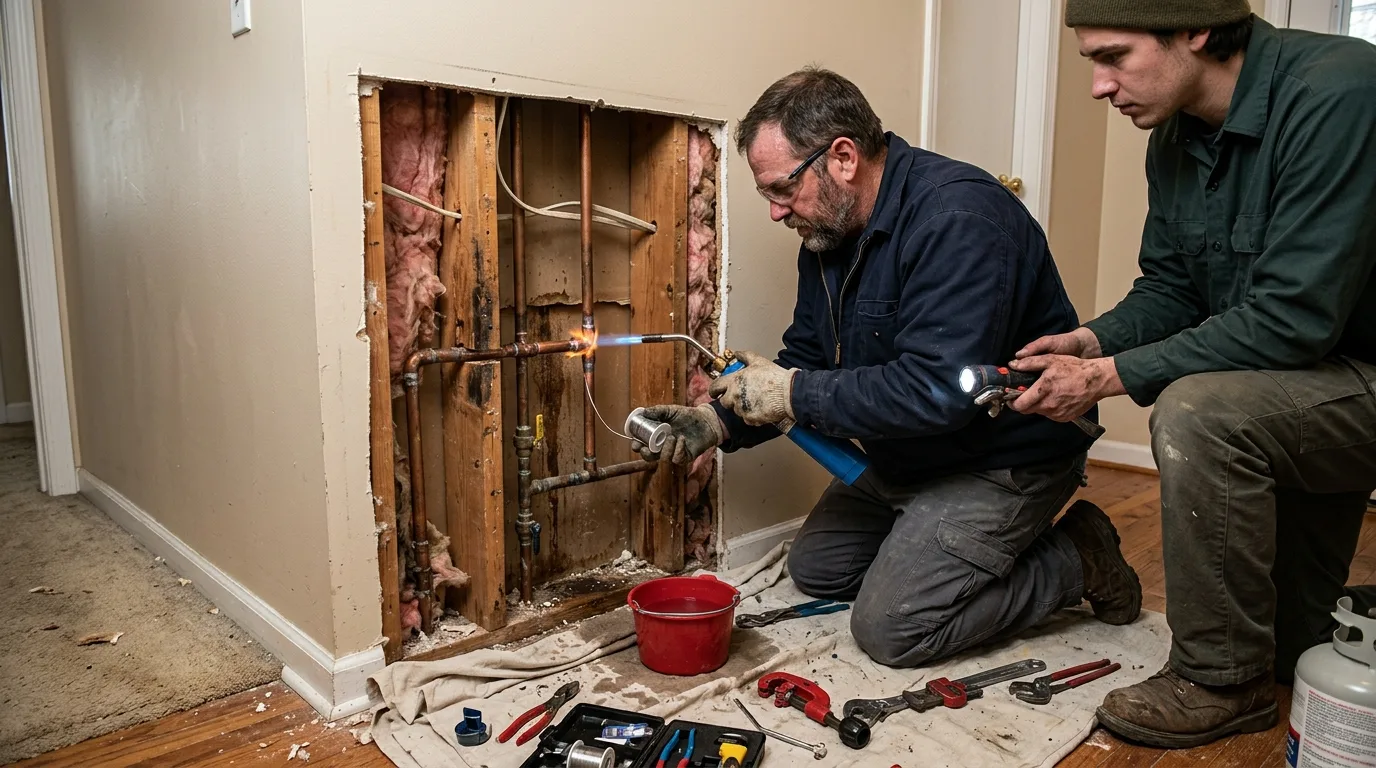
Repiping a larger home is a sequenced job rather than a single event. New supply runs overhead in the attic and drops down through wall cavities to each fixture, which means the upstairs bathrooms are reached relatively easily and the downstairs ones need longer drops. The slab stays untouched. Water is shut off in stages so the house is not without supply for the duration.
What you should expect before it starts is a written plan: which bathrooms are out of service on which day, where the drywall openings will be, how long the whole thing takes, and what the patching arrangement is. On a house this size that plan is worth more than the price quote, because the disruption is the part that actually affects you.
 4 causesof nearly every ceiling leak
The Cerritos call list
What larger homes here call us for
Upstairs-to-downstairs leaks dominate, followed by the pressure and fixture consequences of having a lot of plumbing in one house.
- Ceiling leaks from upstairs bathrooms, located before anything is opened
- Shower pan, toilet flange and tub overflow failures
- Pressure regulator replacement protecting a large fixture count
- Two-story repiping planned and sequenced room by room
- Water heaters sized and serviced for four or more bathrooms
- Sewer camera surveys on long laterals under larger lots
Have a ceiling leak traced
Note whether the stain grows after a shower, a bath or a flush, that alone narrows it.
Stain spreading on a downstairs ceiling?
Stop using the bathroom above it and call. The source is rarely where the stain is, and finding it properly saves the ceiling.
Trace it before it spreads
Leak location seven days a week · (714) 386-7076
Across the city
Where we work in Cerritos
Citywide residential coverage, plus the commercial premises along the main corridors.
- South Street
- Del Amo Boulevard
- Artesia Boulevard
- Bloomfield Avenue
- Norwalk Boulevard
- Carmenita Road
- Shoemaker Avenue
- Studebaker Road
- 166th Street
- Civic center surrounds
Cerritos sits west of Buena Park over the county line, reached along Artesia or Del Amo without freeway dependency.
Cerritos priorities
Services these houses ask for
Leak location and supply-side work lead, as the housing type predicts.
Asked by neighbors on this side of town
Cerritos plumbing questions
Moisture mapping and thermal imaging. A moisture meter shows the extent and shape of the wet area, which frequently points away from the stain and toward the actual source, and thermal imaging shows temperature differences where water is present behind the surface. Combined with questions about when the stain grows, after a shower, after a bath, after a flush, or continuously, that usually identifies the source before anything is cut. If an opening is needed, it is small and in a known place.
Because water follows the path of least resistance along framing before it drops. A leak at a shower drain can run several feet along a joist before finding a route through the ceiling. That is precisely why cutting the ceiling under the stain so often finds nothing, and why locating properly first is worth the small cost. It is also why two ceiling stains in different rooms occasionally turn out to share a single source.
Measure. A screw-on gauge at an outside hose bib, once during the day and once late at night when static pressure is at its highest. If the night reading is substantially above what domestic fittings are designed for, the regulator is not doing its job. On a large house that matters more than on a small one, simply because there are far more components being worn out by it. Replacement is a short, inexpensive job.
Typically three to five days depending on the number of bathrooms, plus drywall patching afterwards. The new supply runs through the attic and drops down inside walls, so the slab is untouched. Water is off in stages rather than continuously, and the work is sequenced so the house remains usable. You should be given a day-by-day plan before it starts, which bathrooms are out when matters more to most households than the total duration.
Either increase stored volume or remove the storage limit. A larger tank, or a second tank, suits a household whose demand is concentrated into a short morning window. A tankless system removes the duration limit but has a maximum simultaneous flow rate and needs adequate gas supply and correct venting. The right answer depends on your actual usage pattern and what your gas line can deliver, both of which should be established before anything is specified.
Generally yes, and the same logic applies as anywhere with deep setbacks: more length means more joints, more root opportunity, and more value in locating a defect precisely rather than excavating hopefully. A camera survey with a surface locator is the inexpensive step that determines the size of the expensive one. On a larger lot with mature planting, trenchless lining is often the option worth asking about.
It is regular coverage. The drive from Buena Park runs along Artesia or Del Amo without freeway dependency, which makes the timing reliable. It is one of the further areas we cover, so during peak traffic the honest window is longer than for a Buena Park address, and you will be told that rather than given an optimistic figure. Overnight, response is quick.
Three things. Check the pressure, because on a large fixture count a failed regulator costs more than anywhere else. Replace multi-turn angle stops with quarter-turn valves so any fixture can actually be isolated. And know the age of the water heater, planning replacement rather than waiting for a tank in an upstairs closet or a garage to open. None is expensive; all three remove the most common causes of an expensive night.
Book a Cerritos appointment
Number of bathrooms and whether the problem is upstairs or down are the useful opening details.
Next door
Around Cerritos
Neighboring areas covered on the same western runs.
Cerritos dispatch
Find it before you open the ceiling
On a two-story house the diagnosis is worth more than the repair. Call and get the source located properly the first time.
Speak to a leak specialist
(714) 386-7076 · Available around the clock, all year