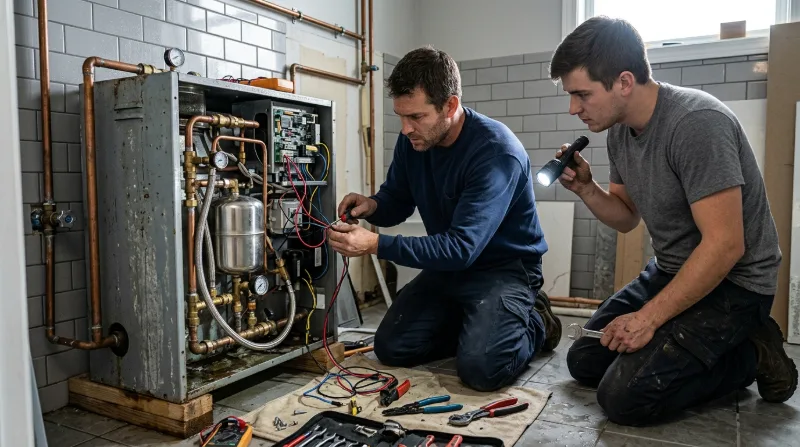
Pressure Regulator Repair
Often the real cause when pressure swings rather than simply being low.
RegulatorsPressure and flow measured at the meter and at the house, so the restriction is located not assumed.
Pulling or boring a new line spares driveways, hardscape and mature planting.
Service line replacement goes through City of Buena Park permitting with inspection.
Trench, concrete and landscape restoration scope written down before excavation starts.
Diagnosing the run
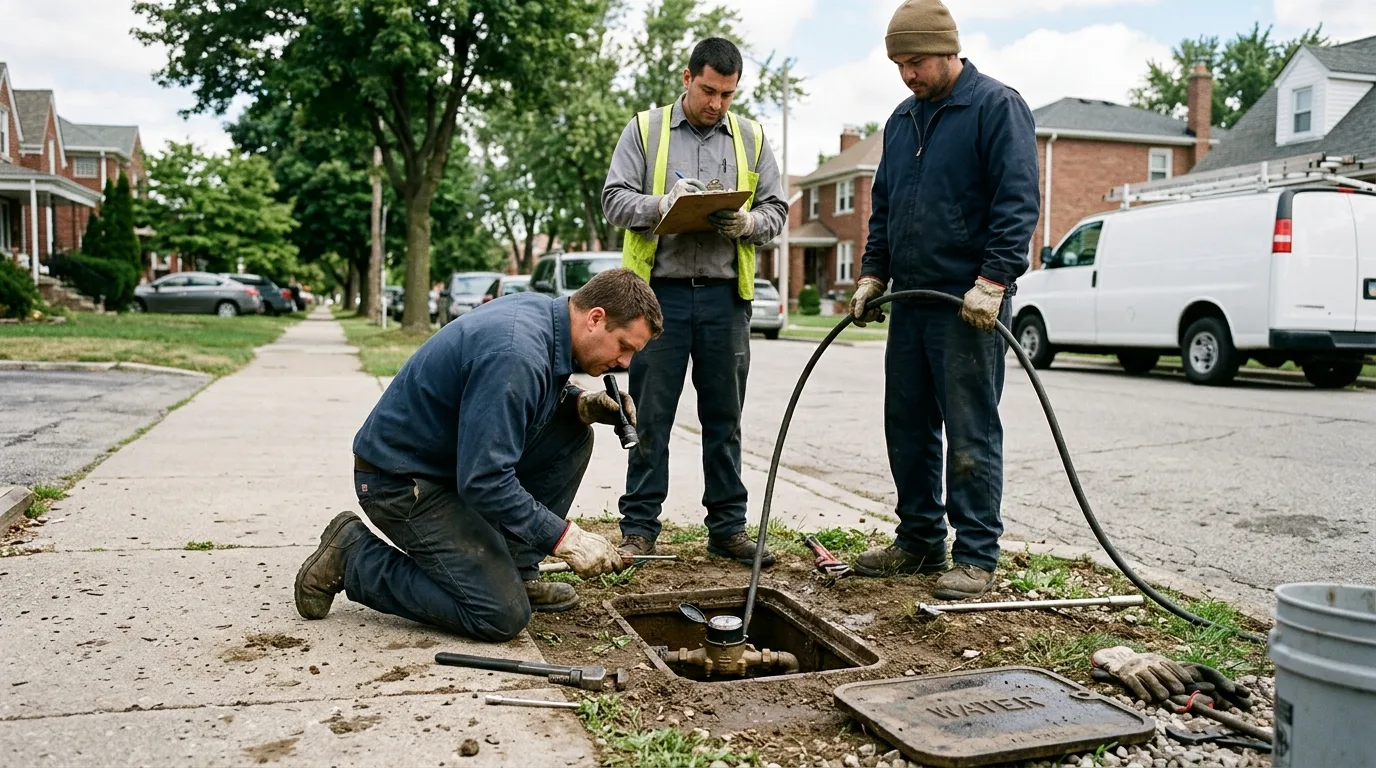
The service line is the pipe carrying water from the meter at the property line to the point where it enters the building. On older Buena Park properties it can be galvanized steel, copper, or occasionally polybutylene from a later era, and it is frequently buried under a lawn, a walkway or a driveway laid decades after the pipe.
It gets blamed rarely and deserves blame more often than it gets it, because its symptoms mimic interior problems. Poor pressure throughout the house, which people attribute to the plumbing. A meter that turns with everything in the building shut off, which people attribute to a slab leak. A soggy patch of lawn or a hairline crack in a driveway that weeps in dry weather. Or discoloured water at every tap, which is interior corrosion, just further upstream than anyone was looking.
The test that separates the two: pressure and flow are measured at the meter, then again at a hose bib at the house. Good pressure at the meter with poor pressure at the building means the restriction is in the service line. Poor pressure at both means the problem is upstream of you, the street supply or the regulator, not your pipe.
Three separate faults get lumped together and they call for different responses. An undersized line delivers acceptable pressure to one fixture and collapses when two run at once. It was often adequate for the house as built and became inadequate after a second bathroom, a laundry addition, an irrigation system or an ADU was added. No repair fixes this; the line has to be upsized.
A corroded line is a diameter problem created by time. Galvanized service lines scale internally exactly as galvanized interior pipe does, and because the run is long, the cumulative restriction is significant. The symptom is gradual pressure decline over years, often with rust-tinted water at first draw. Again, replacement rather than repair, a spot repair on a uniformly corroded line simply moves the restriction.
A leaking line is the urgent one. Underground, it can lose a very large volume with almost no visible sign, particularly in landscaped ground. The confirmation is a meter turning with the whole building isolated at the house shutoff. A single localised failure on an otherwise sound line can be spot repaired; on old galvanized, replacement is usually the better spend, since a leak proves the material has reached its limit.
The new line runs from the meter to the point of entry, sized for the building’s actual demand rather than copied from what was there. That sizing conversation matters: adding a bathroom, an ADU or an irrigation zone changes the calculation, and it is far cheaper to install a properly sized line once than to discover the constraint after a remodel.
Two installation approaches. Open trench excavates the full route, which is straightforward under lawn and disruptive under hardscape. Trenchless methods, boring or pulling a new line along the existing route, need only entry and exit pits, which is what makes them worth their premium when a stamped driveway, mature planting or established hardscape sits over the run.
Material is typically copper or an approved polyethylene, with the choice driven by soil conditions, route and local requirements. A new shutoff valve at the house belongs in every one of these jobs, as does a check of the pressure regulator, since a new full-bore line will deliver whatever the street is offering and that is not always something you want undamped.
The general pattern is that the utility owns the main and the meter, and the property owner owns the line from the meter to the building. That means a leak on your side of the meter is yours, including the portion under the front lawn or the parkway strip in many cases.
It is worth confirming rather than assuming, because the exact division varies and because getting it wrong is expensive in both directions, paying to replace something the utility would have handled, or waiting for a utility that was never going to come. Before excavation, establish who owns what, and if you are in a condominium or an HOA-managed property, check the association documents, since shared service lines serving several units are common.
One practical note: if a leak is between the meter and the property line, tell the utility anyway. Meter-adjacent leaks sometimes turn out to be the meter or its connections, which is not your pipe at all.
Length and depth drive the price, then surface conditions, then method. A short run under a lawn is a modest job. A long run under a stamped concrete driveway with mature landscaping over it is where trenchless earns its cost, because the alternative includes replacing the surface.
Service line replacement is permitted work through the City of Buena Park and is inspected. Take the permit, it produces a documented, code-compliant installation and it avoids a resale conversation about undocumented work on the potable supply.
Get restoration in writing with specifics. Backfill and compaction, concrete replacement where it was cut, and turf repair are usually included. Replacing specialist hardscape, mature planting, irrigation lines crossed during excavation, or matching a decorative driveway finish generally is not. Ask explicitly about irrigation, because a trench across a front garden nearly always crosses something.
This is a job that opens the ground once, so a handful of items are cheap now and disproportionately expensive later. A new main shutoff valve at the house that actually operates, many original gate valves are seized open and will break the first time they are needed.
A pressure regulator, replaced or installed if static pressure at the meter is high, plus an expansion tank if the system needs one. A hose bib on the new line at the front of the property, which is more useful than it sounds. And if a repipe is anywhere on the horizon, sequencing it with the service line replacement saves a mobilisation and lets the whole system be sized coherently instead of in stages.
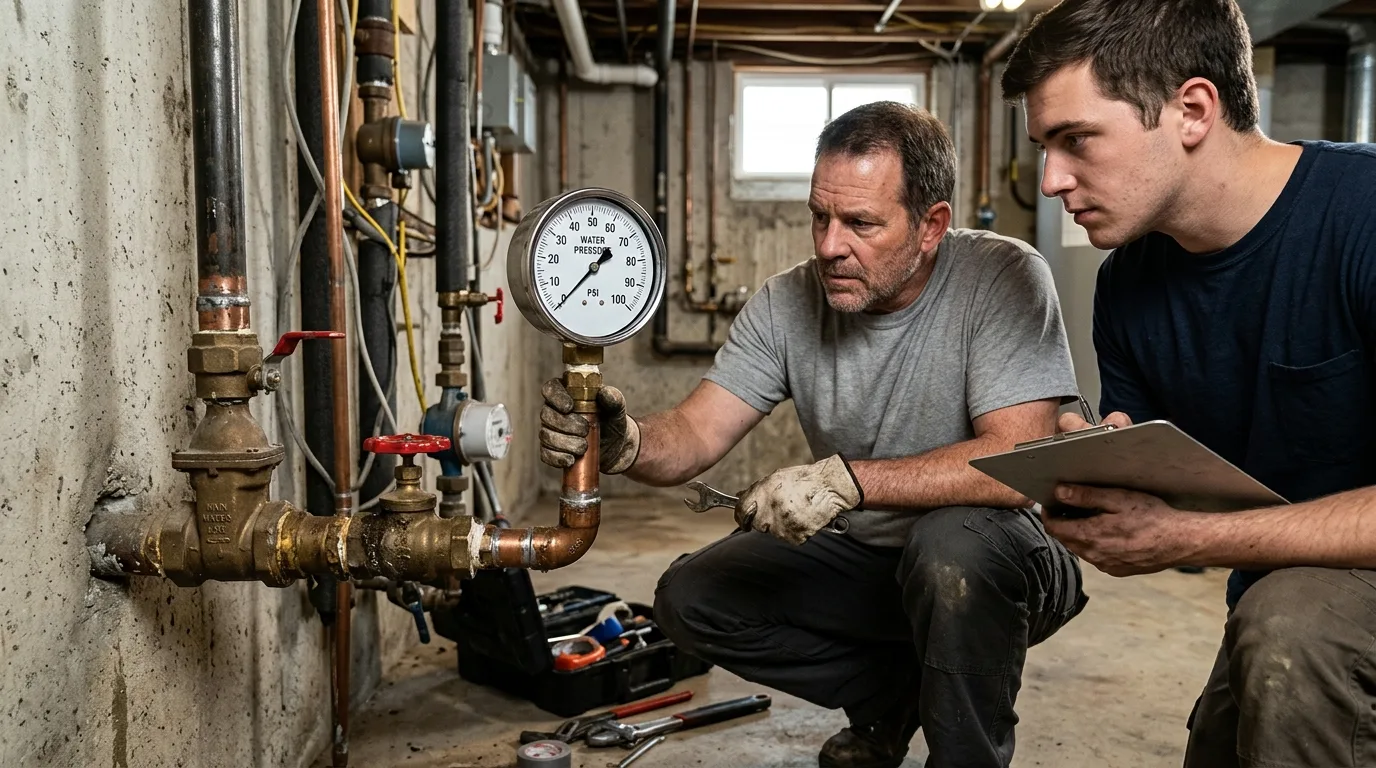 Two gaugesOne answer
The five-minute diagnostic
Almost every wrong decision about pressure comes from measuring in only one place. Two readings and a flow test settle where the restriction lives.
This is the sequence a plumber should run before proposing any work on the service line.
If a quote for a new service line arrives without these numbers, ask how the conclusion was reached.
Close the shutoff at the building and watch the meter. If it keeps moving, the loss is outside, and it is running around the clock.
Underground losses can be very large with almost no surface sign, especially under planting.
From symptom to new line
Measure, size, install, restore. The sizing step is the one that determines whether you are happy in five years.
Pressure and flow at the meter and the house, meter isolation test, and the existing route traced and marked.
New line sized for actual demand including any additions, method chosen, open trench or trenchless, and the permit pulled.
New service line run to the point of entry, new shutoff fitted, regulator addressed, system flushed and pressure tested.
City inspection, then backfill, compaction, concrete and turf restoration to the agreed scope.
Questions we get on these calls
By measuring in two places. A gauge at the meter shows what the street is delivering; a gauge at a hose bib shows what reaches the building. A large drop between them means the restriction is in the service line. If both readings are low, the problem is upstream of your property or at the regulator. And if static pressure looks fine at both but pressure collapses when two fixtures run, the line is probably undersized rather than corroded.
Length and depth first, then what is on the surface, then method. A short run under a lawn is a modest job; a long run under a stamped concrete driveway with mature landscaping is considerably more, which is exactly the situation where trenchless installation earns its premium. Ask for the restoration scope as a separate line, because backfill and turf are usually included while decorative hardscape, mature planting and crossed irrigation lines usually are not.
Generally yes, the utility owns the main and the meter, and the owner owns the line from the meter to the building, which often includes the portion under the front lawn. It is worth confirming rather than assuming, since the exact division varies and getting it wrong costs money either way. In condominiums and HOA-managed properties check the association documents, as shared service lines serving several units are common here.
Often, yes. Trenchless methods bore or pull a new line along the route using only entry and exit pits, which avoids cutting through driveways, walkways and established hardscape. Whether it is viable depends on the route, depth, soil and what obstructions sit along the way. It costs more per meter than open trenching and frequently costs less overall once you price replacing a decorative concrete driveway.
If the cause was a corroded or undersized line, yes, and the improvement is usually dramatic. If the cause is something else, no, a failed pressure regulator, a hidden leak inside the house, corroded interior galvanized piping, or genuinely low street pressure will all survive a new service line. This is precisely why the two-gauge test comes first: it prevents a substantial excavation from being carried out on the wrong diagnosis.
A straightforward run under a lawn is often a single day including excavation, installation, testing and backfill. Longer or deeper runs, hardscape crossings and trenchless installations take longer, and permitting and inspection scheduling add calendar time even when the work itself is quick. Expect a period without water on the day of the tie-in, and ask for that window in advance if the property is occupied.
Typically copper or an approved polyethylene, chosen for the soil conditions, the route and local requirements. Both are long-lived when installed properly. What matters as much as material is sizing and depth, and the quality of the tie-ins at each end. A new shutoff valve at the house should be part of the job regardless, since original gate valves on older properties are frequently seized open and break the first time anyone needs them.
Yes. Water service line replacement is permitted work through the City of Buena Park and is inspected on completion. Take the permit: it is a potable water supply, the inspection is there to confirm the installation is sound, and undocumented work on the incoming supply is an awkward item to explain at resale. A contractor proposing to skip it is transferring the consequences to you.
It is one of the most likely explanations, and the meter test will confirm it quickly, close the shutoff at the building and see whether the meter still turns. Other candidates are an irrigation lateral or valve, a sewer lateral failure, or drainage from a neighboring property. The distinction matters because they are different jobs entirely, and an isolation test costs nothing before anyone starts digging.
Almost always worth pricing, and this is the moment when it is cheap. Many original service lines were sized for a house with one bathroom and no irrigation. If you have added bathrooms, a laundry, irrigation zones or an ADU, or expect to, the incremental cost of a larger line during the same excavation is small compared with discovering the constraint later. Ask for the sizing calculation rather than a like-for-like replacement by default.
Bring both pressure readings if you have them, they change the conversation entirely.
Related work
Pressure, leaks and the pipework on either side of the meter.
Often the real cause when pressure swings rather than simply being low.
Regulators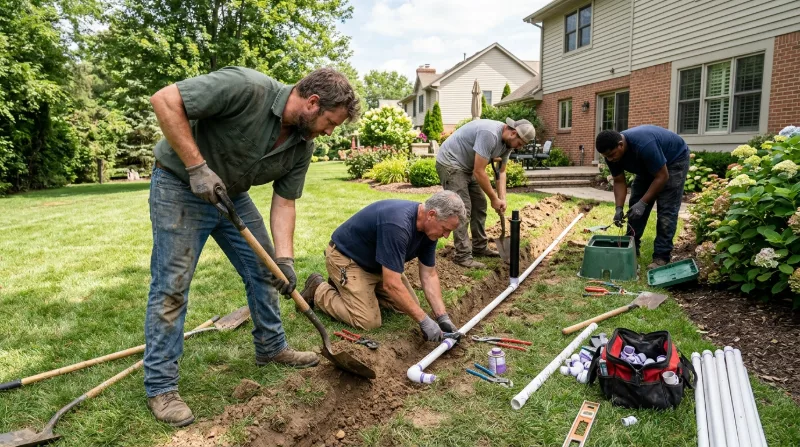
When the street simply cannot deliver what the property needs.
BoostingMeasure first
Two readings, a flow test and a meter check. Then a properly sized line and a permit.
Service line work across Buena Park 90620 and 90621, plus Fullerton, Anaheim, La Palma and Cypress.