Slab Leak Repair
Reroute overhead or open the concrete, once the leak is a mark rather than a guess.
Slab leaksIsolation, pressure testing and listening before anything is cut or excavated.
Acoustic, thermal and tracer gas, because no single technique wins on every layout.
You get a located spot and an honest statement of how certain it is.
Findings, photographs and readings written up in a form a carrier can actually use.
Confirm before you diagnose
Leak detection answers two separate questions, and they get conflated constantly. The first is whether water is leaving the system at all. The second is where. The first question is free and you can answer it yourself in five minutes; the second is what you hire someone for.
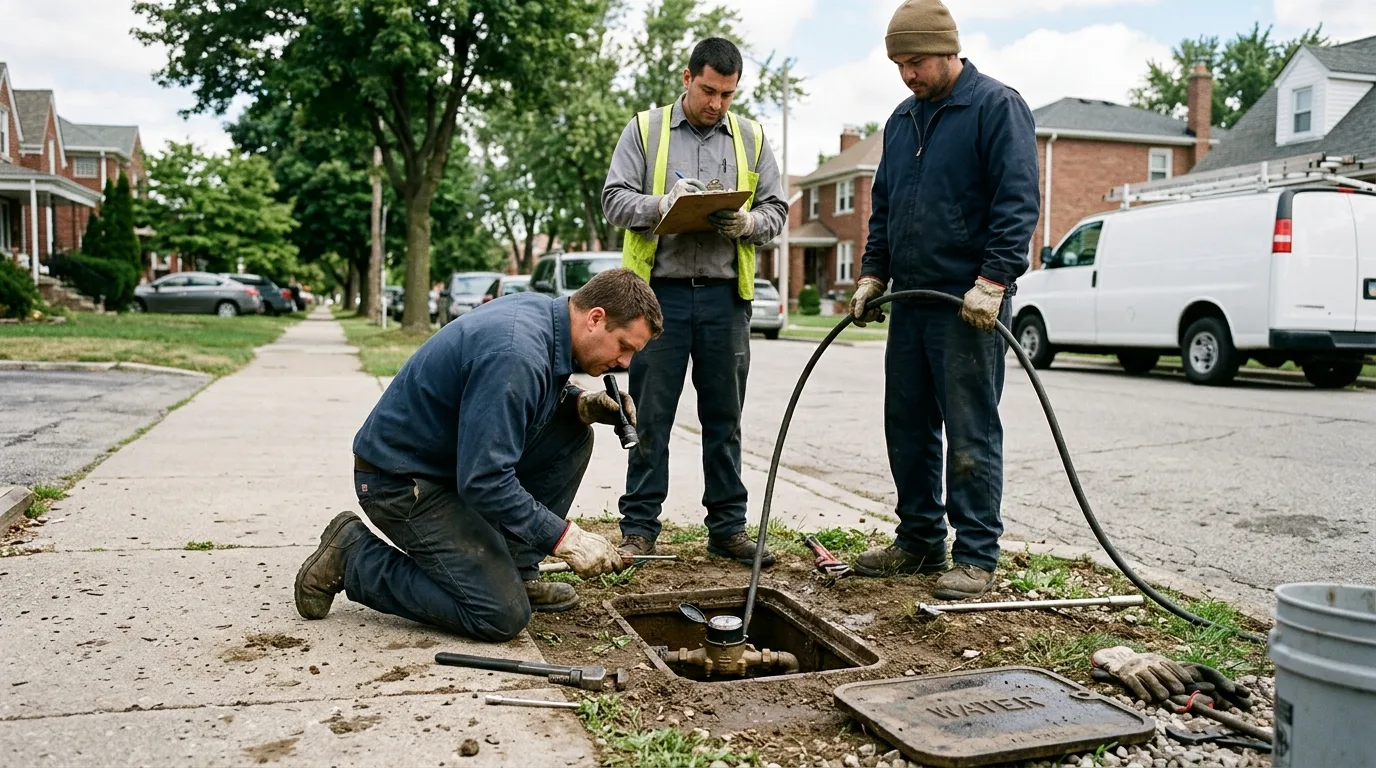
To answer the first, shut every fixture and appliance in the building, taps, toilets, ice makers, irrigation controllers, the water softener if you have one, then go and watch the water meter. Most meters have a small low-flow indicator, a triangle or a dial, that moves at very low rates. If it is turning with everything closed, water is escaping somewhere on your side of the meter. If it is perfectly still for fifteen minutes, whatever you are experiencing is not a supply leak, and that is genuinely useful information too.
A running meter narrows things enormously but does not locate anything. Water travels along the path of least resistance, under slabs, along footings, inside wall cavities, so the damp spot you can see is frequently meters from the failure. That gap is precisely why detection is a distinct skill rather than a matter of looking harder.
The work is a funnel: broad isolation, then progressively finer location. First the plumber divides the system. Closing the water heater outlet separates hot from cold, and watching the meter or a gauge afterwards tells you which side is losing. On a house with irrigation, isolating the irrigation valves rules out a very common culprit that has nothing to do with the building.
Then a pressure test. The isolated section is brought to a known pressure and watched. A steady loss confirms a leak and gives a rough sense of scale; holding pressure clears that section. This step is where a lot of misdiagnosis gets prevented, because a system that holds pressure is not leaking regardless of what the wet patch suggests.
Then listening. Water escaping a pressurised pipe makes noise, and that noise transmits through pipe, soil and concrete. Acoustic equipment amplifies it and filters out ambient sound, and the technician moves a ground microphone in a grid, working toward the loudest point. It is genuinely skilled work, the difference between an experienced operator and a beginner is often a couple of meters, which on a slab is the difference between a targeted repair and a demolition.
Where acoustics struggle, other methods take over. Thermal imaging maps the heat plume from a hot-side leak through flooring. An inert tracer gas, introduced into a drained line and detected where it surfaces, is the most precise technique available and earns its cost on complicated layouts and long buried runs.
Under-slab supply lines are the headline, and they are the reason detection is such a common call here. Postwar tracts were built slab-on-grade with copper or galvanized run beneath the concrete, and when those lines pit through, the water saturates the sub-base and surfaces somewhere unpredictable, or not at all for months.
Irrigation systems come second and are wildly underestimated. A cracked lateral or a stuck valve can lose enormous volumes into the ground with no visible symptom at all, especially in the growing season when everything is meant to be damp. Any competent detection visit isolates irrigation early, because finding it there saves an entire slab investigation.
Then the service line between the meter and the house, which on older properties can be original and buried under a driveway. Then interior wall leaks at drop-eared elbows and shower valve bodies, which show as blistered paint or a musty smell in a closet. Then toilets, which are the most common household water loss of all and rarely register as leaks because the sound is intermittent, a flapper passing water silently into the bowl can waste more per day than a pinhole.
If your meter is still with everything off, but you have damp, odor or staining, you are probably dealing with the drainage side rather than the supply side. Drains are not pressurised, so they only release water when something is draining, which means no meter movement and symptoms that come and go with use.
Under-slab drain failures in this housing stock are typically cast iron fractured along the bottom of the pipe, or clay with root intrusion at joints. Those are found with a camera and a locator rather than a microphone. Where a leak is suspected but not visible on camera, the line can be isolated and filled to test whether it holds, or smoke tested to find where air is escaping, which also finds broken vents.
The distinction matters because the two investigations use different equipment and different skills. Telling the plumber on the phone whether your meter is moving routes the visit correctly, and it is the single most useful sentence you can offer.
A location, marked physically, paint on concrete, a flag in soil, a marked point on a wall, not a description of an area. A stated confidence level, because an honest technician will tell you when a layout has forced them to a best estimate rather than a certainty. The method used and why. And photographs plus readings, which is what turns the visit into documentation.
That documentation is worth asking for even if you are not filing an insurance claim, and essential if you are. California homeowner policies commonly treat resulting water damage differently from the failed component itself, and claims move far more smoothly with a written diagnosis, moisture readings, dated photographs and an itemised invoice. Speak to your carrier before authorising restoration work, since some policies have requirements about how and by whom it is done.
One last thing to insist on: if a contractor proposes opening concrete without having shown you a located mark and explained how they arrived at it, stop and ask again. Exploratory demolition is not detection, and it is the single most expensive way to find a leak.
Two situations justify a detection visit on a house that is not obviously leaking. The first is a purchase. On an older Buena Park property, a static pressure reading, a meter test and a visual inspection of exposed pipe cost very little and tell you a great deal about what the next decade holds, particularly whether the supply system is original galvanized.
The second is a bill that has changed without an explanation. A gradual increase over several billing cycles, with no change in occupancy or irrigation, is characteristic of a small leak growing. Small leaks are cheap to find and cheap to repair; the same leak eighteen months later may be a slab repair with flooring restoration attached.
 5 minMeter test
Do this before you call
Five minutes of preparation makes a detection visit shorter, cheaper and more accurate. It also occasionally solves the problem outright.
Work through the list in order and write down what you see, the sequence matters as much as the result.
Bring those five answers to the call and the visit usually starts halfway to the answer.
That pattern almost always has a physical cause, and small leaks are dramatically cheaper to find than large ones.
Non-invasive methods first, nothing gets opened until there is a mark on the floor.
The method
Each stage eliminates possibilities. By the fourth there should be a mark on the ground, not a theory.
Meter observation with the building isolated, to prove water is leaving the system and roughly how fast.
Hot from cold, irrigation from domestic, service line from interior. Each split removes a large area from consideration.
Acoustic ground microphone work, thermal imaging on hot-side leaks, tracer gas where the layout demands precision.
Physical mark, stated confidence, photographs and readings, everything the repair and any claim will need.
Questions we get on these calls
It is quoted as a defined service before the visit, and it is separate from whatever repair follows. The variables are property size, whether the suspected leak is interior, under slab or on a buried service line, and how many methods the layout requires. Some plumbers apply the detection fee against the repair if you proceed, so ask. Set against the cost of opening concrete in the wrong place, which happens routinely without detection, it is the cheapest part of the whole job.
That is the entire premise. Isolation and pressure testing narrow the system without touching the building. Acoustic listening locates escaping water through concrete and soil. Thermal imaging maps a hot-side leak through flooring. Tracer gas, introduced into a drained line, surfaces where the pipe has failed. Opening happens after the leak is located, at the located point, which is why detection saves far more than it costs.
Then it is probably not a pressurised supply leak, which rules out a great deal. Damp with a still meter usually means the drainage side, a failure that only releases water when something is draining, or a source that is not plumbing at all: roof and flashing leaks, irrigation overspray, condensation on ducting, or moisture rising through a slab. Drain-side investigation uses a camera, a locator, and where needed a hold test or smoke test rather than acoustic equipment.
Very often, and it is worth checking before anything else. A flapper or fill valve passing water into the bowl can waste more per day than a pinhole in a pipe, and it makes almost no noise. Put a few drops of food colouring in the tank, leave it thirty minutes without flushing, and look in the bowl, color in the bowl means the flapper is leaking. It is a cheap part and a ten-minute repair, and it explains a surprising share of mysterious water bills.
In good conditions, accurate enough to mark a spot and open a small opening rather than a room. Accuracy depends on the operator’s experience, the pipe material, the depth, the flooring above and how much ambient noise the site has. An honest technician will tell you when conditions have forced them to a best estimate, traffic noise, a very deep line, a leak too small to be audible, and will suggest a second method rather than pretending to a certainty they do not have.
Yes, and it is one of the first things isolated on any detection visit, because irrigation is a hugely underestimated source of loss. A cracked lateral, a stuck valve or a broken head below grade can waste enormous volumes with no visible symptom, particularly in the growing season when the ground is supposed to be damp. Isolating the irrigation valve and repeating the meter test frequently redirects an entire investigation away from the house.
Usually. The cases that need a second visit are intermittent leaks, very small losses that fall below the threshold of acoustic detection, and layouts where access has to be created first. If a leak cannot be located on the day, you should be told that plainly along with what would be needed next, rather than being sold an exploratory excavation. Detection that ends in honest uncertainty is more useful than detection that ends in a confident guess.
Ask for the written findings, the method used, the located position, moisture readings and dated photographs, plus an itemised invoice. That package is what carriers actually work from. Policies commonly treat resulting water damage differently from the failed pipe itself, so the more clearly the sequence of events is documented, the smoother the claim. Speak to your carrier before authorising restoration, since some policies specify how and by whom it must be carried out.
It is a strong indicator of a hot-side leak beneath the slab, because hot water lines run warmer than the concrete around them and the heat conducts upwards. But it is not proof, and it does not locate anything, the warmth spreads well beyond the failure. Other explanations exist, including radiant heating where present and hot lines running close to the surface legitimately. Confirm with a meter test and detection before anyone talks about cutting concrete.
On an older Buena Park property it is inexpensive relative to what it can reveal. A meter test, a static pressure reading and a visual inspection of exposed pipe at the heater and under sinks tell you whether the supply system is original galvanized, whether pressure is being regulated, and whether anything is losing water right now. Pair it with a sewer camera survey and you have covered the two most expensive hidden systems on the property.
Have the meter result ready, moving or still is the first fork in the whole diagnosis.
Related work
The location is step one. These are the repairs that follow, depending on what was found.
Reroute overhead or open the concrete, once the leak is a mark rather than a guess.
Slab leaks
Accessible failures in copper, galvanized and CPVC, repaired at the located point.
Repairs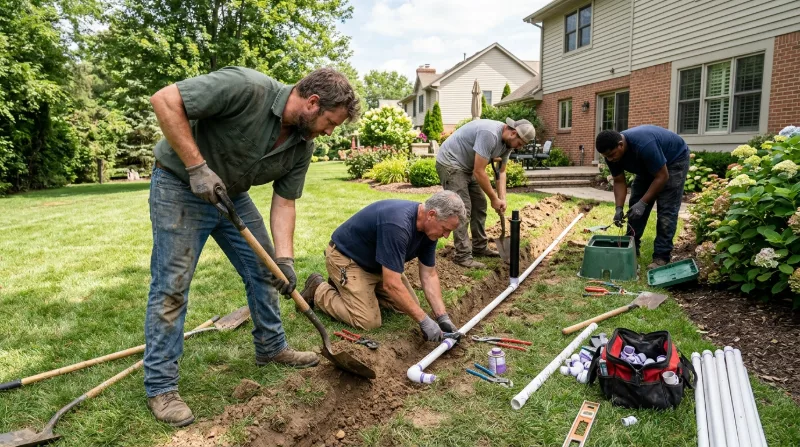
When the loss is between the meter and the building rather than inside it.
Service line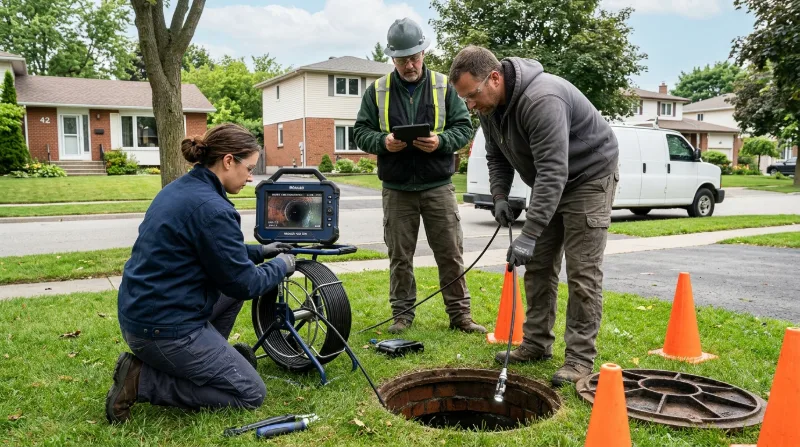
The drain-side investigation, for damp with a meter that never moves.
Drain sideLocate, then open
A mark on the floor, a confidence level, and documentation you can hand to a carrier.
Detection across Buena Park 90620 and 90621, plus Fullerton, Anaheim, La Palma, Cypress and Cerritos.