Slope-aware diagnosis
Grade affects drainage, venting and pressure. It is the first thing a plumber should be asking about here.
Pressure varies with elevation
Higher properties can sit noticeably lower in pressure; lower ones can sit uncomfortably high.
Pump systems serviced
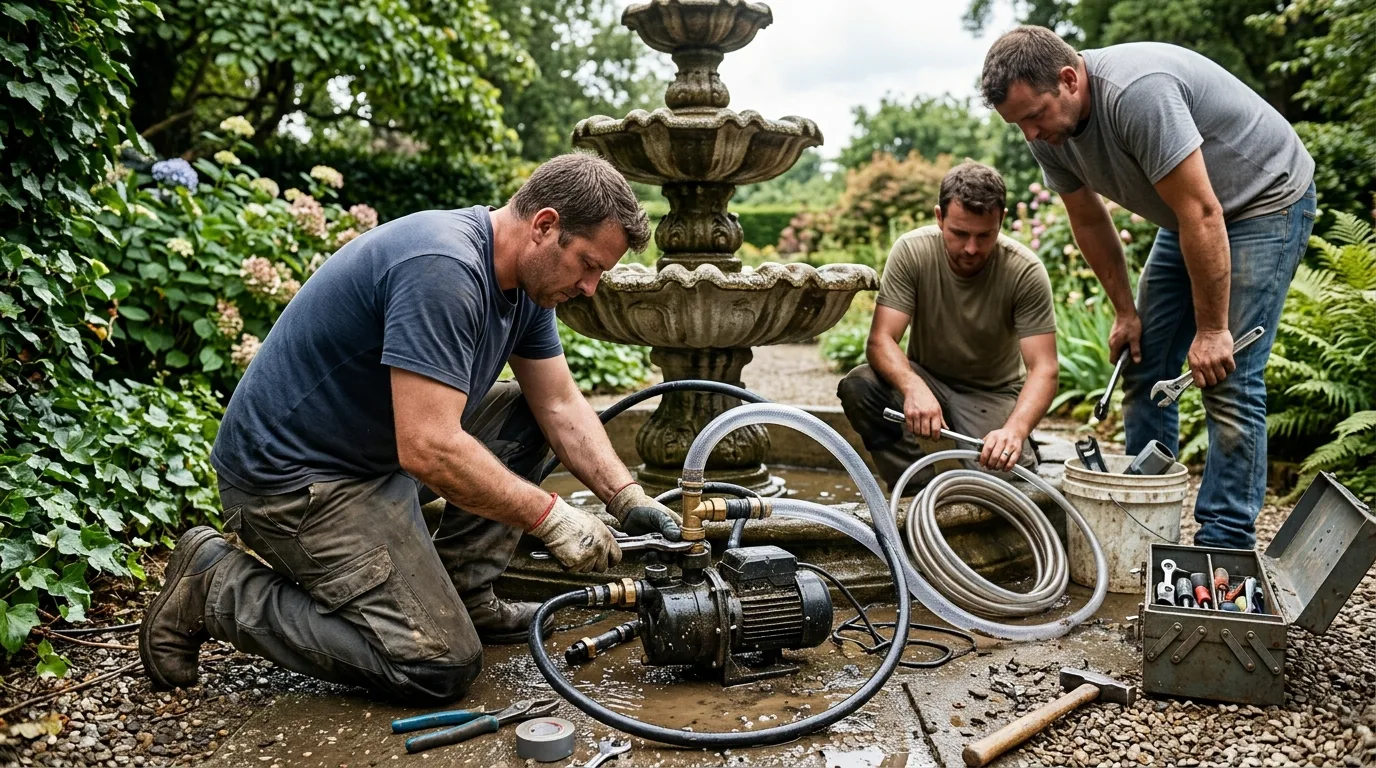
Ejector and sump pumps that lift waste or groundwater are common here and fail without warning.
Access planned in advance
Steep driveways and terraced lots change how equipment reaches the work. Discussed on the call.
Hillside and slope-adjacent plumbing
Why the northern edge of Buena Park needs a different plumbing conversation
Almost all of Buena Park is flat. That flatness is invisible until you work on the sloping ground at the northern edge, where the city rises toward the Fullerton hills, and suddenly every assumption a plumber carries from the tract neighborhoods needs re-examining. Drainage that would be marginal on level ground runs beautifully here. Drainage that runs the wrong way relative to the fall is a permanent problem no amount of snaking will fix.
The most common consequence is in waste plumbing. Gravity drainage needs a consistent, modest fall, too little and solids settle, too much and water outruns the solids it is supposed to carry, leaving them behind. On sloping sites, additions and converted spaces frequently end up with sections of drain that are either almost level or dramatically steep, and both produce recurring blockages that look mysterious until someone actually measures the pipe.
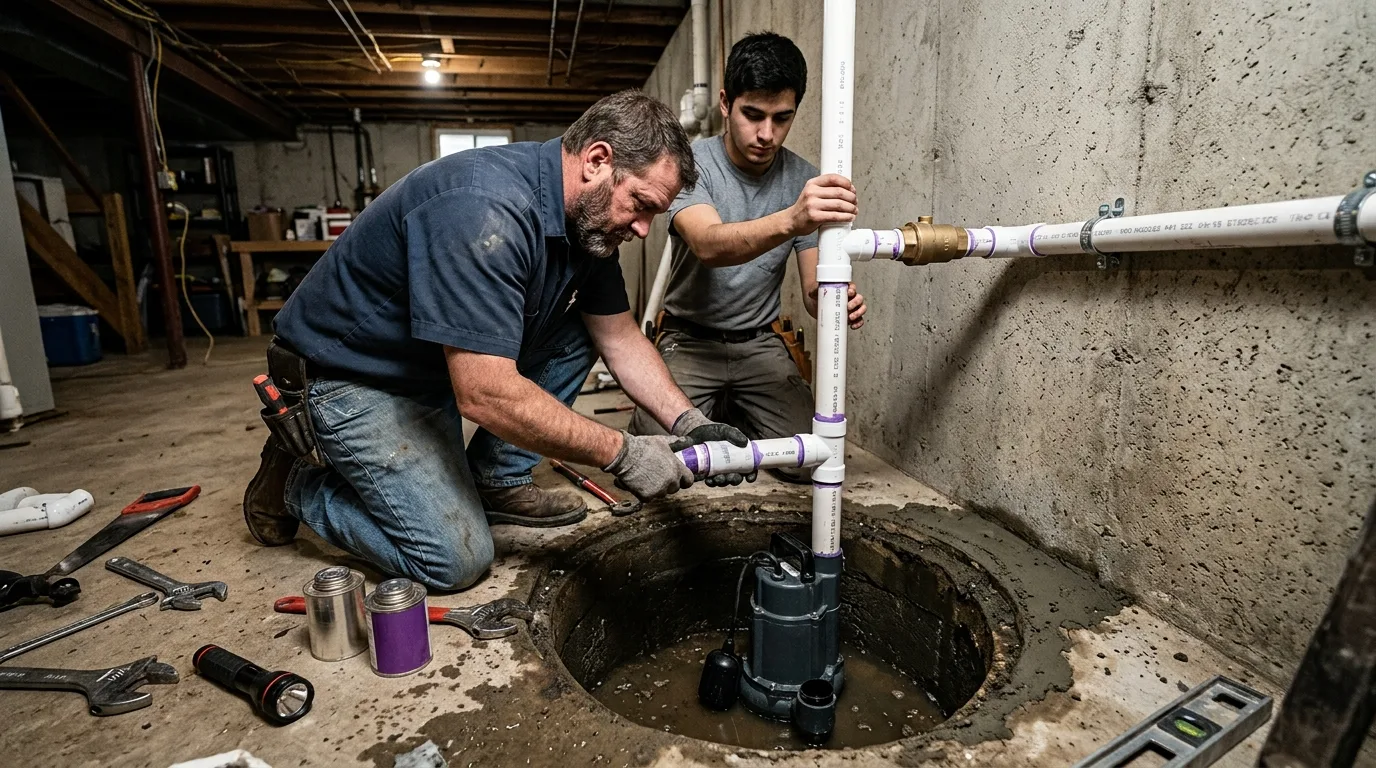
The second consequence is where a fixture sits below the level of the sewer connection. Basements, lower-terrace bathrooms, garage conversions cut into the slope, all of them may need waste lifted rather than dropped, which means a pump. Pumps are mechanical, they run only when needed, and they therefore fail without any warning at all until the day something backs up.
If you have an ejector or sump pump, test it deliberately every few months rather than waiting to find out. Pour water in until it cycles and listen. A pump that runs, lifts and shuts off cleanly is fine. A pump that hums without running, cycles repeatedly, or stays on is telling you something now instead of at 2am.
Slope drainage and the blockages that keep coming back
A drain that blocks once is an event. A drain that blocks every few months is a design or condition problem, and on sloping ground the usual causes are fall-related. A belly, a low section where the pipe has settled, holds standing water permanently and catches everything passing through. An over-steep section lets liquid race away and strands solids on the pipe floor. Neither is visible from inside the house and neither is solved by clearing the blockage again.
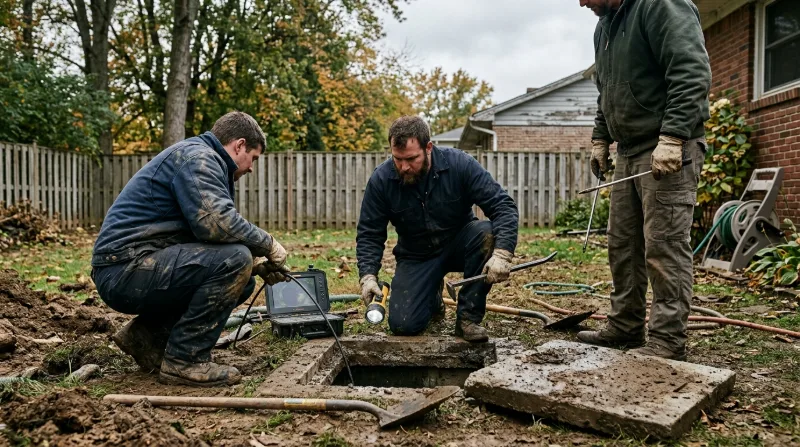
Camera inspection with a locator is what turns this from guesswork into a plan. The camera shows the defect, the locator marks the position and depth on the ground above, and you find out whether you are looking at a two-meter spot repair in a known place or something more substantial. On a hillside property, knowing exactly where to dig is worth a great deal.
Pumps: ejector, sump and when each is needed
An ejector pump handles wastewater from fixtures that sit below the gravity sewer line, grinding and lifting it up to where gravity can take over. A sump pump handles groundwater collecting in a pit, keeping it away from the structure. They do different jobs and are not interchangeable, though on hillside properties it is not unusual to find both, and occasionally to find one doing the other’s work badly because of a decision made years ago.
Either way, the failure modes are similar: a stuck float switch, a worn impeller, a blocked check valve that lets lifted water run straight back down, or an outlet line that has become restricted. The check valve is the one most often missed, because a system with a failed check valve appears to work, the pump runs, water goes up, it simply runs constantly and wears itself out doing the same lift over and over.
Pressure differences across a slope
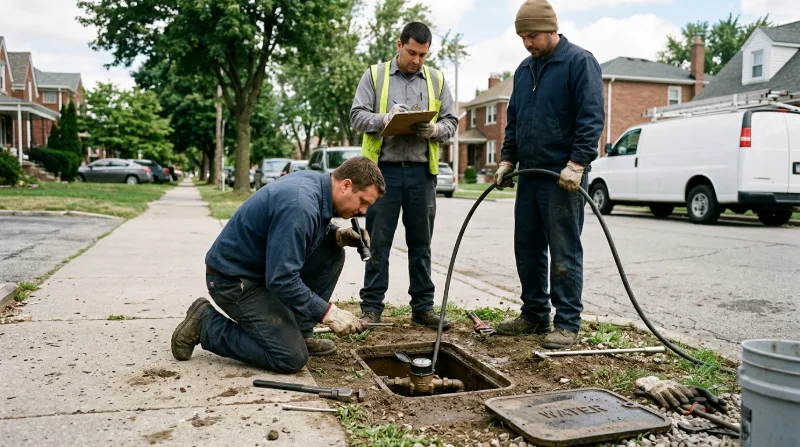
Water pressure varies with elevation, roughly by a predictable amount for every foot of rise. Across a hillside neighborhood that means the property at the top and the property at the bottom of the same street can be receiving noticeably different pressure from the same main. Low-side properties often need a regulator working properly to protect fixtures. High-side properties sometimes suffer weak flow that gets blamed on the plumbing inside the house when the cause is outside it.
The fix depends which problem you have, and both start with a gauge reading rather than an assumption. Where pressure is genuinely low at the top of a run, a booster arrangement may be justified. Where it is high at the bottom, a functioning regulator is the answer, and it is a far cheaper answer than replacing fixtures repeatedly.
 Gradedecides half the diagnosis here
The Coyote Hills call list
What slope-adjacent properties call us for
The pattern is distinct enough that a plumber who works these streets regularly starts the conversation differently: not “what is blocked” but “where is it relative to the fall”.
- Recurring blockages caused by bellied or over-steep drain sections
- Ejector and sump pump failures, float switches and check valves
- Low pressure at higher properties and excess pressure at lower ones
- Camera inspection with surface locating before any hillside excavation
- Water heaters in lower-level or garage-cut spaces with venting constraints
- Storm and slope drainage crossing into waste systems where it should not
Book a camera and locate survey
On a slope, knowing exactly where the defect sits is most of the cost saved.
Pump stopped and the lower level filling?
Stop using every fixture that drains to it, and call. A pump failure escalates faster than almost any other plumbing fault because nothing warns you before it happens.
Get a pump technician out
Emergency dispatch 24 hours · (714) 386-7076
Where the ground rises
The Coyote Hills area we cover
The northern edge of Buena Park where the ground begins to rise toward the Fullerton hills, plus the slope-adjacent streets on both sides of the line.
- Rosecrans Avenue
- Artesia Boulevard north
- Malvern Avenue
- Coyote Creek channel
- Fullerton line streets
- Beach Boulevard north
- Dale Street north
- Holder Street
- Terraced hillside lots
- Trail-adjacent blocks
If your property has a noticeable slope, a lower level cut into grade, or a pump anywhere in the system, this page describes your plumbing more accurately than the flatland pages do.
Requested on the slope
Services Coyote Hills properties need most
Drainage diagnosis and pump work dominate, with pressure management close behind.
Asked by neighbors on this side of town
Hillside plumbing questions
Because clearing a blockage removes the symptom and leaves the cause. On sloping ground the cause is very often the fall of the pipe itself, a settled low section holding standing water, or a section so steep that water outruns solids. Both catch debris repeatedly in the same place. A camera run with a surface locator identifies it in one visit and tells you whether a short spot repair fixes it permanently. Continuing to snake it is the more expensive option over three years.
Service life varies widely with how hard it works and what goes through it, but the failure is rarely the motor. It is usually the float switch sticking, the check valve failing so lifted water drains back, or the impeller fouled by something that should not have been flushed. Any of those can be addressed without replacing the whole unit. What shortens life dramatically is wipes and hygiene products, an ejector pump is far less tolerant of them than a gravity sewer.
Usually, once the cause is confirmed. Start by measuring at an outside hose bib to establish what is actually arriving. If the incoming pressure is genuinely low for the elevation, a booster system is the direct solution. If the incoming pressure is fine and the flow inside the house is weak, the restriction is internal, scaled supply lines, a partly closed valve, or a failing regulator, and boosting would only push harder against the same bottleneck.
It can be, because access, shoring and reinstatement are all more involved than on flat ground, and because equipment may not be able to reach the work directly. That is exactly why camera-and-locate work matters so much here: pinpointing the defect can turn a speculative dig into a small, precise excavation. It is also why trenchless options deserve serious consideration on hillside properties, since they avoid the trench entirely.
Often it is groundwater rather than plumbing, and the honest answer is that a plumber should tell you so rather than sell you a repair. What a plumber can do is rule the plumbing in or out: check whether the water is chlorinated supply water, whether the meter moves with fixtures off, and whether any waste line runs near the wall. If the plumbing is clear, the issue belongs to drainage or geotechnical work and you should be pointed in that direction, not billed for a pipe repair.
Yes, with a pumped system rather than gravity drainage. That means an ejector pump, a sealed basin, correct venting and a check valve on the discharge. It is a normal installation and it works reliably when done properly. What matters is that it is designed as a pumped system from the start rather than improvised, and that you understand the ongoing reality: a pumped bathroom is less forgiving about what gets flushed than a gravity one.
It affects how easy it is to find. On terraced lots the meter is often at the street level while the house sits well above or below it, and there may be an additional isolating valve nearer the building. Locate both before you need them, and check that the valve actually turns, old gate valves seize in place, and discovering that during an emergency is the worst possible moment. A plumber can replace a seized main valve with a quarter-turn ball valve in a single short visit.
Access is generally fine, these are ordinary residential streets, not fire roads. The variable is the same as everywhere else in the city: traffic on the surrounding arterials at peak hours. Overnight and mid-morning, response to this side of Buena Park is usually well under an hour. If your driveway is steep, narrow or gated, mention it when you call so the right vehicle is sent the first time.
Talk about a slope drainage problem
Mention any pump in the system and whether the property has a lower level cut into grade.
Next door
Around Coyote Hills
Neighboring areas covered on the same northern runs.
Slope-side dispatch
Grade is a fact, not an excuse
Recurring blockages, dead pumps and pressure that never seems right all have findable causes on a hillside property. Call and get someone who starts by asking about the fall.
Speak to a drainage plumber
(714) 386-7076 · Answered at any hour, any day