Hotel & Hospitality Plumbing
Peak-load hot water, risers and after-hours work in high-occupancy buildings.
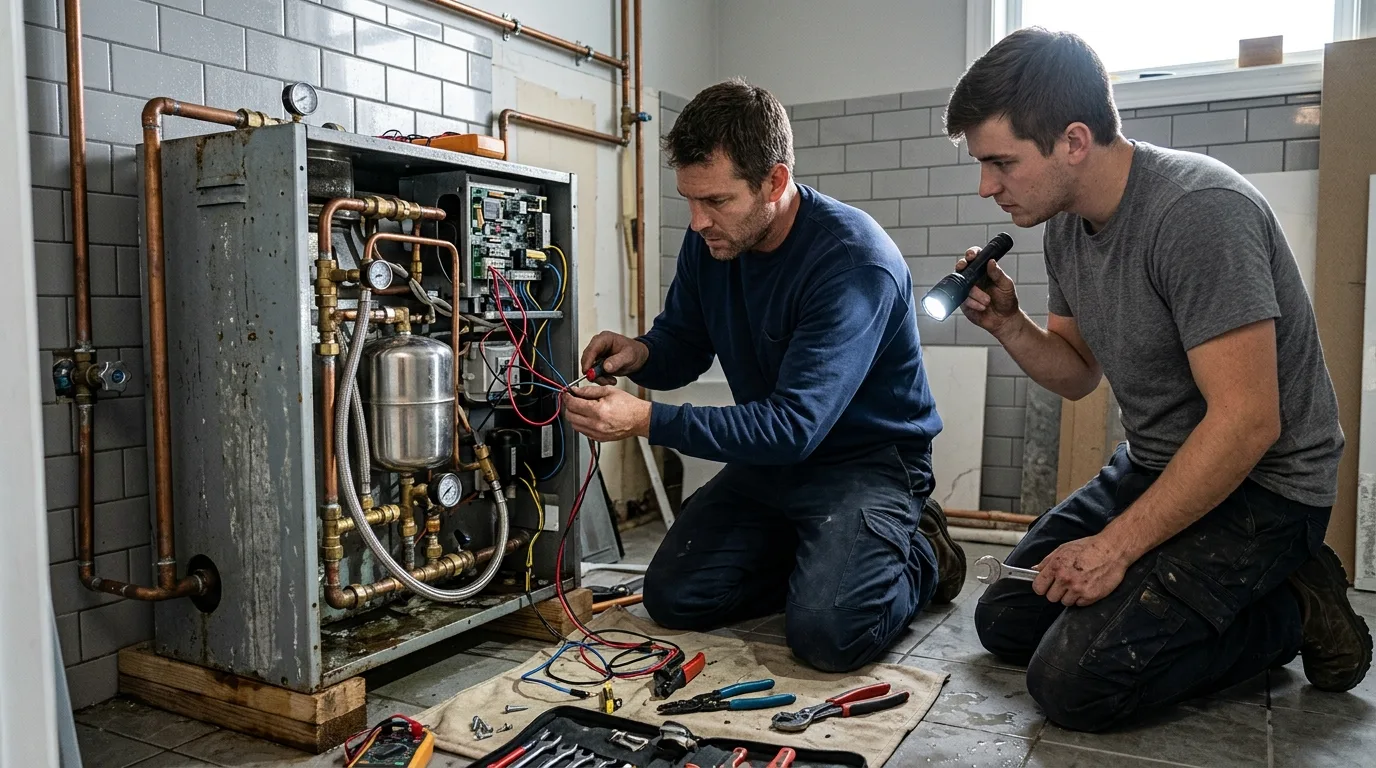
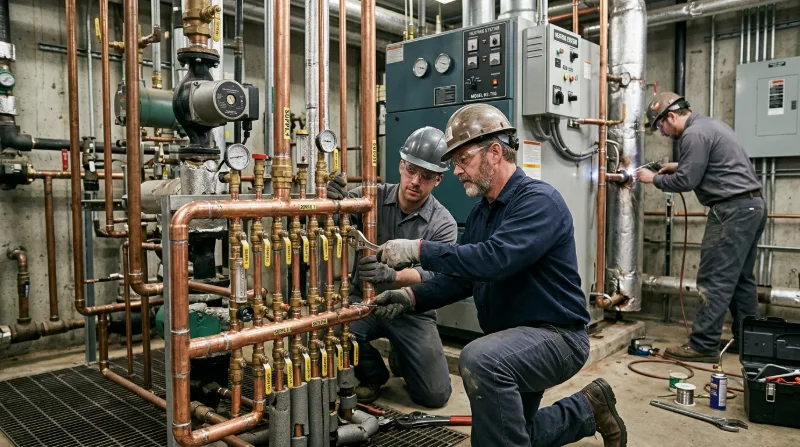
HospitalityHeaters, storage, loop, pumps and mixing valves assessed as one system, not as an appliance.
Changeovers and plant work scheduled outside service hours by default.
Capacity calculated against the worst hour of the day, not average consumption.
Banked and staged systems so one failure does not empty a building of hot water.
Where the fault really is
Commercial hot water is a system with at least four components that can each produce the same complaint. The heating plant, banked heaters or a boiler with storage. The distribution, including the recirculation loop and its pump. The control layer: mixing valves, thermostatic valves and balancing. And the demand side, which in a hotel or a restaurant is spiky rather than steady.
That is why plant-level diagnosis matters so much. A guest room reporting no hot water at 7 a.m. tells you almost nothing about which of those four is at fault, and replacing the wrong one is expensive. The useful questions are: what time of day does it happen, how many rooms or units are affected, where in the building are they, and does it recover after a period.
The pattern is the diagnosis. Failure at peak hour that recovers afterwards points at capacity or recovery rate. Consistently cold at the far end of a run points at the recirculation loop or its pump. Lukewarm everywhere regardless of time points at a mixing valve. Intermittent across the building points at a staged heater that is not firing.
Most commercial installations use multiple heaters in a bank, or a boiler with a storage vessel, precisely so that no single failure stops service. The consequence is that partial failure is easy to miss: with one of three heaters down, the plant looks fine through most of the day and falls over at the peak hour. Staff report an intermittent problem, and nobody finds a fault because they look at the wrong time.
Routine service on a plant of this kind means checking each unit fires and stages correctly, verifying that controls are sequencing rather than one unit carrying the load, inspecting burners, flues and combustion air, and checking storage temperature against setpoint at both quiet and busy periods. Scale is as much of an issue here as it is domestically, and worse, a commercial-capacity unit accumulates it faster in proportion to the volume it moves.
On boiler plants, add the water side: expansion, relief, air separation and circulation. A plant that cannot maintain setpoint at peak has either a heating problem, a distribution problem or a demand it was never sized for, and separating those three is the whole job.
A recirculation loop keeps hot water moving so that a fixture at the far end of a long run delivers hot water immediately rather than after a long draw. When the loop stops returning, the plant can be perfectly hot and the far rooms still be cold, and this is the single most common cause of the complaint in hotels and multi-story buildings.
Causes, in rough order: a failed or seized recirculation pump; a pump running but airlocked; a check valve installed backwards or failed, allowing short-circuiting; balancing valves closed or maladjusted after previous work; or a loop that was never balanced correctly at commissioning and has been marginal since.
Diagnosis is measurement rather than inspection: temperatures taken at the plant, at intermediate points and at the return, with the differential telling you whether flow exists and whether it is adequate. That is a straightforward exercise for someone who does it regularly, and it frequently ends a problem a building has lived with for years.
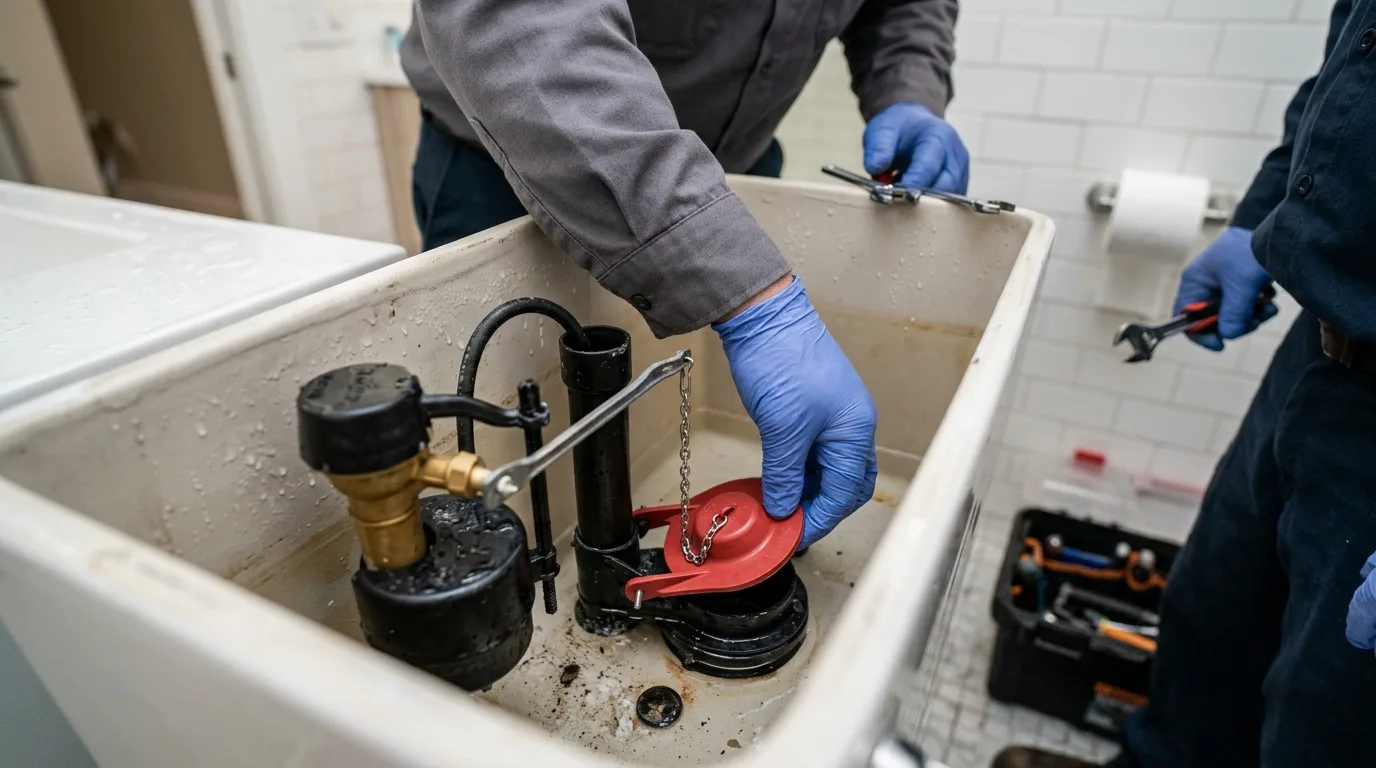
Commercial systems commonly store hot water above delivery temperature and blend it down at a master mixing valve, which is what allows storage to be hotter for capacity while delivery remains safe. When a mixing valve drifts, sticks or fails, the entire building goes lukewarm regardless of plant condition, and staff naturally report a heater problem.
Point-of-use thermostatic valves do the same job locally and have their own failure modes. In a hotel, one wing reporting cooler water than the rest is often a valve rather than a distribution issue.
This is also a safety domain. Storage temperature and delivery temperature serve different purposes, and the balance between capacity, scalding risk and bacterial control in stored water is not something to adjust casually. Any change to setpoints or valve settings should be deliberate, documented and appropriate to the building and its use.
Buena Park carries an unusual concentration of hospitality for a city its size. The Beach Boulevard entertainment corridor puts hotels and dinner-theatre venues alongside restaurants, and their hot water demand profile is nothing like a residential one: a hotel peaks hard at the check-out hour, a kitchen peaks around service and clean-down.
Sizing for those buildings is a peak-load calculation, the worst hour, with an allowance for simultaneous use, rather than a match of whatever is currently installed. Buildings that have added rooms, converted spaces, upgraded kitchen equipment or changed their occupancy pattern frequently have plant sized for a version of themselves that no longer exists.
The right time to correct that is at replacement, and the right way is to price capacity, recovery rate and storage as three separate levers rather than assuming more heaters is the answer. Often additional storage with the existing heating capacity solves a peak problem at a fraction of the cost of new plant.
Commercial work is scheduling as much as plumbing. Plant changeovers, loop work and descaling should happen overnight or before opening, with the sequence planned so the building is never without hot water during service. In multi-tenant buildings, zone isolation lets one riser or wing be worked on while the rest continues.
Redundancy is worth designing rather than hoping for. Banked heaters, a spare pump on the shelf, isolation valves that allow one unit to be removed without draining the plant, these are modest decisions at installation time that determine whether a future failure is an inconvenience or a closure.
Finally, documentation. Ask for readings at each visit: storage and delivery temperatures, loop differential, gas pressures, and what was found and adjusted. Accumulated over a couple of years, that record turns plant management from guesswork into something you can plan around, and it makes the next diagnosis dramatically faster.
 4Systems to check
Report it usefully
A hot water complaint from a building is only actionable with context. These five answers usually identify which of the four systems is at fault before anyone arrives.
Worth capturing from staff at the time of the complaint rather than reconstructing later.
Facility managers: these five answers usually shorten the visit by an hour or more.
Tell dispatch the time of day, the number of units and where they are. That routes the call to the right plant technician.
Emergency plant response around the clock, with scheduled work placed outside service hours.
How a plant call runs
Measure the whole system before touching any part of it. That order is what prevents replacing something that worked.
Timing, affected units, location and severity, plus recent changes to occupancy, equipment or plumbing.
Storage and delivery temperatures, loop differential, pump operation, staging behavior and gas pressures under load.
Heating capacity, distribution, control or demand, identified specifically before any component is quoted.
Repair or replacement carried out in an agreed window, with readings recorded for the building file.
Hospitality & multi-tenant
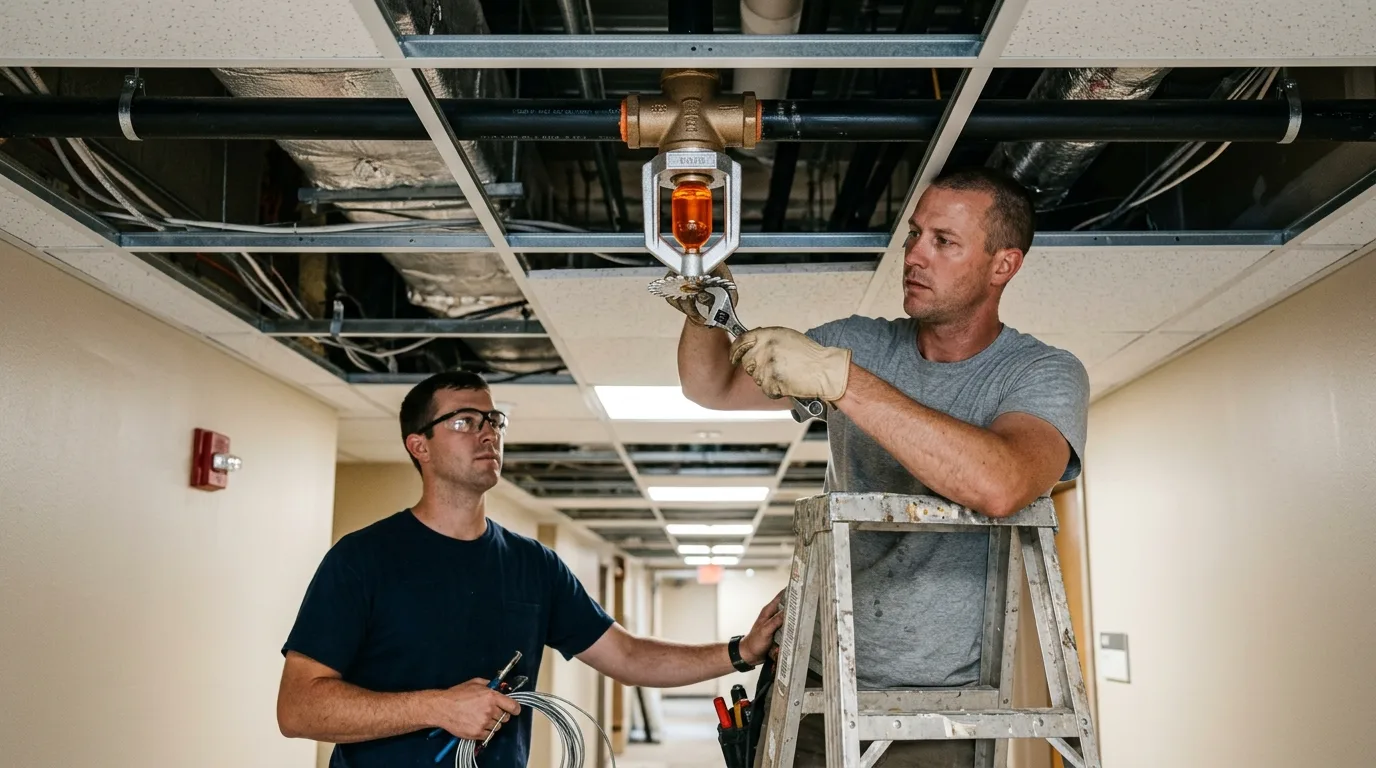
A hotel cannot be switched off, and a restaurant cannot lose hot water during service. That constraint shapes every part of how commercial plant work is planned here.
The answer is sequencing and isolation: work the plant in stages, keep partial capacity live, isolate by zone in multi-tenant buildings, and put the disruptive steps into the quietest window the building has.
Tell us the building type and your quietest hours and the work gets planned around them.
Questions we get on these calls
Because that is when the system is asked for more than it can deliver, and the cause is usually capacity, recovery rate or a partially failed plant rather than a broken component. With one heater in a bank of three down, the plant copes all day and falls over at the check-out hour or the pre-service rush. The diagnosis has to happen at the peak, or with readings taken across both quiet and busy periods, because a plant inspected at 2 p.m. can look perfect.
Almost always the recirculation loop. The loop keeps hot water moving so distant fixtures deliver immediately; when it stops returning, the plant can be fully hot while the far end of the run is cold. Common causes are a failed or airlocked pump, a check valve installed backwards or failed, balancing valves closed after previous work, or a loop that was never balanced properly. Temperature readings at the plant, mid-run and at the return identify it quickly.
A master mixing valve is the first suspect. Commercial systems commonly store hot water above delivery temperature and blend it down at a mixing valve, so when that valve drifts, sticks or fails, everything downstream goes lukewarm regardless of how hot the plant is. It presents as a heater problem and is not one. Point-of-use thermostatic valves cause the same symptom locally, which is why one wing behaving differently from another often means a valve rather than distribution.
Yes, and for commercial plant work that is the default rather than an accommodation. Changeovers, descaling, loop work and pump replacement are planned into overnight, pre-open or low-occupancy windows, with the sequence arranged so the building keeps at least partial hot water capacity throughout. Tell us the building type and your quietest hours when booking and the work gets planned around them rather than the other way round.
It is a peak-load calculation with an allowance for simultaneous use, based on the worst hour of the day rather than average consumption. A hotel peaks hard at check-out; a kitchen peaks at service and clean-down. Buildings that have added rooms, converted spaces or upgraded kitchen equipment often run plant sized for a version of themselves that no longer exists. Capacity, recovery rate and storage are three separate levers, and additional storage frequently solves a peak problem far more cheaply than new plant.
More than residential ones, proportionally, because they move far more water through the same hard supply. Scale on a commercial burner surface or in a heat exchanger reduces output, increases gas consumption and shortens equipment life, and on a system running near capacity at peak it is often the difference between coping and failing. Descaling belongs on a scheduled interval set by throughput, alongside burner, flue and control checks.
By designing redundancy in rather than hoping for it. Banked or staged heaters mean one failure reduces capacity instead of eliminating it. Isolation valves arranged so a single unit can be removed without draining the plant turn a shutdown into a partial one. A spare recirculation pump on the shelf converts a multi-day wait into an afternoon. These are modest decisions at installation and replacement time with a very large effect on how a future failure feels.
It depends on the building, its use and the applicable requirements, and it is not something to adjust casually. Storage temperature and delivery temperature serve different purposes, storage supports capacity and bacterial control, delivery has to be safe at the fixture, which is exactly why mixing valves exist. Any change should be deliberate, documented and appropriate to the building rather than dialled up to solve a capacity problem, which is a common and risky shortcut.
Yes, including the water side that comes with them: expansion, relief, air separation, circulation and controls. A boiler plant with storage behaves differently from banked heaters and fails differently too, and the diagnosis has to cover both the heating side and the distribution side. Where a building has a boiler serving both heating and domestic hot water, understanding how the two loads interact is often the key to an intermittent complaint.
Storage and delivery temperatures, loop differential readings, pump status, staging behavior, gas pressures under load, and a clear note of what was found, adjusted or replaced. Accumulated across visits, that record turns plant management into something you can plan around: you can see a pump degrading, a scale interval shortening, or a capacity margin narrowing as occupancy grows. Ask for it from the first visit rather than trying to reconstruct history later.
Tell us the building type, the number of units and when the complaint occurs.
Related work
Hot water is one system in a building. These are the ones next to it.
Peak-load hot water, risers and after-hours work in high-occupancy buildings.
Hospitality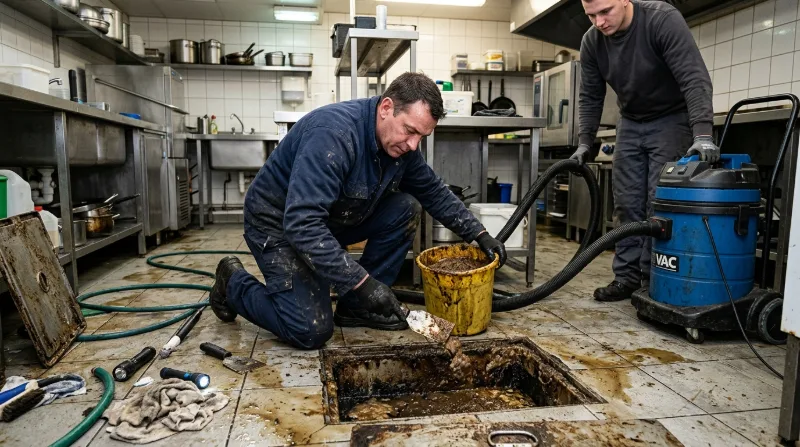
When upper floors starve at peak and the plant is not the problem.
Pressure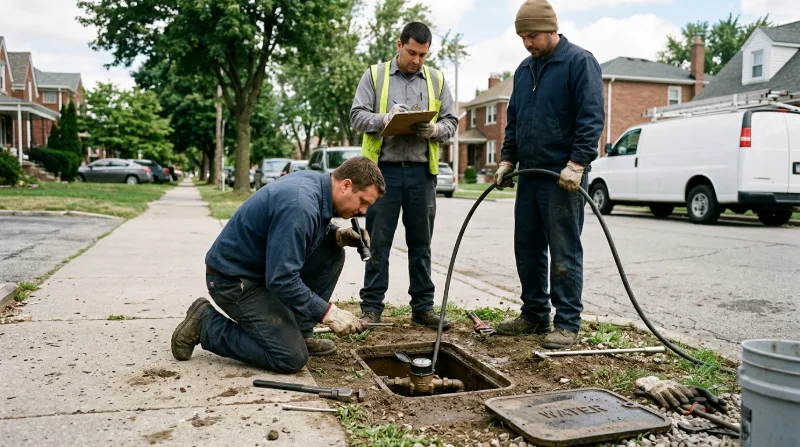
Risers, stacks, grease lines and shared systems across whole buildings.
Commercial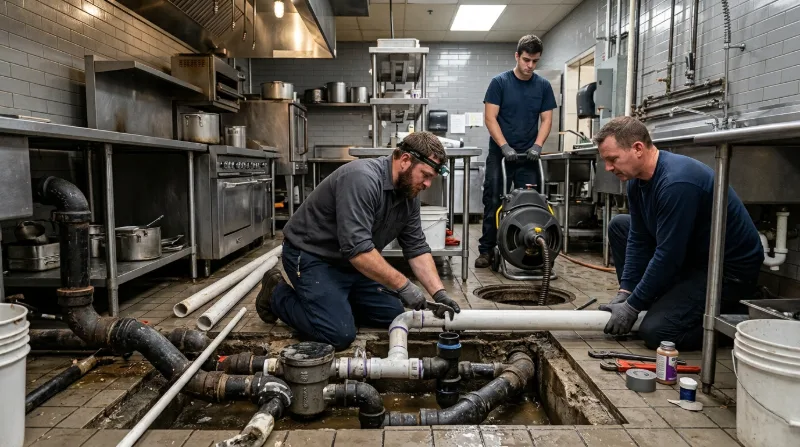
Systems, not appliances
Four systems produce the same complaint. Measurement is what tells you which one you have.
Hotels, restaurants, industrial and multi-tenant buildings across Buena Park and north Orange County.