Tankless Water Heater Service
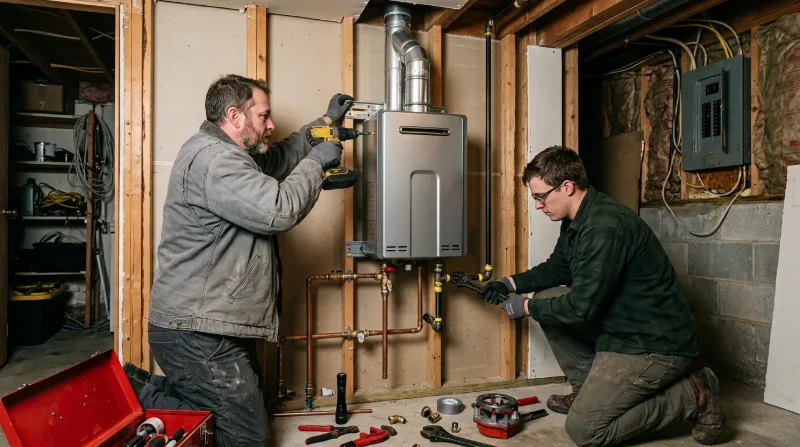
The retrofit that most often needs a bigger gas run than it was given.
TanklessTotal appliance demand and run length calculated, not matched to what happens to be there.
Every new run is held and proved before it is put into service, with the test documented.
Gas piping goes through City of Buena Park permitting and is inspected.
Individual appliance valves and accessible connections, which older installations often lack.
Safety first, always
Gas work sits in a different category from the rest of plumbing because the failure mode is not water damage. So the most important thing on this page comes before anything technical: if you smell gas, leave the building and call the gas utility from outside. That is the correct first call, not a plumber. Do not operate switches, do not use a phone inside, do not look for the source.
Once the utility has made the situation safe, shutting off supply or tagging an appliance or line, a plumber comes in to find and repair the fault, pressure test the system and return the appliance to service. That sequence exists for good reason and it is worth knowing in advance, because the moment you need it is not the moment to work it out.
Gas odor: leave first, call the utility from outside. Do not switch anything on or off, do not use a phone inside the building, and do not try to locate the leak yourself. Once the utility has made it safe, call (714) 386-7076 and a plumber will locate the fault, repair it, pressure test the system and recommission the appliance.
The most common gas projects in this housing stock are conversions and additions. A homeowner moving from an electric to a gas range needs a new run to the kitchen. An ADU or garage conversion needs supply for a range, a water heater and sometimes a dryer. An outdoor kitchen or fire feature needs a run to the patio with appropriate protection where it leaves the building.
The engineering question in all of these is load. A gas system has to deliver adequate volume to every appliance simultaneously, and that depends on total connected demand, pipe diameter, run length and the number of fittings. Adding an appliance to a system that was sized for fewer is the standard cause of underperformance, and the symptoms show up on the newest appliance, which is why the new equipment usually gets blamed.
This matters especially with tankless water heaters. A tankless burner at full fire demands substantially more gas than the tank it replaced, and demands it instantly. Retrofits that reused the existing line without recalculating produce ignition failures and lockouts that look like unit faults and are supply faults. Sizing the run properly at the outset is far cheaper than diagnosing it afterwards.
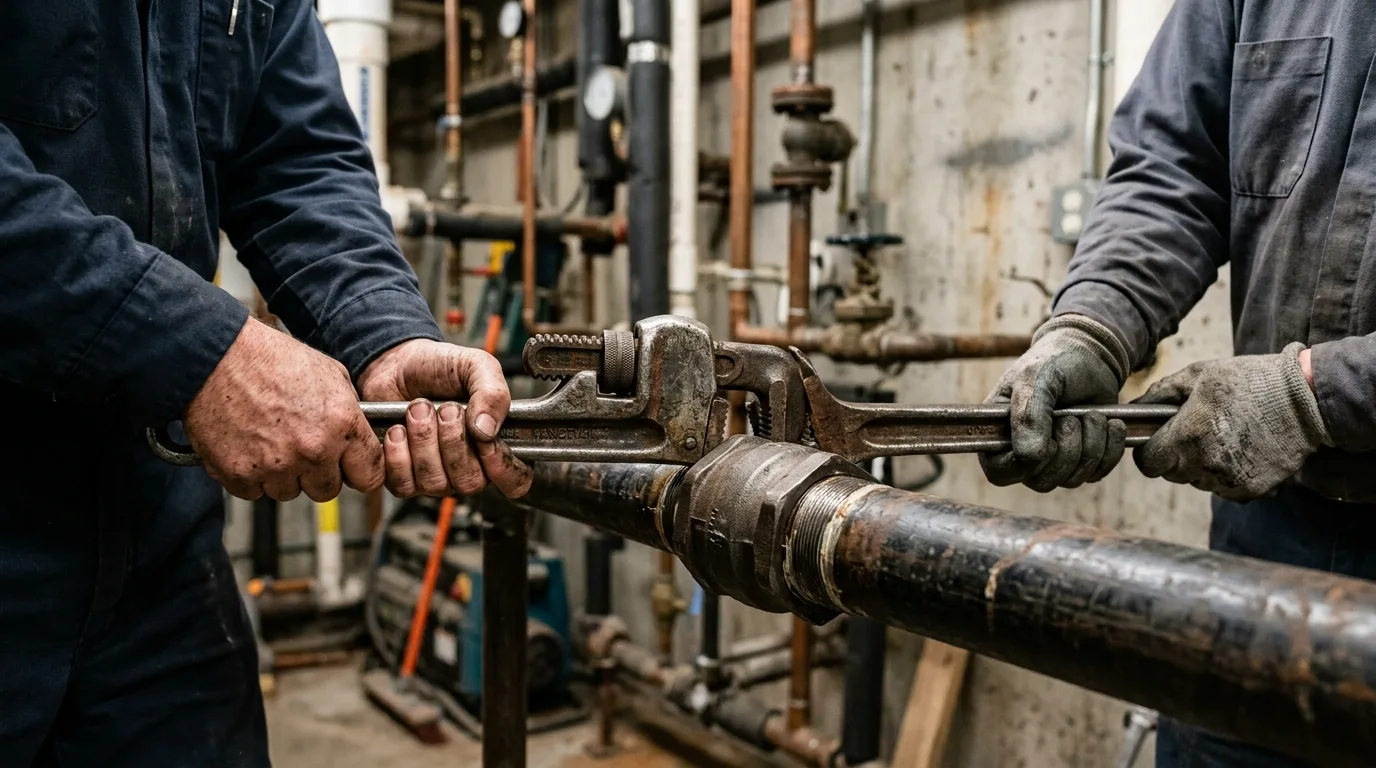
Black iron pipe with threaded joints is the traditional and still very common material for interior and exterior gas runs. It is robust and well understood, and it is what most existing systems in these houses are made of.
Corrugated stainless steel tubing is flexible, faster to install through existing framing, and needs far fewer joints, which makes it attractive in retrofits. It has specific requirements around support, protection from physical damage and bonding, and those requirements are not optional, an improperly installed flexible system is worse than a properly installed rigid one.
For buried and exterior runs, coated steel or approved polyethylene with correct transition fittings is used depending on the application. Anywhere a line passes through a wall, emerges from the ground, or sits where something might strike it, protection is part of the installation rather than an afterthought.
Appliance connectors are the most commonly aged component in an existing system. Old flexible connectors corrode, and a corroded connector at a water heater or range is one of the more frequent sources of a genuine leak. Replacing them during any gas work is inexpensive and sensible.
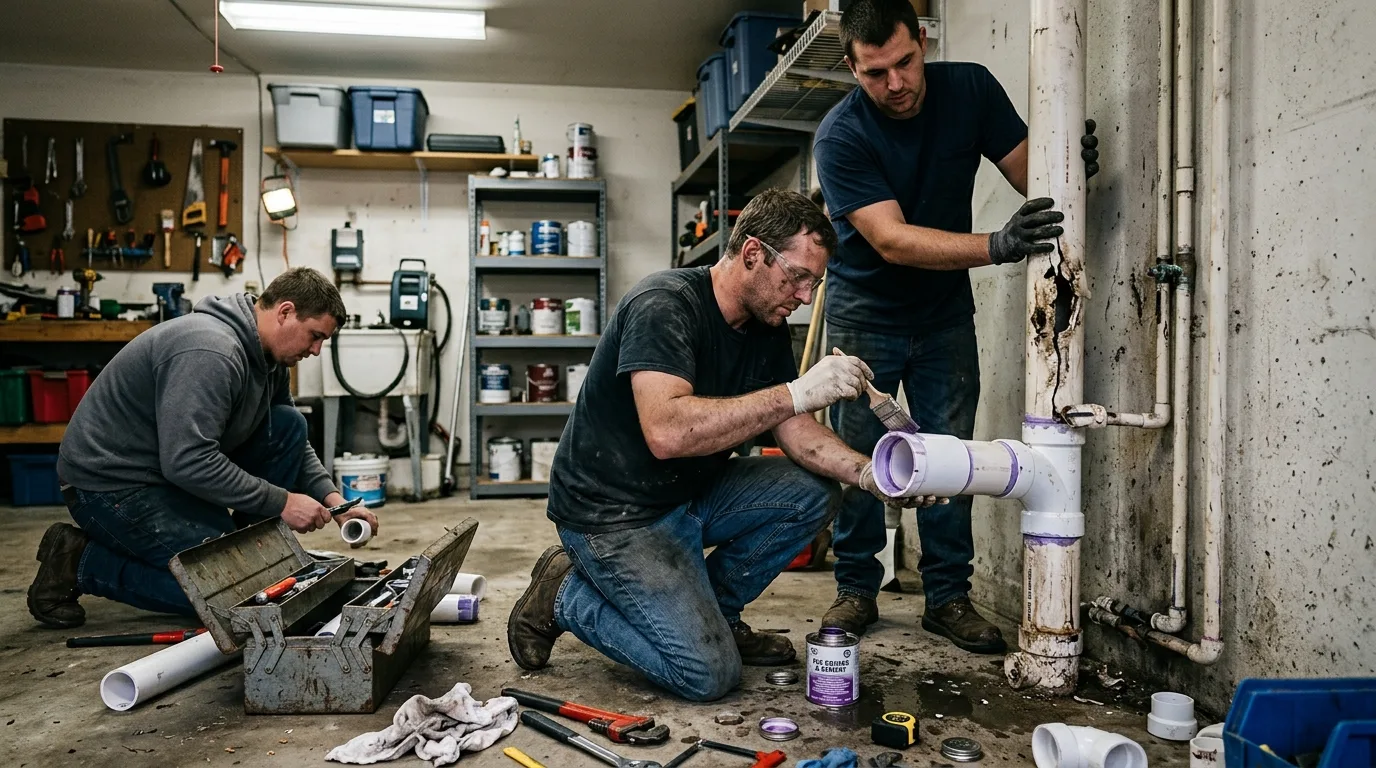
A pressure test isolates a section, brings it to test pressure and holds it, watching for any drop. It is how new work is proved before being put into service, and how an existing system is assessed when a leak is suspected but not located. The test result is a number, and it should be documented.
Locating a leak on a system that is losing pressure uses a combination of methods: electronic gas detection to find the concentration, leak detection solution applied at joints to reveal escaping gas as bubbles, and systematic isolation to narrow the affected section. On a long run with many joints this is patient work, and it is done properly or not at all.
The most common leak points, in rough order: appliance flexible connectors, threaded joints on older black iron where the sealant has aged, appliance shutoff valves that have been operated after decades of sitting, and unions disturbed by other work. Any of them is repairable. What matters is that the whole system is tested afterwards rather than just the repaired joint.
Every gas appliance should have an accessible individual shutoff valve close to it, so the appliance can be isolated without shutting the building. Many older installations here do not, or have one that is inaccessible behind an appliance that would have to be moved first.
The main shutoff at the meter should be identifiable and operable. It is worth knowing where it is and what it looks like before there is a reason to use it, and worth noting that operating it means the supply has to be restored and appliances relit properly afterwards, which is not a homeowner task.
Where an appliance has been removed and the line capped, that cap should be a proper fitting rather than a temporary measure, and the line should be tested. Abandoned gas lines left live behind drywall during past remodels are a real finding in this housing stock and worth resolving when discovered.
Gas piping is permitted work through the City of Buena Park and is inspected. This is one area where the permit is not a formality: the inspection is an independent check on a system where an error has consequences beyond property damage.
What you should receive: the permit, the pressure test result, the inspection sign-off, and a clear statement of what was installed, in what material, and what appliances it serves. Keep it. Undocumented gas work is a genuine problem at resale and an awkward one to resolve retrospectively, since verifying buried or concealed piping means exposing it.
A contractor who suggests doing gas work without a permit is offering a small saving on something where the downside is not financial. That is the one category of work where it is worth being inflexible.
 TestThen service
Load and sizing
When a gas system is undersized for its total load, the symptoms appear at whichever appliance demands the most, usually the newest one. The appliance is fine; the pipe is not.
These are the checks that identify a supply problem rather than an equipment problem.
Worth doing before buying an appliance rather than after installing one.
The sizing conversation happens before the appliance is bought. It is much cheaper that way.
Load calculated, run sized, permit pulled and the finished system pressure tested.
How gas work runs
Calculate, install, test, inspect. None of the four is optional on gas.
Every connected appliance totalled, run length and diameter sized accordingly, and the existing system assessed for capacity.
Permit pulled through the City, appropriate material installed with correct support, protection and accessible shutoffs.
Section isolated, brought to test pressure and held, with the result recorded rather than asserted.
City inspection completed, appliances connected and relit, pressures verified at full fire, and paperwork handed over.
Restaurants & commercial
A commercial kitchen has multiple high-demand appliances firing simultaneously, which makes total load and simultaneous use central rather than incidental. A line that copes at 3 p.m. can starve at the height of service.
Isolation matters just as much. Individual appliance valves on an accessible manifold mean one piece of equipment can be taken out of service without shutting the kitchen, which is the difference between a repair and a closure.
Facility managers: ask for pressure readings taken with the full appliance battery firing.
Questions we get on these calls
Leave the building and call the gas utility from outside. That is the correct first call, not a plumber. Do not operate light switches or appliances, do not use a phone inside, and do not try to find the source. Once the utility has made the situation safe, shutting off supply or tagging the line or appliance, a plumber locates and repairs the fault, pressure tests the system and recommissions the appliance properly.
Yes, and it is one of the most common gas projects here as households move from electric to gas cooking. The work involves sizing the run for the appliance and the rest of the connected load, routing it appropriately with correct support and protection, fitting an accessible shutoff valve at the appliance, pressure testing the new work, and having it inspected. Ask about it before buying the range, since the route affects both cost and feasibility.
Yes, and this is the category of work where it matters most. Gas piping is permitted through the City of Buena Park and inspected, and the inspection is an independent check on a system where an error has consequences beyond property damage. You should receive the permit, the pressure test result and the inspection sign-off. Undocumented gas work is a genuine problem at resale and awkward to verify retrospectively.
Very often because the gas line was not upsized for it. A tankless burner at full fire demands substantially more gas than the tank it replaced, and demands it instantly rather than over a slow reheat. An underfed unit produces ignition failures, lockouts and an inability to reach temperature at high flow, all of which look like unit faults. A manometer reading at full fire with other appliances running identifies it in minutes.
It depends on the application. Black iron with threaded joints is traditional and still very common for interior and exterior runs. Corrugated stainless steel tubing is flexible and faster through existing framing with fewer joints, and it has specific mandatory requirements for support, physical protection and bonding. Buried and exterior runs use coated steel or approved polyethylene with correct transitions. Protection is included wherever a line passes through a wall or emerges from the ground.
Yes, and it is increasingly common. The key question is whether the existing system has capacity for the additional load, a conversion may add a range, a water heater and a dryer, which is a substantial increase. Sometimes the existing line serves it; often the run to the property needs upsizing or a dedicated branch installed. That calculation should happen early in the project, because it affects both the budget and the routing.
A pressure test first, to establish that the system is losing pressure and by how much. Then a combination of electronic gas detection to find concentration, leak detection solution applied at joints to reveal escaping gas, and systematic isolation to narrow the affected section. The most common leak points are aged appliance flexible connectors, threaded joints where the sealant has degraded, shutoff valves operated after decades of sitting, and unions disturbed by other work.
Yes, and it should be accessible without moving the appliance. Many older installations here either lack them or have one hidden behind equipment that would have to be pulled out first, which defeats the purpose. Adding accessible individual valves is straightforward during any gas work and means a single appliance can be isolated for service without shutting down the whole building.
It needs assessing rather than ignoring. Lines left from removed appliances are common in this housing stock, and the questions are whether the cap is a proper fitting or a temporary measure, whether the line is still live, and whether it is concealed behind finishes. A pressure test establishes whether it holds. Where a line is no longer needed, the correct resolution is to isolate and cap it properly at the source rather than leaving it in the wall.
Yes, and it is treated differently because the load profile is different. A commercial kitchen has multiple high-demand appliances firing simultaneously, so total connected load and simultaneous use are central to the calculation, a line that performs at 3 p.m. can starve at the height of service. Individual appliance shutoffs on an accessible manifold matter too, since they let one unit be isolated without closing the kitchen.
Tell us the appliances involved and where they will sit, that is what determines the sizing.
Related work
The appliances gas serves, and the systems they sit inside.
The retrofit that most often needs a bigger gas run than it was given.
Tankless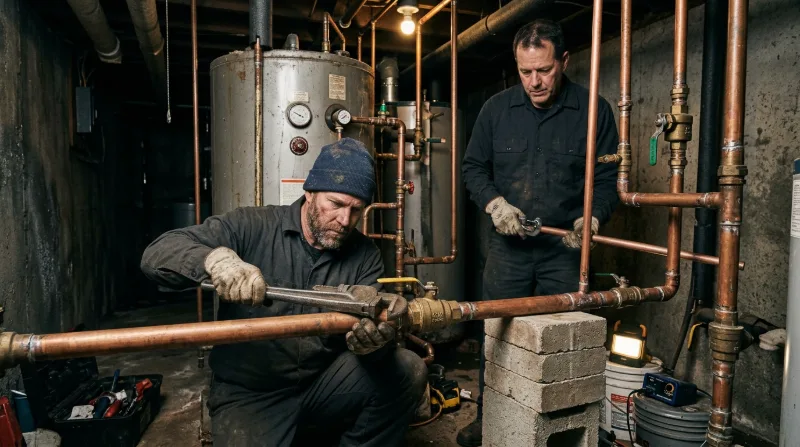
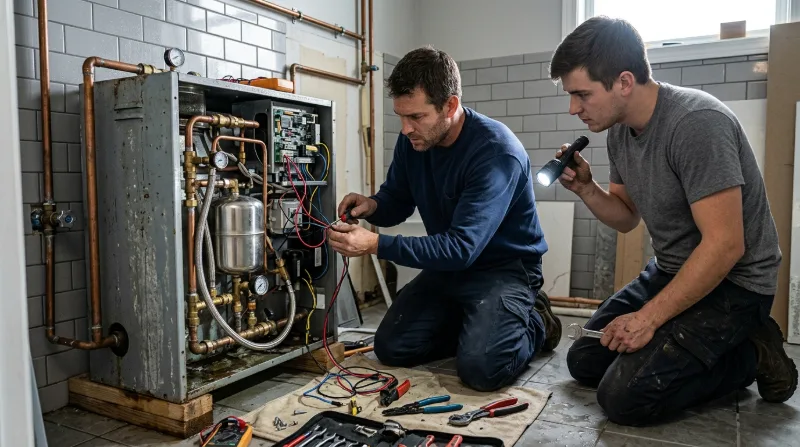
Kitchen batteries, manifolds and simultaneous-use load calculations.
CommercialSized, tested, signed off
Load calculated, run installed properly, pressure held and proved, inspection documented.
Residential and commercial gas work across Buena Park, Fullerton, Anaheim, Cypress and La Palma.