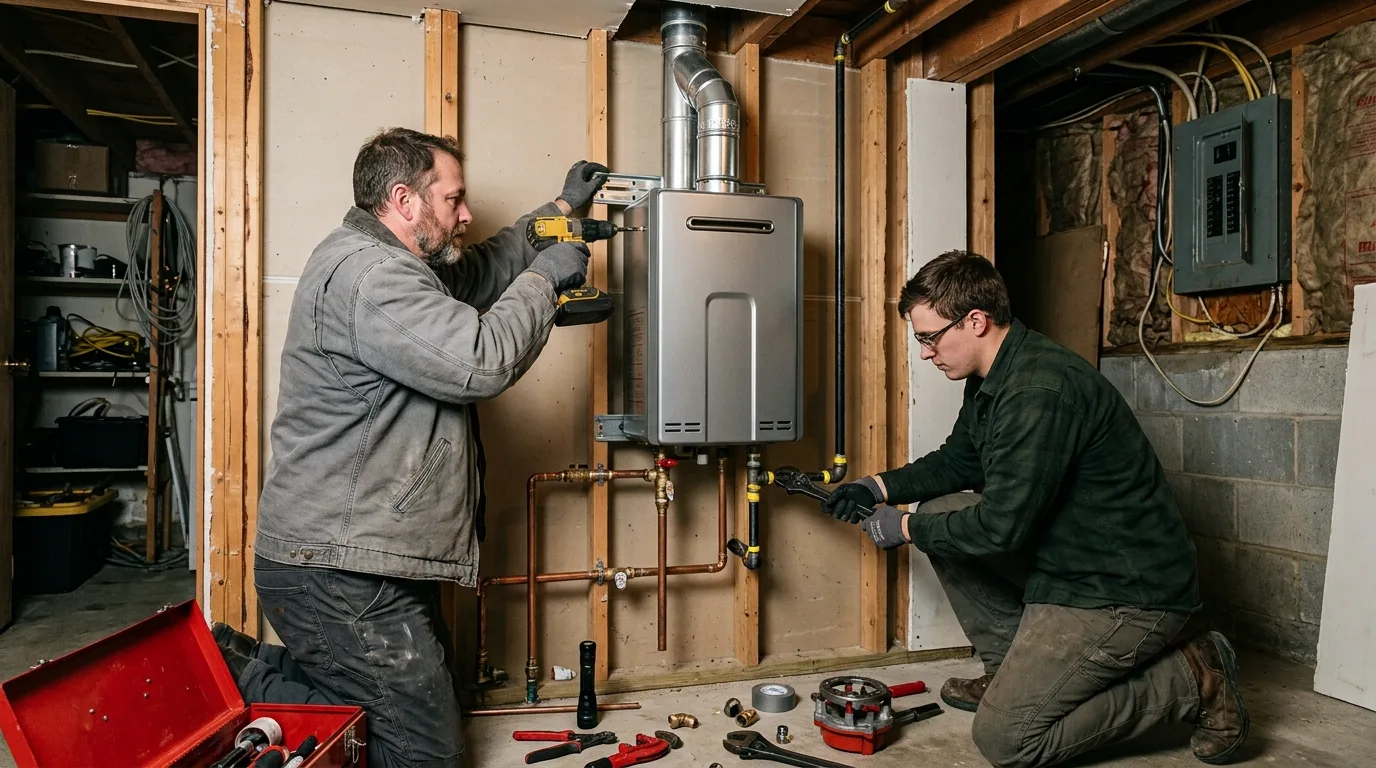
Water Heater Installation
Retrofits done properly, with gas sizing and venting priced up front.
InstallThe single largest factor in how long a tankless unit lasts in Orange County water.
The code is the diagnosis. Gas supply, flow sensing and venting each produce their own.
Underfed burners and marginal venting cause faults people blame on the unit.
You will hear what a conversion actually needs before anyone quotes one.
How they fail
A tankless heater is a modulating burner firing across a heat exchanger, controlled by a flow sensor and a temperature sensor. There is no reservoir, so nothing stores heat and nothing hides a problem: every fault shows up immediately at the tap, usually accompanied by a code on the display.
Nearly every service call on a tankless unit in this area comes down to four things. Scale in the heat exchanger, which is the dominant one locally. Gas supply that cannot feed the burner at full fire, often because the line was sized for the tank that used to be there. Flow sensing, where the unit will not fire because it does not register demand, sometimes genuinely, sometimes because a very low-flow fixture sits below the minimum activation rate. And venting or combustion air, where restriction or improper termination causes lockouts.
Descaling is not optional here. Imported water in this part of Orange County carries enough mineral content that a heat exchanger scales measurably within a year or two. Scale restricts flow through the exchanger, drives the burner harder, produces temperature swings and error codes, and eventually damages the exchanger itself, which is the most expensive component in the unit.
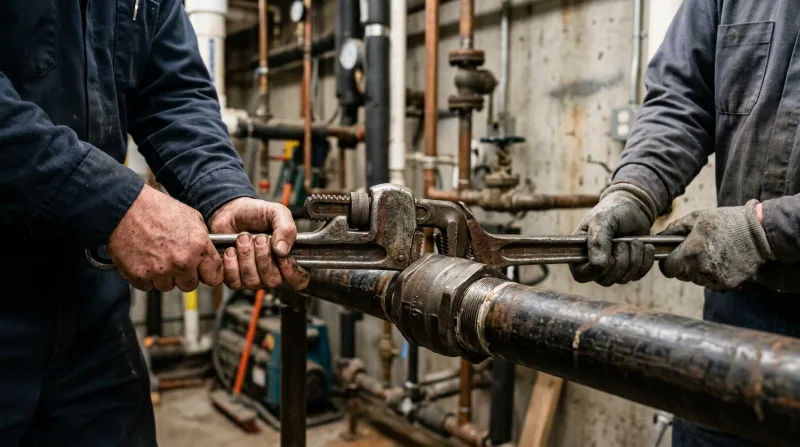
The procedure is straightforward: isolate the unit at its service valves, connect a circulating pump and a descaling solution, circulate for a period, then flush and restore. It takes under an hour on a unit with isolation valves fitted and considerably longer on one without.
That is the detail worth knowing. Service valves, a pair of isolation valves with hose ports, fitted at the cold inlet and hot outlet, are inexpensive at installation and turn descaling into a routine appointment. Without them, the technician has to break connections to circulate, which is slower and costs more every single time. If your unit was installed without them, having them fitted during the next service pays for itself quickly.
Interval depends on water and usage. Annual is a reasonable default in this area, more often for heavy use or where the water is particularly hard, and less often where softening or filtration is installed upstream. A unit that has never been descaled and now shows temperature swings may need more than one treatment, and if the exchanger has been damaged the honest answer may be that descaling will not fully recover performance.
A tankless burner at full fire demands substantially more gas than the tank it replaced, and it demands it instantly rather than over a slow reheat. Where a retrofit reused the existing gas line without recalculating it, the unit is chronically underfed, and the symptoms look like unit faults rather than supply faults.
What underfeeding produces: ignition failures and lockouts, an inability to reach set temperature at high flow, and codes relating to combustion. It is often intermittent, worse when another gas appliance is running, and worse in winter when demand is higher. Homeowners frequently replace parts, or the whole unit, chasing something the pipe was causing.
Diagnosis is a manometer reading at the unit with the burner at full fire and other appliances running. If the pressure drops below specification under load, the supply is the fault. The fix is upsizing the line or, occasionally, a dedicated run. It is real work with real cost, which is exactly why it should be identified before a retrofit is quoted rather than after it is installed.
Tankless units fire on flow. Below a minimum activation rate they will not fire at all, which is why an aggressively low-flow bathroom tap can produce cold water while a shower produces hot. That is behavior, not a fault, though it can sometimes be improved with a different aerator or by adjusting the set temperature.
A failing flow sensor produces the same symptom for a different reason and is a genuine repair. So does a partly blocked inlet filter screen, which is a commonly overlooked five-minute check.
The cold water sandwich, a brief slug of cool water mid-draw, happens when a unit cycles off and back on, typically with intermittent flow such as washing dishes by hand. Some models handle it better than others; a small buffer tank or a recirculation arrangement resolves it where it genuinely bothers a household. It is worth distinguishing from a fault, because it is often mistaken for one.
Tankless units are sensitive to venting because they modulate. Improper material, insufficient rise, excessive length, poor termination clearances or a restricted intake all produce lockouts, and they often produce intermittent lockouts, which are the hardest to diagnose from a description.
Condensing units also produce acidic condensate that must be drained and, depending on requirements, neutralised. A blocked or improperly routed condensate line causes faults and can damage the unit. It is a routine service check and a common cause of a unit that started failing after a few years for no apparent reason.
Combustion air matters too, especially where a unit sits in a small closet or a tight garage alcove. Sealed-combustion models draw from outside and are largely immune; open-combustion units in confined spaces are not, and a unit that faults only when the door is closed is telling you something specific.
The case for it is genuine: endless hot water, a very small footprint that reclaims floor space, high efficiency, and a service life that can substantially exceed two tank replacements. In a household that will maintain it, it is a good long-term choice.
The case against is equally genuine and gets glossed over in sales conversations. Descaling is mandatory here, so you are trading one maintenance task for another rather than escaping maintenance. Retrofits often require gas line upsizing and new venting, which can double the cost of the project. The minimum activation rate can surprise households with very low-flow fixtures. And repairs, when needed, are more specialized than swapping a thermocouple.
The honest recommendation depends on the household rather than the technology. If you flush your current tank annually and value the endless supply and the space, tankless is likely to please you. If your last heater failed at nine years having never been touched, a high-recovery tank will probably serve you better and cost less to own.
 1 yrDescale interval
Ownership checklist
Tankless ownership is low-effort but not no-effort, and everything on this list is quick. Skipping the first item is what turns a twenty-year unit into a nine-year one.
Ask for these during any service visit, and have the valves fitted if the original installer left them out.
Inexpensive to fit and they reduce the cost of every descale from then on.
The code is the diagnosis. Read it out on the phone and you will usually get a straight answer about what it means.
Ignition, flow, venting and gas supply faults are all diagnosable in one visit.
The service visit
Descaling is the headline. The other three checks are what stop a fault recurring next winter.
Fault log and error codes, install date, service history, and what the household has actually noticed and when.
Circulating descale through the exchanger, inlet filter screen cleaned, and the unit flushed and restored.
Gas pressure measured at full fire with other appliances running, plus venting, intake and condensate checked.
Fired across the flow range, temperature set safely, and the interval for the next descale agreed in plain terms.
Questions we get on these calls
Annually is a sensible default in this part of Orange County, sooner for heavy use or particularly hard supply, and potentially less often where a softener or filtration is installed upstream. The mineral content in imported water scales a heat exchanger measurably within a year or two. If yours has never been descaled and is showing temperature swings or codes, expect that the first treatment may not fully recover performance if the exchanger has already been affected.
Scale narrows the passages through the heat exchanger, so flow drops and the burner works harder for the same output. You get temperature swings, reduced flow at set temperature, error codes, higher gas consumption, and eventually damage to the exchanger itself, which is the most expensive part in the unit. A neglected tankless heater in this water can easily underperform and outlive a conventional tank by a shorter margin than its price suggests.
Codes are model-specific, but they cluster into a few families: ignition failure, flame loss, overheat, flow sensing, venting or air pressure, and condensate. Read the exact code out when you call and it usually points straight at the cause. The most common root causes locally are scale, gas supply that cannot maintain pressure at full fire, a restricted intake or exhaust, and a blocked condensate line. All four are diagnosable in a single visit.
Probably minimum activation flow. A tankless unit will not fire below a certain flow rate, and an aggressively low-flow bathroom tap can sit under that threshold while a shower comfortably exceeds it. That is behavior rather than a fault, though a different aerator or a temperature adjustment sometimes improves it. If it is new behavior on a fixture that used to work, suspect a failing flow sensor or a partly blocked inlet filter screen instead.
A brief slug of cooler water partway through a draw, caused by the unit cycling off and back on. It is most noticeable with intermittent flow, washing dishes by hand, or a shower with a mixer being adjusted. Some models manage it better than others. Where it genuinely bothers a household, a small buffer tank or a recirculation arrangement resolves it. It is worth identifying as normal behavior rather than paying to chase it as a fault.
Frequently, yes, and it is the most commonly underestimated part of a retrofit. A tankless burner at full fire demands considerably more gas than the tank it replaced, and it demands it instantly. Where an installer reused an undersized line, the unit is chronically underfed, producing ignition failures, lockouts and an inability to reach temperature at high flow, all of which look like unit faults. A manometer reading at full fire with other appliances running settles it.
It depends on the household more than the technology. If you will maintain it, value endless hot water and want the floor space back, it is a good long-term choice with a service life that can exceed two tanks. If your last heater failed at nine years having never been flushed, a high-recovery tank will likely serve you better for less money. Be sure the retrofit cost you are quoted includes any gas line and venting work, because that is where budgets break.
Repaired, in most cases. Flow sensors, igniters, flame rods, gas valves, fans, control boards and thermistors are all serviceable components, and the majority of faults are one of those or a maintenance issue rather than a terminal problem. Replacement becomes the realistic answer when the heat exchanger itself has been damaged, usually by years without descaling, since that component approaches the cost of a new unit.
Yes. It is permitted work through the City of Buena Park and it is inspected, and there is more to inspect than on a tank swap: gas sizing, venting material and termination, combustion air, and condensate handling on a condensing unit. That is exactly why the permit is worth having, those are the four things most often done poorly, and an independent inspection is a genuine safeguard on a gas appliance.
It solves a real annoyance, the wait for hot water at a distant fixture, and on a long run it saves a meaningful amount of water. The considerations are that it needs to be compatible with your unit, that some arrangements require a dedicated return line while others use a crossover at the far fixture, and that running it continuously costs energy, so a timer or demand control is normally the right configuration. Worth pricing at the same time as any other tankless work.
Have the model number and the error code ready, between them they usually identify the fault.
Related work
Installation, the conventional alternative, and the water treatment that protects it.
Retrofits done properly, with gas sizing and venting priced up front.
Install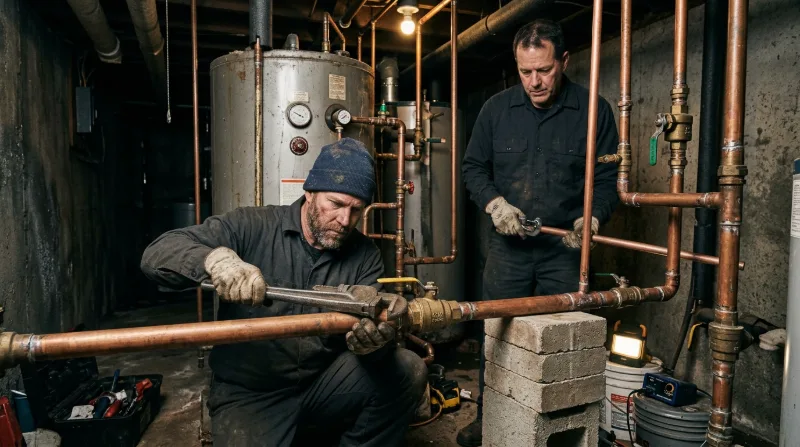
Maintained, not neglected
One appointment a year, service valves fitted, gas and venting verified. That is the whole ownership burden.
Tankless service across Buena Park, Fullerton, Anaheim, La Palma, Cypress and Cerritos.