Toilet Repair & Installation
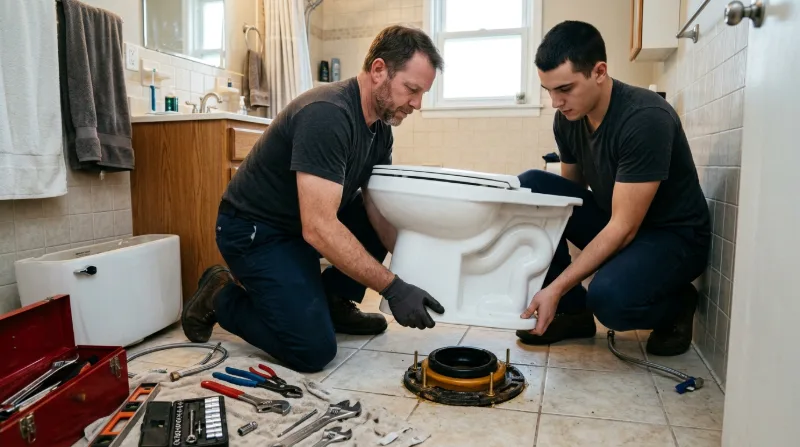
Running fills, rocking bases and failed wax rings in the same bathroom.
ToiletsSeized angle stops are the single most common complication on any fixture job.
Corroded supply stubs and mixed materials get proper transitions rather than a hopeful fitting.
High static pressure is why cartridges and aerators keep failing on new fixtures.
Bring your own fixture, just ask before buying, because not everything fits older rough-ins.
What actually takes the time
Every experienced plumber has the same story about fixture work: the faucet takes twenty minutes and the shutoff valve takes an hour. In houses of this age, the supply side underneath a fixture has usually been untouched since installation, and the parts down there have aged in a way the fixture above has not.
That is why a good quote for fixture installation includes more than the fixture. New angle stops, new braided supply lines, and an assessment of the supply stubs coming out of the wall. Those three items are inexpensive during the visit and expensive as a separate emergency later, and they are the difference between a fixture job that ends cleanly and one that turns into a repair.
Test your angle stops this week. Under each sink and behind each toilet, try closing the valve by hand. If one will not turn, or turns without stopping the water, it needs replacing before it needs using, and you would much rather discover that now than during a burst supply line at midnight.
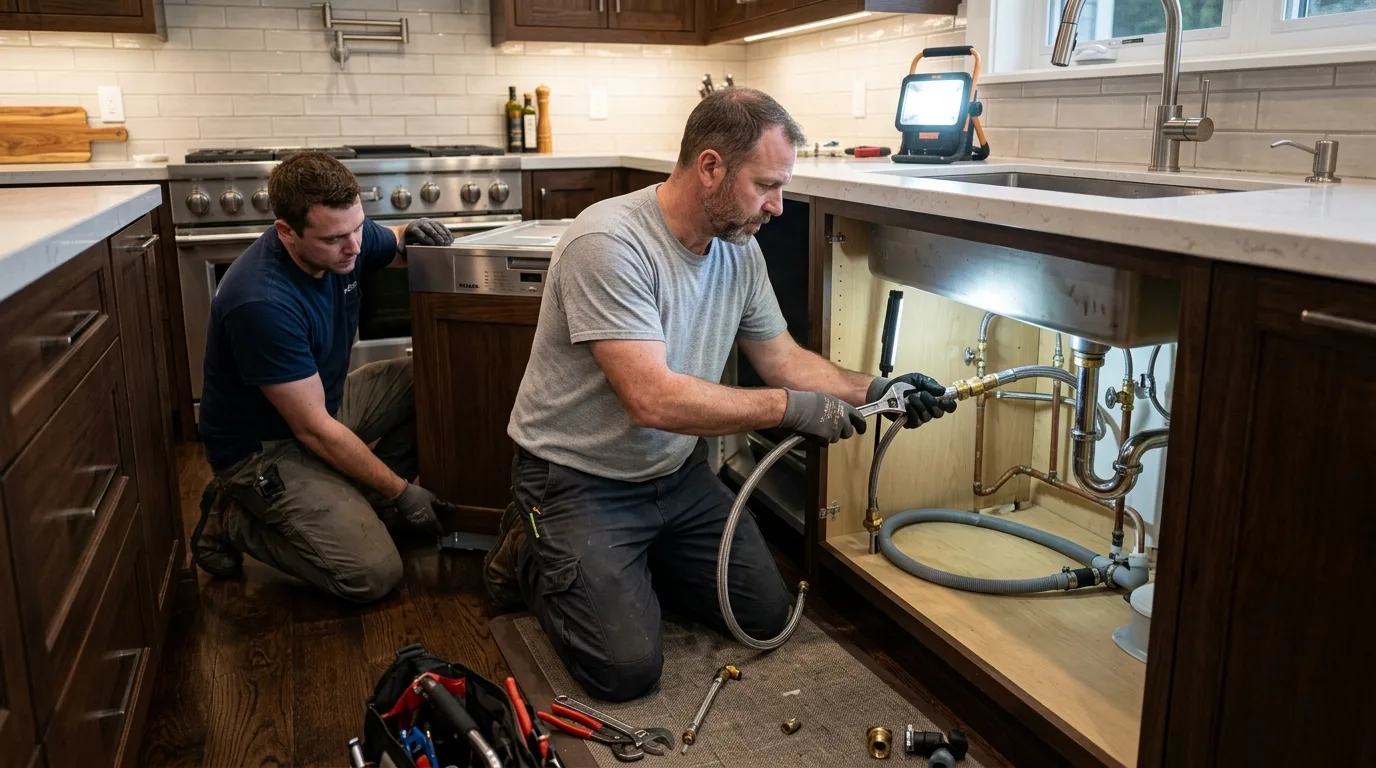
Kitchen installations carry more variables than bathroom ones. The number of holes in the sink or countertop has to match the fixture, and single-hole faucets fitted to three-hole sinks need a deck plate. Deep sinks, thick stone countertops and garbage disposals all reduce the working space underneath, which is why a fixture that looks simple in a showroom can be awkward in place.
Pull-down and pull-out sprays add a hose and a weight that need clearance to travel. Filtered and instant-hot arrangements add another connection and often a tank under the sink. Any of these is routine, but all of them are easier to get right when the plumber knows what is coming, which is the argument for a quick conversation before buying rather than after.
While the space is open, the useful checks are the disposal mounting and its connections, the trap arrangement, many older ones have been extended with a series of adapters that leak eventually, and the dishwasher connection, including whether it has a proper air gap or high loop.
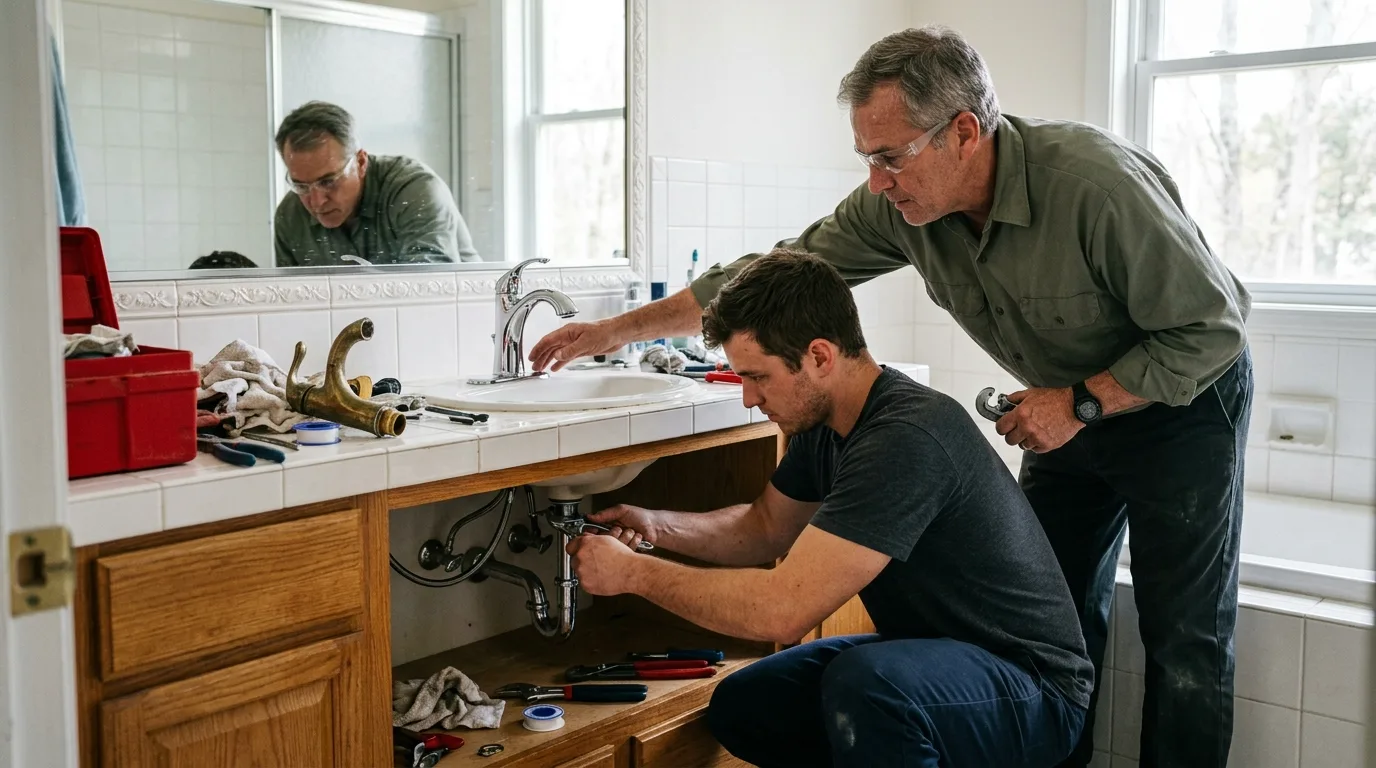
Bathroom fixture work is usually simpler and has one specific complication: center-set, mini-widespread and widespread faucets all have different hole spacings, and a fixture bought without checking will not fit. Measure the existing spacing before purchasing, or send a photo.
A vanity replacement is a bigger job than it appears because it involves the drain height as well as the supply. The stub-outs from the wall and the drain rough-in have to align with the new cabinet, and when they do not, which is common with older rough-ins and modern vanities, the wall has to be opened or the connections reworked. Worth pricing honestly at the outset.
Pop-up drain assemblies are the small part that causes disproportionate annoyance. Old ones seize, leak at the tailpiece, and are frequently the actual source of a cabinet that has been damp for months while everyone blamed the faucet.
Hose bibs live outside, take physical abuse, and are frequently the oldest untouched valve on a property. A bib that weeps at the handle needs a packing repair; one that leaks from the body needs replacing. Adding a vacuum breaker where there is not one is worth doing at the same time.
Laundry valves are the highest-consequence fixture connection in most houses. A washing machine supply hose that lets go while nobody is home puts water into the building at full pressure for hours, and old rubber hoses fail without warning. Replacing them with braided stainless hoses and fitting a single-lever laundry valve that can be shut easily is one of the cheapest risk reductions available in a house.
The same logic applies to refrigerator and ice maker lines, which are often the original plastic tubing with a saddle valve piercing the copper, an arrangement that fails quietly and is worth replacing with a proper stop and a braided line.
Fitting a fixture you have bought yourself is entirely normal and often the right approach when the look matters to you. Two cautions make it go smoothly.
First, check fit before purchase, not after. Hole count and spacing, rough-in dimensions, countertop thickness, cabinet depth and drain height all have to work with what is already there. A photo and a measurement sent before you order avoids a return and a wasted visit.
Second, understand where warranty sits. Manufacturer warranty on an owner-supplied fixture belongs to you, and the plumber warrants their labor. That is a perfectly workable arrangement as long as it is stated. What causes friction is discovering the split after a cartridge fails.
One quality note worth making plainly: fixture internals vary enormously at similar price points, and cartridges are where the difference shows. A fixture whose cartridge is a proprietary part with poor availability becomes a problem in five years. Ask before buying, a plumber who fits fixtures every week knows which lines are serviceable and which are disposable.
If cartridges and aerators fail repeatedly on new fixtures, the fixture is not usually the problem. Two upstream causes account for most of it. High static pressure loads every seal continuously and shortens the life of everything, and it is measured in ten minutes with a gauge on a hose bib. Hard water scales aerators and cartridge surfaces, which shows first as a spray pattern that has gone erratic and a handle that has become stiff.
Both are fixable upstream rather than by buying better fixtures. A pressure regulator and, where appropriate, softening or filtration address the cause. If you have replaced the same cartridge twice, ask for a pressure reading before replacing it a third time.
 4Parts to replace
Include these
The fixture is the visible part. These four items are what determine whether the installation is trouble-free for the next decade.
Ask for each explicitly, they cost little now and a great deal as separate call-outs later.
A quote that itemises the stops and lines is easier to compare and usually the better job.
That is the part to replace before it is needed rather than during the emergency it will otherwise create.
Quick, inexpensive, and the single best small plumbing decision most households can make.
The installation
Check fit, prepare the supply side, install, then test properly under pressure.
Hole count and spacing, rough-in dimensions, countertop and cabinet clearance checked against the actual fixture.
Angle stops and supply lines replaced, stubs assessed, correct transitions used where materials differ.
Fixture mounted and secured, drain and trap connected properly rather than extended with adapters.
Run under pressure, check every joint dry, verify aerator flow and handle action, and gauge static pressure.
Questions we get on these calls
Yes, and it is common. Two things make it go smoothly: check fit before you buy rather than after, and understand that the manufacturer warranty on the fixture is yours while the plumber warrants their labor. Send a photo and the hole spacing before ordering, hole count, rough-in dimensions, countertop thickness and cabinet depth all have to work with what is already there, and a mismatch means a return and a wasted visit.
Because of what is underneath. In houses of this age the angle stops and supply lines have usually been untouched since installation, and a stop that will not close has to be replaced before the fixture can be changed, which means shutting the house main and doing a small repair first. Corroded supply stubs, chains of drain adapters and tight clearances under deep sinks or stone countertops add time too. Good quotes anticipate all of it.
Almost always, yes. Angle stops on older installations are frequently seized, and the person who discovers that is usually someone trying to stop a leak in a hurry. Replacing them while the plumber is already under the sink costs very little. The same applies to supply lines, reconnecting twenty-year-old originals to a brand-new fixture is a false economy that shows up as a call-out within a couple of years.
Count the holes and measure the spacing between the outer two, center to center. That distinguishes single-hole, center-set, mini-widespread and widespread configurations, which are not interchangeable. Also check the countertop thickness and the depth of the cabinet, since deep sinks, thick stone and garbage disposals limit the working space. A photo and two measurements sent before you order will settle it in a single message.
If it is genuinely new, suspect either an installation issue at the cartridge or seat, debris from the supply lines lodged in the valve, or high static pressure loading the seals. Debris is common after any supply work and is usually cleared by flushing. Pressure is the one people miss, a gauge on a hose bib takes ten minutes, and if the reading is high, every cartridge you fit will keep failing early regardless of quality.
What varies most is the cartridge and the availability of parts, and that matters more than the finish. A fixture whose cartridge is a proprietary part with poor supply becomes a problem in five years, regardless of what it cost. A plumber who fits fixtures weekly knows which lines are serviceable and which are effectively disposable, so it is worth asking before you buy rather than choosing on appearance and price alone.
Yes, though it is a larger job than a faucet swap because both the supply and drain positions have to align with the new cabinet. Older rough-ins and modern vanities frequently do not match, in which case the connections have to be reworked or the wall opened. That is worth pricing honestly at the start rather than discovering mid-job, so a look at the existing arrangement before the vanity is ordered is time well spent.
Both are worth upgrading, and the laundry one is the highest-consequence supply connection in most houses. A rubber washing machine hose that fails with nobody home puts water in at full pressure for hours. Braided stainless hoses and a single-lever laundry valve that is easy to shut are cheap risk reduction. Refrigerator lines are often original plastic tubing on a saddle valve piercing the copper, which fails quietly and deserves a proper stop and a braided line.
Yes. A bib weeping at the handle usually needs a packing repair; one leaking from the body needs replacing. Hose bibs are typically the oldest untouched valve on a property and they take physical abuse, so replacement is common. It is also a good moment to add a vacuum breaker if there is not one, and to check the condition of the pipe behind it, which on older properties is often the original material.
Hard water. Mineral content in the supply here deposits on aerator screens and cartridge surfaces, which shows up as an erratic spray pattern, reduced flow and stiffening handles. Cleaning or replacing aerators is a quick fix for the symptom. If it is happening across the house on a short cycle, the upstream answer is softening or filtration, which also protects the water heater and every other fixture at the same time.
Send a photo of the sink and what is underneath, that is usually enough to quote accurately.
Related work
The rest of the small-job list, and the two upstream causes behind early fixture failure.
Running fills, rocking bases and failed wax rings in the same bathroom.
Toilets
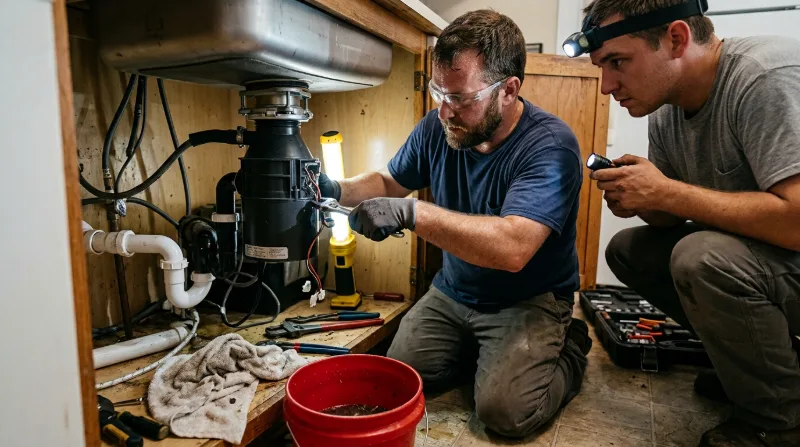
The unit that shares the cabinet and complicates every faucet job.
Disposals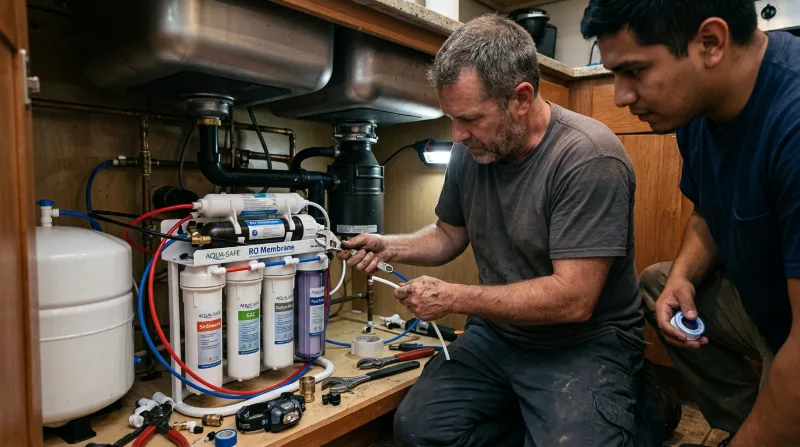
The upstream answer to scaled aerators and stiff cartridges.
Water qualityDone to the wall, not to the fixture
The parts you cannot see are what decide whether the installation is trouble-free.
Kitchen, bathroom, laundry and outdoor fixtures across Buena Park and north Orange County.