Commercial Water Heater Service
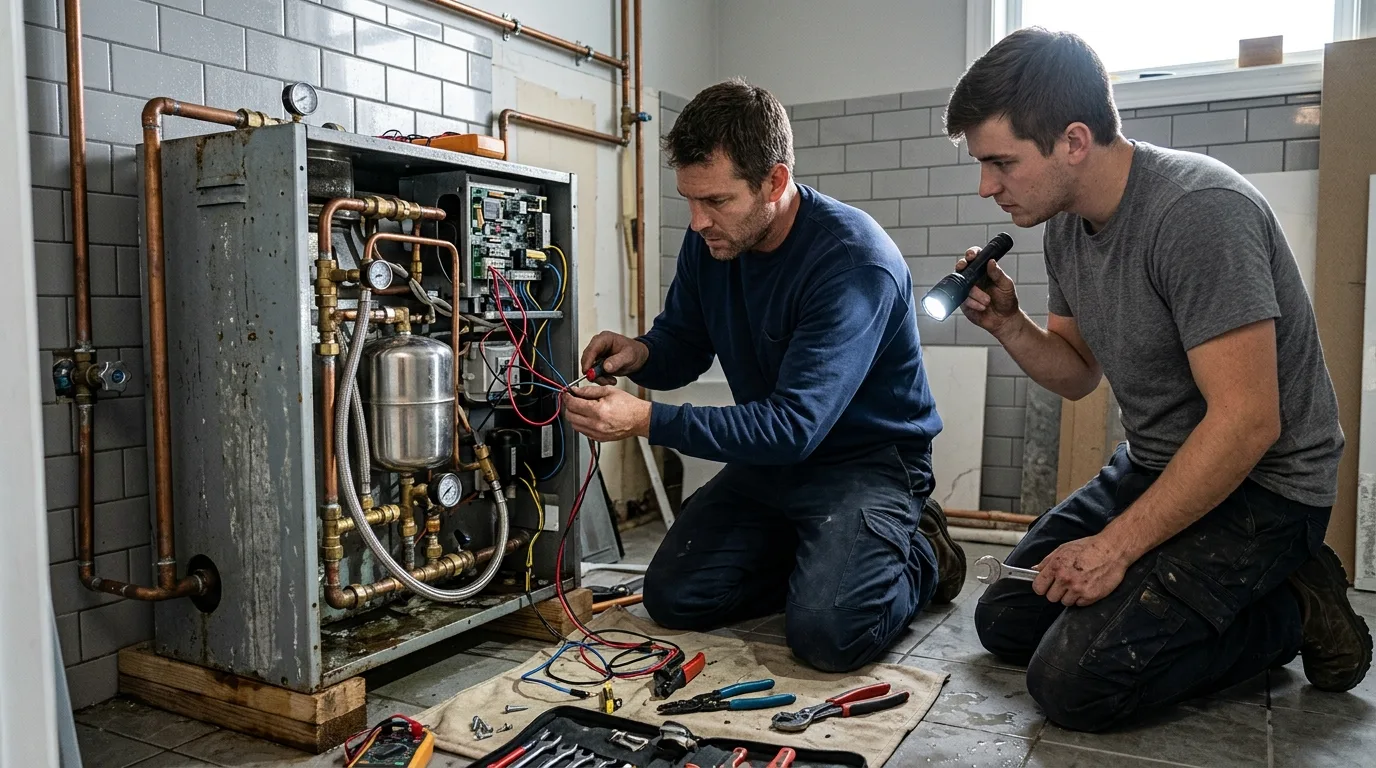
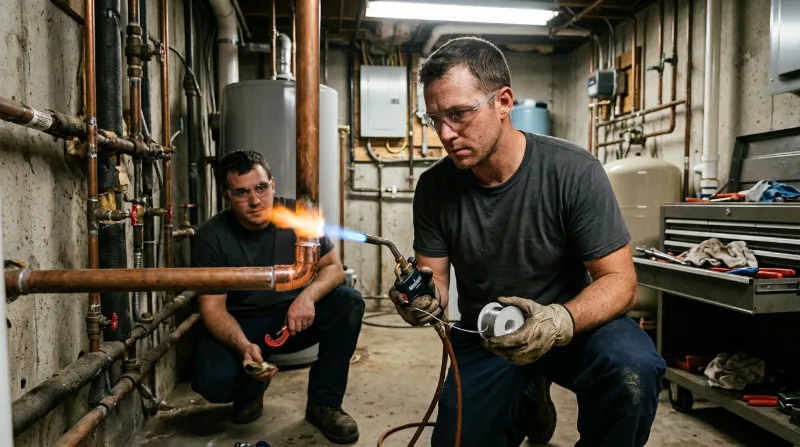
Plant, loops and mixing valves, the four systems behind one complaint.
Hot waterPlanned work lands in the quietest hours the property has, never during service.
Capacity assessed against the worst hour, check-out, pre-shift, clean-down.
Staged equipment, contained work areas and access routed through back-of-house.
Banked plant and duplex pumps so one failure reduces capacity instead of stopping service.
Why hospitality is its own discipline
Hospitality plumbing is defined by two constraints that no other building type combines. Demand is extremely peaked, a hotel’s hot water load concentrates into the check-out hour, a kitchen’s into service and clean-down, and the building is occupied continuously, so there is no natural window when things can simply be switched off.
Buena Park has more of these buildings than a city its size would suggest. The Beach Boulevard entertainment corridor concentrates hotels and motels serving regional attractions, dinner-theatre venues with large simultaneous seatings, and restaurants operating at high volume. Their plumbing is closer to light commercial infrastructure than to anything residential, and it fails in ways that are entirely predictable once you know the pattern.
The single most useful thing to report is timing. A hot water complaint at 6 a.m. that resolves by 10 a.m. is a capacity or recovery problem. A complaint that persists all day is plant or a mixing valve. A complaint confined to the far end of a floor is the recirculation loop. Timing and location together usually identify the system before anyone arrives.
The most common hospitality call is guest rooms reporting no hot water during the morning peak, with everything apparently normal by the time anyone investigates. That pattern is nearly diagnostic in itself: the plant has enough capacity for average demand and not enough for the worst hour.
Two mechanisms produce it. Genuine under-capacity, where the building has added rooms, converted spaces or changed its occupancy pattern while the plant stayed the same. And partial failure, where one heater in a bank of three is down, which is invisible for most of the day and decisive at the peak. Banked plant is designed for exactly that redundancy, and the consequence is that failures hide until the load arrives.
Sizing for these buildings is a peak-load calculation with an allowance for simultaneous use, not a match of whatever is currently installed. And capacity is only one of three levers: recovery rate and storage volume are the others, and additional storage frequently solves a peak problem at a fraction of the cost of new heating plant. That is a conversation worth having before a changeover rather than after.
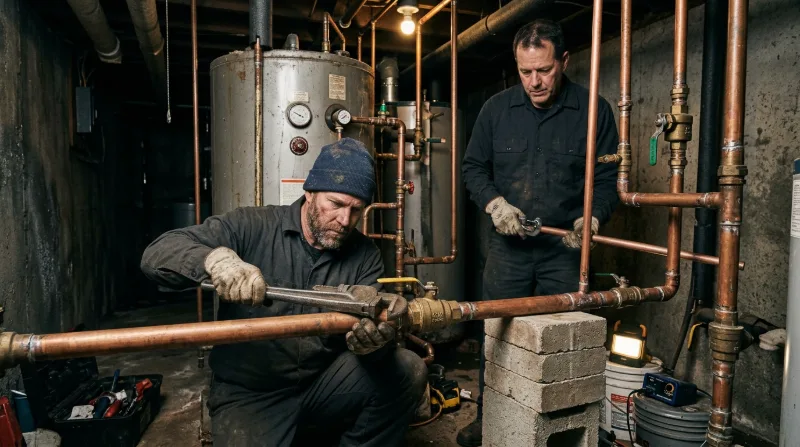
A recirculation loop keeps hot water moving through the distribution system so a fixture at the far end of a long run delivers hot water immediately rather than after a long draw. In a hotel it is the difference between a guest turning a tap and getting hot water, and a guest calling the front desk.
When the loop stops returning, the plant can be fully hot while the far rooms are cold, and this is the single most common real fault behind upper-floor and end-of-corridor complaints. The causes are a failed or seized recirculation pump, a pump running but airlocked, a check valve failed or installed backwards allowing short-circuiting, balancing valves closed or maladjusted after previous work, or a loop that was never balanced correctly at commissioning.
Diagnosis is measurement rather than inspection: temperatures at the plant, at intermediate points and at the return, with the differential showing whether flow exists and whether it is adequate. It is straightforward for someone who does it regularly, and it routinely resolves a complaint a property has lived with for years and assumed was capacity.
Guest rooms are stacked, which means their supply and drainage are stacked too. A riser fault affects a vertical column of rooms; a stack blockage backs up into the lowest room on that column. That geometry determines everything about how the work is planned.
The practical consequence is zone isolation. Closing the correct riser takes one column of rooms out of service while the rest of the hotel operates normally, which is a manageable operational problem. Closing the wrong valve, or not knowing which valve does what, takes out a floor or a wing. This is why valve tagging and a riser map are worth more in a hotel than in almost any other building.
Access adds its own discipline. Work that passes through guest rooms or corridors needs coordination with housekeeping and front desk, contained work areas, staged equipment and routes that keep tools and hoses out of guest-facing space. Discretion is part of the job specification, not a courtesy, a repair that is technically perfect and visible to arriving guests has still failed part of its brief.
A hotel restaurant, a dinner-theatre kitchen or a high-volume venue kitchen moves grease in quantities that make drainage a scheduled maintenance item rather than a repair category. Fats cool on the pipe wall and set, food solids adhere, and the line narrows until it closes, reliably at the least convenient moment, because that is when the load is highest.
Venues add a specific pattern worth naming: large simultaneous seatings produce a restroom and drainage load that arrives in minutes rather than spreading across an evening. Restroom cores in those buildings see peaks a normal commercial building never experiences, which means fixture wear, flushometer faults and blockages arrive faster.
The answer in both cases is interval maintenance with recorded evidence. Grease lines jetted on a cycle matched to throughput, interceptors serviced before they surcharge, floor sinks and traps included, and a camera pass each visit so the interval can be tuned rather than guessed. A venue on that program does not lose a service; one waiting for the backup eventually does.
Pressure falls with height, so upper guest floors always see less than the ground floor. Where the margin is thin, that becomes the difference between a usable shower and a complaint, and it frequently gets misdiagnosed as a hot water problem because guests describe it as poor hot water rather than poor pressure.
Multi-story buildings handle it with a pressure system: duplex or triplex pump sets with variable speed control holding constant pressure across a demand curve that swings enormously through the day, and zoning by height so the lower floors are not over-pressured to serve the top. Redundancy is the specification rather than a luxury, because a single pump failure in a hotel means guest floors without usable water.
The diagnostic overlap with hot water is worth understanding. A booster set that has lost one pump in a duplex arrangement behaves exactly like a partially failed heater bank: fine through most of the day, failing at peak. That is why a peak-hour complaint in a multi-story property should have both the plant and the pressure system measured, not one or the other.
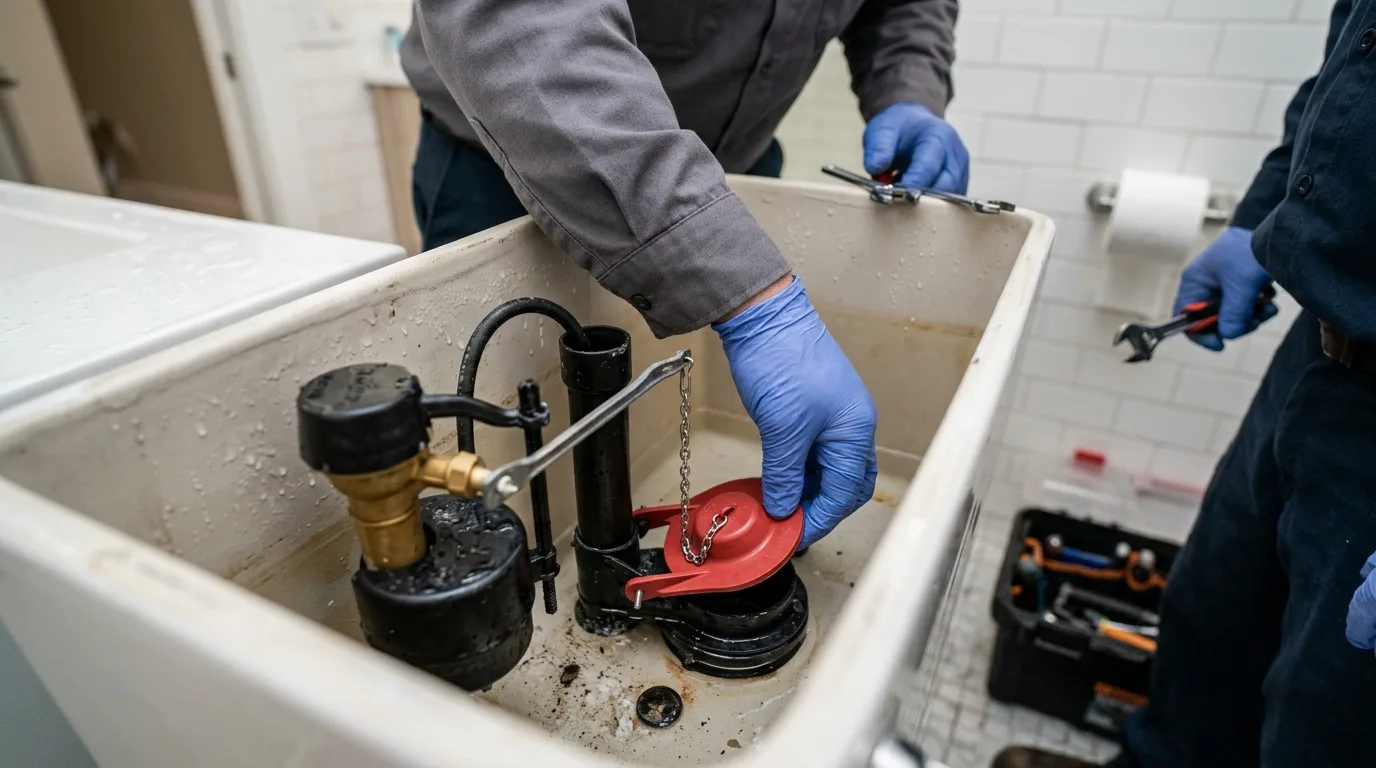 Peak hourThe real test
Report it precisely
Hospitality complaints reach maintenance filtered through guests and front desk, which strips out exactly the detail that makes them diagnosable.
Capturing these five at the time of the complaint is worth more than any amount of investigation afterwards.
Front desk and maintenance logs are often enough to identify the system on the phone.
Tell dispatch the time, the number of rooms and which floors. That routes the call to a plant technician rather than a general plumber.
Emergency plant and riser response around the clock, with isolation as the first action.
How a hospitality call runs
Four stages, and the first one is about the building operating rather than the plumbing working.
Isolate the smallest zone, one riser, one column, one wing, so the rest of the property keeps operating normally.
Plant temperatures, loop differential, pump operation, staging behavior and pressure at the highest fixture, at peak and off-peak.
Emergency work now; planned work staged into overnight, pre-open or low-occupancy hours agreed with the property.
Readings logged for the building file, intervals set for grease and plant service, and valve information tagged for next time.
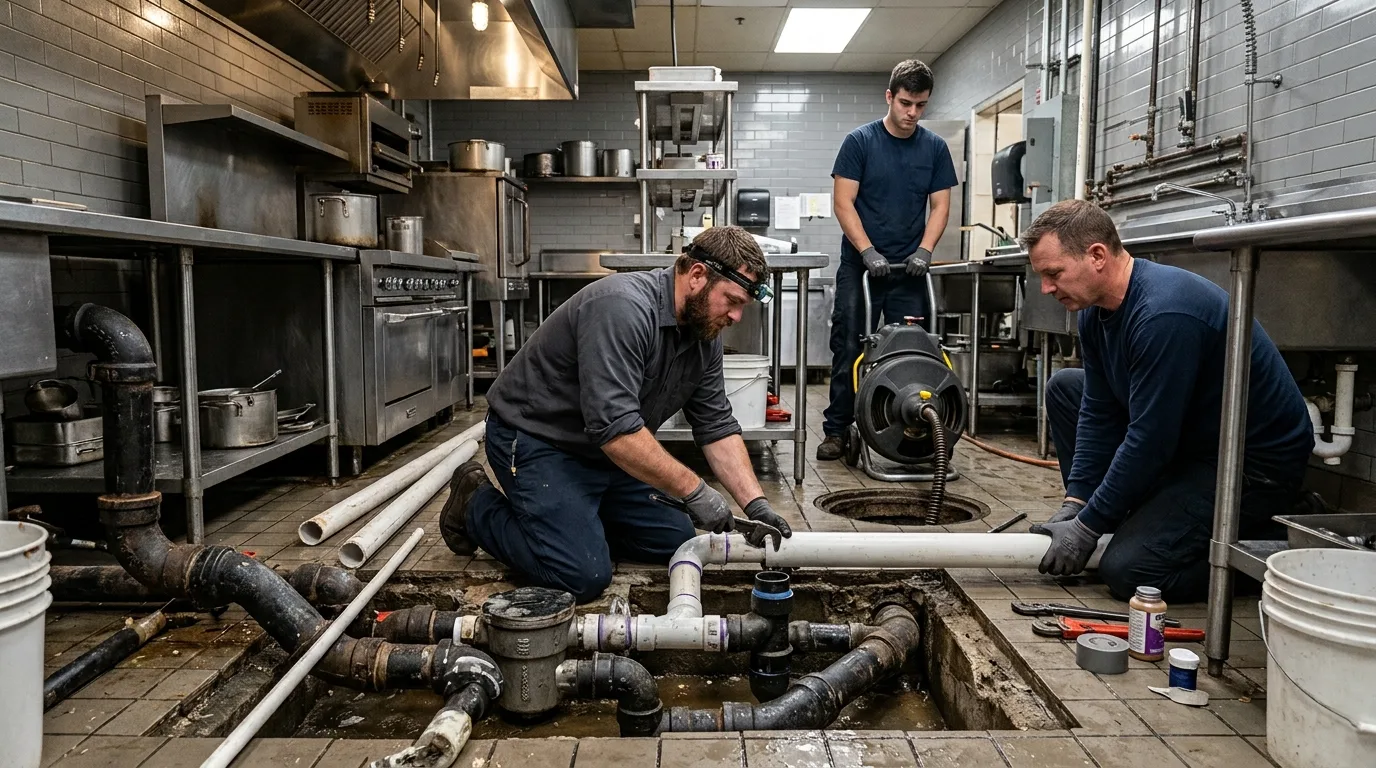
Venues & dinner theatre
A venue that seats hundreds at once produces a restroom and drainage load that arrives within minutes, not spread across an evening. Restroom cores in those buildings see peaks no ordinary commercial property experiences.
The consequence is faster wear and faster blockages, and the answer is scheduled attention: flushometer checks, fixture and flange inspection, floor drain and trap service, and grease line jetting on an interval that reflects the real volume passing through.
Give us your performance calendar and the work gets scheduled into your dark hours.
Questions we get on these calls
Yes, and it is the default for planned hospitality work rather than a special request. Plant changeovers, loop repairs, riser work, jetting and interceptor service are scheduled into overnight, pre-open or low-occupancy windows, with equipment staged and access routed through back-of-house. Emergency response runs around the clock. Give us your occupancy pattern and quietest hours and the work is planned around the property.
Because that is when demand concentrates, and the plant has enough capacity for average use but not for the worst hour. Two mechanisms produce it: genuine under-capacity, where the building has added rooms or changed its occupancy while the plant stayed the same, and partial failure, where one heater in a bank is down, invisible most of the day and decisive at peak. Both are identified by taking readings at the peak rather than at midday.
Almost always the recirculation loop. It keeps hot water moving so distant fixtures deliver immediately, and when it stops returning, the plant can be fully hot while the far rooms are cold. Causes include a failed or airlocked pump, a check valve failed or fitted backwards, balancing valves closed after previous work, or a loop never properly balanced at commissioning. Temperature readings at the plant, mid-run and at the return identify it quickly.
That is the objective on every call. Guest rooms are stacked, so their supply and drainage are stacked too, and closing the correct riser takes one column of rooms out while the rest of the property operates normally. What makes that possible is knowing which valve isolates what, verified by actually closing them, not assumed. Valve tagging and a riser map are worth more in a hotel than in almost any other building type.
Put it on an interval rather than waiting for it. Grease cools on the pipe wall and sets, food solids adhere, and the line narrows until it closes, reliably at the highest load, which is the worst moment. Jetting on a cycle matched to actual throughput, with the interceptor serviced before it surcharges and a camera pass recorded each visit, keeps the line viable. One mid-service closure costs more than several years of scheduled visits.
No, though guests describe both the same way, which is why they get conflated. Pressure falls with height, so upper floors always see less, and where the margin is thin that becomes a complaint. Multi-story buildings handle it with a booster set, and a booster that has lost one pump in a duplex arrangement behaves exactly like a partially failed heater bank: fine most of the day, failing at peak. Both systems should be measured.
Enough that a single failure reduces capacity rather than stopping service. That means banked or staged heaters rather than one large unit, duplex or triplex booster sets with alternating duty, isolation valves arranged so any single component can be removed without draining the plant, and ideally a spare recirculation pump on the shelf. These are modest decisions at installation and replacement time with a very large effect on how a future failure feels.
With coordination and containment. Access is arranged with housekeeping and front desk, work areas are contained and protected, equipment is staged rather than carried through repeatedly, and routes keep tools and hoses out of guest-facing space wherever possible. Discretion is part of the specification: a repair that is technically perfect and visible to arriving guests has still failed part of what it was asked to do.
Yes, and they need a different interval from ordinary commercial restrooms. A venue seating hundreds at once produces a load that arrives in minutes, so fixture wear, flushometer faults and blockages appear faster than anywhere else. Scheduled attention, flushometer rebuilds, fixture and flange checks, floor drain and trap service, catches those before they become out-of-service stalls during a performance.
An asset list covering plant, pumps, loops, interceptors and backflow assemblies; a service interval for each; documented readings every visit so a degrading pump or narrowing capacity margin is visible in advance; grease line jetting matched to throughput; and an agreed out-of-hours window. The value is that the property stops discovering problems through guest complaints and starts seeing them in the maintenance record first.
Room count, floors, plant type and when complaints occur, that is enough to scope the visit.
Related work
Each of these has its own page, and in a hotel they all interact.
Plant, loops and mixing valves, the four systems behind one complaint.
Hot water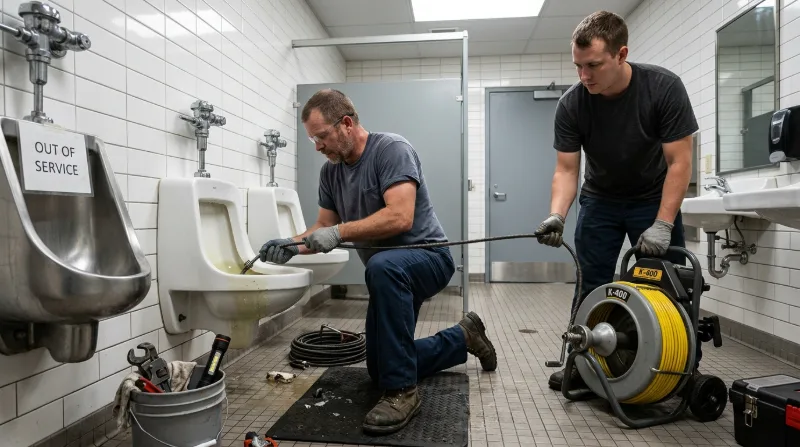
Upper-floor pressure, zoned by height with redundancy built in.
Pressure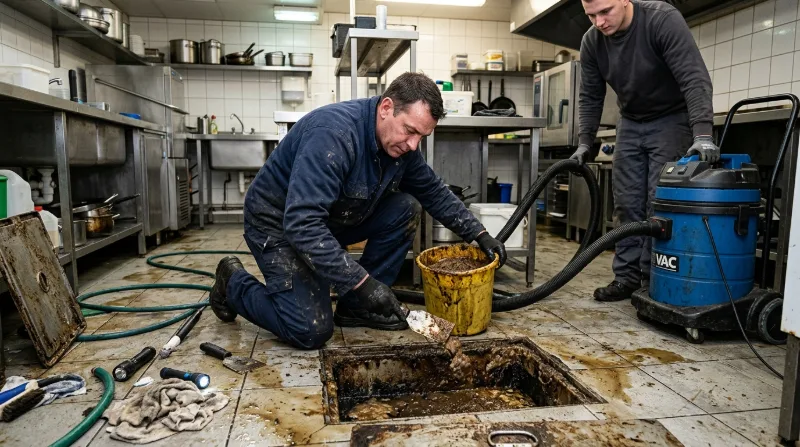
Risers, stacks and the zone isolation that keeps the building open.
BuildingsGuests never notice
Peak-load capacity, a loop that returns, redundancy in the plant, and maintenance that keeps it all out of the guest experience.
Hotels, motels, venues and restaurants along Beach Boulevard and across north Orange County.