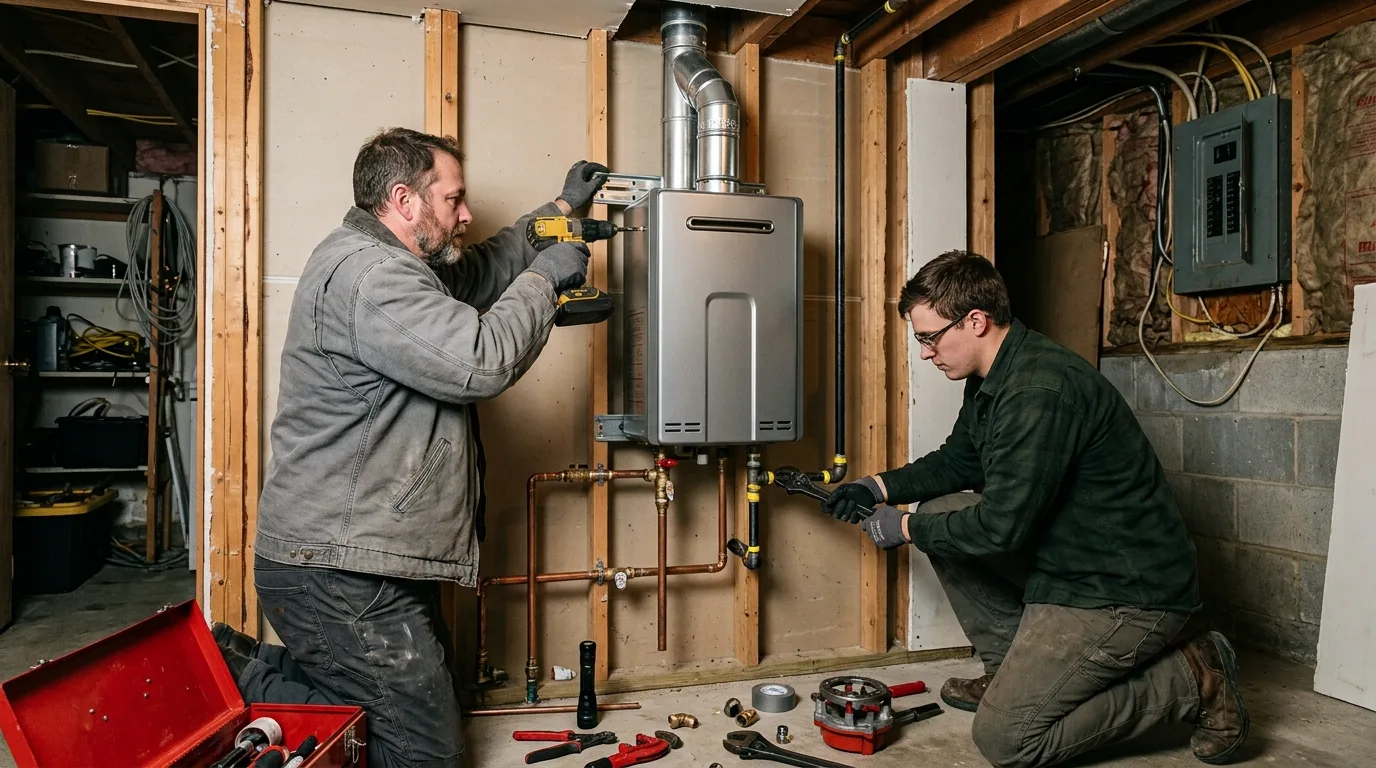
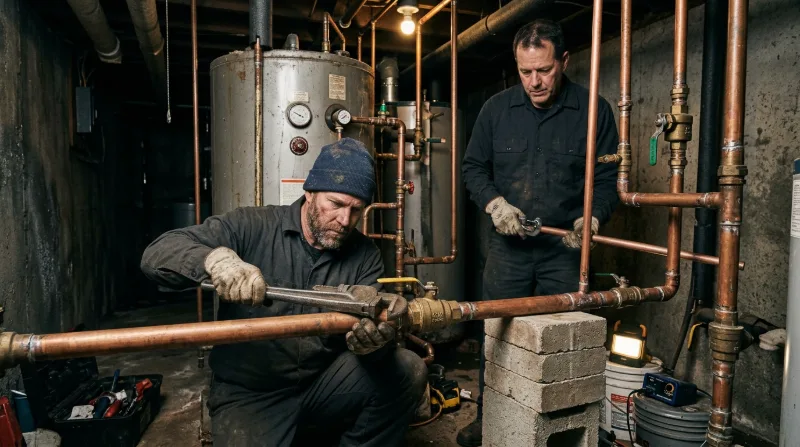
Sized on demand
Simultaneous use and recovery rate, not a rule of thumb about occupant count.
Permitted and inspected
Pulled through the City of Buena Park, with the inspection scheduled as part of the job.
Seismic strapping to code
California requires bracing, and it is the most commonly flagged item on older installs.
Set up for hard water
Expansion tank, pressure check and a flush schedule, so the new tank outlives the last one.
Decide once
Four questions worth answering before the truck arrives
A water heater replacement is usually reactive: the old one failed, the household has no hot water, and the fastest path is a matching unit in the same place. That is often the right answer, but it should be a decision rather than a default, because the incremental cost of changing something during an installation is a fraction of what it costs later.
The four questions are capacity, recovery rate, technology and location. Capacity is how much hot water the tank holds. Recovery rate is how fast it makes more, and it matters more than capacity in households with clustered demand. Technology is tank versus high-recovery tank versus tankless. Location is whether the current spot is actually the best one, a heater in a hallway closet or an interior utility space carries a different risk profile from one in a garage, and moving it during a replacement is far cheaper than moving it as a project.
Sizing is about simultaneous demand, not headcount. A household of four with staggered morning showers is served well by a modest tank. The same four people showering inside thirty minutes with a laundry cycle running needs either more capacity or a higher recovery rate. Describe your actual mornings and the sizing conversation becomes straightforward.
Tank, high-recovery tank, or tankless
A conventional tank is the default for good reasons: lowest installed cost, simplest replacement, well understood, and entirely adequate for most households. Its limits are finite capacity and standby loss, and in this water its service life is shortened by scale unless it is flushed.
A high-recovery tank is the underused middle option. Same footprint, same simplicity, but a larger burner that reheats far faster, which suits exactly the household that runs out of hot water in a cluster and then does not need any for eight hours. It is frequently a better answer than upsizing capacity and always cheaper than converting to tankless.
Tankless fires on demand and delivers hot water indefinitely, in a fraction of the space, with a long service life. The honest caveats: descaling is mandatory in this water rather than optional, retrofits often need a larger gas line to supply the burner and different venting, and there is a minimum flow rate below which the unit will not fire, which occasionally surprises people with a very low-flow fixture. Where it shines is a household that will maintain it and values the endless supply and the reclaimed floor space.
Electric versus gas is usually decided by what is already there, since adding gas or upgrading a circuit changes the economics substantially. Heat pump water heaters are worth mentioning: highly efficient, but they need air volume and produce cool exhaust, which makes a garage a plausible location and an interior closet generally not.
What a compliant installation includes
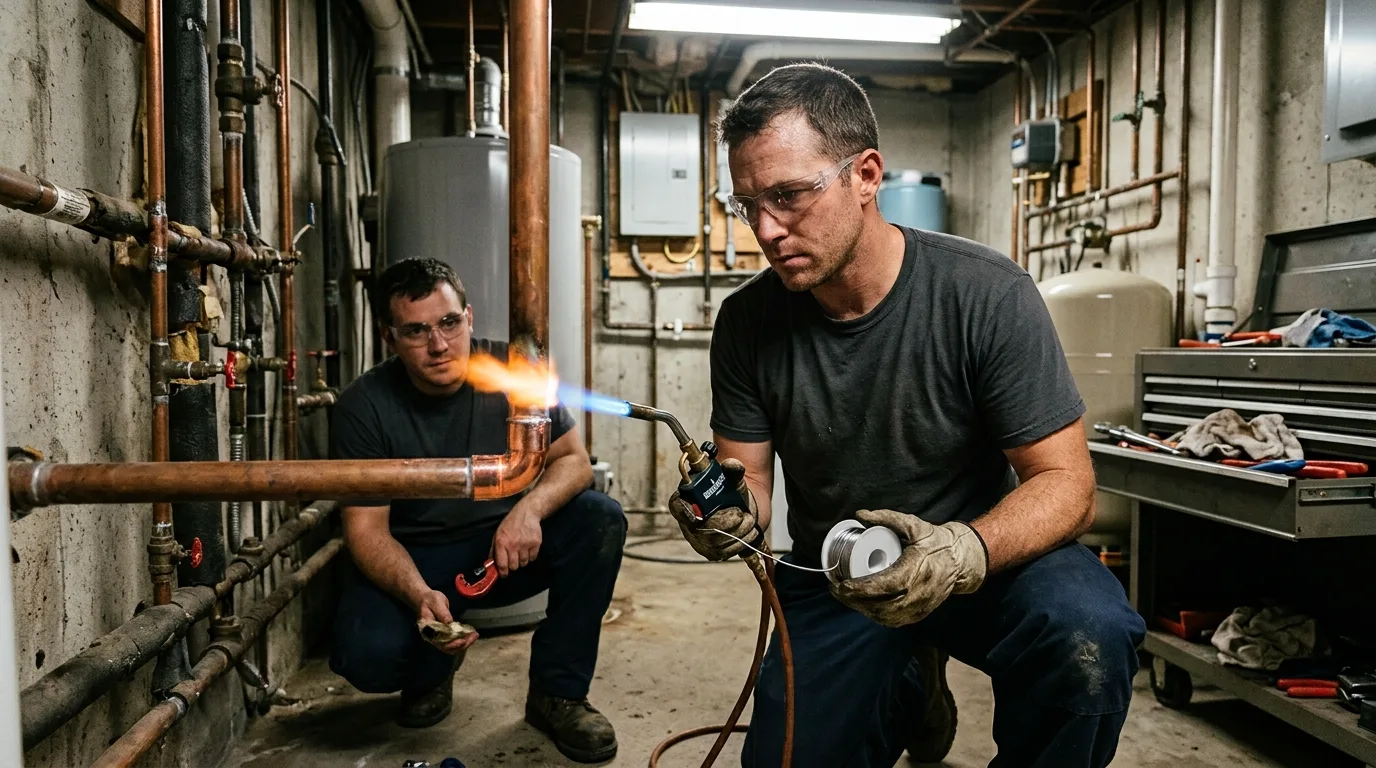
Seismic strapping is the item inspectors flag most often on older installations in California, and it is not decorative, two straps at the specified heights, anchored properly into structure. If your current heater has one strap, a plumber’s strap, or none, that is a code issue independent of the heater’s age.
Then: a temperature and pressure relief valve with its discharge line routed correctly to an approved termination, never capped, never plugged, never terminated somewhere it cannot be seen. Correct venting with proper rise, slope and clearances for a gas unit, and adequate combustion air, which is a genuine issue in tight closets and small garage alcoves. A drain pan with a drain line where the location requires one, which interior installations generally do. New flexible connectors rather than reused ones, a functioning cold inlet shutoff, and dielectric unions where copper meets steel.
An expansion tank belongs in most installations here and is skipped constantly. Heated water expands, and in a system with a pressure regulator there is nowhere for that expansion to go, so pressure spikes, the T&P valve weeps, and every joint in the house absorbs the cycling. Checking static pressure and fitting an expansion tank where needed is inexpensive and materially extends the life of both the heater and the plumbing.
The permit, and why it is worth having
Water heater replacement is permitted work through the City of Buena Park, and it is inspected. The permit costs a modest amount and produces an installation someone independent has confirmed is correct, on a gas-fired appliance with a pressure vessel, in an earthquake zone, that is worth having.
It also matters at resale. Undocumented work on a gas appliance is exactly the kind of finding that produces a credit request or a repair demand during escrow, and retrospectively permitting is more expensive and more awkward than permitting at the time. A contractor who suggests skipping the permit is offering you a small saving and a larger liability.
Hard water, and making this one last longer than the last one
Imported water in this part of Orange County carries enough mineral content that scale is the dominant cause of premature heater failure locally. On a gas tank, scale accumulates on the bottom and insulates the burner from the water it is heating: recovery slows, fuel use rises, the tank rumbles, and usable capacity drops because the lower portion is occupied by sediment. On an electric tank, scale coats the elements and causes early failure. On tankless, scale restricts the heat exchanger and drives error codes.
The maintenance is unglamorous and effective. Flush a tank annually. Descale a tankless unit on the manufacturer’s interval, without exception. Check the anode rod at around five years, it is a cheap sacrificial part that protects the tank steel, and replacing a depleted one can add years.
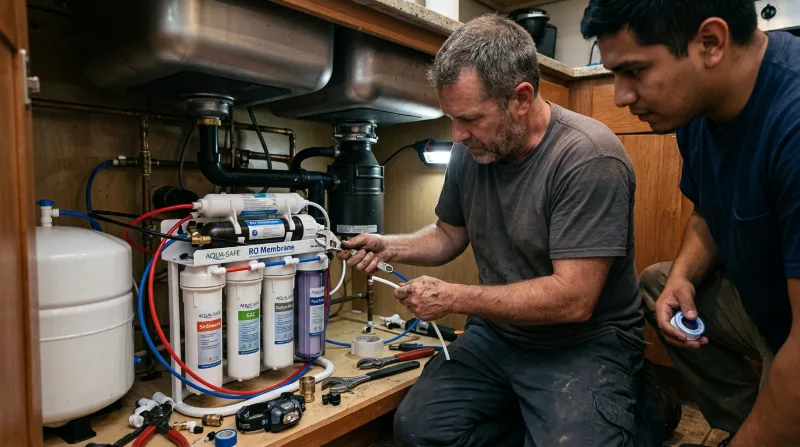
The upstream option is softening or filtration, which addresses the cause rather than the symptom. It is worth pricing if the house has a history of eating heaters, aerators and fixtures. At minimum, stub in a loop during the installation so the equipment can be added later without reopening the work.
Location, and what to fix while it is out
A heater in a garage is the easiest scenario: room for a pan and drain, room for combustion air, and a failure that ends up on a concrete floor near a door. A heater in an interior closet or a hallway is a higher-consequence location, a tank failure there puts up to seventy-five gallons into flooring and framing, and it is worth asking whether relocation is practical during the replacement.
While the old unit is out, several items are cheap and disproportionately annoying later: the cold inlet shutoff valve, if it is a seized gate valve; the flexible connectors; the drain pan and its line; the strapping anchors; and any accessible section of corroded supply pipe at the connections. Ask what the plumber can see and address while access is open.
 2Seismic straps
What to check on any quote
The line items that separate a good installation from a swap
Two installation quotes can differ by a lot and both be honest, they are including different work. These are the items to confirm are present.
Ask for each of them explicitly, because a heater fitted without them is cheaper on the day and worse for a decade.
- Permit and inspection pulled through the City, with someone scheduling the inspection rather than leaving it to you.
- Seismic strapping two straps at code heights, anchored into structure, not a single strap into drywall.
- Expansion tank and pressure check static pressure gauged, expansion tank fitted where the system needs one.
- New connectors and shutoff flexible connectors and cold inlet valve replaced, not reused from a twelve-year-old install.
- Pan, drain and venting drain pan with a routed line where required, and venting with correct rise, slope and clearances.
Ask What Is Included
A quote that itemises these is easier to compare and usually the better installation.
No hot water and a tank that is finished?
Replacement can happen quickly, and it is still worth two minutes on sizing before the unit is ordered.
Arrange a Replacement Today
Same-day installation where stock and schedule allow, with the permit handled either way.
The installation
What the day looks like
Size, remove, install, commission. The first and last steps are the ones people forget to ask about.
01
Size and specify
Simultaneous demand, recovery rate, fuel, location and technology settled. Permit pulled and unit ordered to spec.
02
Isolate and remove
Water and gas or power isolated, old tank drained and removed, connections and mounting condition assessed.
03
Install to code
New unit set, strapped, connected, vented, pan and drain fitted, expansion tank added where the system needs one.
04
Commission and inspect
Filled, purged, fired and tested, temperature set safely, City inspection completed and maintenance interval explained.
Commercial installations
For buildings, capacity is a peak-load calculation
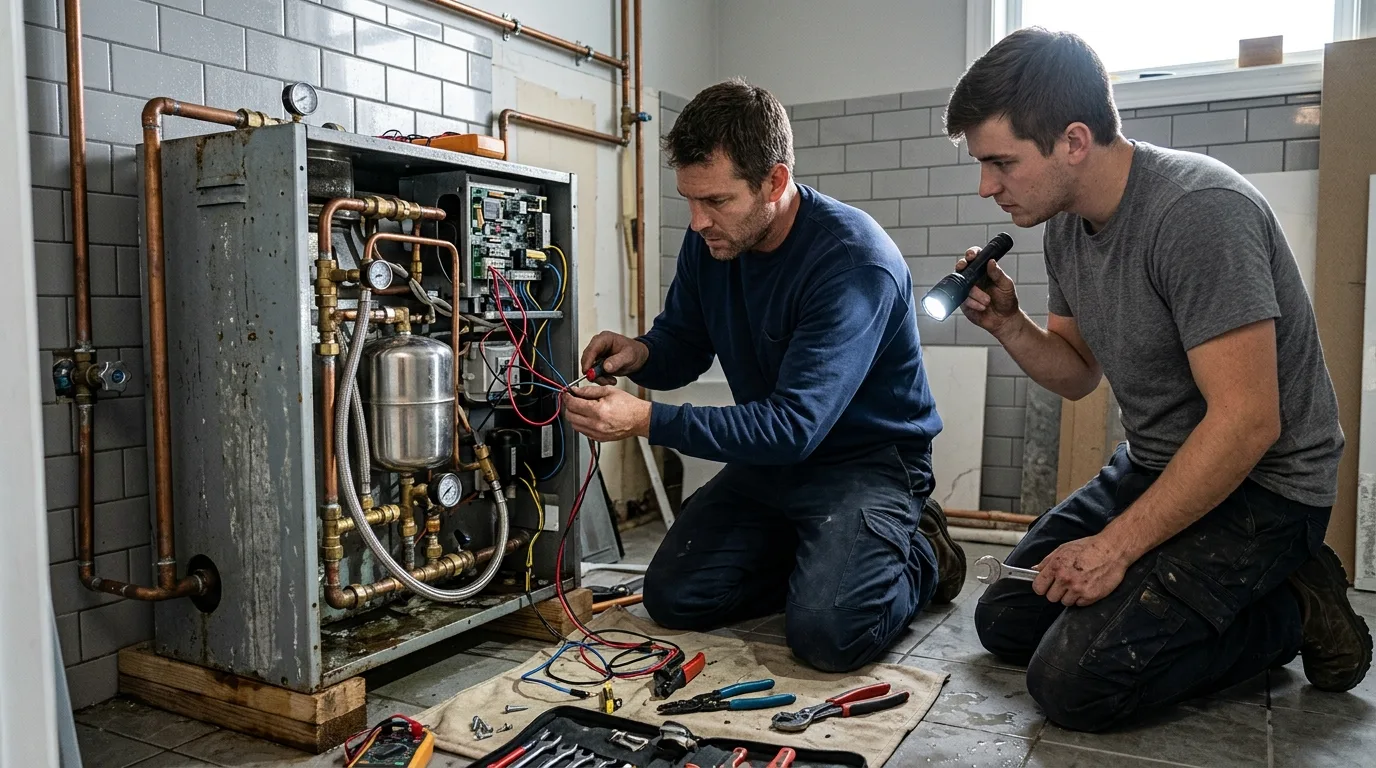
In a hotel, restaurant or multi-tenant building, hot water is a system rather than an appliance: heaters or a boiler plant, storage, a recirculation loop, mixing valves and often booster pumps. Sizing is driven by peak demand at the worst hour of the day, not by average consumption.
That is why commercial installations are designed rather than swapped. Banked and staged systems allow redundancy so a single failure does not empty the building of hot water, and getting the loop and mixing arrangement right is what stops the far end of a long run from running cold regardless of plant capacity.
- Peak-load sizing for hotels, kitchens and multi-tenant buildings rather than like-for-like replacement
- Banked and staged heater installations with redundancy so one failure does not stop service
- Recirculation loop, mixing valve and booster pump work as part of the installation
- Overnight and pre-open changeovers so the building is never without hot water during service
Plan a Commercial Changeover
Facility managers: ask for the peak-load calculation, not a match of what is currently installed.
Questions we get on these calls
Installation questions
It depends on simultaneous demand and recovery rate rather than occupant count, which is why the old rules of thumb disappoint people. Four people with staggered showers are well served by a modest tank; the same four inside thirty minutes with laundry running need more capacity or a much faster recovery rate. Describe your actual mornings, how many fixtures run at once and how close together, and the sizing follows from that.
Yes. It is permitted work through the City of Buena Park and it is inspected. On a gas-fired appliance containing a pressure vessel, in an earthquake zone, an independent check that the installation is correct is worth the modest fee. It also protects you at resale, where undocumented work on a gas appliance reliably produces a credit request during escrow. Ask who pulls the permit and who schedules the inspection.
It can be, with two honest conditions. Descaling is mandatory in this water, not optional, you are trading tank maintenance for exchanger maintenance, not eliminating maintenance. And retrofits frequently need a larger gas line and different venting, which changes the cost. Where tankless is excellent: endless hot water, a small footprint, long service life, and a household that will actually maintain it. Where it disappoints: as a like-for-like swap in a house that maintains nothing.
A straightforward like-for-like tank replacement is typically a few hours. Changing capacity, relocating the unit, correcting venting or combustion air, or adding an expansion tank extends that. A tankless retrofit is usually most of a day and sometimes more if gas line or venting work is required. Inspection is scheduled separately and does not hold up your hot water.
Heated water expands, and in a system with a pressure regulator that expansion has nowhere to go, so pressure spikes each heating cycle, the relief valve weeps, and every joint in the house absorbs the cycling. An expansion tank absorbs it. Most installations here benefit from one, and it is inexpensive when fitted during the install. It is also one of the most commonly omitted items, so ask whether it is included and what the static pressure reading was.
Often, and replacement is the cheap moment to do it. A heater in an interior closet or hallway is a higher-consequence location, since a tank failure puts up to seventy-five gallons into flooring and framing. Relocating to a garage typically improves the risk profile and makes combustion air, pan drainage and future service easier. It adds cost for pipe, gas and venting changes, but far less than doing it as a standalone project later.
They are highly efficient and worth considering where conditions suit. The requirements are real: they need a reasonable volume of air to draw from and they exhaust cool air, so a garage or a large utility space works and a small interior closet generally does not. They also need a condensate drain and a suitable electrical supply. If your existing installation is a garage-located electric tank, it is a genuinely attractive option worth pricing.
A conventional tank typically gives eight to twelve years locally, and the lower half of that range is realistic without flushing, because scale is the dominant local failure mechanism. Tankless can run considerably longer with proper descaling and disappointingly short without it. The strongest predictor is not brand or price, it is whether anyone performs the annual maintenance. Softening or filtration upstream shifts the odds further in your favor.
Yes, removal and disposal of the old unit is normally part of the installation. Confirm it is in the quote rather than assumed, along with whether any drain pan, connectors and shutoff valve are being replaced or reused. Reused twelve-year-old flexible connectors and a seized cold inlet gate valve on a brand-new heater are a false economy that shows up as a service call within a year or two.
It is sometimes possible, but ask before purchasing rather than after. Two problems arise: warranty terms often differ for owner-supplied equipment, and units bought on specification alone frequently do not suit the installation, wrong venting configuration, wrong gas input for the existing line, wrong dimensions for the alcove, or a capacity that does not match actual demand. A ten-minute conversation before you buy avoids an expensive return.
Book an Installation Consultation
Describe your household mornings and your current unit, that is enough to size it accurately.
Related work
Around a new heater
Repair first, the tankless option, and the pressure problem that shortens every heater’s life.
Tankless Water Heater Service
What ownership actually involves before you commit to on-demand.
Tankless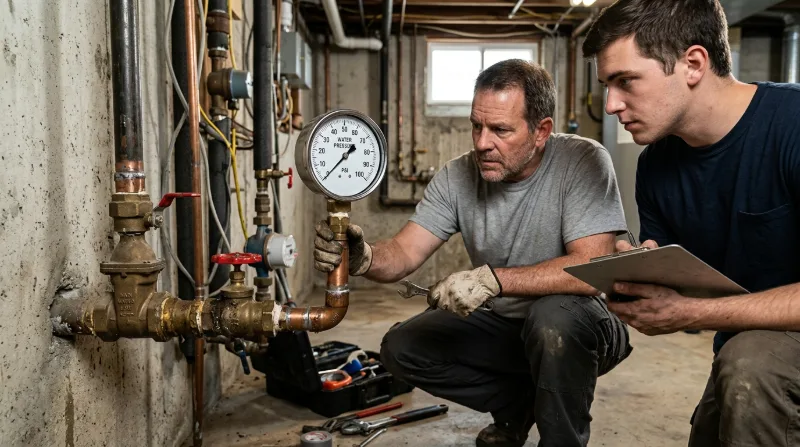
Water Softener & Filtration
Treating the cause of scale rather than flushing the symptom annually.
Water qualitySpecified, not swapped
The cheap moment to get it right is now
Capacity, recovery, technology and location, decided once, with the permit and the strapping handled.
Specify a New Water Heater
Residential and commercial installations across Buena Park and north Orange County.