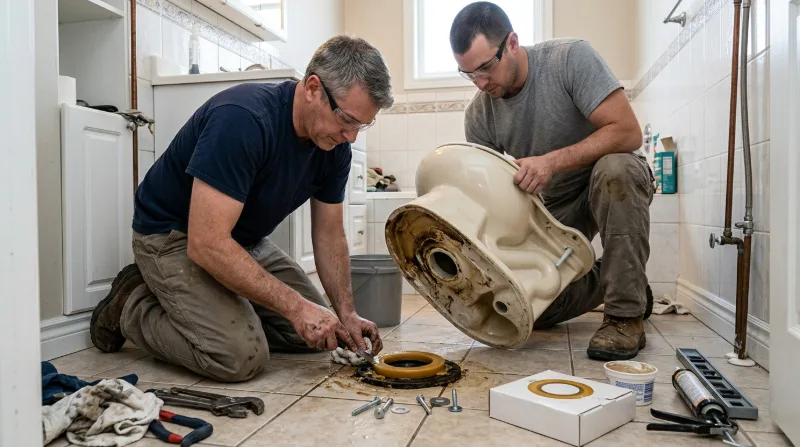
Toilet Repair & Installation
Running fills, rocking bases and failed seals in the same room.
ToiletsCartridges, seats and spools change from the front on most valve bodies, no tile removed.
Pressure-balance and thermostatic valves are safety devices, not comfort features.
Scale is why cartridges stiffen and diverters stop diverting in this area.
If access means opening a wall, you hear that and what it involves before work begins.
Symptom to part
A shower has one valve doing several jobs: mixing hot and cold, holding a set temperature against pressure changes elsewhere in the house, and directing water between the tub spout and the head. Almost every complaint maps to one of those functions, which makes diagnosis fast once you know the vocabulary.
A drip from the head or spout when the handle is off is the cartridge or its seats. Water that scalds when a toilet flushes is the pressure-balancing spool inside the valve, which is a safety component. Water that never gets hot enough, or is lukewarm regardless of the handle, is either the cartridge limit stop, a thermostatic element, or a crossover elsewhere in the house. Water coming out of both the spout and the head at once is the diverter. And a shower that has good pressure at other fixtures but not here is usually a blocked head or a scaled cartridge rather than a supply problem.
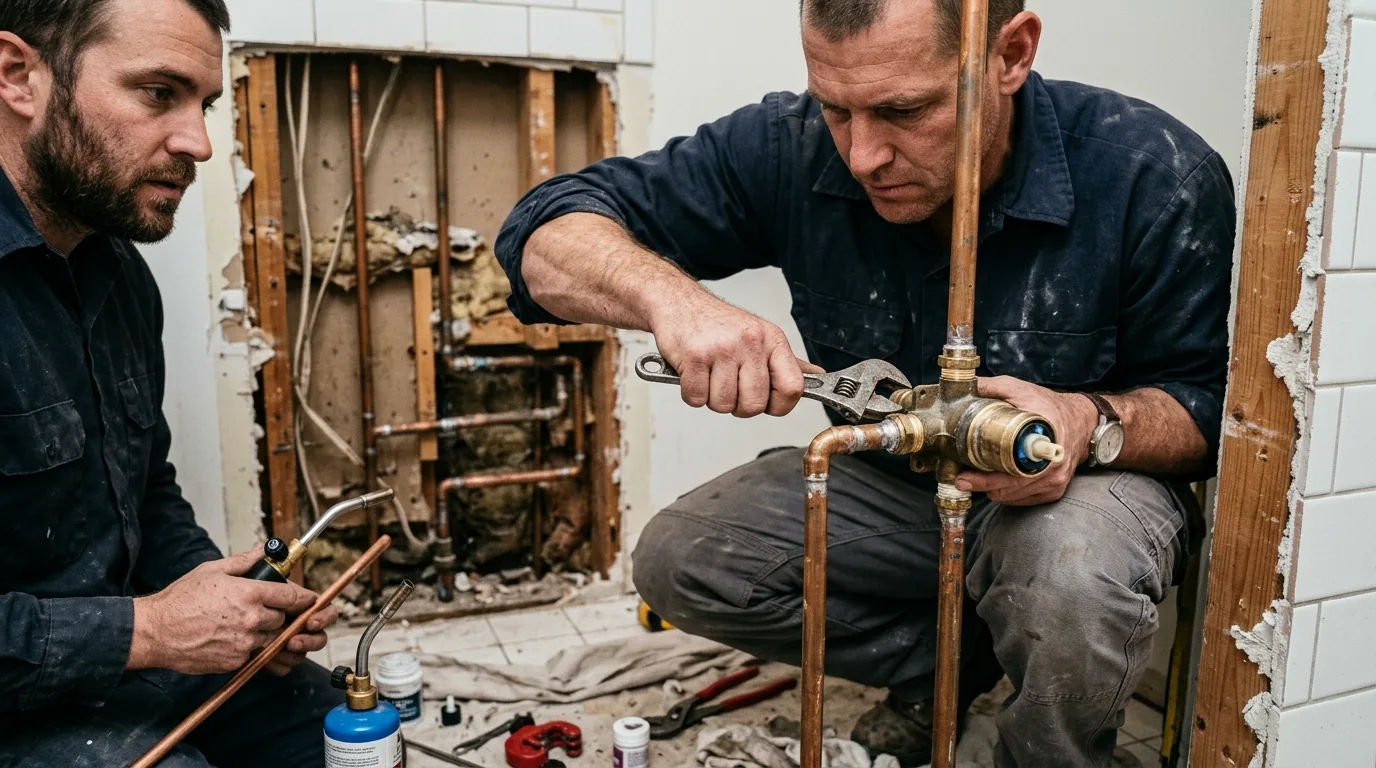
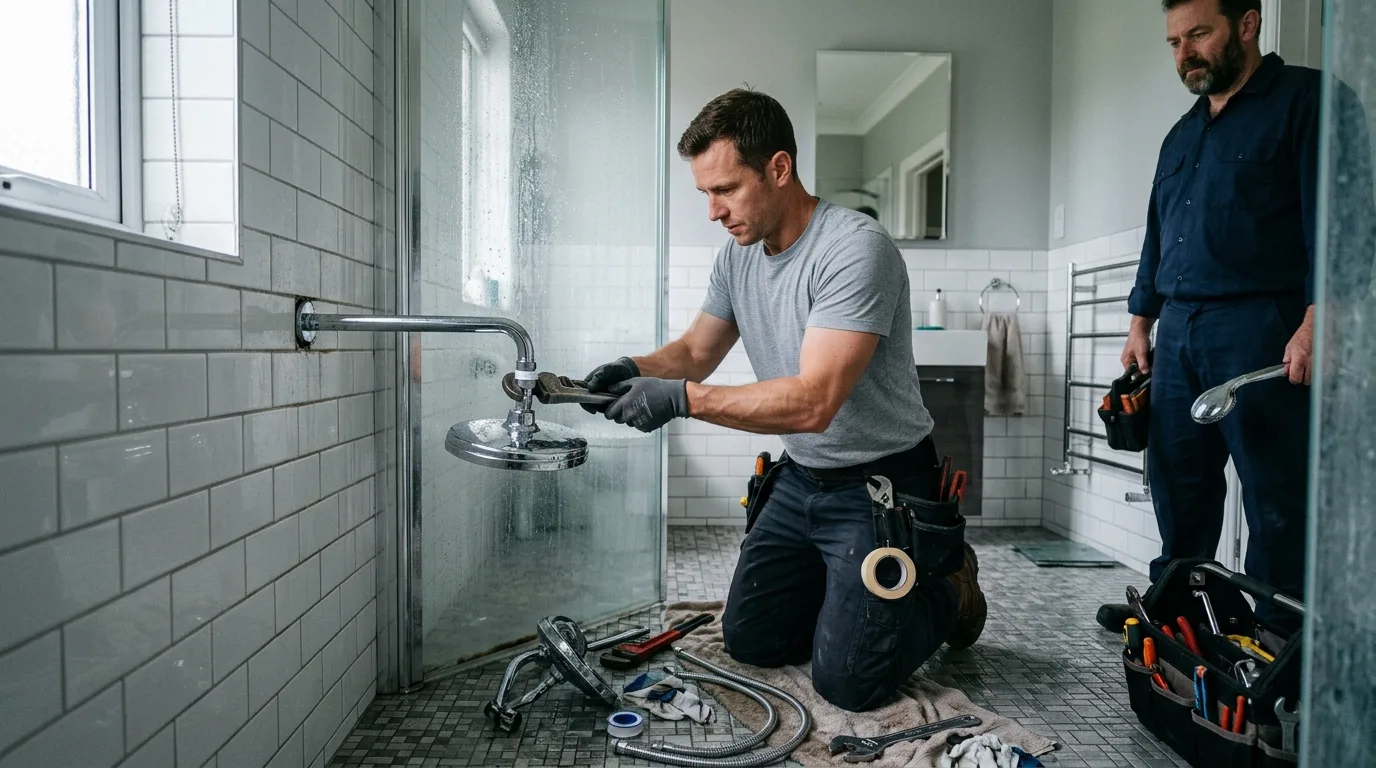
Most shower repairs need no tile removed. On the great majority of valve bodies, the cartridge, seats, springs and balancing spool all come out from the front once the trim is off. Opening a wall is reserved for a failed valve body, a leaking joint behind it, or a rough-in that has to change, and you should be told which of those applies before anything starts.
The cartridge is the moving heart of a single-handle valve, and it wears in two ways. Its seals harden and lose their grip, which produces the drip that will not stop. And mineral deposit builds on its sliding surfaces, which produces a handle that has become stiff, gritty or difficult to set precisely.
Hard water is what accelerates both locally. A cartridge in soft water can last many years; the same cartridge here often needs attention sooner, and a household that has replaced the same one twice should ask for a static pressure reading, because high pressure loads those seals continuously and compounds the problem.
The important practical point is parts availability. Cartridges are model-specific, and older or discontinued valves can be difficult to source, which is why identifying the valve manufacturer matters more than it sounds. A photograph of the trim and handle usually lets a plumber identify the family before the visit and arrive with the right part rather than making two trips.
A shower that suddenly runs hot when a toilet is flushed or the washing machine fills is a safety issue rather than an annoyance. The valve is supposed to hold temperature when supply pressure changes on one side, and when the balancing spool sticks, usually with mineral deposit, it stops doing so.
Pressure-balancing valves handle this mechanically by adjusting to keep the ratio of hot to cold constant. Thermostatic valves go further, holding an actual set temperature with a wax or bimetal element, and they are the better choice where children, elderly occupants or long horizontal runs are involved.
Older houses in this housing stock frequently still have two-handle valves with no balancing at all, which is why the flush-and-scald problem is so recognisable here. Upgrading the valve is real work if the wall has to be opened, but on a bathroom being remodelled anyway it is the single most worthwhile plumbing change available.
Every valve also has a limit stop, an adjustable maximum temperature. It is frequently left at whatever the factory set, and adjusting it is a two-minute job that both prevents scalding and stops the common complaint that a shower will not get hot enough.
When water runs from the tub spout while the shower is on, the diverter has failed. On a tub spout with a pull-up knob, the diverter is inside the spout and the fix is a new spout. On a valve-mounted diverter it is a serviceable part in the valve. On a three-handle arrangement the center handle is the diverter and has its own stem and seat.
Shower heads and hand-held units are the easiest things in the bathroom to improve and the most often left alone. Scale blocks the outlets, which produces an erratic spray and reduced flow that people attribute to house pressure. Cleaning or replacing the head is the first thing to try, before anyone investigates the supply.
Hand-held units and slide bars need a backflow-protected connection, which is worth checking on any older installation. So is the condition of the drop ell, the fitting the head screws into, which on older copper is a common source of a small leak inside the wall that shows up as a stain on the ceiling below.
Tub and shower drains block on hair and soap binding into a mat, usually within the first meter and frequently right at the strainer or the trip-lever linkage. That linkage is the part people forget: an old trip-lever waste has a plunger inside the overflow tube that catches hair and can also seize partly closed, which produces a tub that drains slowly with nothing visible in the drain itself.
Removing the linkage and clearing the mat resolves a large share of slow tub drains without any machine. Where the blockage is further down, cabling the branch is straightforward. Where a tub or shower blocks repeatedly, the branch or the vent deserves attention rather than another clearing.
A shower that gurgles, or a tub whose water rises when another fixture drains, is a venting or main line symptom rather than a local blockage. It is worth mentioning on the phone, because it changes the visit entirely.
Converting a tub to a walk-in shower is one of the most requested remodels in this housing stock, particularly where occupants want to remove a step-over. The plumbing side involves the drain position and depth, the valve height, and the waterproofing interface, and the drain is the part that decides whether the job is straightforward.
A tub drain sits at one end and low; a shower drain usually needs to be more central and to accommodate a pan or sloped bed. In a slab-on-grade house that can mean cutting concrete to reposition the drain, which is a materially bigger job than the fixtures suggest. That should be established before the project is priced, not discovered during demolition.
The valve is easier and worth upgrading at the same time: a modern pressure-balancing or thermostatic valve, set at the right height for the new configuration, with the limit stop adjusted. And if the bathroom is open anyway, this is the moment to replace accessible supply pipe, add an access panel for future service, and deal with any venting that was marginal.
 0Tiles removed
Ask about access
Tile in older Buena Park bathrooms is frequently unmatchable, so access matters as much as the repair. This is what can normally be done from the front.
And what genuinely requires the wall opened, worth knowing which category your job is in before it starts.
Send a photo of the trim and handle, it usually identifies the valve family before anyone visits.
That is the balancing component in the valve, and it is a safety part rather than a comfort one. Worth fixing promptly.
Usually resolved from the front of the valve in a single visit.
The repair
Identify the valve, repair from the front where possible, and set the limit stop before leaving.
Manufacturer and family established from the trim, so the correct cartridge or spool is on the van.
Drip, scald, temperature limit, diverter or flow, each points at a specific part inside the same body.
Cartridge, seats, springs or balancing spool replaced from the front, with descaling where deposit is the cause.
Limit stop adjusted, temperature checked against a flush elsewhere in the house, and flow confirmed at head and spout.
Questions we get on these calls
Usually not. On the great majority of valve bodies the cartridge, seats, springs and balancing spool all come out from the front once the trim is removed, which covers most shower complaints. Tile only has to come off for a failed valve body, a leaking joint behind it, or a rough-in change during a remodel. You should be told which category your job is in before work begins, because older tile here is frequently unmatchable.
The valve is supposed to hold temperature when pressure changes on one side of the supply, and the balancing spool that does that has stuck, usually with mineral deposit. It is a safety component rather than a comfort feature, so it is worth fixing promptly. The repair is normally from the front of the valve. On older two-handle valves with no balancing at all, the fix is a valve upgrade, which does require wall access.
Almost always the cartridge or the seats and springs behind it. Seals harden with age and mineral deposit builds on the sliding surfaces, so the valve no longer closes fully. It is a straightforward repair from the front. If you have replaced the same cartridge twice in a few years, ask for a static pressure reading, high pressure loads those seals continuously and is the most common reason cartridges fail early.
Check the valve first, because it is often the limit stop, an adjustable maximum temperature inside the valve that is frequently left wherever the factory set it. Adjusting it takes a couple of minutes. If that is not it, the candidates are a worn cartridge, a thermostatic element, or a crossover elsewhere in the house letting cold into the hot line. Only after those does the heater become the likely explanation.
The diverter has failed. On a tub spout with a pull-up knob, the diverter is inside the spout and the fix is a new spout, quick and inexpensive. On a valve-mounted diverter it is a serviceable part within the valve. On a three-handle arrangement the center handle is the diverter with its own stem and seat. All three are normally repairable without touching tile.
Look at the overflow. An old trip-lever waste has a plunger inside the overflow tube that collects hair and can seize partly closed, which produces exactly that symptom, slow drainage with a clear-looking drain opening. Removing the linkage and clearing the mat resolves a large share of these without any machine. If it recurs quickly, the branch line or the vent deserves attention rather than another clearing.
Yes, and the drain is what determines how big the job is. A tub drain sits low and at one end; a shower usually needs a more central drain that suits a pan or sloped bed. In a slab-on-grade house that can mean cutting concrete to reposition it, which is materially more work than the fixtures suggest. That should be established before the project is priced rather than discovered during demolition, so an assessment first is worthwhile.
It is worth considering where children, elderly occupants or long horizontal runs are involved. A pressure-balancing valve keeps the hot-cold ratio constant when pressure changes; a thermostatic valve holds an actual set temperature using a wax or bimetal element, which is more precise. If the wall is already open for a remodel, upgrading is the single most worthwhile plumbing change available in a bathroom. As a standalone job it means wall access, so the timing matters.
Start with the head. Scale blocks the outlets and produces an erratic spray and reduced flow that people naturally attribute to house pressure. Cleaning or replacing the head resolves it far more often than anything else. After that, a scaled cartridge is the next candidate. Only if other fixtures are also weak does it become a supply question, at which point a pressure reading and a flow test are the right next step.
Several possibilities, and they need distinguishing before anything is opened. A leaking drop ell, the fitting the shower head screws into, is common on older copper. So is a failed drain connection or trap below the tub, a compromised waterproofing membrane or grout allowing water past the tile, and a leaking supply joint behind the valve. Which one it is determines whether the repair is from above, from the front, or through the ceiling.
A photo of the trim and handle identifies the valve family and gets the right part on the van.
Related work
The rest of the fixtures, the drain behind them, and the pressure that ages them all.
Running fills, rocking bases and failed seals in the same room.
Toilets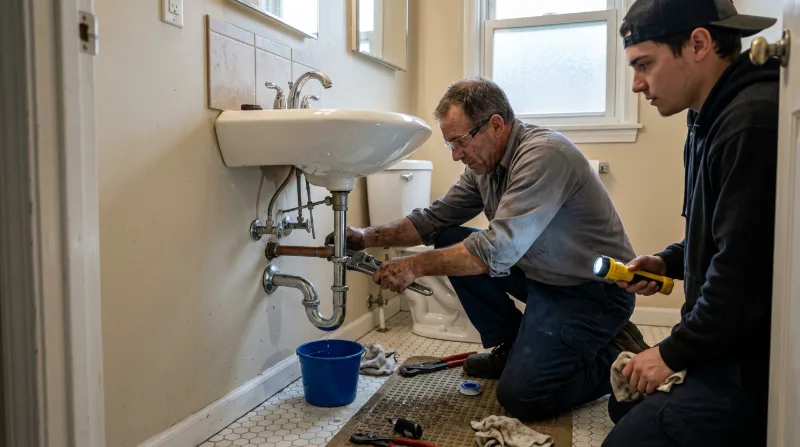
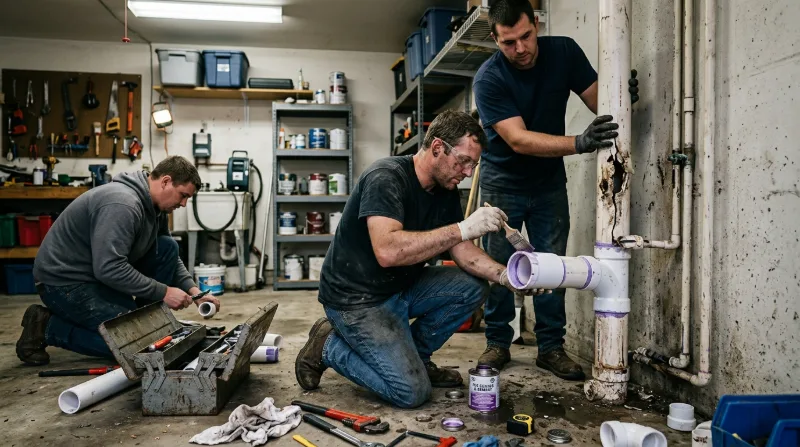

Fixed from the front
Identify the valve, replace the part, set the limit stop, and leave the wall exactly as it was.
Valve, diverter, drain and conversion work across Buena Park and north Orange County.