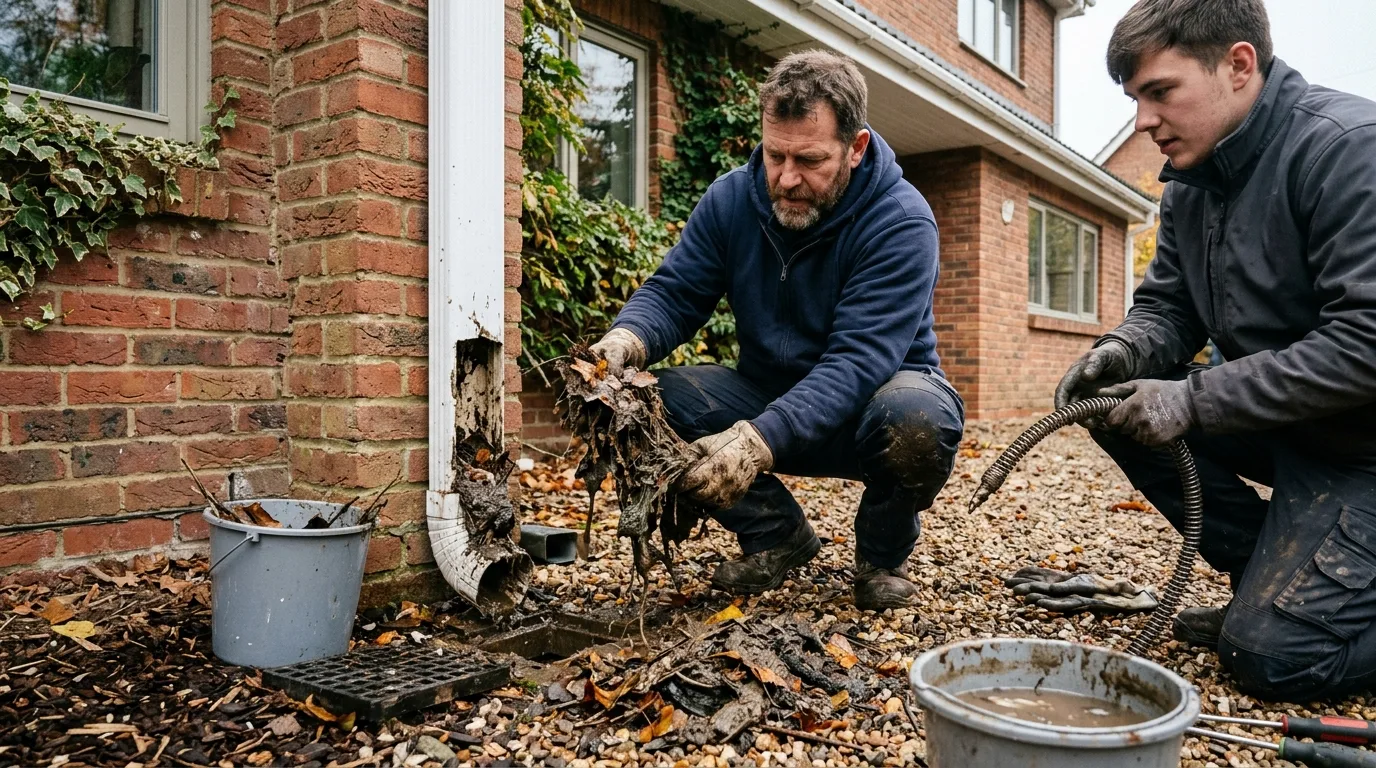
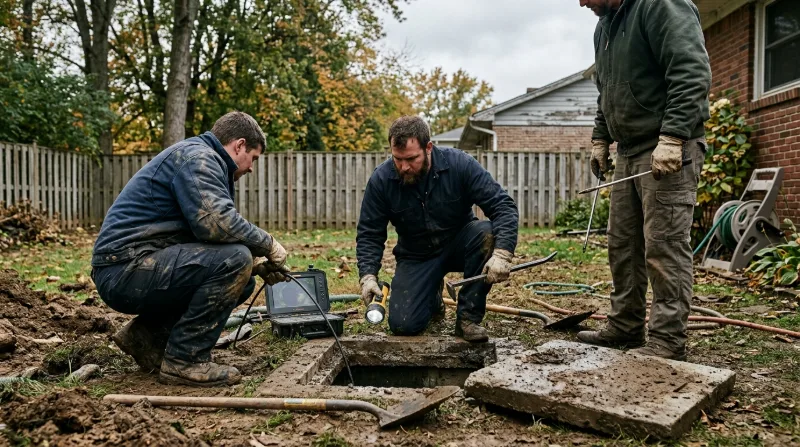
Central and quick to reach
Sitting between Stanton, Orangethorpe and the I-5 ramps, this is one of the fastest pockets to get to.
Attached-housing experience
Shared stacks, podium parking, upstairs units and the access problems that come with all three.
Contain first, diagnose second
In a stacked building the priority is stopping the spread into the unit below, then finding the cause.
Documentation for the HOA
Photographs, cause and scope written down, so the association conversation has something factual in it.
Attached housing, shared plumbing
Why a leak in a Buena Park Downtown condo is not the same job as a leak in a house
In a detached house, a plumbing problem is entirely yours. You own the pipe, you own the damage, and you decide what happens. In the condominium and townhome buildings around Stanton Avenue and Orangethorpe, almost none of that is true. The supply riser feeding your unit probably serves several others. The drain stack behind your bathroom wall carries waste from the floors above. The shut-off that actually isolates your kitchen may be in a utility closet you do not have a key to.
That changes the sequence of a service call. Before anyone can diagnose a leak, the water has to be stopped, and stopping it may mean isolating a riser that affects your neighbors. That takes a building contact, sometimes a manager, occasionally a maintenance person with the only key. The plumbers who work this district regularly know to ask about that on the phone rather than discovering it standing in your hallway.
The second difference is downward damage. Water in a stacked building does not stay on your floor. A slow supply leak behind a vanity will find the ceiling of the unit below long before it reaches your visible flooring, and by the time your neighbor knocks on the door, the drywall is already saturated. Containment comes first here in a way it simply does not in a single-family house.
Find your unit’s shut-off before you need it. In most Buena Park Downtown buildings there is an isolating valve inside the unit, often under the kitchen sink or in a laundry closet, that lets you stop your own water without involving the building. Knowing where it is turns a flood into a puddle.
Shared drain stacks and the backup that is not your fault
A vertical waste stack collects from every unit on the line. When it blocks low down, the unit at the bottom of the stack is the one that overflows, regardless of who caused the blockage. Ground-floor residents in older attached buildings learn this the hard way. If your tub or shower backs up when nobody in your home has run water, the problem is almost certainly in the shared stack rather than in your branch line.
Diagnosing that properly means camera work in the stack rather than snaking your fixture repeatedly. It also means a conversation with the association, because a shared stack is usually common-area plumbing and therefore the association’s responsibility to maintain. A clear written diagnosis is what turns that conversation from an argument into an action.
Second-floor units, podium slabs and access
Many townhomes in this district place living space over a garage or a podium slab. That puts the kitchen and bathroom plumbing above an unfinished ceiling, which is genuinely helpful, leaks are often visible from the garage before they damage anything finished. Where the unit sits above another dwelling instead, access is the opposite problem: the run is sandwiched between two finished floors and reaching it means opening one of them.
The practical advice is the same either way. Check the garage ceiling occasionally for staining. If your building has a shared podium, know whether your parking bay sits under your own unit or a neighbor’s. Both facts save an hour of investigation when something goes wrong.
Retail and food tenancies on the same block
The commercial units around the district have a different failure profile again. Grease is the dominant issue for anything with a kitchen, and a grease-loaded line does not respond to cabling, it needs jetting to scour the pipe wall back to clean. Restrooms in retail tenancies see heavy public use, which shortens the life of flush valves, supply stops and faucet cartridges dramatically compared with domestic equivalents.
Scheduling matters as much as the repair. Work that can be done before opening or after close is worth arranging even at an after-hours rate, because an afternoon with the restrooms shut usually costs more than the difference.
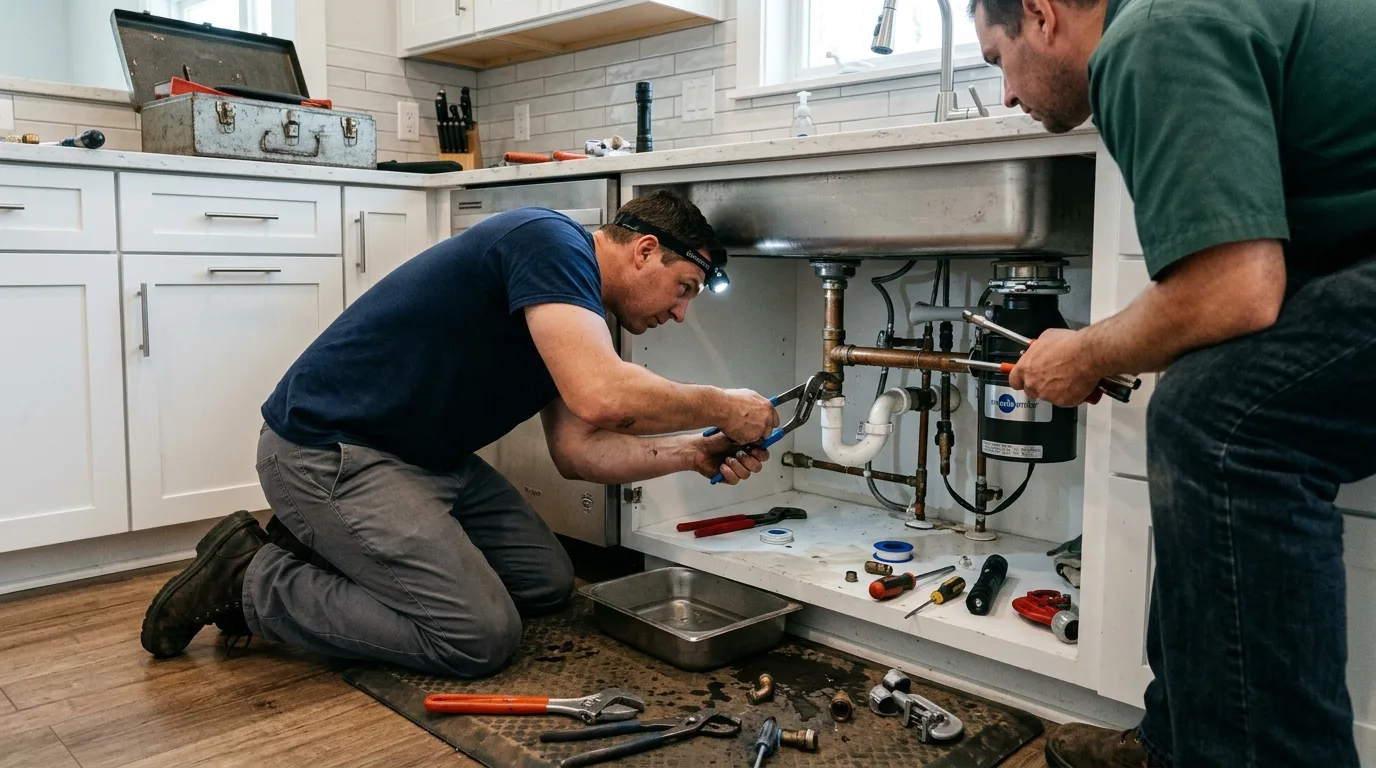 3 floorsa stack leak can reach
What we get called for here
The Buena Park Downtown call list
Attached housing concentrates certain problems and almost eliminates others. Nobody here calls about a slab leak in the traditional sense, and nobody calls about a sewer lateral, because those belong to the association. What replaces them is everything at the unit boundary.
- Backups in shared waste stacks affecting lower units
- Supply leaks behind vanities found first by the neighbor below
- Water heaters in closets with tight clearances and pan drains that go nowhere
- Angle stops and braided supply lines at the end of their service life
- Flush valves and fill valves worn out by heavy use in retail restrooms
- Grease-loaded kitchen lines in food tenancies needing jetting rather than cabling
Report a leak in your unit
Say whether the water is reaching another unit, that changes how quickly someone is dispatched.
Water coming through your ceiling from the unit above?
Put buckets down, move what you can, and call. The plumber will work with your building contact to isolate the right riser rather than guessing at valves.
Get containment started now
Round-the-clock dispatch · (714) 386-7076
The district
What Buena Park Downtown covers
The commercial and higher-density core around the Stanton Avenue and Orangethorpe Avenue junction, including the attached housing that has filled in around it.
- Stanton Avenue
- Orangethorpe Avenue
- Auto Center Drive
- Dale Street
- Crescent Avenue
- Beach Boulevard frontage
- I-5 corridor blocks
- Malvern Avenue south
- Knott Avenue
- Adjacent townhome tracts
Buildings here vary enormously in how their plumbing is divided between owner and association. Mention the building name when you call and the dispatcher can often anticipate the access question.
What this district asks for
Services most requested by Downtown residents and tenants
Weighted toward attached-housing problems and the commercial units on the same streets.
Asked by neighbors on this side of town
Condo and townhome plumbing questions
As a rough rule, plumbing that serves only your unit is yours and plumbing that serves more than one unit is the association’s, but the governing documents override any rule of thumb and they vary from building to building. What helps is evidence. A plumber who photographs the failure point, states in writing whether it sits on a branch line or a shared stack, and describes the cause gives you something concrete to submit. Without that, the discussion becomes opinion against opinion.
Close the fixture’s own angle stop if the leak is at a fixture, under a sink or behind a toilet. If it is inside a wall, you need the unit isolating valve, which in most buildings here is in a laundry closet, a water heater closet, or under the kitchen sink. If there genuinely is not one, the building riser has to be closed, and that requires your maintenance contact. Find out which of these applies to your unit on a calm day, not during a flood.
That is completely normal and does not mean they are wrong. Water travels along the underside of subflooring and down framing before it appears anywhere visible in the source unit. The leak is usually at a supply connection behind a cabinet, a shower pan failure, or a waste connection under a tub. A plumber can often locate it with a moisture meter and a thermal camera without opening anything, which is worth doing before either of you starts making claims.
For anything inside your own walls, generally yes. Where it changes is when the water supply to other units must be shut off, when access to a common area is needed, or when the repair touches shared plumbing. Some associations also require notice before work in a unit. Check your rules once and keep the answer somewhere findable, it saves a delay when something urgent happens.
Classic shared-stack symptom. Waste from the floors above is meeting a restriction below your level and finding the lowest available opening, which is your tub. Snaking your own drain will achieve very little because your branch line is not the problem. This needs the stack cleared and, ideally, camera-inspected to find out why it is restricting, usually scale in old cast iron, or something non-flushable lodged at a fitting.
Sometimes, and the deciding factors are venting and gas supply rather than the unit itself. Tankless heaters need a dedicated vent route to outside air and a gas line capable of a much higher instantaneous draw than a tank heater. In an attached building, both can be difficult or impossible without work that affects common structure. A plumber should check the existing gas line size and the venting route before quoting anything, and should tell you plainly if the answer is no.
Yes. Grease line jetting, floor drain and interceptor issues, commercial water heaters, and restroom fixtures that see hundreds of uses a week. Scheduling around trading hours is normal, early mornings before a kitchen opens or after close in the evening. Say what your hours are when you call and dispatch will work around them where the problem allows it.
This is one of the quickest parts of the city to reach, with I-5 access and no significant traffic overnight. For a genuine emergency in the district the realistic overnight window is usually well under an hour. What slows things down is access rather than distance, gated parking, a controlled lobby, or an unavailable building contact. Have a gate code or a phone number ready and the response is materially faster.
Speak to dispatch about your building
Have the building name, unit number and any gate code ready, it shortens the arrival time.
Next door
Around Buena Park Downtown
The neighboring areas covered on the same central runs.
Entertainment Corridor
Hotels, restaurants and attractions along Beach Boulevard.
Beach Blvd coverage
Attached-housing dispatch
One call, whether it is your pipe or the building’s
You should not have to work out who owns the pipe before you can get help. Call, describe what you can see, and the diagnosis will tell you where the boundary falls.
Get a plumber to your unit
(714) 386-7076 · Answered day and night