Sewer Camera Inspection
The survey that decides whether trenchless is even possible on your line.
SurveyHost pipe condition, bellies and offsets determine whether trenchless can work at all.
Cured-in-place lining for a sound host pipe, pipe bursting where the old line must be replaced.
Access pits rather than a trench across driveways, walkways and mature planting.
Permitted through the City, and the finished line cameraed before sign-off.
The two methods
Trenchless is not one technique. Cured-in-place lining installs a resin-saturated liner inside the existing pipe and cures it there, producing a smooth jointless pipe within the old one. Pipe bursting pulls a bursting head through the existing line, fracturing it outward into the surrounding soil while simultaneously drawing new pipe in behind. Both need only entry and exit pits rather than an open trench.
The distinction matters because their requirements are opposite in one respect. Lining needs a host pipe that still holds its shape, because the liner takes the shape it is given. Bursting does not care about the host pipe’s condition, it destroys it, but it does need soil that will accept the displacement and a route free of obstructions and other utilities. A collapsed clay line cannot be lined; it can often be burst.
Neither method fixes a belly. A sagged section holding standing water is a grade problem, and both trenchless techniques follow the existing route and profile. Lining a belly produces a smoother belly. Correcting fall requires excavating that section and re-laying it, which is why the camera survey has to identify bellies specifically before anyone quotes trenchless.
The economics of trenchless are driven entirely by what sits on top of the pipe. On a lateral running under an open lawn, open-trench replacement is often the cheaper and simpler answer, and the lawn recovers in a season.
That is not the typical situation here. Houses from the postwar tracts have had seventy years of additions: extended driveways, poured patios, decorative concrete, block walls, mature trees and established planting, all installed over the top of a lateral nobody was thinking about. Replacing the pipe by open trench in that context means replacing the surface too, and matching a stamped or colored concrete driveway is frequently impossible.
The mature parkway trees that cause so much root intrusion in this city compound it. Excavating a trench close to a mature tree risks the tree as well as the hardscape, and in some cases the tree is protected or simply irreplaceable in the owner’s judgment. Trenchless resolves that conflict: the pipe gets rebuilt, the root entry points are sealed, and the tree stays.
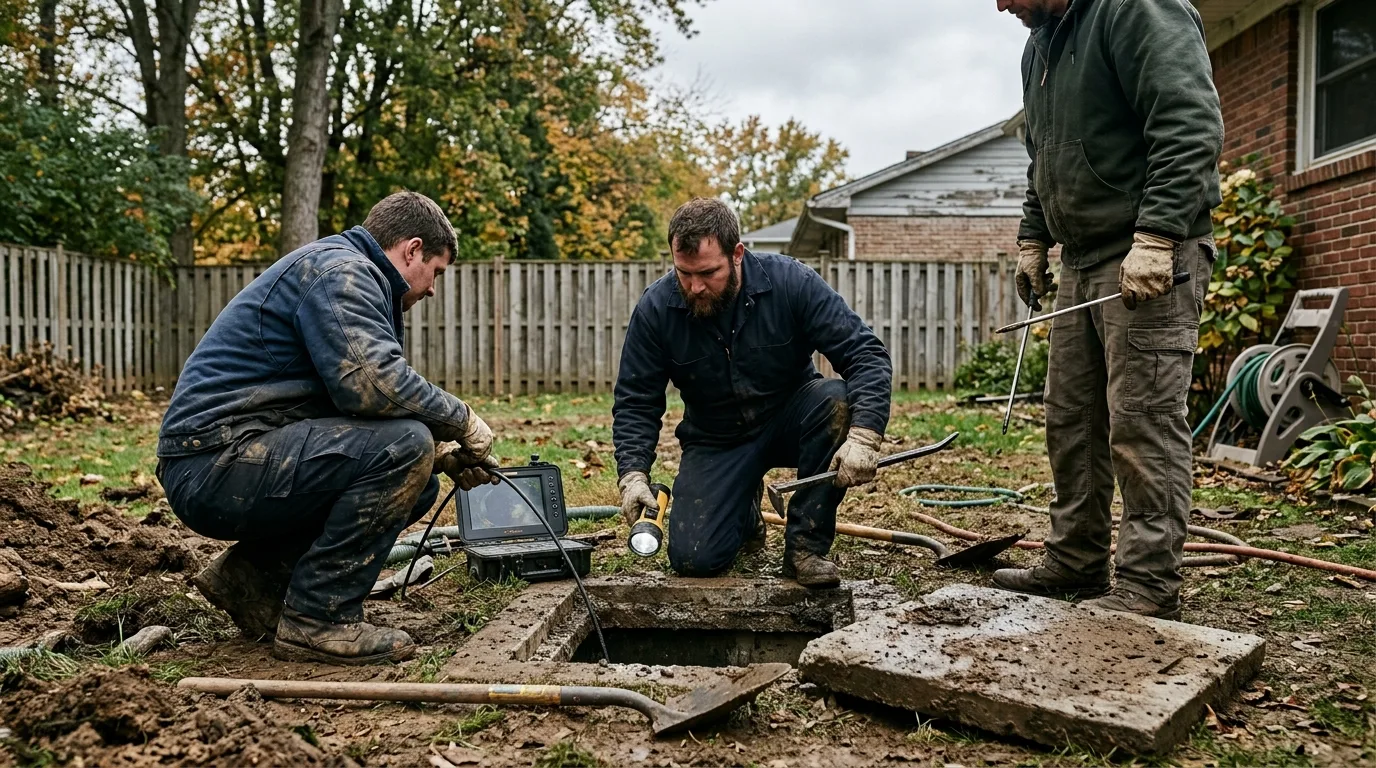
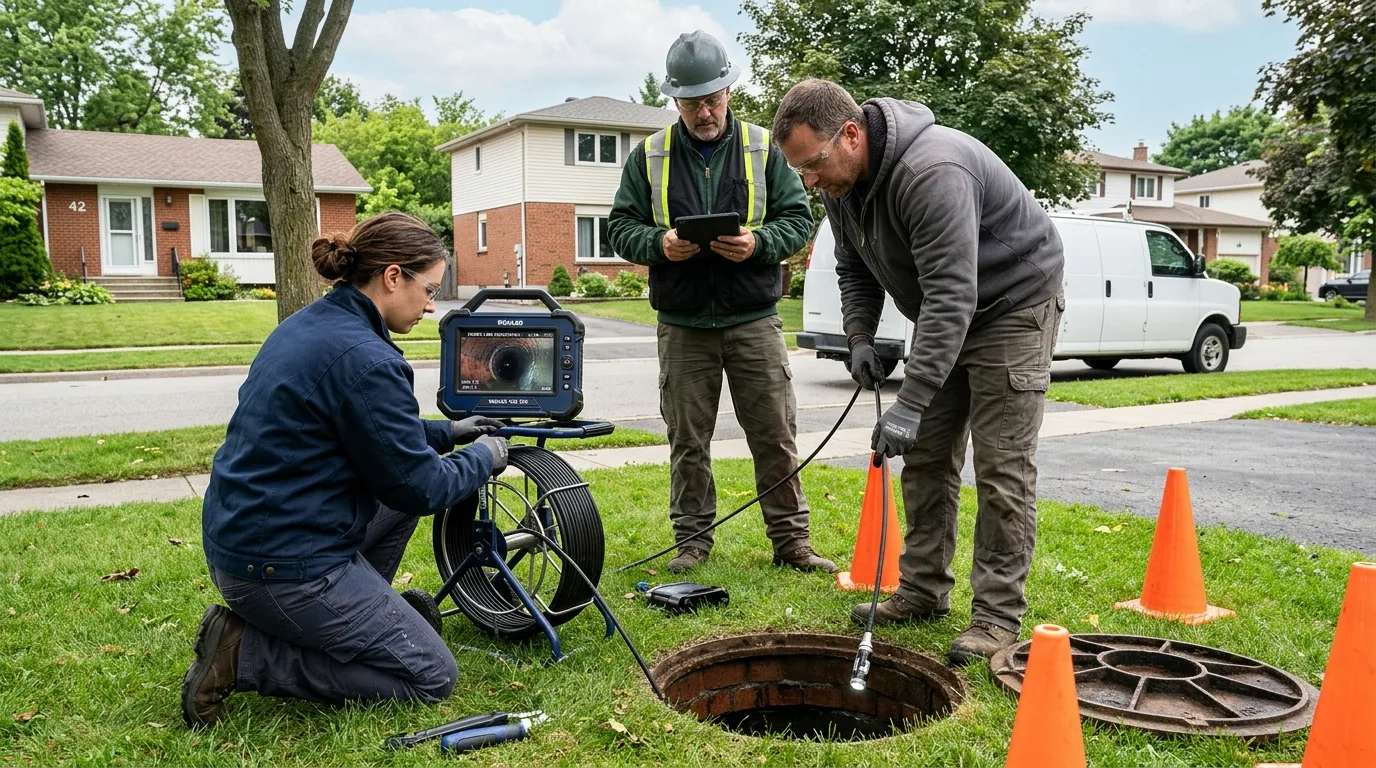
No responsible trenchless quote exists without a camera survey, because candidacy is a physical question. The survey has to establish the pipe material and diameter, the presence and severity of any bellies, whether joints are offset and by how much, whether there are collapses or badly deformed sections, and the location and depth of the entry and exit points.
It also has to identify connections. A lateral with a branch tie-in, a second bathroom addition, a garage drain, a converted ADU, needs those connections reinstated after lining, which is a defined step rather than an afterthought. Missing one during the survey means finding it afterwards, which is the worst time.
And it has to identify Orangeburg, the bituminised fiber pipe used in some mid-century construction. Once it has begun to deform there is no sound host pipe for a liner to bond to, and the realistic answer becomes bursting or open replacement. Identifying it on camera converts a mystery into a plan.
A cured liner is a continuous jointless pipe inside the old one, with no gaps for roots to enter and a smooth interior that flows well. Internal diameter reduces slightly, which is almost always irrelevant on a residential lateral. The liner spans cracks, seals joints and reinstates structural integrity where the host pipe was deteriorating but intact.
Pipe bursting leaves you with new full-diameter pipe along the same route, genuinely new, not a liner within old material. It is the answer when the host pipe is collapsed, badly deformed or too far gone to line, and it can also upsize the line modestly in the right soil.
Both are verified the same way: a camera pass through the finished pipe before sign-off. Ask for that footage. It is the only proof that connections were reinstated properly, that the liner cured without wrinkles or blockage, and that the line runs clean end to end.
Per meter, trenchless costs more than open trenching. Per job, it frequently costs less, because the comparison has to include surface restoration. The way to decide is to price both on the same survey and add restoration honestly to the open-trench figure, including concrete replacement, hardscape matching, planting and any irrigation crossed.
Disruption is real but concentrated. Access pits are excavated at each end, equipment occupies the driveway or front garden for a day or two, and drainage is out of service during the work. Lining includes cure time, so plan for a full day at minimum and often two.
The honest limits, stated plainly: bellies and severe offsets are not fixed by either method. Collapsed pipe cannot be lined. Very tight bends can defeat both. Bursting needs soil that accepts displacement and a route clear of other utilities, which a locate has to confirm. And a badly deteriorated host pipe with nothing sound to bond to rules lining out. A contractor who acknowledges these limits is the one to trust with the quote.
Trenchless sewer work is permitted through the City of Buena Park and inspected. Insist on it, and ask who schedules the inspection. Along with the permit, ask for three things in writing: the material and system being installed, the labor warranty as distinct from any manufacturer warranty, and the post-work camera footage.
Keep all of it. A documented trenchless repair is a genuine asset at resale in this housing stock, where a buyer looking at an original clay lateral under a driveway is otherwise pricing in a five-figure unknown. The footage, the permit and the inspection record convert that unknown into a settled question.
 2Access pits
Candidate or not
Candidacy is a matter of physical fact, established on camera, not a matter of preference. Here is what qualifies a line and what disqualifies it.
If a quote arrives without these points addressed, the survey was not thorough enough to price the job.
The survey costs a fraction of the repair and determines which repair you should be buying.
That is exactly the situation trenchless exists for. The first step is a camera pass to see whether your pipe qualifies.
Camera survey with depth and distance marked, then both methods priced against open trenching.
How it is done
Survey, prepare, install, verify. Skipping the verification means taking the result on trust.
Camera pass with distances and depths, bellies and offsets identified, connections mapped, entry and exit points chosen.
Line cleared and scoured so the host pipe is clean, a liner bonds to what is there, including anything left behind.
Liner inverted and cured in place, or a bursting head pulled through while new pipe is drawn in behind it.
Branch connections reopened, final camera pass recorded, City inspection completed and the access pits restored.
Questions we get on these calls
Per meter it costs more; per job it often costs less, and the comparison is only fair if surface restoration is included on the open-trench side. A trench across a lawn is cheap to make good. A trench across a stamped concrete driveway, established hardscape and mature planting is not, and matching decorative concrete is frequently impossible at any price. Get both methods quoted from the same camera survey and add restoration honestly to the trench figure.
A residential lateral is typically one to two days. Lining includes cure time, which is a fixed period that cannot be rushed, and preparation, clearing and scouring the host pipe, takes real time because a liner bonds to whatever is left in there. Pipe bursting is often quicker in the installation itself. Add calendar time for permitting and inspection scheduling. Drainage is out of service during the work, so plan around that if the property is occupied.
For the purposes that matter on a residential lateral, yes. A cured liner is a continuous jointless pipe with no gaps for roots to enter and a smooth interior that flows well, spanning cracks and sealing joints. It reduces internal diameter slightly, which is almost never significant at residential scale. Where a liner is not equivalent is on a host pipe that has lost its shape, it takes the shape it is given, which is why bellies and severe offsets rule it out.
No, and this is the most important limitation to understand. A belly is a sagged section that holds standing water because the fall is wrong, and both trenchless methods follow the existing route and profile. Lining a belly gives you a smoother belly that still holds water. Correcting grade means excavating that section and re-laying it to fall. Any contractor offering to line a belly should be asked directly how that addresses the slope.
A bursting head is pulled through the existing pipe, fracturing it outward into the surrounding soil while new pipe is drawn in behind it. It is used where the host pipe cannot be lined, collapsed sections, badly deformed pipe, deteriorated Orangeburg, and it leaves genuinely new full-diameter pipe rather than a liner inside old material. It needs soil that will accept the displacement and a route confirmed clear of other utilities, which a locate establishes beforehand.
Yes, but only small access pits, typically one near the building and one near the property line or the connection point. That is what preserves the surface across the length of the run. Equipment will occupy the driveway or front garden during the work, and the pits themselves need backfilling, compacting and restoring afterwards. Ask for the number and location of pits in the quote so there are no surprises about where the ground gets opened.
They have to be reinstated, and it is a defined step rather than an afterthought, a liner passes over a branch tie-in and seals it closed until the connection is reopened. This is why mapping connections during the camera survey matters so much: an unnoticed branch serving an addition, a garage drain or a converted ADU turns into a blocked line discovered after the liner has cured. Ask specifically how many connections were identified and how each will be reinstated.
Both methods are intended as long-term repairs with design lives measured in decades, and the finished line has no joints for roots to enter, which is what killed the original. What genuinely affects longevity is the quality of the preparation and installation, and whether any underlying grade problem was addressed rather than papered over. Ask for the labor warranty separately from the manufacturer warranty on the liner system, and keep the post-work footage as your baseline.
Yes. It is permitted work through the City of Buena Park and it is inspected. Ask who pulls the permit and who schedules the inspection, and get the post-work camera footage as part of the handover. That package, permit, inspection record, footage, is what makes the repair a documented asset at resale rather than an undocumented claim, which matters in a housing stock where buyers price original clay laterals as an unknown.
Almost certainly because the pipes are in different condition, and possibly because different things sit on top of them. Two houses on the same street, built the same year with the same original clay, can have completely different survey findings: one with root intrusion at intact joints, one with a collapsed section and a belly. The first is a lining candidate; the second is not. The camera survey is the only thing that legitimately settles it, which is why the quote should always follow the footage.
If you already have camera footage, share it, candidacy can often be assessed from it directly.
Related work
Survey, cleaning, open replacement, trenchless sits inside a larger set of choices.
The survey that decides whether trenchless is even possible on your line.
Survey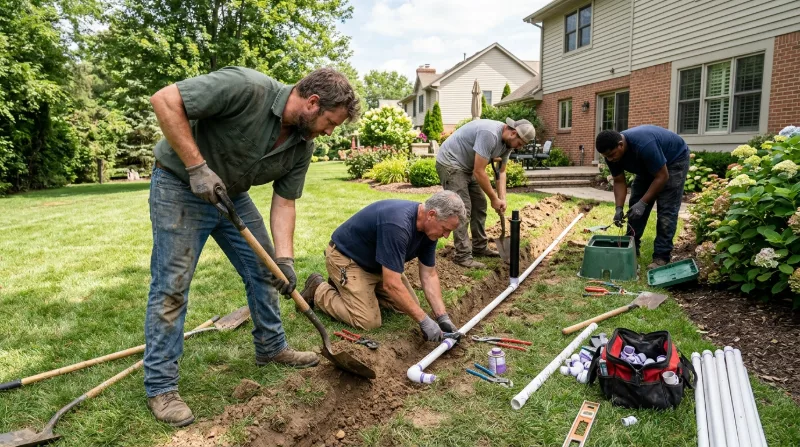
Spot repair and open replacement, including the bellies trenchless cannot fix.
Open repair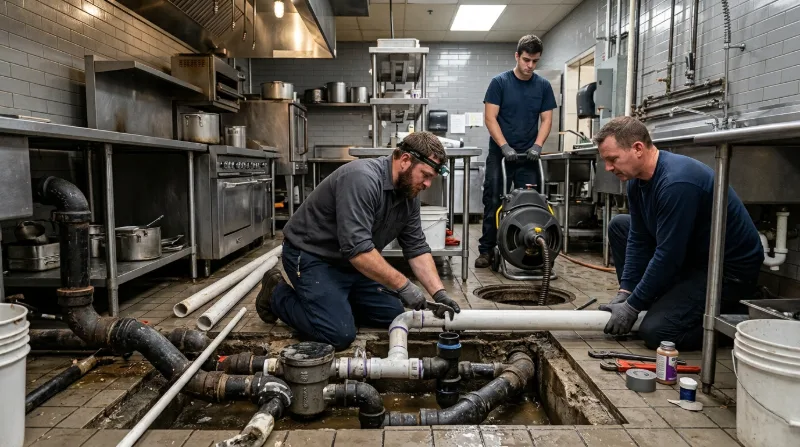
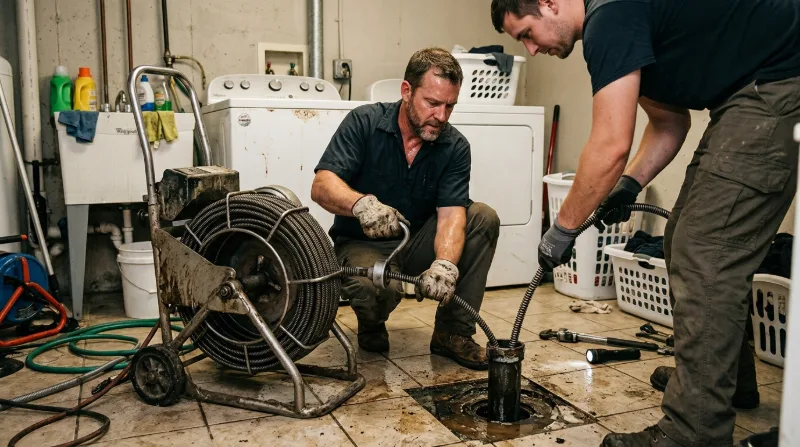
Pipe replaced, surface intact
Camera survey first, both methods priced, and the finished line proved on video before sign-off.
Lining and bursting across Buena Park, Fullerton, Anaheim, La Palma, Cypress, Stanton and Cerritos.