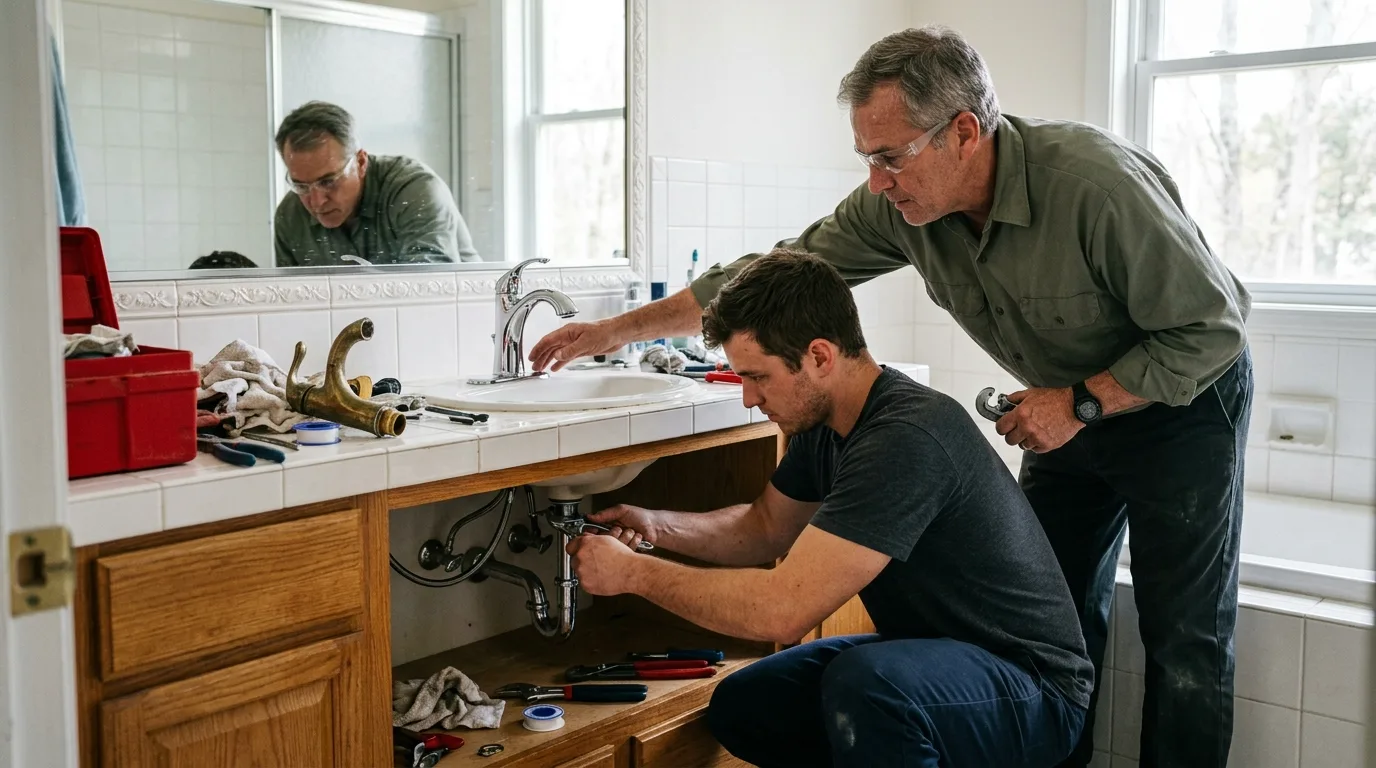
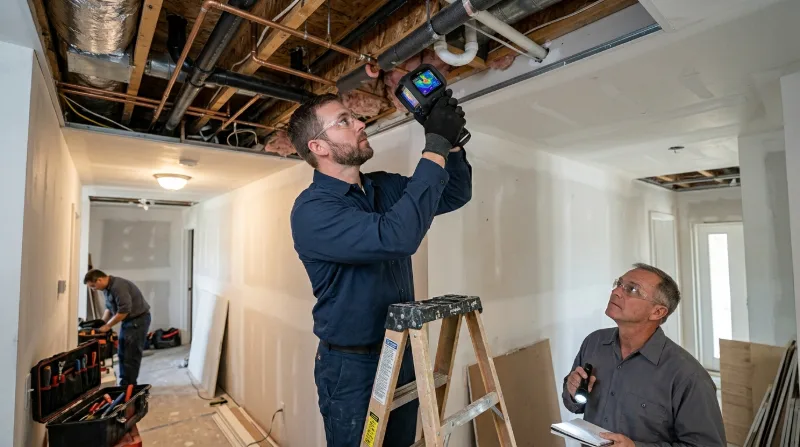
Slab Leak Repair
Water surfacing through the floor or a warm patch underfoot after a night-time leak.
Slab leaksA person answers, not a voicemail box or a form that promises a callback tomorrow.
Before anything else, we walk you through killing the water and the power near it.
You hear the emergency rate before a truck is dispatched, not after the work is done.
Houses, condos, restaurants, hotels and multi-tenant properties on the same line.
What to do in the first five minutes
Almost every plumbing emergency gets worse in a straight line: the longer water moves, the more it costs. A supply line that has failed inside a wall can push well over a hundred gallons an hour into framing, drywall and insulation, and the plumbing repair itself is usually the cheapest part of what follows. So the first job on an emergency call is not the pipe. It is the valve.
In most Buena Park houses there are three places to stop water. The fixture stop under a sink or behind a toilet handles a local failure. The house main is either a gate or ball valve on the riser where the supply enters the building, commonly on a side wall near the hose bib or in the garage. Failing that, there is the street-side valve in the meter box at the front of the property, which needs a meter key or a good pair of pliers on the flat of the stem. Turn clockwise, then open a low fixture such as a tub spout or a hose bib to drain the pressure out of the system so the leak stops feeding.
If water is anywhere near electricity a ceiling light, a wall outlet, a panel, a furnace or a garage circuit, shut that breaker off before you go near the water, and if you cannot get to the panel safely, leave the building and call from outside. (714) 386-7076 is answered 24 hours a day.
It is a real question, because after-hours work costs more and there is no reason to pay that on a job that can safely wait eight hours. The honest dividing line is whether the situation is still doing damage, still unsafe, or leaving the property uninhabitable.
Call immediately for: water escaping that you cannot shut off; sewage backing up into a tub, shower or floor drain; a gas smell anywhere near a water heater, range or wall furnace; a water heater leaking from the tank body rather than a fitting; no water at all in an occupied building; or a slab leak that has water surfacing through the floor. Any of those is an emergency at 2 a.m. as much as at 2 p.m.
It can usually wait for a scheduled visit: a dripping faucet, a running toilet you can shut off at the stop, one slow drain in a house with more than one bathroom, a water heater that is producing lukewarm water but not leaking, or a pinhole leak you have contained with a bucket and a towel. Say so on the phone and we will book it into a normal daytime window at the normal rate, that is a better outcome for you than paying nights for a repair that could have been planned.
Emergency plumbing is not evenly distributed across housing stock, and this city has a specific profile. The postwar tracts that went up after incorporation in 1953 were built slab-on-grade, with copper or galvanized supply lines run under the concrete and cast-iron or clay drainage out to the street. All of it was installed within a few years, using the same materials, carrying the same hard imported water.
That shared history produces predictable 2 a.m. failures. Galvanized supply corrodes from the inside until a section gives way, usually at a threaded joint, and often the second and third failures arrive within months of the first because every other joint in the house is the same age. Under-slab copper develops pinholes and then surfaces as a warm spot on the floor or as water coming up along a wall line. Cast-iron drains scale, lose diameter and eventually fracture at the bottom of the pipe, which is why a house can go from a slow drain to sewage on the floor over a single weekend.
Newer construction fails differently and just as urgently. Braided appliance supply lines to washing machines, dishwashers and refrigerators are a leading cause of interior water damage, and they usually let go without warning. Water heater flex connectors corrode. Angle stops seize and then snap when someone finally tries to turn one. None of that is age-of-house dependent; it is age-of-part dependent.
A supply leak is a water problem. A sewage backup is a health problem, and it should be treated as one. When waste water comes up through the lowest fixture in the building, usually a downstairs shower, a tub or a garage floor drain, the main line is blocked downstream, and every gallon anyone in the building sends down a drain has nowhere to go but into the room.
Stop using water entirely: no flushing, no laundry, no dishwasher, no showers. Keep people and pets out of the affected room. Do not pour drain chemicals into a backed-up line, they sit in standing water and turn a dirty job into a caustic one for whoever has to open the cleanout. On an emergency backup the plumber locates the exterior cleanout, relieves the line to get the building usable again, and then puts a camera down before quoting anything permanent, because the difference between roots at a joint, a grease plug and a collapsed clay section is the difference between a jetting visit and a sewer replacement.
If the backup is happening in a restaurant, hotel or multi-tenant building, tell dispatch that on the call. Those jobs get a different plumber, a different truck and a different sequence, isolating the affected stack or riser so the rest of the building can keep operating comes before clearing the line.
Emergency work is priced differently from a weekday appointment. That is not a surcharge for panic; it reflects a plumber leaving home at 1 a.m. with a truck stocked for whatever you described. What matters is that you hear the number before dispatch, and that the on-site price for the actual repair is given to you in writing before any work starts.
On a genuine emergency the visit usually splits into two parts, and it is worth understanding why. The first part stops the damage: isolate the failure, cap or repair the section, get water back to the rest of the building. The second part is the permanent repair, which sometimes should not be done at 2 a.m., you do not want a decision about repiping a whole house, or opening a slab, made by an exhausted homeowner in the middle of the night. A good emergency plumber will tell you which part is urgent and which part should be scheduled and quoted properly in daylight.
Ask what the after-hours rate is, what the diagnostic includes, whether the emergency call fee applies against the repair, and what happens if the cause turns out to be something other than what you described on the phone. Those four answers are the whole picture, and you should get them before the truck is on your street.
For a supply failure: pipe cutters, fittings and couplings in copper, PEX and CPVC, press or solder capability, shutoff valves and angle stops, and a water vacuum. For drainage: a sectional or drum cable machine, a jetter on the larger trucks, and a camera. For gas: a manometer and leak detection solution. For water heaters: gas control valves, thermocouples, elements, T&P valves and flex connectors.
Being specific on the phone is what gets the right truck to your door. "Water is coming out of the ceiling under the upstairs bathroom" is a genuinely more useful sentence than "I have a leak," because the first one dispatches someone carrying what that job needs. Tell us the age of the house if you know it, what material the pipes are if you can see them, and whether this has happened before.
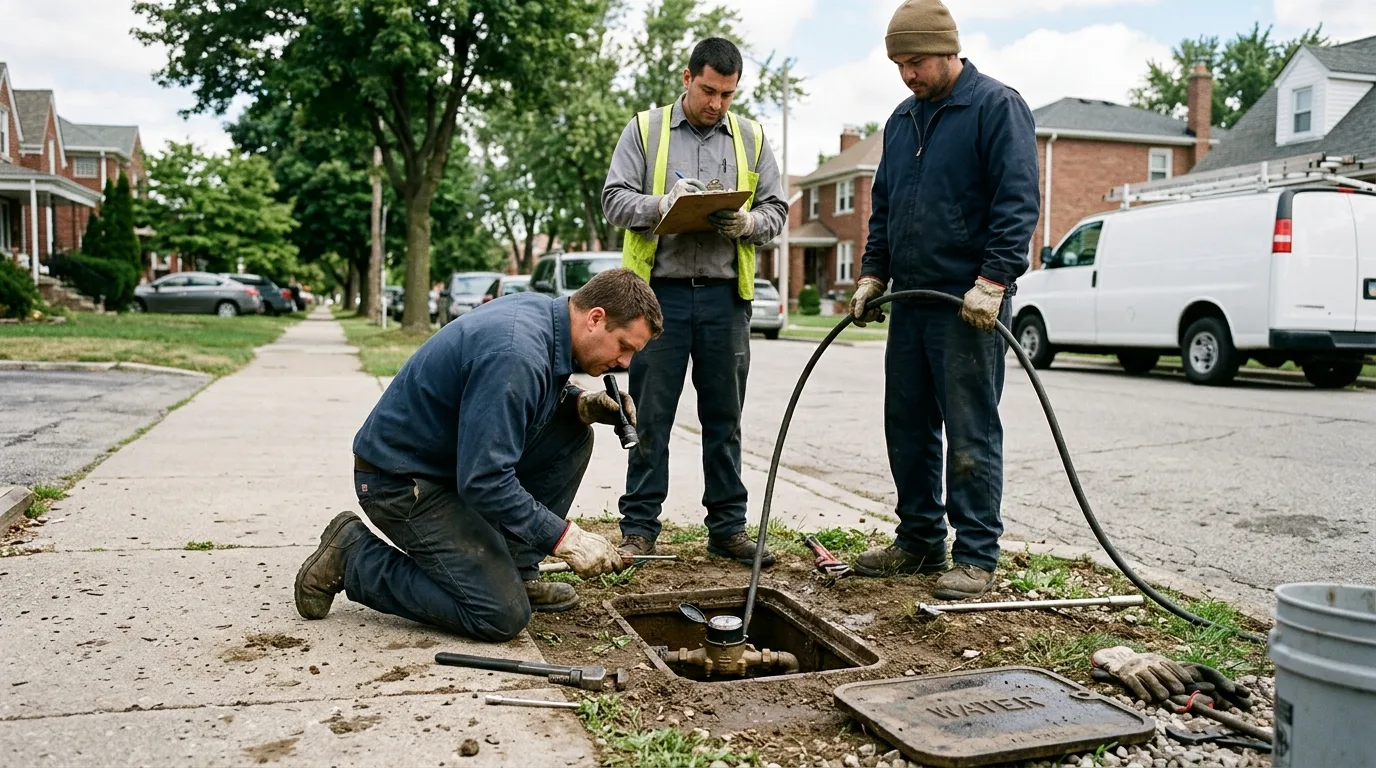 24/7Live dispatch
Know it before you need it
The single most useful ten minutes any homeowner can spend on plumbing is locating the main shutoff while nothing is wrong. In an emergency, people lose more to a valve they cannot find than to the failure itself.
Go and look now, and check it actually turns. Old gate valves seize in the open position and then break when they are finally needed, which is a cheap thing to replace on a Tuesday and a disaster at midnight.
Happy to talk you through finding your shutoff on the phone, no visit required.
Shut the main, keep away from anything electrical, and call. We will stay on the line while a plumber is routed to your address.
Answered live, 24 hours a day, every day of the year, including holidays.
How an emergency call runs
Emergency work has a sequence, and knowing it makes the next two hours far less frightening.
On the phone: which valve to close, which breaker to kill, which room to stay out of. This part starts before anyone is dispatched.
A plumber who covers your part of Buena Park and carries the right equipment, with an honest arrival window and the after-hours rate stated.
Find the failure, cap or repair the section, restore water to the rest of the property, and get the building usable again.
The lasting fix quoted in writing, done now if it should be, scheduled properly if the decision deserves daylight.
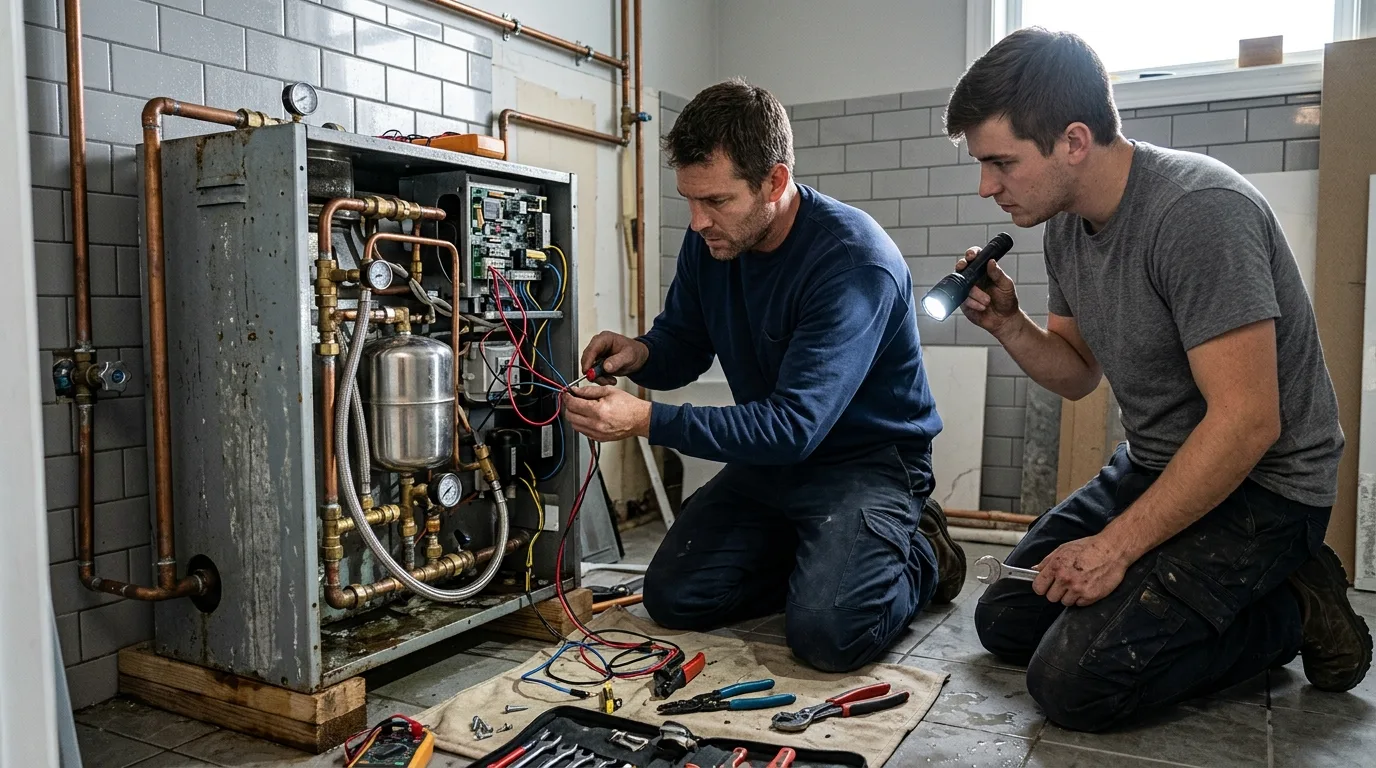
Hotels, restaurants & multi-tenant
Along the Beach Boulevard entertainment corridor, an emergency is rarely one broken thing. A failed riser affects four floors of guest rooms. A blocked grease line shuts a kitchen mid-service. Losing hot water at 6 a.m. in a full hotel is a different emergency from losing it in a house, because you cannot ask two hundred guests to wait.
Commercial emergency response starts with isolation rather than repair: shut the smallest possible zone, keep the rest of the building operating, then work the problem. Tell dispatch the building type, how many units or rooms are affected, and whether you have riser or stack access, and the call is routed to a plumber who works on that equipment.
Facility and property managers: ask for zone isolation on the first call, it saves the rest of the building.
Questions we get on these calls
Emergency calls are dispatched around the clock, and Buena Park sits at the junction of the I-5 and CA-91, so a plumber working anywhere from Fullerton to Cypress can usually be routed to you quickly. You will get an honest arrival window on the phone rather than a promise that sounds good. Tell dispatch immediately if water is actively running, because active-damage calls move ahead of everything else in the queue and we will talk you through shutting off the supply in the meantime.
Yes. Nights, weekends and holidays are answered live, because that is when the calls that cannot wait actually happen. You will speak to a person who asks what is happening, helps you stop the water, and then routes the job. If you reach out during a period of unusually heavy call volume, a storm week, or a cold snap that puts pressure on old water heaters, you may be told realistically that the wait is two hours rather than thirty minutes, which is more useful to you than an optimistic guess.
After-hours and weekend work is priced differently from a weekday appointment, and you hear the emergency rate before a truck is dispatched. The specific repair price is given to you in writing on site after the plumber has diagnosed the problem, and no work starts before you have agreed to it. Ask on the phone whether the emergency call fee applies against the repair cost, and ask on site what is included, parts, labor, disposal, and whether a second visit is needed for the permanent fix.
If water is escaping and you can safely reach a valve, yes, always. Closing the main and then opening a low fixture such as a tub spout drains the pressure out of the system and usually stops an active leak within a minute or two. The only reason not to is safety: if the valve is in standing water near live electricity, or you cannot reach it without going through the flooded area, stay out and tell dispatch that on the call.
That combination almost always means the main sewer line is blocked, not the toilet. Waste water backs up and exits at the lowest opening in the building, which is usually a downstairs shower, tub or floor drain. Stop using water anywhere in the house immediately, every flush and every load of laundry adds to what comes up. This is an emergency call, and the plumber will relieve the line through the exterior cleanout first, then camera it before quoting a permanent repair.
If you smell gas, leave the building first and call the gas utility from outside, that is the correct first call, not us. Once the utility has made the situation safe and shut off or tagged the appliance or line, we dispatch a plumber to find and repair the leak, pressure test the system and get the appliance back in service. Common culprits are corroded flex connectors at water heaters and ranges, failed appliance valves, and older black iron runs with compromised threaded joints.
It depends where it is leaking from. Water at a fitting, a flex connector or the T&P discharge line is usually a repair that can be scheduled, though it should not be ignored. Water coming from the body of the tank means the tank itself has failed, and it will not get better, that is an emergency, especially in a garage or interior closet where forty to seventy-five gallons has somewhere to go. Shut the cold inlet valve on top of the tank and the gas cock or breaker, then call.
Often, yes, most supply failures, blockages and heater faults are resolved in one visit. Sometimes the right answer is to stabilise now and schedule the permanent repair, and it is worth understanding why. Repiping a house, opening a slab or replacing a sewer lateral are decisions with real money attached, and they deserve a proper diagnosis, a written quote, permits where required, and a homeowner who is not making the call at 3 a.m. The plumber will tell you clearly which category your job is in.
Yes, with one caution worth knowing up front: in condominiums and HOA-managed buildings, responsibility for a given pipe often depends on whether it serves one unit or several. Lines inside your unit are usually yours; shared risers, stacks and main lines usually belong to the association. The plumber can tell you which side of that line the failure sits on, which sometimes matters more than the repair cost. Bring your management company into the conversation early if a shared line is involved.
The address and cross street, what you are seeing and where, whether you have managed to shut the water off, and whether anything electrical is near the water. If you know the age of the house, the pipe material, and whether this has happened before, say so, those three details often determine which truck is the right one to send. Photos help too, and you can text them once you are talking to dispatch.
Describe what you are seeing and we will tell you honestly whether it needs someone tonight.
Related work
The overnight visit stops the damage. These are the repairs that most often follow it.
Water surfacing through the floor or a warm patch underfoot after a night-time leak.
Slab leaks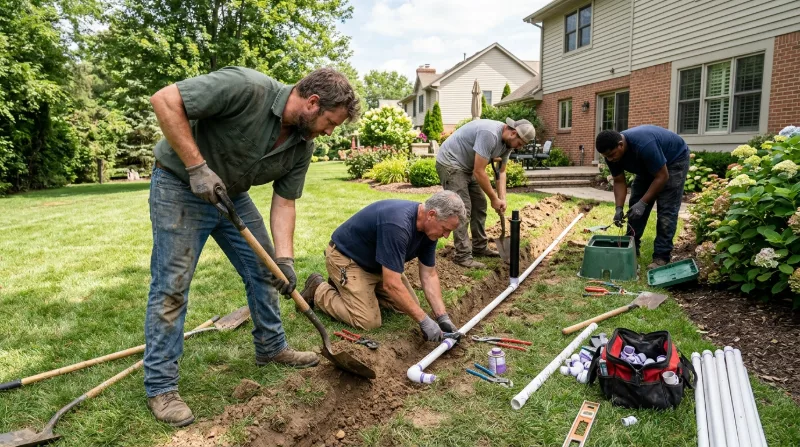
What the camera finds after a backup is relieved: roots, a belly or a broken lateral.
Sewer work
Failed valves, thermocouples and tanks, repaired where repair is the honest answer.
Water heaters
A running meter with everything shut off means the leak has to be found before it is opened.
Find the leakAny hour, any day
One call, a real conversation, and help stopping the water before the truck even leaves.
Buena Park 90620 and 90621, plus Fullerton, Anaheim, La Palma, Cypress, Stanton, La Mirada and Cerritos.