Water Heater Repair
Weeping relief valves and short heater life are pressure symptoms first.
HeatersStatic pressure at a hose bib, and a differential across the regulator, before any work is proposed.
Some regulators are serviceable; most in this housing stock are past that point.
A regulator plus a heater and no expansion tank is what makes relief valves weep.
One inexpensive part that extends the life of an entire plumbing system.
What pressure does
Water pressure is the load every component in a plumbing system carries continuously. Within a normal range that load is unremarkable. Above it, everything ages faster: supply hoses to washing machines and dishwashers, angle stops, fixture cartridges, toilet fill valves, solder joints, and the water heater, which experiences the pressure plus its own thermal cycling.
The reason it goes unnoticed is that nothing fails immediately. A house running high pressure does not burst; it develops a reputation for eating fixtures. Cartridges that need replacing every few years. Toilet fill valves that fail repeatedly. A washing machine hose that lets go. A relief valve on the heater that weeps. Homeowners treat those as separate incidents, and a plumber who checks pressure once finds the common cause behind all of them.
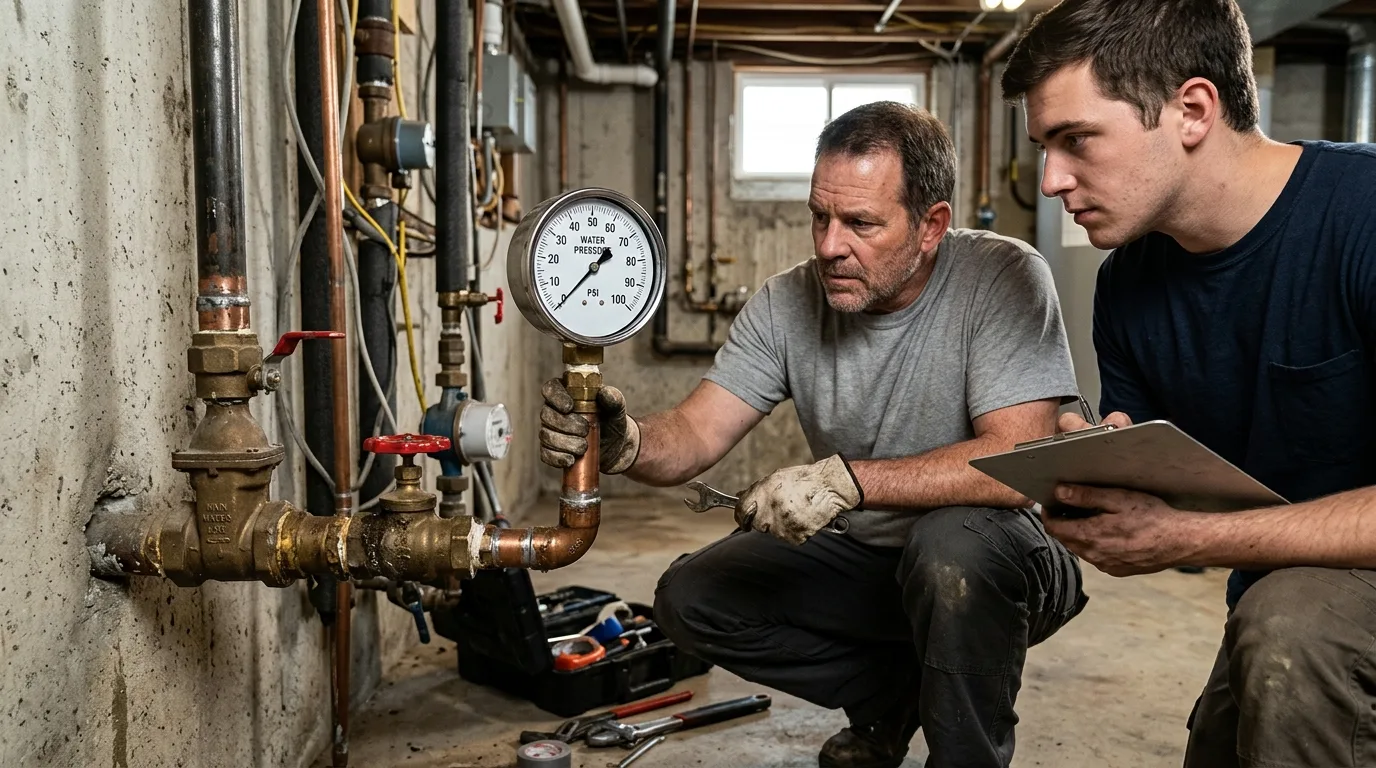
The test costs nothing and takes ten minutes. A screw-on gauge at any hose bib, with nothing running in the house, gives static pressure directly. If the reading is above the normal range, everything else in this page applies to your house, and the fix is one modest component rather than a project.
A pressure reducing valve, commonly called a regulator, sits on the incoming supply and reduces street pressure to a controlled level for the building. It is a spring-and-diaphragm device, and like anything with a diaphragm and a seat, it wears.
Failure comes in three flavours. Failing high: the regulator stops reducing effectively and lets street pressure through, which is the dangerous version because it puts the whole system under load without any obvious symptom until something fails. Failing low: it over-restricts, producing genuinely poor pressure throughout the house that people mistake for corroded pipes or a bad service line. And failing erratically: pressure swings high and low, often varying through the day with street pressure, which is the most recognisable symptom and the one that most often prompts a call.
Age is the main driver, and there is a rule of thumb worth knowing: regulators do not last as long as the plumbing they protect. Many Buena Park houses are on original or long-overdue regulators, and a fair number have none at all, either never fitted, or removed during past work and not replaced.
Banging or knocking in the walls when a tap or appliance valve closes is water hammer, and high pressure makes it dramatically worse. So does a lack of arrestors on quick-closing valves such as washing machine solenoids.
A relief valve weeping at the water heater is one of the most reliable indicators of a pressure problem, and it is usually thermal expansion rather than raw supply pressure. In a system with a regulator, expansion from heating has nowhere to go, the regulator prevents backflow toward the street, so pressure spikes on every heating cycle until the relief valve opens. The fix is an expansion tank, and the regulator is only half the story.
Short fixture life, repeated toilet fill valve failures, and pinhole leaks appearing in sequence all point the same way. So does a shower that scalds when a toilet is flushed, though that is more often a pressure-balance issue at the valve. And genuinely low pressure has several candidates besides the regulator, corroded galvanized interior piping, an undersized or corroded service line, or a hidden leak, which is why measurement at two points matters more than a single reading.
Static pressure first: gauge on a hose bib, nothing running. That single number resolves most of the question. Then, if a regulator is present, a differential across it, pressure upstream at the meter and downstream at the house, which shows whether it is doing its job and by how much.
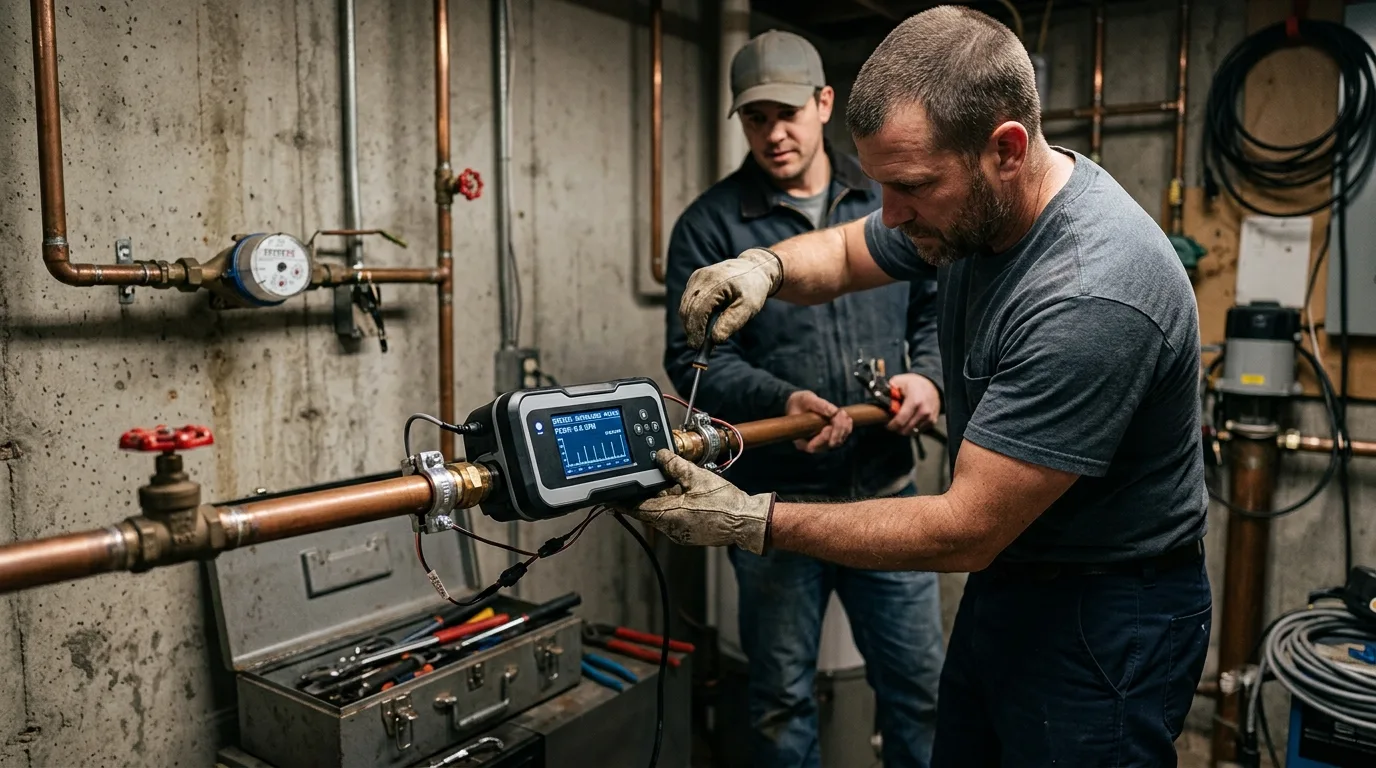
Then a flow test: static pressure holds up but collapses when two fixtures run, which points at diameter rather than pressure, an undersized or corroded service line, or corroded interior piping. Then observation over time, because a regulator failing erratically may read acceptably at the moment of testing and badly two hours later. A gauge left in place with a maximum-reading needle captures overnight spikes that a single reading misses entirely.
That last technique is underused and very informative. Overnight is when street pressure typically rises, so a house that reads acceptably at 3 p.m. can be spiking substantially at 4 a.m., and the components take that load every night.
Some regulators have serviceable internals and can be rebuilt. In practice, on the age of unit typically found in this housing stock, replacement is usually the better spend, the labor is similar, the part is not expensive, and a new unit resets the clock rather than extending a worn one.
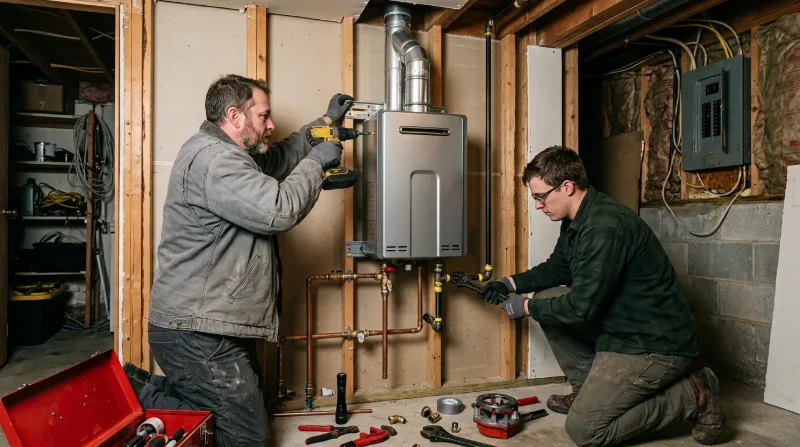
Several items belong in the same visit. An expansion tank if the system has a regulator and a water heater and no tank, which describes a great many houses here. A new main shutoff valve if the existing one is a seized gate valve, since it is right there and it will break the first time it is needed. Hammer arrestors where quick-closing appliance valves are causing knocking. And a check of the water heater relief valve, which may have been weeping long enough to need replacing itself.
It is also worth setting the new regulator deliberately rather than accepting the factory setting. There is a range that protects components without producing disappointing showers, and the right point within it depends on the house, its height, the length of its runs, and whether it has a booster or specific fixture requirements.
The opposite problem is real in parts of this area and has different answers. A long service run, an uphill lot in the Coyote Hills, an upper floor in a multi-story building, or a genuinely low street supply can all leave a property under-pressured even with a healthy regulator.
The first step is still measurement, because the fix depends entirely on the cause. Poor pressure at the meter means the supply itself is limited, and the answer is a booster pump and pressure system. Good pressure at the meter with poor pressure at the house indicts the service line. Good static pressure that collapses under demand indicates diameter, service line or interior piping. Each of those is a different job with a different cost, and a gauge separates them in minutes.
 10 minGauge test
What to test and when
Pressure diagnosis is measurement, not inference. These four readings between them explain almost every pressure complaint a house can produce.
Any of them can be taken in minutes, and the overnight one is the most revealing.
Cheap to measure, and it frequently redirects a much larger proposed job.
Both are pressure symptoms far more often than they are plumbing faults. One gauge reading settles it.
Usually resolved in a single visit, with the regulator replaced the same day where needed.
The visit
Measure, interpret, correct, protect. The fourth step is the one that stops the symptom returning.
Static pressure, regulator differential, behavior under flow, and an overnight maximum where the symptom is intermittent.
High, low or erratic, and whether the cause is the regulator, the service line, interior piping or thermal expansion.
Regulator replaced or rebuilt and set deliberately, with the main shutoff and arrestors addressed while access is open.
Expansion tank fitted where the system needs one, and the heater relief valve checked and replaced if it has been weeping.
Questions we get on these calls
Buy an inexpensive screw-on pressure gauge, fit it to any hose bib, close everything in the house, and read it. That is static pressure and it is the single most useful measurement in domestic plumbing. If you can leave a gauge with a maximum-reading needle attached overnight, better still, street pressure often rises at night, so a house that reads acceptably in the afternoon can be spiking substantially at four in the morning.
Banging or knocking in the walls when a valve closes, a relief valve weeping at the water heater, toilets that need new fill valves repeatedly, fixture cartridges failing every couple of years, appliance supply hoses letting go, and pinhole leaks arriving in sequence. Individually those look like unrelated incidents. Together they are a pattern, and a single gauge reading identifies the common cause behind all of them.
It is one of the least expensive meaningful repairs in plumbing, a modest part and a short visit, assuming reasonable access at the supply riser. Add an expansion tank if the system needs one, which many here do, and a main shutoff valve if the existing one is a seized gate valve. Set against the cost of the fixtures, hoses and heater that high pressure destroys over a few years, it is the highest-return spend available on a plumbing system.
Related, but the direct cause is usually thermal expansion. Heated water expands, and in a system with a regulator that expansion cannot push back toward the street, so pressure spikes on every heating cycle until the relief valve opens. The fix is an expansion tank rather than the regulator alone. Never cap or plug the discharge line, it is the safety device on a pressure vessel, and it is telling you something rather than misbehaving.
Many Buena Park houses do; some never had one, and some had one removed during past work and never replaced. It is typically a bell-shaped brass fitting on the incoming supply near where the line enters the property or the building, often close to the main shutoff. A plumber can identify it in seconds. If there is no regulator and street pressure is high, fitting one is the single most valuable improvement you can make to the system.
Yes, and it is a common misdiagnosis. A regulator that fails by over-restricting produces genuinely poor pressure throughout the house, which people attribute to corroded pipes or an undersized service line and occasionally spend a great deal addressing. A differential reading across the regulator, upstream at the meter, downstream at the house, identifies it immediately, which is why measurement in two places matters more than a single number.
That is the most recognisable regulator failure. A worn diaphragm or seat stops holding a consistent setpoint, so downstream pressure tracks street pressure instead of being controlled, and street pressure varies with demand across the day and night. It is also the pattern most likely to read acceptably at the moment a plumber tests, which is why an overnight maximum reading is worth capturing when the complaint is intermittent.
It removes a major contributing cause, which changes the future rather than the past. If pinhole leaks are appearing in sequence in old copper, high pressure has been accelerating that and correcting it slows the process meaningfully. It will not reverse existing corrosion or rescue a system at end of life. On a house being repiped, correcting pressure is essential, installing new pipe and leaving high pressure in place hands the new system the same problem.
There is a normal working range that protects components without producing disappointing showers, and the right point within it depends on the property, its height, the length of its runs, whether there is a booster, and any specific fixture requirements. What matters is that the setting is chosen deliberately rather than left at whatever the factory shipped, and that it is checked after installation with a gauge rather than assumed.
Measure at the meter first. Low pressure at the meter means the supply itself is limited, and the answer is a booster pump and pressure system. Good pressure at the meter with poor pressure at the house indicts the service line between them. Good static pressure that collapses when two fixtures run points at diameter, an undersized or corroded service line, or corroded interior piping. Three different jobs, separated in ten minutes by a gauge.
If you already own a gauge, take a reading before you call, it shortens the whole conversation.
Related work
Almost everything. These are the services where a pressure reading changes the answer.
Weeping relief valves and short heater life are pressure symptoms first.
Heaters
The answer when the supply genuinely cannot deliver enough.
Boosting
When the drop is between the meter and the building.
Service lineOne gauge, many answers
Ten minutes of measurement, one modest component, and everything downstream lasts longer.
Pressure diagnostics across Buena Park 90620 and 90621, plus Fullerton, Anaheim, Cypress and La Palma.