Coyote Hills
Slope-adjacent properties on the northern edge where grade drives drainage.
Coyote HillsWater services and sewer laterals here are often two or three times the length of a tract-house run.
Long runs and elevation change make pressure regulation more than a formality on these streets.
Established trees and irrigation over the laterals produce most of the drainage calls in this pocket.
Larger house does not mean a larger number for the same repair. Scope is written down before work starts.
Custom homes, custom problems
Most of Buena Park can be read from the street. A block of near-identical single-story houses from 1957 tells a plumber almost everything before the door opens. Los Coyotes does not work that way. The homes here were built individually across several decades, extended and remodelled at different times by different people, and sited on lots big enough that the plumbing had to be run a long way to reach them.
That has two consequences. The first is that diagnosis genuinely matters. There is no safe default assumption about what material the supply is, where the main shut-off sits, or which route the sewer lateral takes to the street. A plumber who arrives with a plan based on the neighborhood average will be wrong often enough to waste your morning. The second is that the distances involved make small problems expensive to ignore. A pinhole in a forty-foot buried service line loses far more water before anyone notices than the same pinhole under a kitchen sink.
The upside is space. Where a tract house forces a water heater into a closet with barely legal clearance, these properties usually have a garage or a utility area with room to work properly. Where a repipe in a small house means opening every wall in the place, larger homes often have attic and garage routes that keep the disruption away from finished rooms.
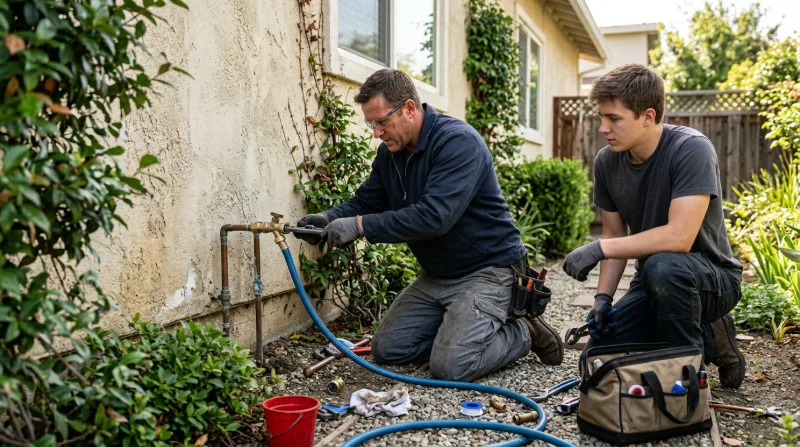
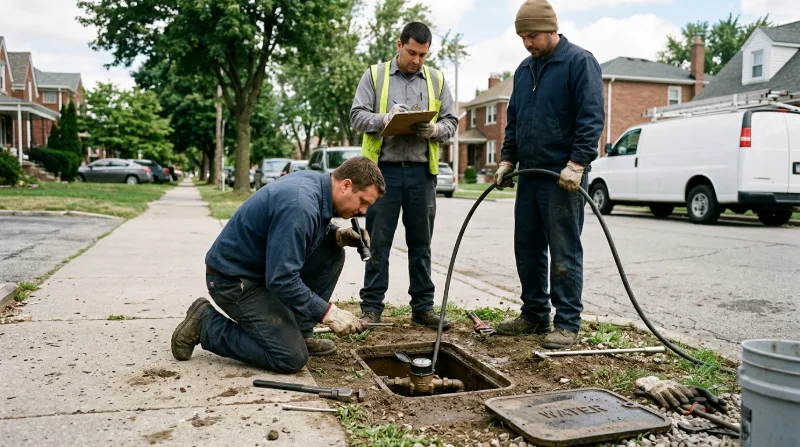
Long buried service lines are the reason unexplained water bills turn up in this neighborhood. If your usage has climbed with no change in habits and no visible leak, ask for the meter test before anything else, watch the meter with every fixture off, and if it moves, the loss is between the meter and the house.
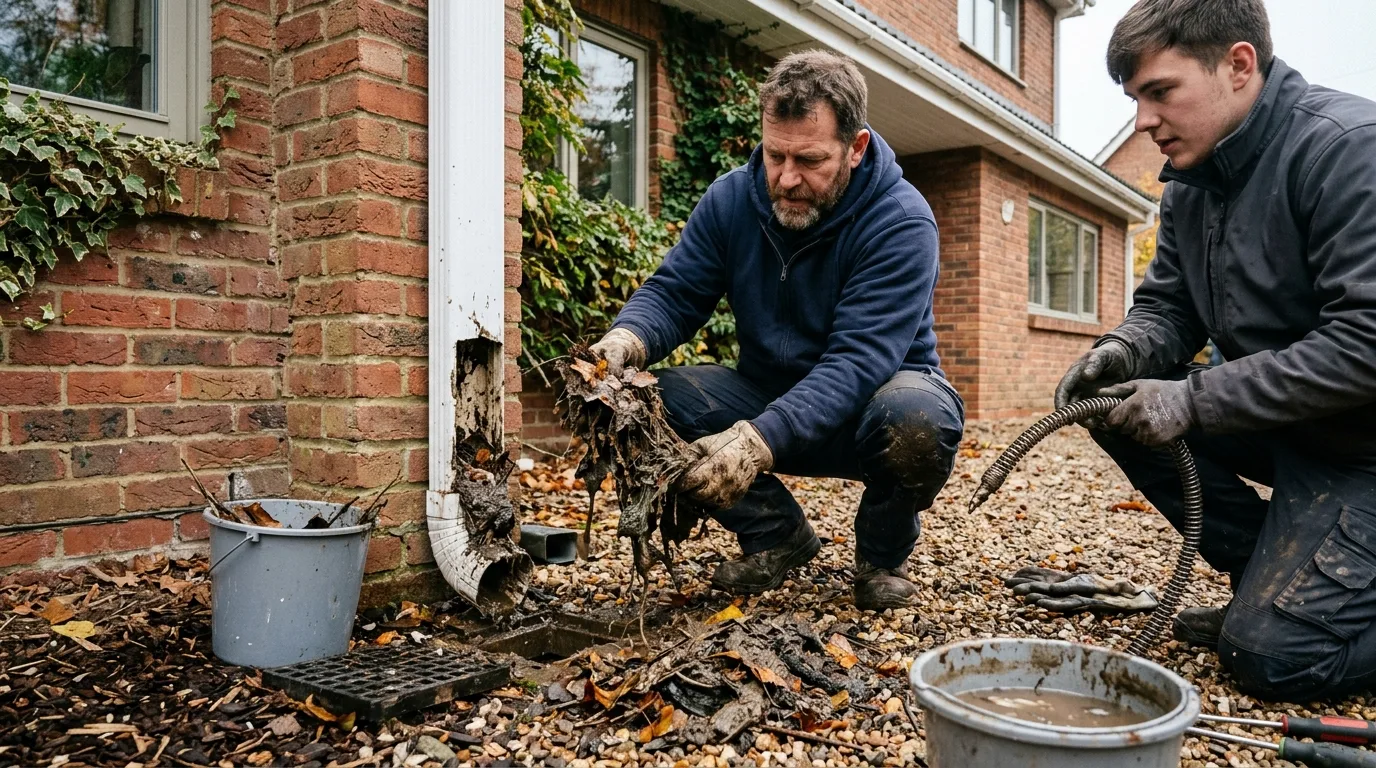
Mature trees are the defining visual feature of these streets and the leading cause of sewer calls in them. A sewer lateral is a permanently damp, nutrient-rich target, and roots find their way to any joint or crack that offers moisture. On a long lateral there are simply more joints to find, and on an older property the pipe is more likely to be clay or early cast iron rather than modern ABS.
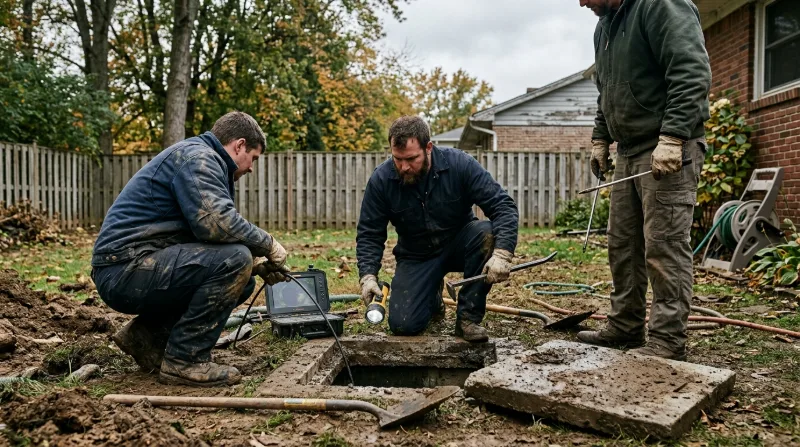
What makes this manageable is that root intrusion is predictable and visible. A camera run shows exactly where the roots are entering and how much of the bore they occupy. From there the choice is honest: clear it on a schedule, spot-repair the specific joint, or line the run and seal every joint permanently. Trenchless lining is particularly attractive here, because the alternative, excavating a long lateral, means digging through the landscaping that made the neighborhood worth living in.
Water arriving at the property line in this part of the city is generally supplied at a pressure comfortably above what domestic fixtures are designed for, which is why a pressure regulator sits at or near the meter. Regulators are consumable. They drift, they stick, and they eventually fail, usually failing open so the house receives full main pressure without anyone realising.
High pressure is quietly destructive. It shortens the life of every cartridge, fill valve, angle stop and flexible connector in the building, forces the water heater’s relief valve to weep, and produces the bang in the pipes when a tap closes quickly. Measuring it takes two minutes with a gauge on a hose bib. On a property this size, with this many fixtures, it is the single cheapest diagnostic worth running before chasing individual symptoms.
Properties with substantial landscaping almost always have irrigation, and irrigation systems connect to potable supply. Where that connection exists, a backflow prevention assembly is what stops water that has been sitting in a sprinkler line from being drawn back into the house supply when pressure drops. These assemblies are mechanical, they wear, and they need periodic testing.
The related problem is the crossover. Where an irrigation controller, a pool fill line or an outbuilding supply has been added over the years by different hands, it is not unusual to find connections that made sense to whoever installed them and no sense at all in combination. Mapping what is actually connected to what is a worthwhile exercise on any property that has been extended more than once.
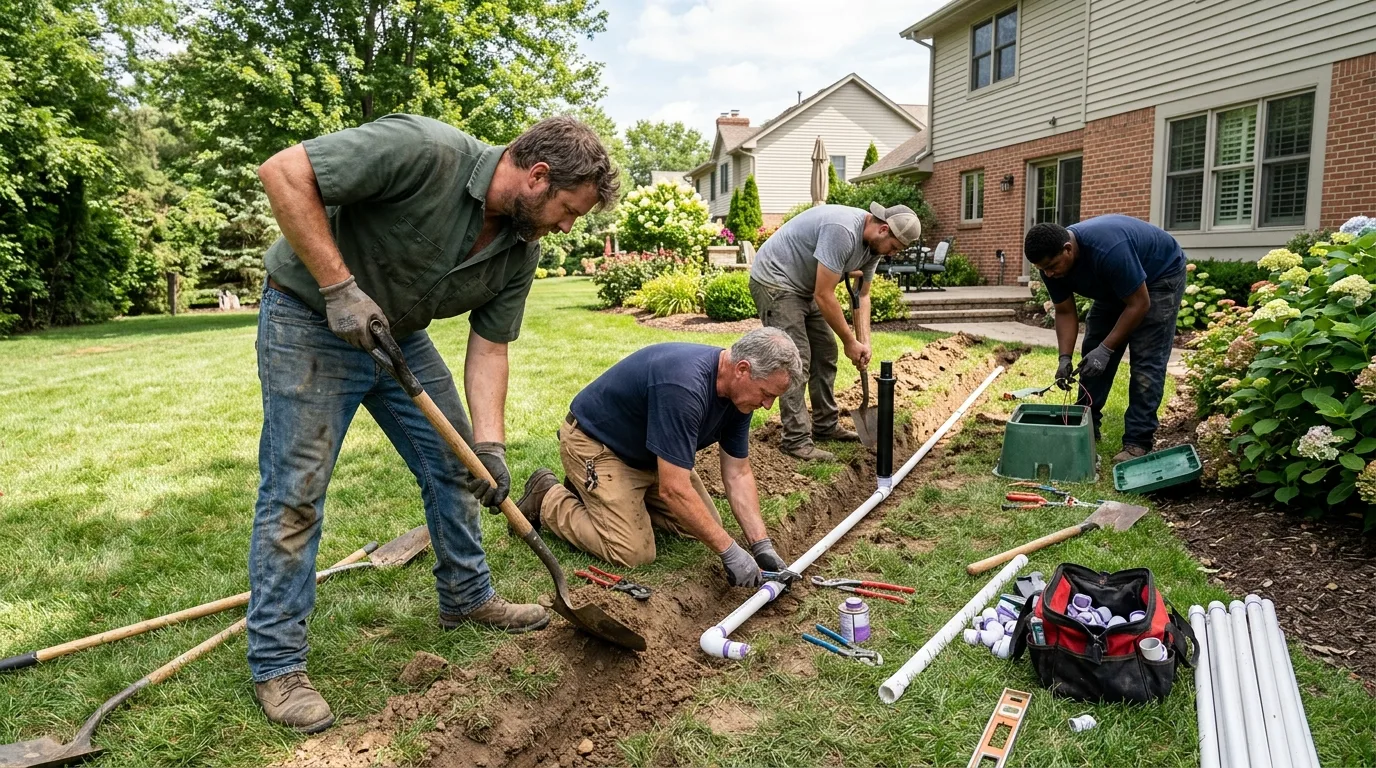 40ft+typical buried service run
The Los Coyotes call list
Fewer emergency calls than the dense parts of the city, more diagnostic and planned work. The problems here tend to develop slowly and get discovered by a bill or a soft patch of lawn rather than by a flood.
A gauge reading and a meter test together rule out most of the slow-loss causes.
That is the classic sign of a buried service line leak on a large lot. It will not dry out and it will not improve. Call and have it located before it undermines a driveway or a foundation.
Available every day and night · (714) 386-7076
Where we go
The larger-lot residential streets around the country club and the roads feeding them, on the eastern side of the city toward the Fullerton line.

The streets named are landmarks rather than a boundary. If you are anywhere on the eastern larger-lot side of Buena Park, this page applies to you.
Requested here most
Diagnostic and planned work leads the list, with long-run repairs close behind.
Asked by neighbors on this side of town
With the meter. Turn off every fixture and appliance in the house, including ice makers and irrigation controllers, then watch the meter’s low-flow indicator for ten minutes. If it moves, water is leaving somewhere between the meter and your fixtures. On a property with a long buried service line, that is the first place to suspect. If the meter is completely still, the loss is a fixture that runs intermittently, a toilet flapper is the usual culprit and costs almost nothing to fix.
Often not. A replacement service can frequently be pulled or bored along a new path rather than excavated along the old one, which means two access pits instead of a continuous trench. Whether that works depends on what is in the way, other utilities, tree roots, hardscape footings, so it is assessed before anything is quoted. Where open excavation genuinely is the only route, you should be told that before the work is booked, not after the first day of digging.
Measure it. A gauge screwed onto an outside hose bib gives you a reading in seconds. Residential fixtures are generally happiest somewhere in the region of the middle of the range a regulator is designed to hold; substantially above that and you are shortening the life of everything downstream. Symptoms that should prompt the check are banging pipes when a tap shuts, a water heater relief valve that weeps, and cartridges or fill valves that keep failing sooner than they should.
That is precisely the situation trenchless lining exists for. A liner is inserted through an existing access point, cured in place, and becomes a continuous jointless pipe inside the old one, sealing every joint the roots were using. There is no trench along the length of the run and the landscaping above stays where it is. It is not universally applicable: a lateral that has collapsed, badly bellied or lost too much of its shape needs excavation. A camera survey is what decides it.
Both can work and they solve it differently. A larger or second tank increases stored volume, which suits a household where demand is concentrated in a short window. A tankless system removes the storage limit entirely but needs adequate gas supply and correct venting, and it has a maximum flow rate, run three showers simultaneously and the temperature will drop. The right answer depends on your actual peak pattern and what your gas line can deliver, both of which should be checked before anything is ordered.
It needs periodic testing, because it is a mechanical assembly with internal parts that wear and it fails silently. A device that has stopped working looks identical to one that is working. Testing is quick, requires a brief interruption to the supply through it, and produces documentation. If your property has irrigation, a pool fill, or any auxiliary supply, it is worth confirming a device exists at all, on properties extended over several decades, sometimes one was never fitted.
It makes planning more important, not the job harder. Extensions typically mean the supply is a mixture of materials and eras, with connection points that may or may not have been done well. A repipe is actually a good opportunity to rationalise that, one material, one set of connections, valves where you can reach them. Expect the plumber to spend real time walking the property and looking in the attic and garage before quoting. If they do not, that is the warning sign.
Not for the same repair. A failed angle stop is a failed angle stop whether it is in a two-bedroom bungalow or a five-bedroom custom home. What genuinely differs is scope: more fixtures means more of them to service, longer runs mean more pipe and more labor, and a bigger lot means further to carry equipment. Those factors are visible in the written scope you approve before work begins, so nothing about the size of the house shows up as an unexplained number.
Useful for anyone who has just bought here and wants to know what they have taken on.
Next door
The neighboring areas covered on the same eastern-side runs.
Slope-adjacent properties on the northern edge where grade drives drainage.
Coyote Hills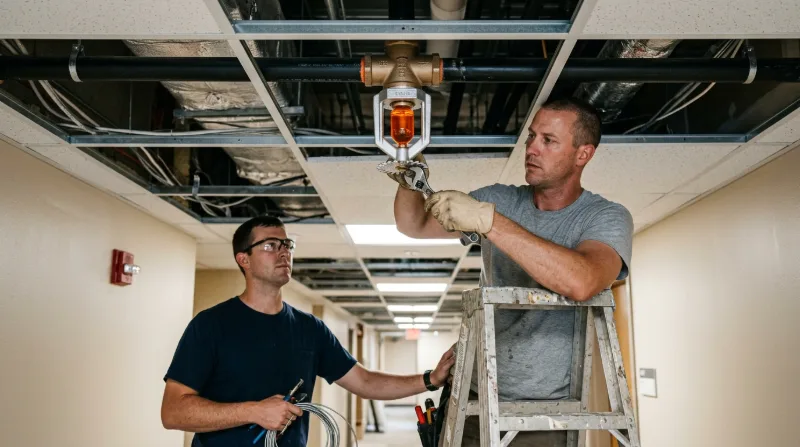
Larger-property dispatch
Buried lines, mature landscaping and forty years of alterations mean the diagnosis is worth more than the guess. Call and get someone who will locate the fault before quoting the fix.
(714) 386-7076 · Dispatch answers around the clock