Sewer Camera Inspection
Distances, depths and named defects, the survey every quote should start from.
SurveyEvery quote starts from a camera pass with depth and distance marked, not an estimate from the curb.
Spot repair, trenchless lining or replacement, priced against each other, not sold as the only option.
Sewer replacement is permitted work through the City of Buena Park, with inspection at the end.
An active sewage backup is relieved and made usable before anyone discusses a long-term repair.
Four failures, one pipe
The lateral is the private drain line running from your building out to the public sewer in the street. In much of Buena Park it is original to the house, which for the postwar tracts means vitrified clay in short jointed sections, or cast iron closer to the building. Both materials were entirely appropriate when installed and both have a service life that a sixty- or seventy-year-old house has now reached or passed.
Nearly every sewer repair on this housing stock comes down to four findings. Root intrusion at joints, where fine roots enter through a hairline gap and then thicken until they form a dam that catches everything passing. A bellied section, where the pipe has settled and now holds standing water, so solids drop out and accumulate at the low point. An offset joint, where ground movement has stepped one section against the next, leaving a lip that catches debris. And structural failure, a cracked or collapsed clay section, or cast iron that has scaled and then fractured along the bottom of the pipe.
A blocked main line is a same-day matter. Waste water exits at the lowest opening in the building, usually a downstairs shower, tub or garage floor drain. Stop all water use, keep people out of the affected room, and do not add drain chemicals to a line standing full. Call (714) 386-7076 and the line gets relieved first, quoted second.
Buena Park\u2019s residential streets were planted at roughly the same time they were built, so the trees are now mature and their root systems are correspondingly large. Roots do not attack pipe out of malice; they follow moisture and nutrients. A clay lateral with jointed sections offers both at every joint, especially once minor ground movement has opened a gap of a millimetre or two.
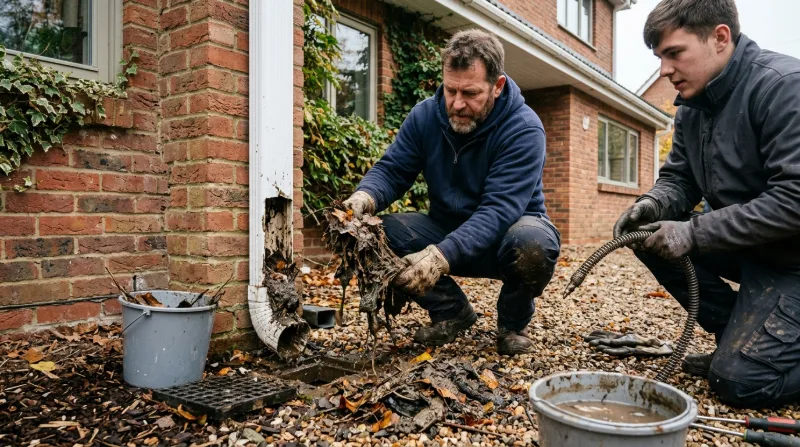
Once a root hair is inside, it thickens in the nutrient-rich environment and branches. What starts as a fine intrusion becomes a mass that occupies most of the pipe diameter, and the mass then catches solids and grease until the line stops. This is the most common single finding on a camera survey in this city, and it is why so many homeowners here have a story about the same drain blocking every autumn.
The important thing to understand is that root intrusion is evidence of a defect, not a cause on its own. Cutting the roots out restores flow and buys time, sometimes years with jetting, sometimes months. But the joint is still open, and the roots come back to the same place. That is the point at which the conversation should move from clearing to repairing, and a homeowner who understands the distinction stops paying an annual subscription for the same blockage.
A belly is a sag. Sewer lines work on gravity and need consistent fall; when a section settles, because the original bedding was poor, because soil moved, or because a tree root lifted or dropped it, that section holds water permanently. Solids settle out in the standing water instead of being carried along, so the low point gradually fills.
The giveaway is a blockage history that no amount of clearing resolves for long, and a camera image showing water standing in a line with nothing draining. Cabling and jetting will clean a belly out, and it will begin refilling immediately, because the geometry has not changed. The only real repairs are to excavate and re-lay that section to correct grade, or in some cases to line it, accepting that lining preserves the existing shape rather than fixing the fall.
An offset joint is a step. One pipe section has shifted relative to the next, leaving a ledge that catches paper and solids. Small offsets can be lined; significant ones need the section replaced, because a liner follows the host pipe and a liner across a large offset simply reproduces the obstruction in smoother material. Camera work with accurate depth and distance is what makes this decision straightforward instead of speculative.
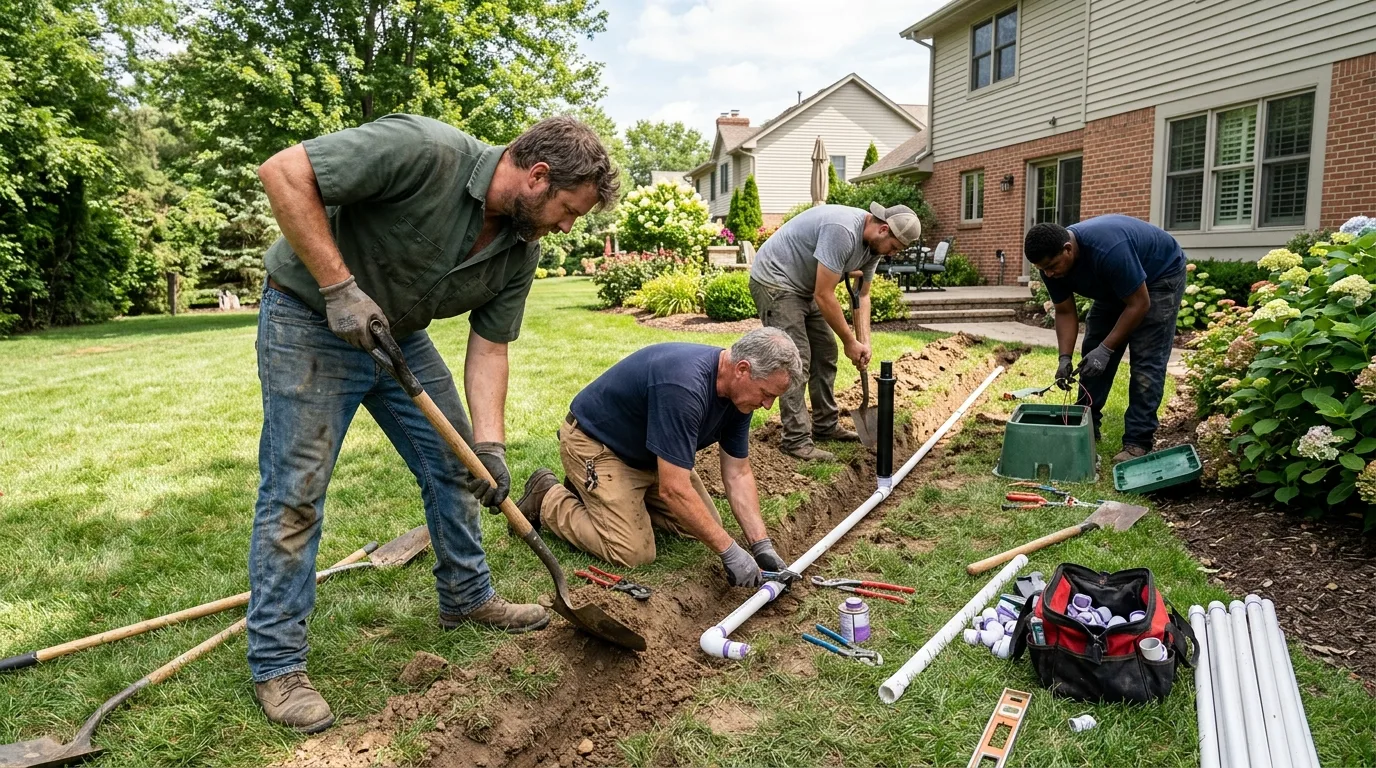
Spot repair means excavating to one defect and replacing a short section. It is the cheapest option and the right one when the camera shows a single localised failure in an otherwise sound line, a crushed section under a driveway, a broken joint at a known depth. Its risk is obvious: if the rest of the pipe is the same age and condition, you may be back.
Trenchless lining installs a resin-saturated liner inside the existing pipe and cures it in place, producing a jointless pipe within the old one. It preserves driveways, hardscape and mature landscaping, which in older Buena Park properties can be worth more than the pipe work itself. It suits lines with root intrusion at multiple joints, cracks and general deterioration where the host pipe still holds its shape. It cannot fix a belly, a severe offset or a collapse, and it slightly reduces internal diameter, usually irrelevant on a residential lateral.
Full replacement digs out the old line and lays new pipe to correct grade. It is the answer for collapse, severe bellies, badly offset joints, or a line so deteriorated that lining has nothing sound to bond to. It is the most disruptive option and the most definitive, and on a lateral running under a lawn rather than a driveway it is frequently the most economical too. Pipe bursting sits between the two: it fractures the old pipe outward while pulling new pipe through, needing only entry and exit pits.
The right answer is a function of what the camera shows, where the line runs and what is on top of it. Any of the three can be correct. What should never happen is a quote for one of them without a camera survey that justifies it.
Four things move the price. Length and depth of the line, depth especially, because it dictates excavation volume and shoring. What is on the surface: lawn is inexpensive, a stamped concrete driveway or mature hardscape is not, which is where trenchless earns its premium. The repair method. And access for equipment.
Sewer replacement is permitted work through the City of Buena Park and is inspected on completion. Insist on the permit. An unpermitted sewer replacement is a resale problem and, if the work was substandard, an expensive one to unwind.
One boundary question that catches people out: responsibility usually splits at the property line or at the point of connection to the public main, with the lateral on your side belonging to you. The exact division depends on local rules and, for condominiums and HOA-managed properties, on association documents, so it is worth establishing early, before anyone excavates. On shared laterals serving several units, get the management company involved on day one.
If the line is flowing but you know it has a defect, you are not obliged to act tonight. Sensible interim measures: have it cleared and jetted where the pipe condition allows, keep wipes and cotton products out of it entirely, be conservative with grease, and avoid heavy simultaneous loads such as laundry plus multiple showers. Keep the camera footage.
Then get quotes on the specific finding rather than on a general description. Two contractors quoting "sewer repair" may be quoting different jobs; two contractors quoting "line the lateral from the cleanout to the property line at a recorded depth" are comparable. Ask each what happens if they encounter a collapse mid-job, what restoration is included, and who pulls the permit.
And if the same line has already backed up into the building once, treat the timeline as short. A lateral that has produced a backup has demonstrated it can do it again, and the second time is rarely more convenient than the first.
 4Failure patterns
Reading the camera
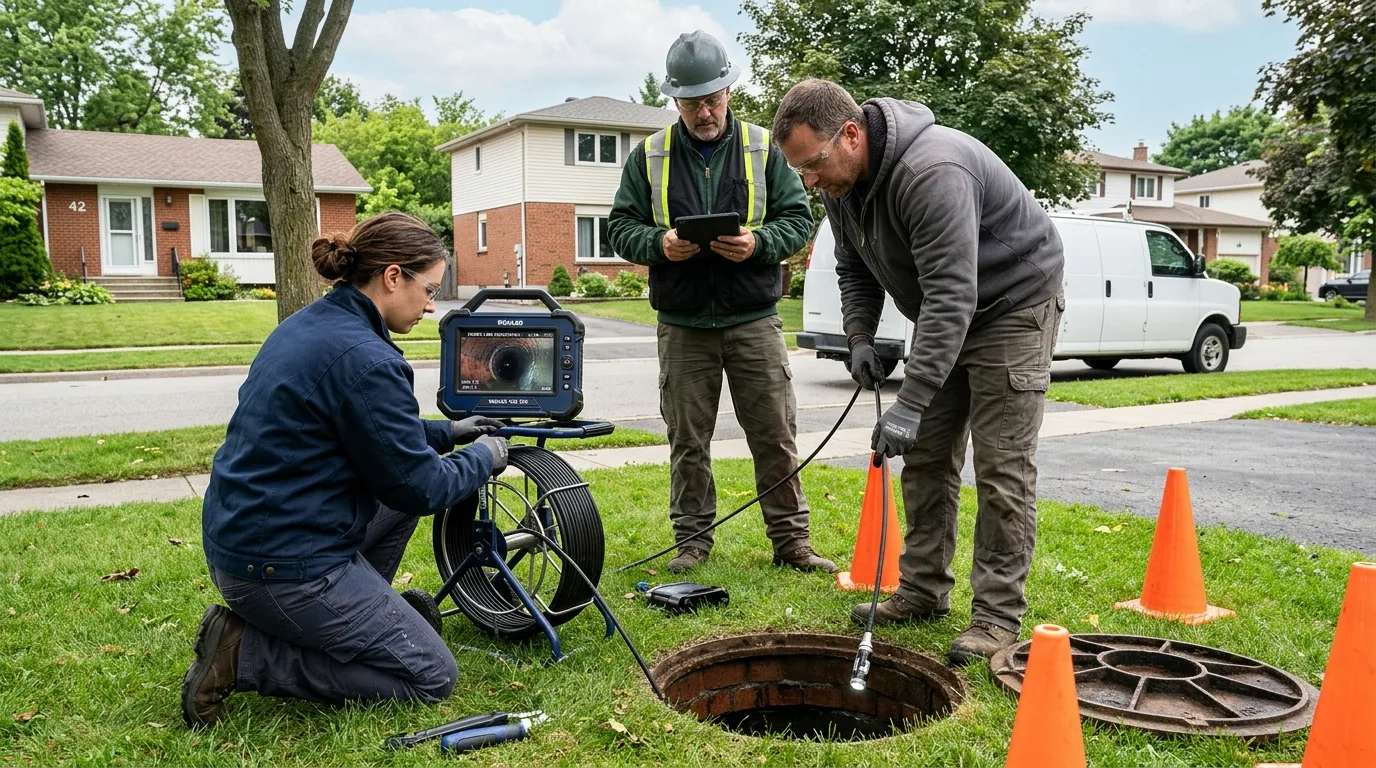
A camera pass is only useful if it produces specifics. Vague footage and a verbal summary is not a diagnosis, and it is not something you can get a comparable second quote on.
This is the minimum you should walk away with, and all of it is routine for a plumber who does this work properly.
Get the footage and the measurements. Everything after that is a comparable decision.
Stop all water use in the building and call. The line gets relieved and the property made usable before anything else is discussed.
Backups are dispatched around the clock, this is not a wait-until-morning problem.
Order of operations
Relief, then diagnosis, then a decision made on evidence. Rushing the middle step is what makes this job expensive.
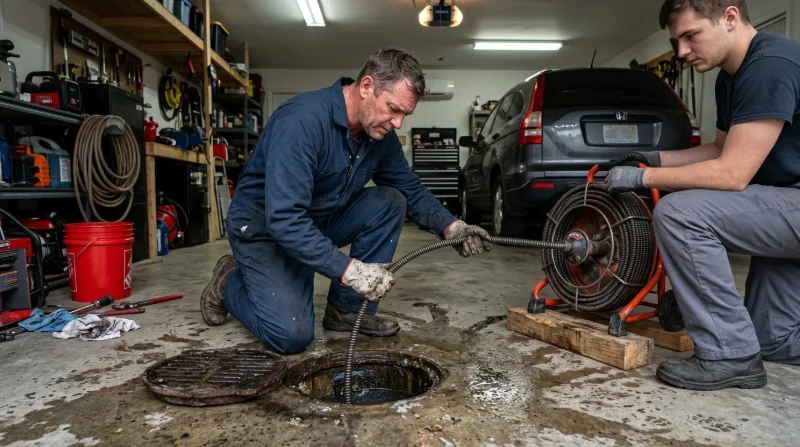
Open the blockage through the exterior cleanout so the building is usable and nothing more comes back into the house.
Survey the lateral, name each defect, and mark distance and depth. Footage recorded and left with you.
Spot repair, lining or replacement, quoted against each other with restoration scope and permit stated.
Work carried out, line re-cameraed, City inspection completed and the surface restored as agreed.
Questions we get on these calls
The pattern is what tells you. Several fixtures slowing at once, a toilet that bubbles when the washing machine drains, waste water surfacing at the lowest drain in the building, or a blockage that returns on a predictable cycle, those all point at the shared line rather than a fixture. A single slow sink does not. If you are seeing the first set of symptoms, a camera survey will usually name the cause in under an hour and is the cheapest money you will spend on the problem.
It spans a wide range because the jobs are genuinely different. A spot repair on a shallow line under a lawn sits at the low end. Lining a full lateral costs more but avoids destroying a driveway. Full replacement of a deep line under hardscape sits at the top. The drivers are length, depth, surface conditions, method and access. What makes quotes comparable is a camera survey with recorded distances and depths, without that you are comparing guesses.
Trenchless covers two methods. Lining installs a resin-saturated sleeve inside your existing pipe and cures it in place, creating a jointless pipe within the old one. Pipe bursting fractures the old pipe outward while pulling new pipe through, using only entry and exit pits. Both spare driveways, hardscape and mature landscaping. Neither can fix a belly, a severe offset or a collapse, because they follow the existing pipe. The camera survey decides whether your line is a candidate.
The roots can be removed; the reason they got in cannot be, by cleaning alone. Roots enter through an open joint or crack, so cutting and jetting clears the mass and buys an interval, sometimes years, while leaving the entry point intact. Permanent resolution means sealing the pipe: lining the affected run or replacing those sections so there is no gap to enter. If you are clearing the same line annually, you are paying for a repair in instalments without receiving one.
A belly is a sagged section that holds standing water permanently, so solids settle out instead of being carried away and the low point gradually fills. On camera it looks like water sitting in a pipe with nothing draining. Lining does not fix it, because a liner follows the shape of the host pipe, you end up with a smoother belly. The real repair is to excavate that section and re-lay it to correct grade. Any contractor offering to line a belly should be asked how that addresses the fall.
Generally the lateral on your side of the property line or point of connection is yours, and the public main is not, but the exact division depends on local rules and is worth confirming rather than assuming. In condominiums and HOA-managed properties it depends on the association documents, and a line serving several units is usually shared. Establish this before anyone excavates, and bring your management company in on day one if a shared line is involved.
Yes. Sewer line replacement is permitted work pulled through the City of Buena Park, and it is inspected on completion. Take the permit even though it adds a step. An unpermitted sewer replacement surfaces during a resale inspection, and resolving it retroactively, potentially including exposing work that has been buried, costs far more than the permit ever would. A contractor who suggests skipping it is transferring risk to you.
That depends entirely on the method, which is why trenchless exists. Full replacement of a line running under a lawn is straightforward and the lawn recovers. A line under a stamped concrete driveway, mature planting or hardscape is where lining or pipe bursting earns its higher price, since both need only small access pits. Get the restoration scope in writing: concrete and soil restoration is normally included, while replacing specialist hardscape, irrigation or mature planting usually is not.
It is a negotiation item rather than a deal-breaker, but only if you have real numbers. Get an independent camera survey before closing, not the seller\u2019s footage, with distances, depths and named defects, then get a written repair quote based on it. Original clay laterals under mature trees are extremely common in this housing stock, so a survey finding root intrusion is normal rather than alarming. What matters is whether you are looking at a spot repair or a full replacement under a driveway.
A spot repair is often a single day including excavation, repair and backfill. Lining a lateral is typically one to two days, with the cure time built in. Full replacement runs from one day on a short shallow line to several on a long or deep one under hardscape. Add time for permitting and inspection scheduling. During the work, expect a period without usable drainage, and ask specifically how that will be managed if the property is occupied.
Ask for the footage, the depths and the distances, that is what makes two quotes comparable.
Related work
Diagnosis, cleaning, and the three repair paths, each one has its own page.
Distances, depths and named defects, the survey every quote should start from.
Survey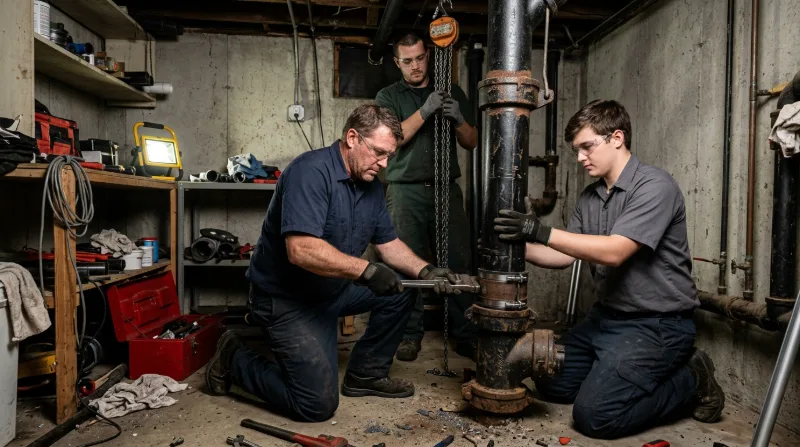
Lining and pipe bursting that spare the driveway and the mature landscaping.
Trenchless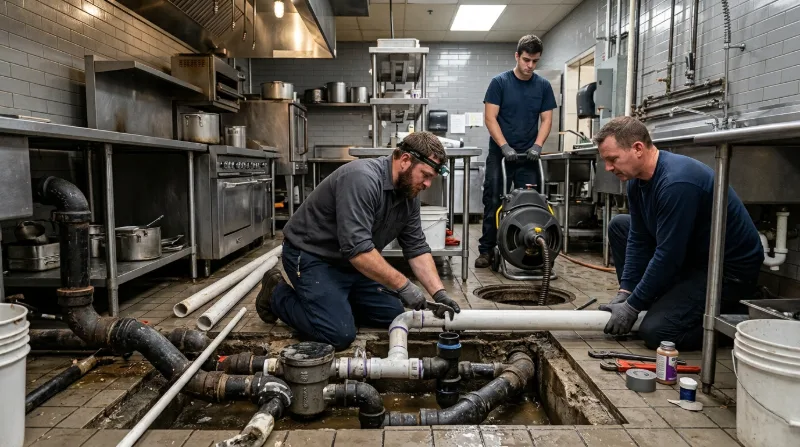
Evidence, then a decision
Camera survey, named defects, measured depths. Then three prices you can actually compare.
Laterals across Buena Park 90620 and 90621, plus Fullerton, Anaheim, La Palma, Cypress, Stanton and La Mirada.