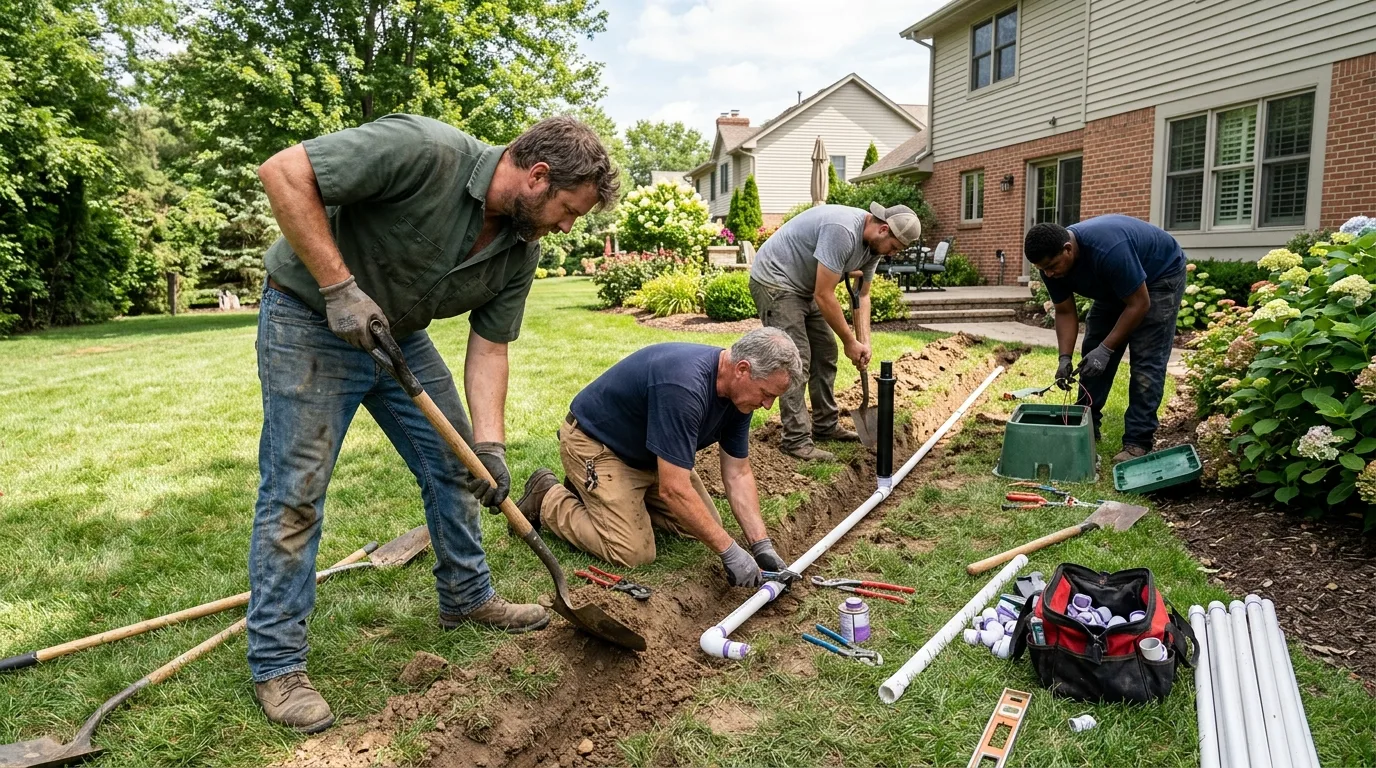
Locate before digging
Camera and surface locator mark the defect exactly, so excavation happens in one known place.
Long laterals
Deeper setbacks mean longer runs to the main, and more joints for roots to find.
Ten minutes northwest
A straightforward run over the county line, with crews working both sides regularly.
Written before starting
Scope and cost agreed at the door, and re-agreed if the job changes.
Across the county line
La Mirada’s generous lots create a specific plumbing problem
La Mirada was developed with more space than most of its neighbors, wider lots, deeper setbacks, more garden. Pleasant to live in, and mostly irrelevant to plumbing except in one respect: the sewer lateral running from the house to the public main is considerably longer than in a tightly packed tract. More length means more joints, more opportunity for root intrusion, and more pipe that has been quietly ageing since the house was built.
The same applies to the water service on the supply side. A longer buried run between the meter and the house means a leak in it loses more water before anyone notices, and the first sign is usually a bill rather than a puddle. Both problems share a solution: locate precisely, then act on the location rather than on a guess.
Above ground the housing is broadly familiar, predominantly slab-on-grade, built during the 1960s, with copper supply and a mixture of cast iron and early plastics in the drainage. It behaves much like the Buena Park tracts of the same era, which means slab leaks, pinhole copper and water heaters at the end of long service lives.
On a long lateral, the cost difference between excavating where the defect is and excavating where you think it might be is enormous. A camera survey with a surface locator is the cheapest part of any sewer job and it determines the size of the most expensive part.
Long laterals, roots and the case for lining
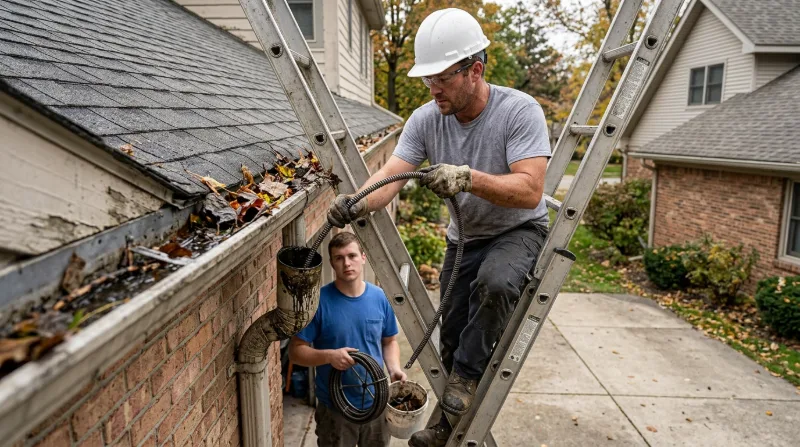
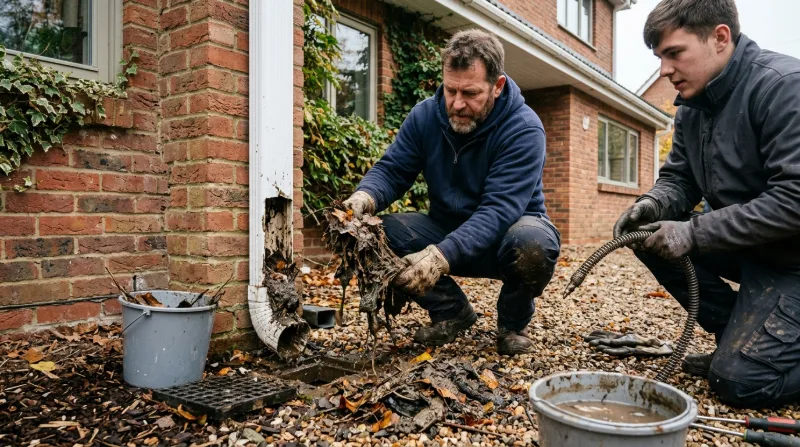
Every joint in a sewer lateral is a potential entry point for roots seeking moisture. On a short run there are few joints; on a long run under a mature garden there are many, and the mature planting that makes these lots attractive is precisely what supplies the roots. The result is a recurring blockage pattern, cleared, fine for a while, back again.
Trenchless lining answers this well on long runs. A liner inserted through an existing access point cures in place to form a continuous jointless pipe inside the old one, sealing every joint at once. There is no trench across the garden and no reinstatement to pay for. It requires a host pipe with enough remaining structure, which is what the camera survey establishes, and it is not appropriate for a collapsed or severely offset line.
Buried water services and unexplained bills
A supply line running forty or fifty feet from the meter to the house is out of sight and generally out of mind until the bill changes. Because the leak is underground, the water disperses into the soil and there is frequently nothing at all to see, occasionally a permanently damp or unusually green patch, but often not even that.
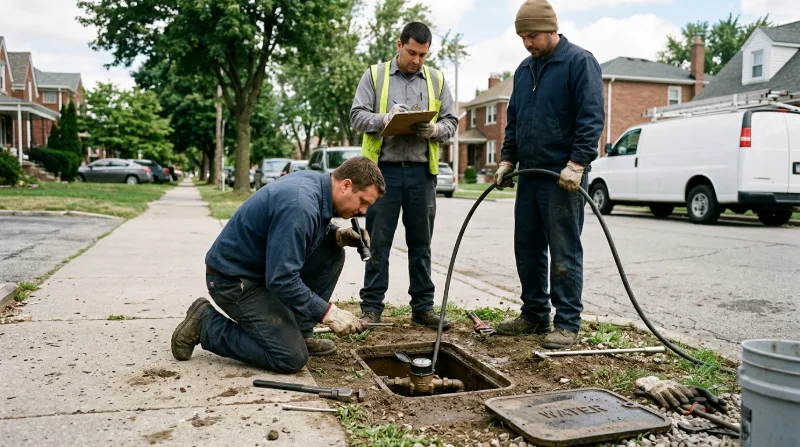
The diagnostic is simple and worth doing before anything else. Shut every fixture, appliance and irrigation controller, then watch the meter’s low-flow indicator. Movement means water is leaving between the meter and the house. From there, the leak can be located along the run rather than the line being replaced speculatively, and where replacement is warranted, a new service can often be pulled along a new path with two access pits rather than a full trench.
The house itself: slab, copper and heaters
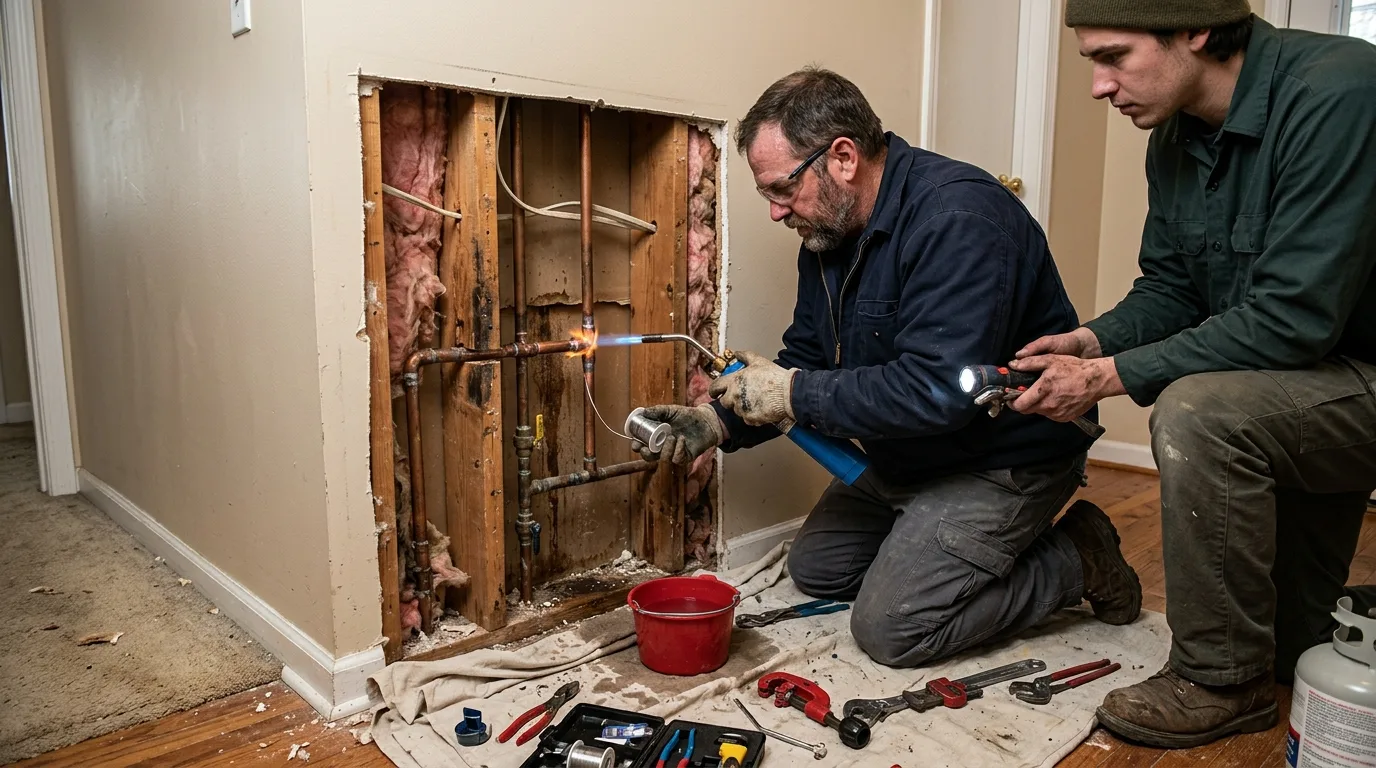
Above ground, La Mirada behaves like any well-kept 1960s slab neighborhood. Copper supply of that vintage produces pinhole failures, and under a slab those are found by warm floors, rising bills and the sound of running water in a silent house rather than by anything visible. Detection is acoustic and thermal; repair is either a small controlled opening or a reroute through the attic.
Water heaters are the other constant, working against the same hard regional water and rarely flushed. And pressure regulators of that age have generally drifted or failed, quietly shortening the life of every fixture in the house. Both are inexpensive to check and both are usually overdue.
 50ftlaterals are common here
The La Mirada call list
What these properties call us out for
Underground work leads, because the distances involved make it both more likely and more consequential.
- Root intrusion at joints in long sewer laterals under mature gardens
- Camera survey with surface locating before any excavation is priced
- Trenchless lining where the host pipe still has structure
- Buried water service leaks found through meter testing and locating
- Slab leak detection and repair in 1960s tract housing
- Water heater replacement and pressure regulator renewal
Order a lateral survey
The survey decides whether the answer is cleaning, a spot repair, or lining.
Sewer blocking again a few months later?
Recurrence means a structural cause, not bad luck. One camera survey identifies it and usually ends the cycle permanently.
Find out why it keeps blocking
Surveys and emergency clearance · (714) 386-7076
Across the city
Where we work in La Mirada
Citywide, from the residential neighborhoods through to the commercial premises along the main corridors.
- Imperial Highway
- Rosecrans Avenue
- La Mirada Boulevard
- Beach Boulevard
- Valley View Avenue
- Santa Gertrudes Avenue
- Alondra Boulevard
- Stage Road
- Foster Road
- Biola-area streets
La Mirada sits over the Los Angeles County line to the northwest, and the drive from Buena Park is short and direct.
La Mirada priorities
Services requested most here
Sewer and service-line work leads, followed by the usual 1960s slab-house repairs.
Asked by neighbors on this side of town
La Mirada plumbing questions
Yes. The boundary is administrative rather than practical: La Mirada is a short, direct drive from Buena Park and crews work both sides regularly. What does change across a county line is the permitting authority for anything requiring a permit, which affects timelines on larger jobs such as sewer replacement. A plumber should tell you that up front rather than discovering it after work is scheduled.
Because problems scale with length. More pipe means more joints, and every joint is a place roots can enter. It also means a blockage can be a long way from the house, which makes locating it precisely far more valuable, excavating in the right place instead of the likely place is often the difference between a modest job and a substantial one. Long runs are also where trenchless lining offers the biggest saving over open excavation.
Shut off every fixture, appliance and irrigation controller, then watch the water meter’s low-flow indicator for several minutes. If it moves, water is leaving between the meter and your fixtures. Then close the main valve at the house: if the meter stops, the loss is inside; if it keeps moving, the loss is in the buried service line outside. That two-step test costs nothing and tells you which job you are facing.
Frequently. A replacement can often be pulled or bored along a new route with access pits at each end rather than a continuous trench. What prevents it is other utilities, hardscape footings or heavy root systems in the path. It is assessed before quoting, and if open excavation genuinely is the only option you should be told so before booking rather than after the first day of digging.
It depends on what the camera shows. Lining needs a host pipe with enough remaining structure to support the liner while it cures, and a route without severe offsets or collapses. Where those conditions are met it is an excellent answer on a long run, sealing every joint at once with no trench. Where they are not, excavation is required, and a plumber should explain specifically why with reference to the footage rather than in general terms.
Possibly, but one leak is not a pattern. Copper of that era fails through slow electrochemical corrosion that affects the whole system, but the timing varies widely between houses depending on water chemistry, pressure history and how the pipe was installed. A single leak in an otherwise sound system justifies a repair. A second within a couple of years changes the arithmetic, and a third almost always makes repiping the cheaper path.
On a property with a long lateral, yes, it is the single most informative pre-purchase check available, because no visual inspection reaches it. You get the material, the condition, any defects and footage you keep. Given that a full lateral replacement on a deep lot is a significant number, knowing before completing rather than after is worth a great deal more than the survey costs.
Ten minutes or so from Buena Park in ordinary conditions, and the route does not depend heavily on freeway traffic, which makes the timing more reliable than it is for some directions. Overnight it is quicker still. As everywhere, you will be given a window based on where crews actually are rather than a default figure.
Book a La Mirada visit
Mention lot depth or an unusually long driveway, it affects how the sewer work is planned.
Next door
Around La Mirada
Neighboring areas covered on the same northwestern runs.
La Mirada dispatch
Long runs, precise answers
Where the pipe is long and buried, guessing is expensive. Call and get it located properly before anybody quotes a trench.
Get the line located first
(714) 386-7076 · Dispatch answers at any hour