Leak Detection
The location step on its own, when you know you are losing water but not where.
Locate itAcoustic listening, pressure isolation and thermal imaging narrow it to a spot, not a room.
Both options priced, with the honest trade-offs, before a saw touches concrete.
Reroutes and repipes go through City of Buena Park permitting with inspection.
Concrete patched and finished, with the scope of restoration agreed in advance.
How to know that is what you have
A slab leak is a break in a pressurised water line running beneath a concrete foundation. Because the pipe is buried in or under the slab, the water has nowhere obvious to go, so it saturates the sub-base, migrates along the path of least resistance, and eventually shows itself somewhere that has nothing to do with where the pipe actually failed. That gap between symptom and source is the whole problem.
Almost every homeowner arrives at the same conclusion through the same sequence. First the water bill climbs without an explanation. Then there is a sound, a faint hiss or rush when every fixture in the house is off, most audible at night. Then a patch of floor is warm underfoot, which means the hot side has failed, because hot lines run hotter than the concrete around them and heat conducts up through tile and vinyl. Then baseboards swell, or a carpet edge stays damp, or a hairline crack opens in the floor. In the worst version, water surfaces through the slab or appears along the exterior at the base of a wall.
The five-minute test anyone can run: shut off every fixture and appliance in the building, including ice makers and irrigation, then look at the water meter. If the low-flow indicator dial is still turning, water is leaving the system somewhere. That does not prove it is under the slab, but it does prove you have a leak, and it is the single most useful piece of information you can hand a plumber on the phone.
Buena Park incorporated in January 1953, right as the postwar tract building hit full speed, and whole neighborhoods went up within a few years of one another. Those houses were built slab-on-grade, poured concrete directly on prepared soil, with supply lines run beneath or through the slab rather than in a crawl space. It was fast, cheap and completely standard for the era.
The consequence arrives sixty or seventy years later. Every house on the street got the same pipe material, installed by the same trades to the same detail, carrying the same hard imported water, sitting in the same soil. Copper under a slab corrodes from the outside in when the surrounding soil chemistry is aggressive, and from the inside out where water chemistry and velocity work on the pipe wall. Galvanized corrodes on a similar clock. Add a few decades of thermal cycling on the hot line, plus the small ground movements that come with clay soils and seasonal moisture, and pinholes are not bad luck. They are schedule.
This is why one street can see several slab leaks within a few years, and why a homeowner who has just repaired one should think carefully before assuming it was a one-off. If the leak was on original under-slab copper in a house of that era, the rest of that pipe is exactly as old as the part that failed. That single fact is what pushes many of these jobs from spot repair toward a reroute or a partial repipe.
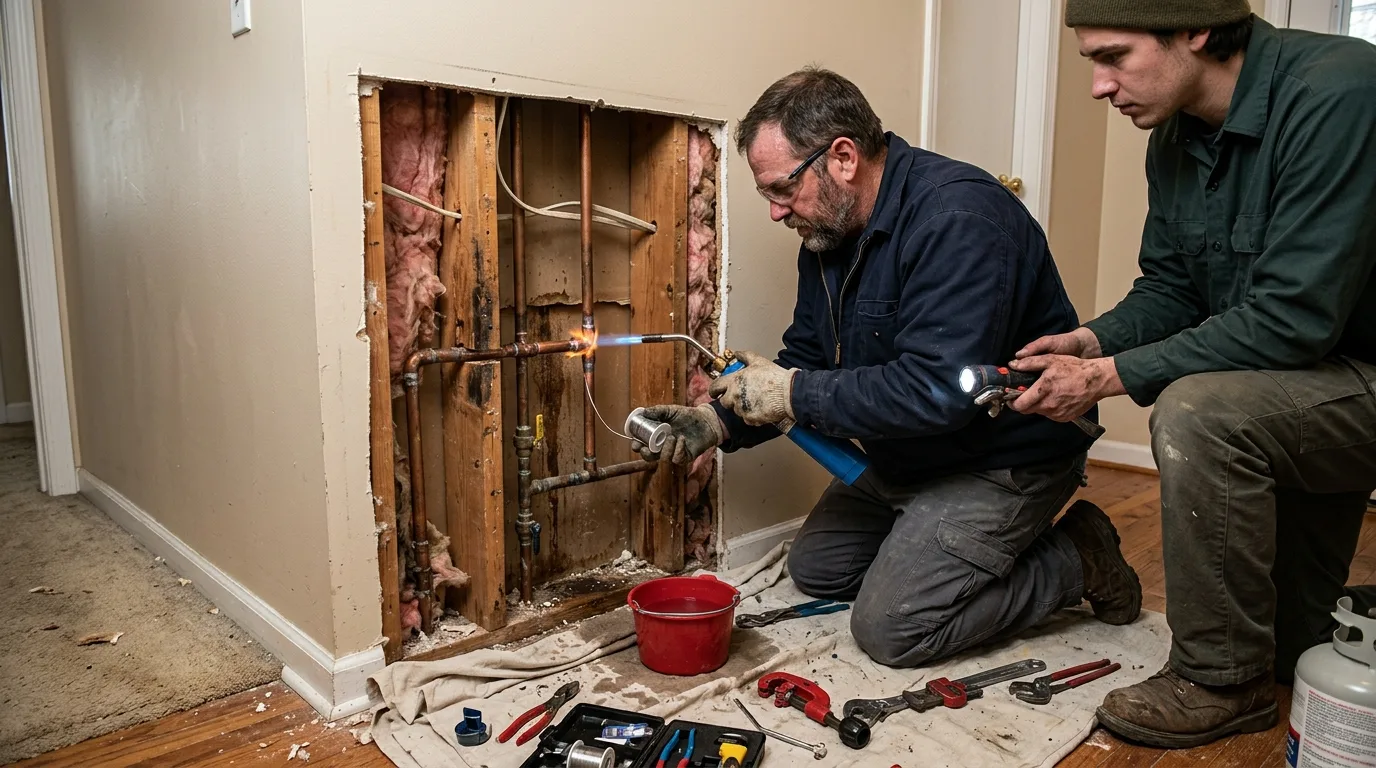
Locating is the part that determines the cost of everything downstream, so it deserves the time it takes. A plumber works from broad to narrow. First, isolate: shut the water heater outlet to separate hot from cold, then watch the meter or a pressure gauge to see which side is losing. A hot-side leak on a house with a warm floor spot is already half-located.
Then pressure-test the isolated side to confirm the loss is real and to estimate its size. Then listen. Acoustic equipment amplifies the sound of water escaping under pressure through concrete, and a skilled operator moves a ground microphone in a grid across the floor to find the loudest point. Thermal imaging supports the hot-side search by mapping the temperature plume through the slab. On some jobs an inert tracer gas is introduced into the drained line and detected at the surface where it escapes, which is the most precise method available and worth it on complex layouts.
What you should expect at the end of the location process is a mark on the floor and a stated confidence level, not a general area, and definitely not a guess based on where the carpet feels damp. Water travels, and the wet spot is frequently meters from the failure. Opening concrete at the wrong place is the most expensive mistake in this entire category of work.
Once the leak is located there are two legitimate repairs, and a competent plumber will price both rather than assume you want the cheaper one.
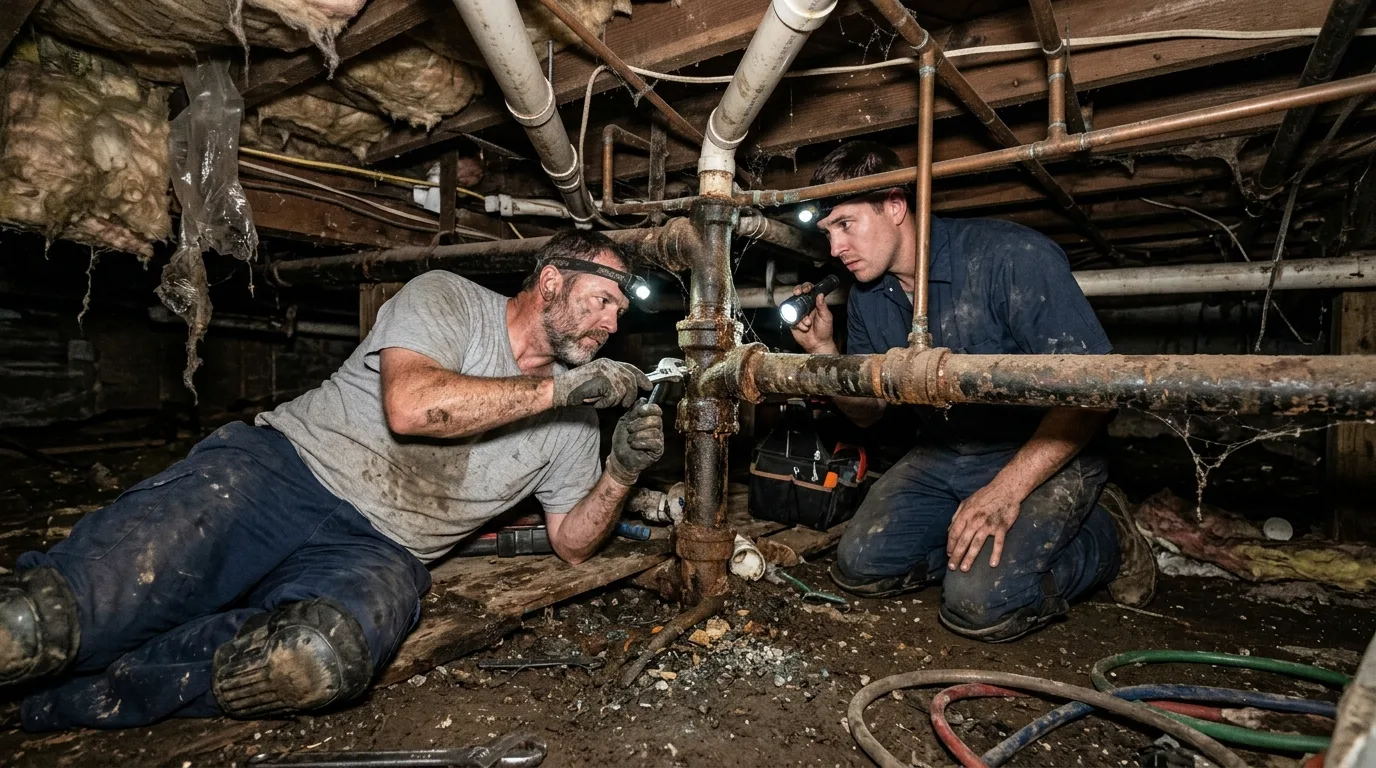
Opening the slab means saw-cutting the concrete over the failure, excavating to the pipe, cutting out the bad section, sleeving and repairing it, then backfilling, re-pouring and finishing. It keeps the original pipe route, which matters when the line is otherwise sound and the failure is clearly a one-off, say, mechanical damage rather than corrosion. It is also disruptive: dust, noise, a hole in your floor for a day or more, and flooring that may not be matchable when it goes back.
A reroute abandons the failed segment entirely and runs a new line overhead through the attic and down inside walls to the fixtures that section served. No concrete is cut in the middle of the house, though drywall is opened where the new line drops. Crucially, a reroute replaces old pipe with new pipe rather than patching sixty-year-old material, which means that specific run stops being a candidate for the next leak. Where several fixtures are downstream, or where the leak is on original under-slab copper in a 1950s or 1960s house, a reroute is frequently the better value even though its sticker price is higher.
There is a third answer worth naming: if two or more slab leaks have already happened, the conversation should shift to a whole-home repipe. Paying for a series of individual repairs on a system that is failing as a system is the most expensive path available, and homeowners land on it one reasonable decision at a time.
The term gets applied loosely, and the distinction changes the whole job. A slab leak is a pressurised supply line, it runs constantly, moves the meter, and gets worse. A failure in the drain, waste or vent lines under the slab only leaks when something is draining, so the meter shows nothing and the symptoms are different: a persistent sewer smell, damp that comes and goes, or a shower that has always drained slowly.
Under-slab drain failures in this housing stock are usually cast iron that has scaled and fractured along the bottom of the pipe, or clay with root intrusion at the joints. They are diagnosed with a camera and a locator rather than acoustic gear, and the repair options are different too, spot excavation, or lining the pipe from an access point. If your symptoms are smell and intermittent damp rather than a running meter, say so, and expect a camera rather than a microphone.
Homeowner policies in California commonly cover the resulting water damage while excluding the failed pipe itself, and the practical consequence is that documentation matters. Photographs of the located leak, the plumber\u2019s written diagnosis, the repair invoice and moisture readings are what make a claim straightforward instead of a fight. Ask for that paperwork whether or not you plan to file.
A slab repair or reroute is permitted work, pulled through the City of Buena Park and inspected on completion. Insist on it. Unpermitted repiping and slab work becomes a disclosure problem at resale, and it is the kind of thing a buyer\u2019s inspector finds easily.
Two final practical notes. Confirm in writing what restoration is included, concrete patching is normal, matching a discontinued 1962 floor tile is not, and that expectation gap causes most of the disputes in this trade. And if the plumber recommends slab entry at a spot without having shown you a located mark and explained how they found it, ask again before anyone starts a saw.
 1953Tract era begins
Why the reroute usually wins
Slab entry repairs the failure. A reroute removes the section that failed from service altogether. On original under-slab lines of this age, that difference is worth real money over the following decade.
The right choice depends on your house, and here is the shortlist a plumber runs through before recommending one.
Ask for the reroute number and the slab-entry number on the same visit, the comparison is the point.
That is the confirmation. The next step is locating it precisely, before anyone talks about cutting anything.
Detection first, quote second, that order is what keeps this job from getting expensive.
The sequence
Four stages, and the first two matter more to your final bill than the last two.
Meter check, pressure test, hot side separated from cold. This establishes that a pressurised line is losing water and which one.
Acoustic listening, thermal imaging and where needed tracer gas, until the leak is a mark on the floor rather than a region.
Reroute versus slab entry, both priced in writing, with permits identified and restoration scope agreed.
New line installed and pressure tested, concrete or drywall patched and finished, inspection completed.
Questions we get on these calls
The honest answer is that detection and repair are two different line items and the second depends entirely on the first. Locating the leak is a defined cost. The repair ranges from a modest spot repair through a single-line reroute to a partial repipe, and the drivers are how many fixtures the line serves, whether attic access supports a reroute, what your floor is made of, and how much restoration you want included. What you should insist on is a written price for your specific job after the leak has been located, with the alternative option priced alongside it.
Not sensibly. A slab leak is running continuously under pressure, so it saturates the sub-base beneath your foundation the entire time. That means a water bill that keeps climbing, mold conditions in flooring and walls, potential soil movement under the slab, and on the hot side a water heater running constantly to reheat water that goes straight into the ground. Small slab leaks do not stay small, and the damage cost curve is much steeper than the repair cost curve.
By isolating and listening. The water heater outlet is closed to separate hot from cold so the losing side is identified, the system is pressure tested to confirm the loss, and then acoustic equipment is used to find the loudest point of escaping water through the concrete. Thermal imaging maps the heat plume from a hot-side leak, and on difficult layouts an inert tracer gas can be introduced into the drained line and detected where it surfaces. Concrete is only opened after there is a mark on the floor.
Opening the slab means saw-cutting the concrete over the failure, repairing that section of pipe, then backfilling and re-pouring. It keeps the original route and is well suited to a one-off failure on otherwise sound pipe. A reroute abandons the failed run and installs a new line overhead through the attic with drops inside walls, so no concrete is cut mid-house and the old material stops being a liability. On original under-slab copper in a 1950s or 1960s tract, the reroute is often the better long-term value.
Policies vary and we cannot tell you what yours does, but the common California pattern is that resulting water damage may be covered while the failed pipe itself is excluded. What consistently helps is documentation: photographs of the located leak, a written diagnosis, moisture readings and an itemised invoice. Ask your plumber for all of it, and speak to your carrier before authorising restoration work, because some policies have requirements about how and by whom that is done.
Watch the meter. A slab leak is on a pressurised supply line, so it runs constantly and the meter moves with every fixture closed. An under-slab drain failure only releases water when something is draining, so the meter shows nothing. The symptom profile differs too: supply leaks give you warm floors, rising bills and a hiss; drain failures give you sewer odor, damp that comes and goes, and often a fixture that has always drained slowly. The two are diagnosed with completely different equipment.
Probably, and it is worth pricing properly rather than waiting for the third. Two failures on the same original under-slab system is strong evidence that the pipe is at end of life throughout, not defective in two spots. A whole-home repipe replaces the supply system with new material routed overhead, which ends the slab leak cycle rather than managing it. Compare the repipe quote against the realistic cost of the next three individual repairs plus their restoration, and the arithmetic usually becomes obvious.
Slab entry requires cutting the floor covering above the work area, and that is the honest downside, original terrazzo, discontinued tile and poured finishes frequently cannot be matched. A reroute avoids cutting the floor but does require opening drywall where the new line drops. Concrete patching and drywall patching are normally included; finish flooring restoration is usually separate and often handled by a flooring specialist. Get the restoration scope in writing before the work begins, because this is where most disputes on these jobs come from.
A localised spot repair generally does not, but a reroute or a repipe does, and it is pulled through the City of Buena Park with inspection on completion. Take the permit even where it feels like friction. Unpermitted repiping is exactly the kind of thing that surfaces during a resale inspection, and the cost of resolving it retroactively is far higher than the permit fee. A plumber who suggests skipping it on work of that scope is creating a problem you will own, not them.
It can affect the soil the foundation bears on, which amounts to the same thing. Continuous saturation changes the moisture content and load-bearing behavior of the sub-base, and in soils that shrink and swell that can produce differential movement, showing up as new cracks in floors or drywall, or doors that stop closing squarely. That is not an argument for panic; it is an argument for not letting a known slab leak run for months while you think about it.
Describe the symptom and how long it has been happening, that usually tells us which side has failed.
Related work
These jobs share the same diagnosis, and often the same house.
The location step on its own, when you know you are losing water but not where.
Locate it
When the second and third leaks make individual repairs the expensive option.
Repiping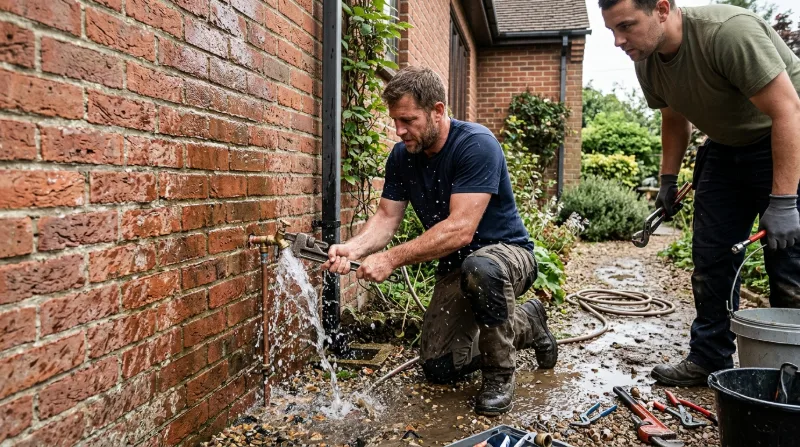
Accessible failures in copper, galvanized and CPVC that have not gone under concrete.
Pipe repair
For a slab leak that has already surfaced through the floor and is not waiting.
Right nowDetection first
The cheapest slab leak is the one that got located properly before anybody picked up a saw.
Serving the postwar tracts across Buena Park 90620 and 90621, plus Fullerton, Anaheim, Cypress and La Palma.