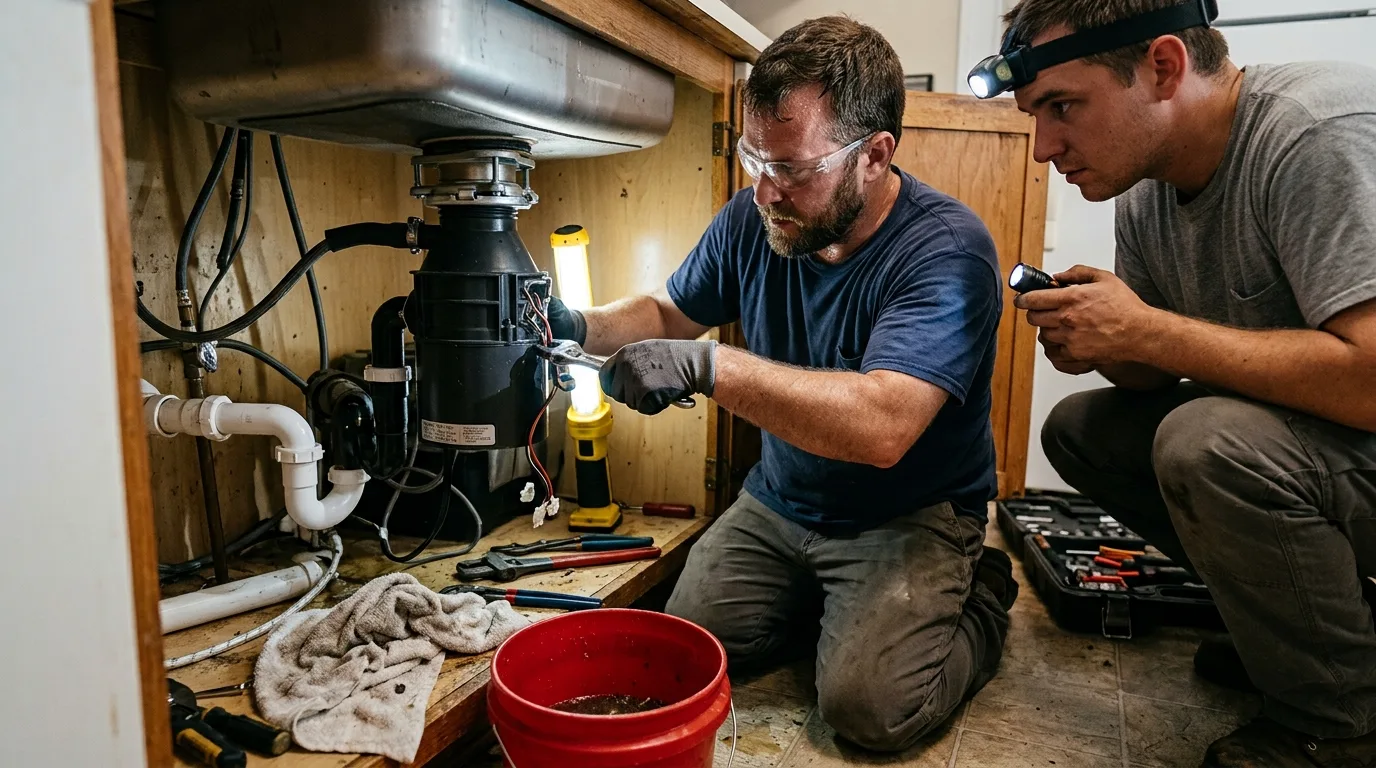
Hum, click or silence
Each sound narrows it to a jam, a tripped overload or a switch and supply issue.
Leaks located precisely
Flange, dishwasher inlet or discharge joint, three places, each with a different fix.
Drain checked too
Most "disposal" backups are grease in the branch line, not the unit at all.
Replaced when worth it
Motors and seals do fail. You get an honest read on repair against replacement.
Diagnose by sound
What the unit is doing tells you what is wrong
A garbage disposal is a simple machine: a motor, a spinning plate with impellers, a grind ring, and a chamber with a drain outlet and usually a dishwasher inlet. Because it is simple, the diagnosis is quick, and it is almost entirely determined by what happens when you turn it on.
A hum with no rotation means the plate is jammed and the motor is stalled. A click and then nothing means the thermal overload has tripped, which is the unit protecting itself. Complete silence means power is not reaching the motor: a switch, a plug, a breaker, or a failed motor. Rotation with a rattle means something hard is loose in the chamber. Rotation with no grinding progress usually means worn impellers or a worn grind ring. And water underneath means a joint, not the motor.
Never put a hand into a disposal chamber. Cut the power at the breaker first, not just the wall switch. Most jams clear from underneath with the hex key that came with the unit, turning the plate back and forth to free it, and most tripped units restart from the reset button on the base once the jam is gone.
Jams, resets and the things that cause them
A jam happens when something wedges between the impeller plate and the grind ring. The usual culprits are a bottle cap, a bone fragment, a fruit stone, a piece of cutlery, or a build-up of fibrous material. The unit hums because the motor is energised but cannot turn, and leaving it in that state is what trips the thermal overload, which is the unit protecting its own motor.
The recovery sequence is: power off at the breaker, free the plate with the hex key from underneath, remove whatever caused it, restore power, press the reset button on the base. That resolves the large majority of hum-and-stall calls, and it is worth knowing because it saves a visit.
What causes repeated jams is worth addressing rather than repeating. Fibrous vegetable waste, coffee grounds in quantity, starchy material, and eggshells all behave badly. So does running the unit without enough water, which is the most common usage mistake, cold water and a decent flow while grinding, and a few seconds of run-on afterwards to carry material clear of the branch line.
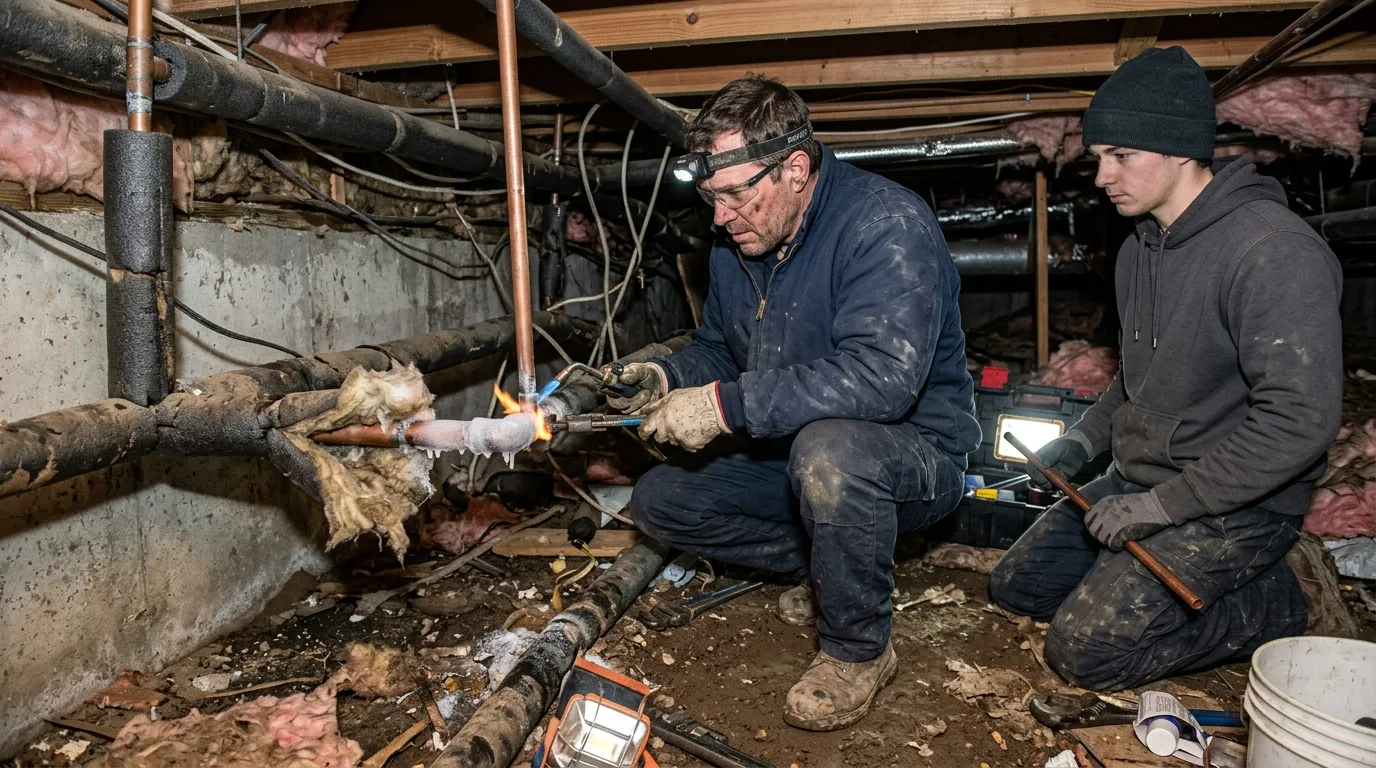
Leaks, and the three places they come from
Water under a sink with a disposal is one of three joints, and identifying which is straightforward once you know where to look.
The sink flange at the top is where the unit mounts to the sink. Leaks here appear on the outside of the unit body running down from the top, and the cause is failed plumber’s putty or a loosened mounting assembly. It needs the unit dropped and remounted properly rather than tightened from below.
The dishwasher inlet on the side leaks at the hose clamp or the connection nipple, and the giveaway is that it only appears when the dishwasher drains. The discharge outlet, where the unit joins the trap arm, leaks at the gasket or the flange bolts and is the easiest of the three to correct.
Water coming from the bottom of the unit body itself is different and is not a joint. It means the internal seals have failed and water is reaching the motor housing, which is a replacement rather than a repair. On a unit of any age, that is the point at which the sensible spend is a new one.
Why a backing-up sink is usually not the disposal
This is the most common misattribution in kitchen plumbing. A sink that fills and drains slowly with the disposal off is a drain problem; the disposal is simply where the water sits while it waits.
Kitchen branch lines block on grease, not food. Fats, oils and greases go down warm and liquid, cool on the pipe wall, and set into a coating that narrows the line over months and years. Food solids, coffee grounds and starch adhere to that coating until the effective diameter is a fraction of the original. A disposal grinds material finer, which helps it travel, but it does nothing about the coating that is causing the restriction.
The clue is what else is affected. If the other basin, the dishwasher or a nearby fixture also drains slowly, the branch is restricted. If the disposal side alone is slow and the unit is grinding normally, look at the trap arm and the disposal discharge for a local obstruction. Where a kitchen line blocks repeatedly, jetting to scour the pipe wall is the honest answer rather than a third cabling visit.
Repair or replace
Repair covers jams, tripped overloads, switch faults, mounting leaks and discharge gasket leaks. Those are the majority of calls and none of them justify a new unit.
Replace when the motor has failed, when the internal seals have gone and water is reaching the housing, when the grind components are worn to the point of poor performance, or when the unit is old, noisy and inefficient and the household uses it heavily. Disposals are not expensive relative to the labor of fitting one, so on an aged unit with a genuine fault, replacement is usually the better spend.
When replacing, two things are worth deciding deliberately. Motor size, because an underpowered unit in a household that uses it heavily will jam repeatedly and be a permanent annoyance. And whether the mounting assembly matches, since compatible mounts make future replacement much simpler.
While the unit is out, replace the discharge gasket, check the trap arm for the chain of adapters that older installations accumulate, verify the dishwasher connection has a proper air gap or high loop, and look at the angle stops in the cabinet, they are right there and frequently seized.
Commercial kitchens are a different machine
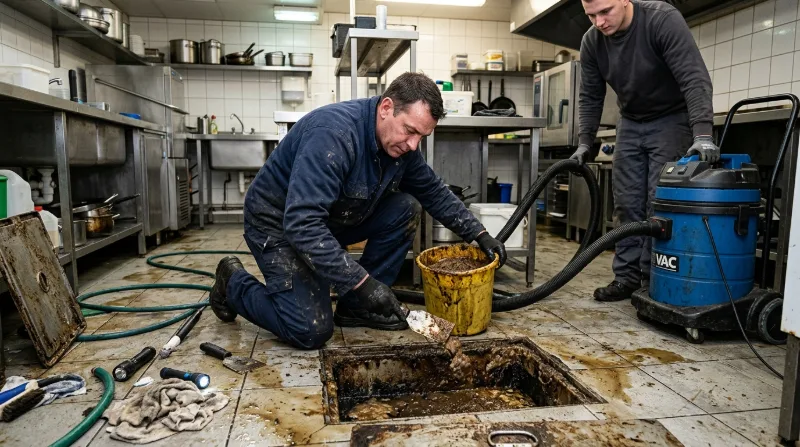
Commercial disposals and food waste systems are heavier equipment with different failure modes and, importantly, they sit upstream of grease management rather than a household trap. In a restaurant or hotel kitchen the disposal is one component in a system that includes floor sinks, a grease interceptor and a waste line carrying volumes no house approaches.
That means a kitchen with recurring disposal or drainage problems needs the line and the interceptor assessed, not just the unit. Grease lines on a scheduled jetting interval do not surprise anyone mid-service; lines that wait for the backup do. Facility managers are far better served by planned maintenance on the whole path than by reactive repairs on the appliance at the top of it.
 3Places it leaks
Before you call
Five minutes that often fixes it
A large share of disposal calls resolve with the sequence below, and it is entirely safe as long as the power is off at the breaker rather than the wall switch.
If it does not resolve, what you observed narrows the diagnosis considerably.
- Cut power at the breaker not just the switch, and never put a hand into the chamber.
- Free the plate from underneath the hex key that came with the unit, worked back and forth until it turns freely.
- Remove the obstruction with tongs or pliers from above, with the power still off.
- Press the reset button on the base of the unit, after the jam is cleared.
- Note what happens next hum, click, silence, rattle or normal running each point somewhere different.
Tell Us What It Did
Those observations usually identify the fault before anyone opens the cabinet.
Water pooling in the cabinet?
Three joints leak on a disposal and one of them means the unit is finished. Worth identifying which before the cabinet floor goes.
Have a Leaking Disposal Checked
Same-day where the schedule allows, cabinet damage is cumulative and avoidable.
The visit
How a disposal call is worked
Sound first, joints second, drain third. The third step is what most calls actually need.
01
Isolate and test
Power isolated, then the unit checked for jam, overload trip, switch fault or motor failure by observation.
02
Locate any leak
Sink flange, dishwasher inlet, discharge joint or the unit body itself, each has a different fix and cost.
03
Check the branch line
Because a slow sink is usually grease in the pipe rather than a problem with the appliance above it.
04
Repair or replace
Remount, reseal or replace, with the discharge gasket, trap arm and dishwasher connection reviewed while access is open.
Questions we get on these calls
Disposal questions
It is jammed and the motor is stalled. Something has wedged between the impeller plate and the grind ring, commonly a bottle cap, a bone fragment, a fruit stone or fibrous material. Cut the power at the breaker, use the hex key that came with the unit to work the plate back and forth from underneath until it turns freely, remove the obstruction from above, then restore power and press the reset button on the base.
The reset is a thermal overload protecting the motor, and it trips when the motor has been stalled or overworked. Repeated trips mean either a recurring jam, an obstruction that has not been fully removed, a failing motor drawing more current than it should, or usage patterns that overload it, fibrous vegetable waste, quantities of coffee grounds, starchy material, or running it without enough water. Repeated trips on a clear chamber usually indicate the motor.
Usually not. A sink that drains slowly with the disposal switched off has a drain problem, and the disposal is just where the water sits. Kitchen branch lines block on grease that has cooled and set on the pipe wall over months and years, narrowing the line until food solids can no longer pass. The disposal grinds material finer, which helps it travel, but does nothing about the coating causing the restriction.
Three places, each identifiable. The sink flange at the top, which shows as water running down the outside of the unit body and needs the unit dropped and remounted. The dishwasher inlet on the side, which only leaks when the dishwasher drains. And the discharge outlet where it joins the trap arm, which is the easiest to fix. Water coming from the bottom of the unit body itself means the internal seals have failed, and that is a replacement.
Repair covers jams, tripped overloads, switch faults, mounting leaks and discharge gasket leaks, the majority of calls, none of which justify a new unit. Replace when the motor has failed, when water is coming from the unit body because the internal seals have gone, or when the grind components are worn enough that performance is poor. Since disposals are inexpensive relative to the labor of fitting one, replacement is often the better spend on an aged unit.
Bones, fruit stones, shells, cutlery and bottle caps cause jams. Fibrous vegetable waste, coffee grounds in quantity, starchy foods and eggshells cause build-up and contribute to branch line problems. Grease and cooking oil are the worst of all, they should never go down a kitchen drain with or without a disposal, because they cool on the pipe wall and set into the coating that eventually blocks the line.
Cold water and a decent flow while grinding, and a few seconds of run-on after the noise changes so material is carried clear of the branch line rather than settling in it. Feed waste in gradually rather than filling the chamber and switching on. Keep grease out entirely. Those three habits address the majority of both jams and drain problems, and they cost nothing.
Yes, provided there is a suitable electrical supply and switch, appropriate space in the cabinet, and a drain arrangement that can accept it. The considerations are the trap arm height, whether a dishwasher connection needs to be brought into the unit, and clearances under deeper sinks and stone countertops. Where there is no existing switched outlet, electrical work is needed, which should be identified in the quote rather than discovered mid-installation.
Motor size matters most, and it should be matched to how heavily the household actually uses it, an underpowered unit in a heavy-use kitchen jams repeatedly and becomes a permanent annoyance. Beyond that, sound insulation makes a noticeable difference, and a mounting assembly compatible with the existing one makes future replacement much easier. Ask before buying if you are supplying the unit yourself, because clearance in the cabinet varies more than people expect.
Yes, and it is treated as different work. Commercial food waste equipment is heavier, fails differently, and sits upstream of grease management rather than a domestic trap. A kitchen with recurring disposal or drainage trouble needs the waste line and interceptor assessed alongside the unit, because the appliance is usually the symptom. Scheduled jetting of the line on an interval matched to volume is what stops these becoming mid-service emergencies.
Book Disposal Service
Describe the sound and whether anything is leaking, that is normally enough to identify it.
Related work
The rest of the kitchen
The drain the unit empties into, and the fixtures sharing the cabinet.
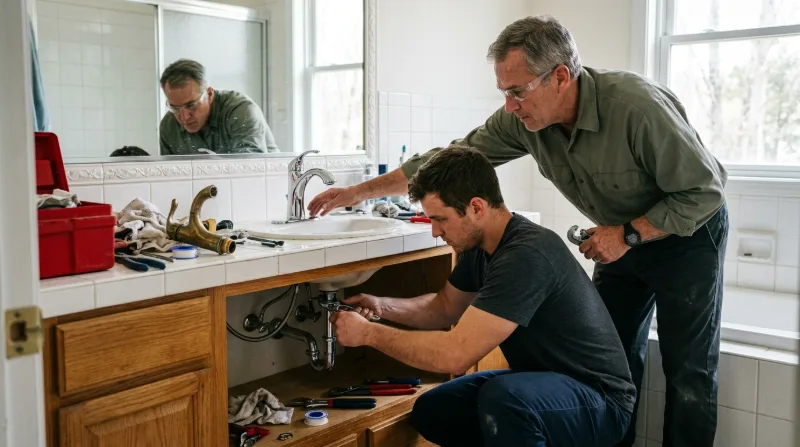
Faucet & Fixture Installation
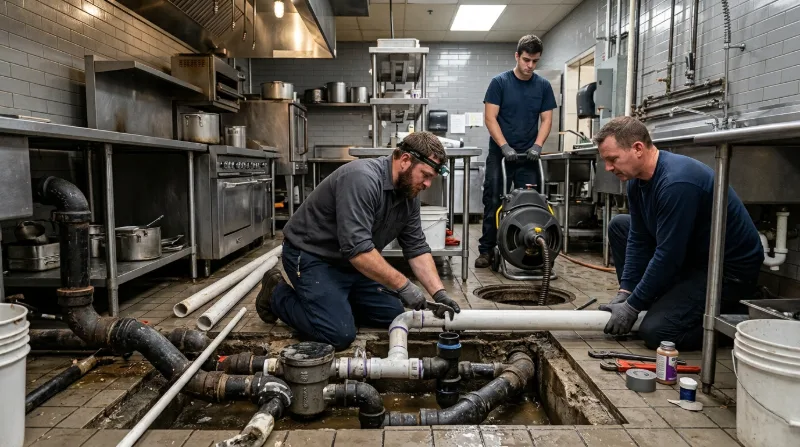
Faucets, traps and the angle stops in the same under-sink space.
Fixtures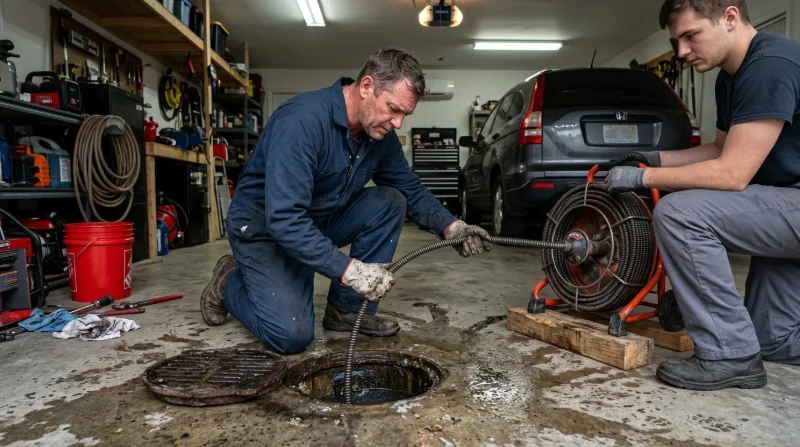
Commercial & Industrial Plumbing
Grease interceptors and waste lines in working kitchens.
CommercialQuick to diagnose
Hum, click, silence or a leak
Four symptoms, four different answers, and one of them is usually the drain rather than the appliance.
Sort Out a Kitchen Disposal
Residential and commercial kitchens across Buena Park, Fullerton, Anaheim and Cypress.