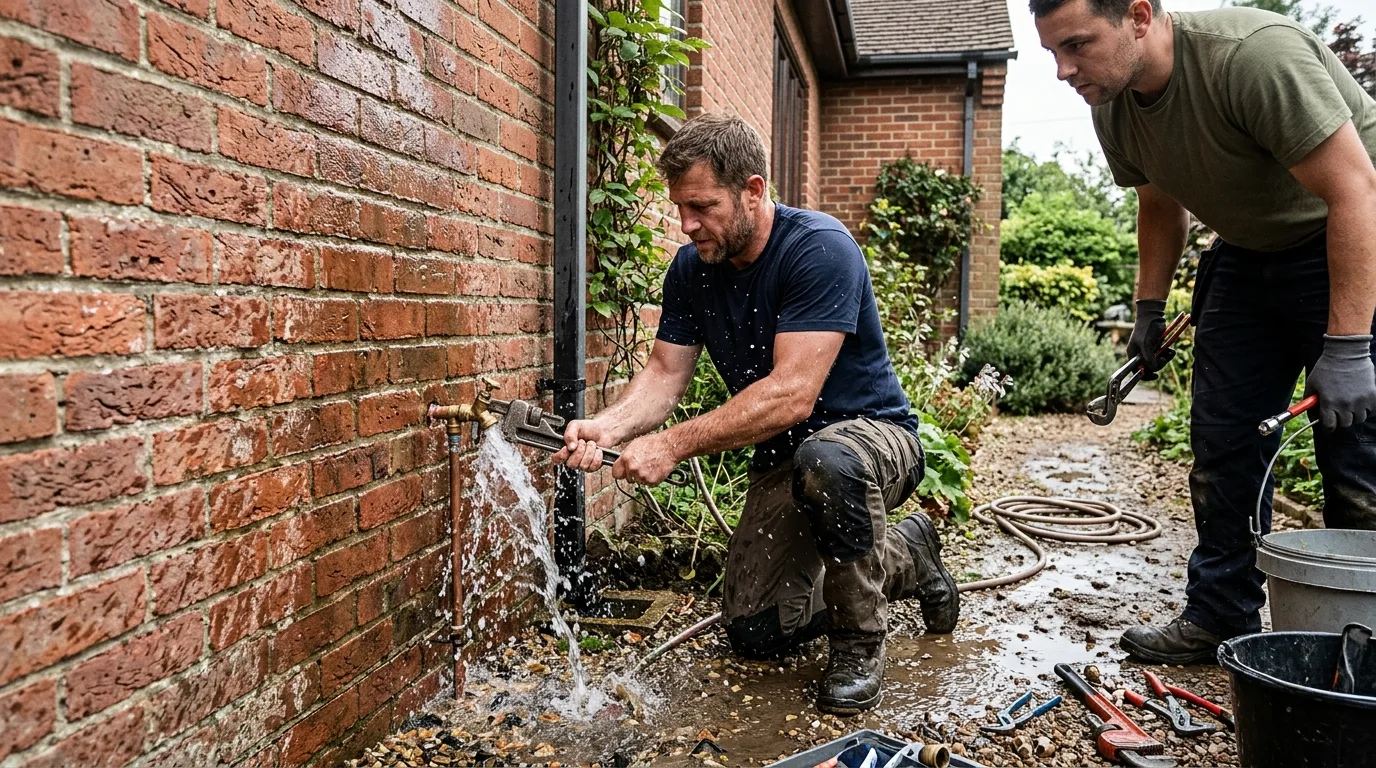
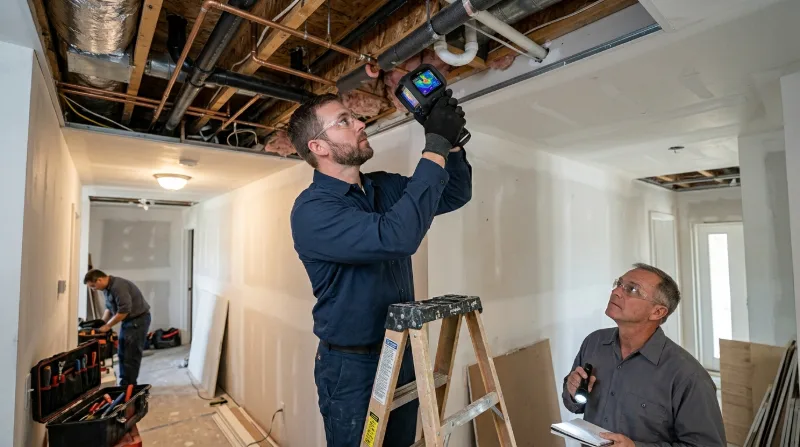
Stop the loss first
Shutoff guidance on the phone, then isolation on arrival, before any repair discussion.
Repaired to last
Cut out and replace the failed section, not a clamp left in a wall to be found later.
Cause established
Pressure gauged and material assessed, because a repeat failure is usually a system telling you something.
Honest about the pattern
You will be told plainly if this looks like one repair or the first of a sequence.
Why pipes fail here
Four mechanisms, and the material each one attacks
Pipe failures look random from inside a house and are anything but. There are a small number of mechanisms at work, each one favouring particular materials, and identifying which one you are looking at is what tells you whether a repair will hold.
Interior corrosion is the galvanized story. The zinc coating protects the steel until it depletes; then the steel corrodes inward, builds a rough scale that narrows the bore, and fails at threaded joints where the wall is thinnest. Pitting corrosion is the copper story, localised attack from water chemistry, velocity or stray current produces a pinhole rather than a general thinning, which is why copper leaks arrive as tiny sprays rather than gradual weeping. Exterior corrosion attacks buried and under-slab runs from the soil side. And mechanical damage covers everything else: a nail through a line during a remodel, freeze damage on an exposed hose bib, physical stress at a poorly supported run, or water hammer working on a joint for years.
Repair clamps and epoxy putty are containment, not repair. They have a legitimate place, stopping a loss at midnight so the household can use water until morning. What they should never be is the finished job left inside a wall, because the next person to find it will be finding it the hard way.
What a proper repair looks like
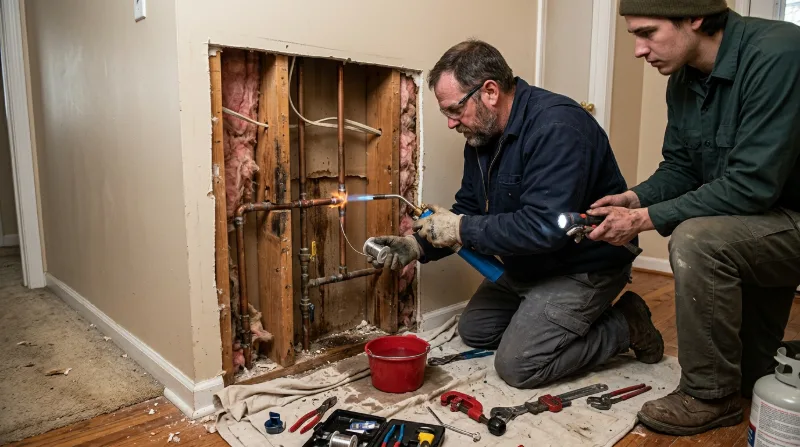
The failed section is cut out and replaced with new material, joined properly, then pressure tested before anything closes. On copper that means a soldered or pressed joint; on galvanized it usually means transitioning to copper or PEX with a dielectric union to prevent galvanic corrosion at the junction; on CPVC it means correct primer and cement with proper cure time.
Length of replacement is a judgment call worth discussing. If a pinhole appears in a section of copper, the pipe either side of it has experienced the same water at the same velocity for the same number of years. Replacing 150mm of pipe around a pinhole is technically a repair and practically a schedule, a plumber who suggests taking out a longer run, or the whole accessible branch, is usually giving you better advice rather than upselling.
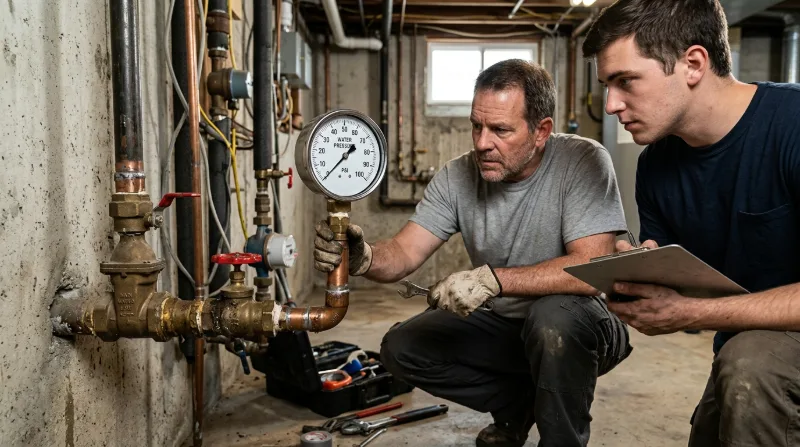
Two things belong in every pipe repair visit and are frequently skipped. A static pressure reading at a hose bib, because high pressure is a leading cause of premature failure and it is trivially cheap to correct compared with the leaks it produces. And a look at the pipe interior in the removed section, the offcut is the most honest diagnostic available, and a plumber who shows it to you is giving you real information about the rest of the house.
Galvanized transitions, and the trap of the mixed system
A great many Buena Park houses are now partially repiped without anyone having planned it: a bathroom remodel brought in copper, a slab leak reroute added PEX, a kitchen extension used CPVC, and the original galvanized carries on doing the rest. That patchwork is normal and mostly harmless, with one important exception.
Where dissimilar metals meet directly, copper joined straight to galvanized steel, galvanic corrosion attacks the junction and produces a failure at exactly the point that was meant to be an improvement. A dielectric union or an appropriate transition fitting prevents it. If you have had a leak develop right where an old and new section meet, that mechanism is the first thing to check.
The broader point is that a mixed system makes diagnosis harder and repairs less predictable. Knowing what is actually in your walls is worth establishing once, a plumber can usually map it in twenty minutes from the water heater, under-sink stubs, the hose bibs and the attic, and that map makes every subsequent decision cheaper.
When repair stops being the right answer
Three signals move the sensible answer from repair to repipe. Sequence: two or more leaks in different parts of the house within a couple of years, on original material. Water quality: rust-tinted water at first draw, which is the inside of galvanized pipe arriving at your tap. And gradual pressure decline over years, which is interior corrosion narrowing the bore rather than any single fault.
The arithmetic is what usually convinces people, and it is worth doing honestly. Add up what you have already spent on individual leaks, add the drywall and paint each one needed, then add a realistic estimate of the next two. Compare that with a repipe quote. On original galvanized in a house of this age, the repipe frequently wins outright, and it comes with restored pressure and an end to the anxiety, which the instalment plan does not.
That said, plenty of pipe repairs are exactly what they appear to be. Mechanical damage from a remodel, a frozen hose bib, a failure at a badly supported run, or a single pinhole in a house that was repiped fifteen years ago are all one-off events. The distinction is what you are paying a diagnosis for.
Accessible, in-wall and under-slab
Access drives cost more than the repair itself does. An accessible failure, in a garage, in an attic, under a sink, at a hose bib, is generally a modest job because there is nothing to open and nothing to restore.
An in-wall repair adds drywall removal and restoration, and it is worth agreeing that scope in writing before work begins: patched, textured, painted, and to what boundary. Tile walls behind shower valves are the expensive version of this, and it is often better to access from the reverse side if a closet or garage backs onto the wall.
Under-slab failures are a separate service, because the decision set changes: locate precisely, then choose between opening the concrete and rerouting overhead. On original under-slab copper in a 1950s or 1960s house the reroute is frequently better value even at a higher sticker price, because it takes that run out of service permanently rather than patching material of the same age as the failure.
Emergency containment you can do yourself
If a pipe is spraying, close the nearest fixture stop if there is one, otherwise the house main, then open a low fixture such as a tub spout or hose bib to drain pressure out of the system. That last step matters and is usually skipped, closing the main stops the supply but leaves the pipes charged, so the leak continues until the pressure is relieved.
Kill power at the breaker to any circuit near standing water before going near it. Move what you can out of the way, and photograph everything before cleaning up, because that documentation is what an insurance claim runs on. Then call and describe what you saw, where, and what material the pipe appears to be.
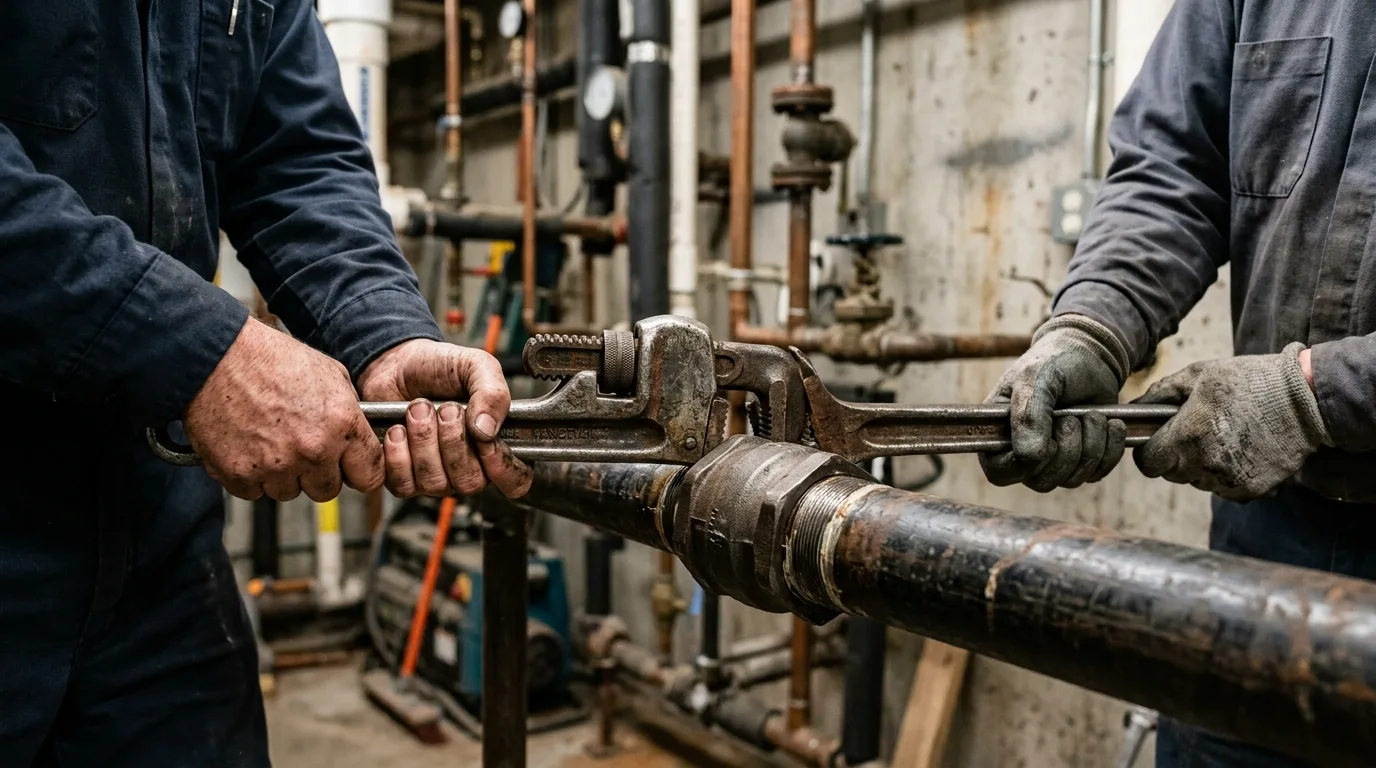 OffcutBest diagnostic
Ask to see the offcut
The removed section tells you about the rest of the house
The single most informative object in a pipe repair is the piece that came out. Cut lengthwise, or just looked into, it shows exactly what is happening throughout the system.
Here is what to look for, and what each observation means for the pipe still in your walls.
- Heavy scale narrowing the bore interior corrosion is advanced, and pressure loss elsewhere in the house has the same cause.
- A clean pinhole in otherwise sound copper localised pitting, more likely a one-off than a pattern.
- Green or white deposit outside the pipe exterior attack from soil or moisture, which favors a reroute over an in-place repair.
- A failure right at a copper-to-steel junction galvanic corrosion, fixable with a proper dielectric transition.
- Damage rather than corrosion a nail, a crushed section, a stressed joint. Repair it and move on.
Ask for the Cut Section
Any plumber doing this properly will be pleased to show you and explain what it means.
Pipe spraying right now?
Close the main, then open a low tap to drain the pressure. That second step is what actually stops the water.
Send a Plumber for a Burst Line
Active leaks are dispatched at any hour, we will talk you through containment while you wait.
The repair visit
What happens once someone is there
Contain, diagnose, repair, prove. The last step is the one that keeps you from seeing the same plumber twice.
01
Isolate
Shut down the smallest zone that stops the loss, so the rest of the property keeps water while the work proceeds.
02
Diagnose the mechanism
Material, corrosion type, static pressure and support conditions, because the cause decides whether a repair will hold.
03
Cut out and replace
Failed section removed and replaced with new material and correct transitions. No clamps left inside walls.
04
Test and restore
Pressure tested before closing, then drywall patched to the agreed scope, with the offcut left for you to see.
Questions we get on these calls
Pipe repair questions
Access is the main variable, not the pipe. An accessible failure in a garage, attic or under a sink is a modest job. An in-wall repair adds drywall removal and restoration, and a tiled wall behind a shower valve adds considerably more. Under-slab failures are a different service entirely. What you should get before work starts is a written price for your specific repair, with the restoration scope stated separately so there is no argument about it later.
The leak itself is small; what it implies may not be. A pinhole is localised pitting corrosion, and the pipe on either side has carried the same water at the same velocity for the same number of years. One pinhole in a house repiped fifteen years ago is bad luck. One pinhole in original 1960s copper is often the first of several. The repair is straightforward either way, the value is in an honest assessment of which situation you are in.
As emergency containment, yes, and sometimes that is exactly the right call at midnight so the household has water until morning. As a finished repair, no. A clamp left inside a wall is a future failure that someone will discover the expensive way, and it will not survive a home inspection at resale. The proper repair cuts out the failed section and replaces it with new material, joined correctly and pressure tested before anything closes.
Because the failures share a cause rather than being coincidences. Original material of the same age, carrying the same water at the same pressure, reaches its limit at roughly the same time throughout the house. Two or more leaks in different locations within a couple of years, especially with rust-tinted water at first draw or gradually declining pressure, is the classic signature of a supply system at end of life. That is the point to price a repipe alongside the next repair.
It is one of the most common contributing factors and one of the least checked. High static pressure stresses every joint, fixture, appliance hose and solder connection continuously, and it shortens the life of all of them. A gauge on a hose bib takes ten minutes and settles it. If the reading is high, replacing the pressure regulator is inexpensive compared with the failures it prevents, and if you repipe without fixing it, the new system inherits the same problem.
It happens where dissimilar metals meet directly, most commonly copper joined straight to galvanized steel, and it attacks the junction, producing a leak at exactly the point that was supposed to be an upgrade. Many Buena Park houses have partial repipes from past remodels, so these junctions are common. A dielectric union or proper transition fitting prevents it. If a leak has appeared right where old and new pipe meet, that is the first mechanism to check.
Repair when the failure is mechanical, isolated, or in a system that is not otherwise showing its age. Repipe when the pattern says the system is finished: multiple leaks in different places on original material, rust-tinted water at first draw, or pressure that has declined gradually over years. The way to decide is arithmetic, total what you have already spent including restoration, add a realistic estimate of the next two failures, and compare that to a repipe quote.
Only where the failure is inside a wall, and a good plumber opens the minimum necessary at a planned location rather than exploring. Drywall patching is normally included; texture and paint may or may not be, and specialist finishes such as tile rarely are. Get the restoration scope in writing before work starts, including how far the paint will be taken, to the patch, or to a natural break in the wall. This is where most disputes on small jobs originate.
Yes, it is code-compliant and widely used here, and for a repair in an accessible location or a run through framing it is often the practical choice, fewer joints, faster installation, and resistance to the scale and pitting that killed the original pipe. Copper remains preferable for exposed sections, stub-outs and mechanical connections. The right answer depends on the location; what matters is that the transition between materials is made with the correct fittings.
Policies commonly treat the resulting water damage differently from the failed pipe itself, and we cannot tell you what yours does. What consistently helps is documentation: photographs before cleanup, the plumber’s written diagnosis, moisture readings, the offcut, and an itemised invoice. Speak to your carrier before authorising restoration work, since some policies specify how and by whom it must be done, and keep everything even if you decide not to file.
Book a Pipe Repair
Tell us where the leak is and what the pipe looks like, that decides what the plumber brings.
Related work
Around a pipe failure
Where the leak is, and what it says about the rest of the system.
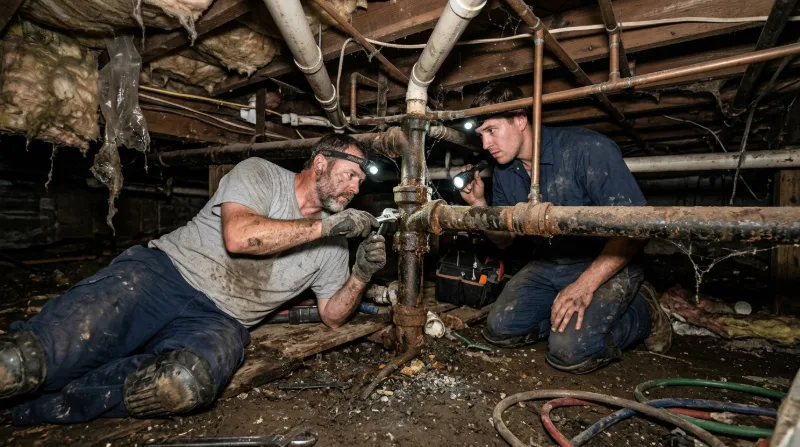
Pressure Regulator Repair
The contributing cause nobody checks until after the second leak.
PressureFixed, and explained
A repair, plus an answer about the rest of the house
The leak gets fixed properly. You also find out whether this was an event or a pattern.
Get a Leak Repaired Properly
Copper, galvanized, CPVC and PEX repairs across Buena Park and north Orange County.