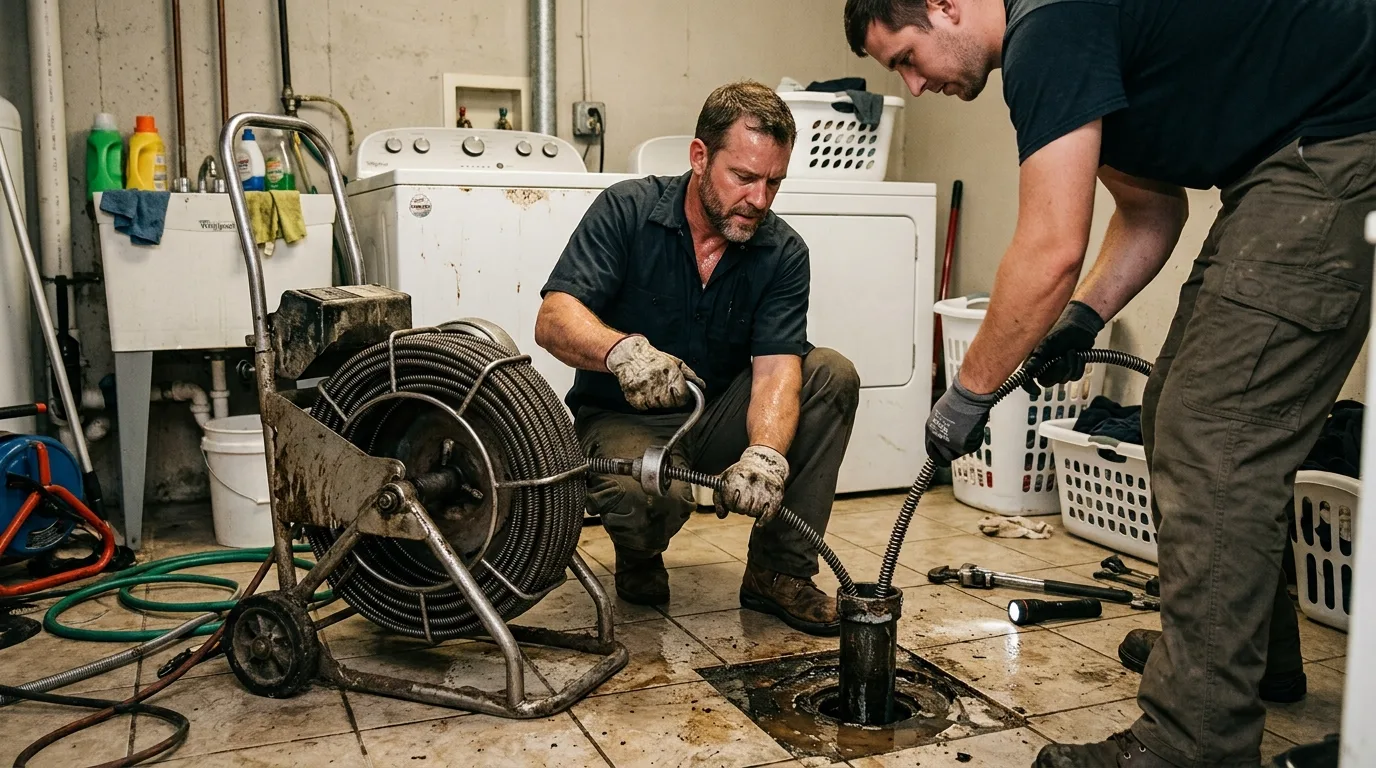
Local or main line
Established in the first ten minutes, because the two problems need different machines.
Verified, not assumed
On repeat blockages the line gets cameraed so you find out why, not just that it opened.
Same-day where possible
Blockages are the most schedulable emergency there is, and most are cleared in one visit.
Flat price per line
You hear the price for clearing that drain before the machine comes off the truck.
Read the symptom
Where the blockage is, told by which fixtures misbehave
Drain problems are unusually easy to triage from the sofa, because the drainage system in a house is a tree. Small branches serve individual fixtures, larger branches collect them, and everything eventually reaches one main line running out to the street. Where the blockage sits determines which fixtures notice.
If exactly one fixture is slow and everything else drains normally, the blockage is in that fixture\u2019s branch or trap. If every fixture in one bathroom is slow, it is the branch serving that group. If fixtures on opposite sides of the house are slowing, or the lowest drain in the building backs up when you run water elsewhere, the main line is restricted and you should stop using water until it is cleared. That last case is the one that turns into sewage on a floor, and it is worth acting on the same day.
Skip the chemical drain opener. Caustic products sit in standing water, generate heat, damage older cast iron and rubber seals, and rarely clear anything more substantial than hair. Worse, they turn a routine job into a hazardous one for whoever opens the line next. If you have already poured some in, say so on the phone so the plumber arrives prepared.
Kitchen lines: grease, not food
Kitchen drains fail for one dominant reason, and it is not the thing people blame. Fats, oils and greases go down the drain warm and liquid, then cool on the pipe wall and set. Over months that coating narrows the line, and food solids, coffee grounds and starch adhere to it until the diameter is a fraction of what it was. By the time water backs up in the sink, the pipe may be eighty percent lined.
That matters because it changes what "clearing the drain" should mean. A cable punched through a grease plug restores flow immediately and leaves the coating in place, which is why so many kitchen blockages return within weeks. Scouring the pipe wall requires water at pressure, hydro jetting, and on a kitchen line with a history of repeat blockages that is usually the honest recommendation rather than a third cabling visit.
Buena Park has a specific version of this problem in its commercial kitchens. Restaurants and dinner-theatre venues along the Beach Boulevard corridor move serious volumes of grease, and their lines need scheduled maintenance rather than reactive clearing. A kitchen that plans a jetting interval does not close mid-service; a kitchen that waits for the backup does.
Bathroom lines: hair, soap and the thing in the trap
Shower and tub drains block on a mixture of hair and soap scum that binds into a mat, usually within the first meter or two of the drain, and frequently right at the strainer or trap. Bathroom sinks add toothpaste and cosmetic residue. These are the most homeowner-solvable blockages in plumbing: pulling the stopper assembly and physically removing the mat solves a large share of them without a machine.
Toilets are different. A toilet blocks either in its own internal trap or in the branch just downstream, and the culprit is almost always something that should not have been flushed. Wipes marketed as flushable are the leading offender by a wide margin, they do not break down, they catch on any imperfection in the pipe, and they collect everything that follows. Cotton products, dental floss and paper towels behave the same way. If a toilet is blocking repeatedly, either something is caught in it or the branch has an obstruction, and a camera answers that question quickly.
One symptom worth flagging on the phone: gurgling. A drain that gurgles, or a toilet whose water level moves when another fixture drains, is telling you about air, not water. Either the vent is restricted or the line is partly blocked, and the system is pulling air through a trap seal instead of the vent stack. That is also the mechanism behind sewer odor indoors, a trap that has been siphoned dry stops sealing.
Laundry standpipes and the second-load overflow
A washing machine dumps a large volume of water fast, so the laundry standpipe is the first place a partially restricted line reveals itself. The classic report is that the first load is fine and the second overflows, which is exactly what a line with reduced diameter does: it can handle one surge and then cannot keep up.
Lint and detergent residue build up in laundry lines the way grease does in kitchen lines, and in older houses the laundry frequently ties into a long horizontal run with minimal fall. If your laundry drain is the only fixture with a problem, it is a branch issue. If clearing it does not hold, the line probably needs scouring rather than cabling, or has a slope problem that a camera will show.
Cabling, jetting, and knowing which one you are buying
Cabling, running a rotating steel cable with a cutting head down the line, is the right tool for a great many blockages. It is fast, it works in small-diameter branch lines where a jetter cannot go, and it will cut through a root mass or auger out a solid obstruction. Its limitation is that it makes a hole. It does not clean the pipe wall.
Hydro jetting pushes water through a nozzle at high pressure, with rear-facing jets that propel the hose forward while scouring the full circumference of the pipe. It removes grease coating, cuts fine root hair, and flushes debris out ahead of it. It is the better answer for grease-lined kitchen lines, main lines with recurring blockages, and commercial drains on a maintenance schedule.
Jetting is not universally correct, and this is where an honest plumber earns trust. Deteriorated clay, badly scaled cast iron and lines with known structural defects can be damaged by high pressure. That is why on an older Buena Park property with an unknown main line, the correct sequence is camera first, then decide. If someone proposes jetting a sixty-year-old lateral sight unseen, ask them what the camera showed.
When clearing the drain is not the actual answer
Some blockages are symptoms of a pipe problem rather than a debris problem, and clearing them repeatedly is just paying rent. Three patterns give it away. First, the same line blocks on a predictable cycle, every few months, at roughly the same interval. Second, the blockage sits at the same distance every time, which points to a defect at that spot. Third, clearing produces immediate relief that degrades over days rather than months.
The usual culprits under this housing stock are root intrusion at clay pipe joints, a bellied section where the line has settled and now holds standing water, offset joints from ground movement, or cast iron that has scaled down to a fraction of its original diameter. All four are visible on camera and none of them are fixed by a cable. What the camera buys you is the ability to spend money once, on a spot repair, a lining or a replacement, instead of annually on clearing.
A last practical note about access. Houses with an accessible exterior cleanout are cheaper and cleaner to service, because the machine works from outside and any mess stays outside. If your property has no cleanout, or it has been paved over or buried by landscaping, adding one is a modest job that pays for itself the first time you need the main line opened. Worth asking about while a plumber is already on site.
 1 vs manyFixtures affected
Before you call
Four minutes of looking that changes the visit
Blockage calls go faster and cost less when the plumber knows what pattern they are walking into. None of this requires tools.
Run through this list and have the answers ready, it frequently narrows a main line problem down before anyone arrives.
- Which fixtures are affected? Flush each toilet and run each sink, tub and shower, and note what slows or gurgles.
- Does anything back up elsewhere? Run the washing machine and watch the lowest drain in the building.
- Is it getting worse, or steady? A blockage that is progressing over days behaves differently from one that has been slow for a year.
- Has this line blocked before? Dates and rough interval matter more than you would think.
- Where is your cleanout? Usually a capped pipe at ground level near the building line, sometimes hidden under planting.
Give Us the Symptom List
Two minutes on the phone with those answers is usually enough to send the right machine.
Lowest drain in the house backing up?
Stop running water, no laundry, no dishwasher, no showers, and call. Every gallon sent down a blocked main comes back up somewhere.
Send a Plumber for a Main Line
Main line stoppages are dispatched at any hour, because they do not stay contained.
What the visit looks like
How a blockage gets cleared properly
Four stages. The last one is the one most often skipped, and the one that stops you calling again in six weeks.
01
Locate the blockage
Which fixtures, which branch, how far down. Access chosen, cleanout where there is one, fixture or roof vent where there is not.
02
Choose the machine
Cable for solid obstructions and small branch lines, jetter for grease coating and recurring main line blockages.
03
Clear and flush
Open the line, then run water at volume to confirm the flow is genuinely restored rather than momentarily relieved.
04
Find out why
On repeat blockages, a camera run so the cause is identified, roots, belly, scale or a defect, before you pay to clear it again.
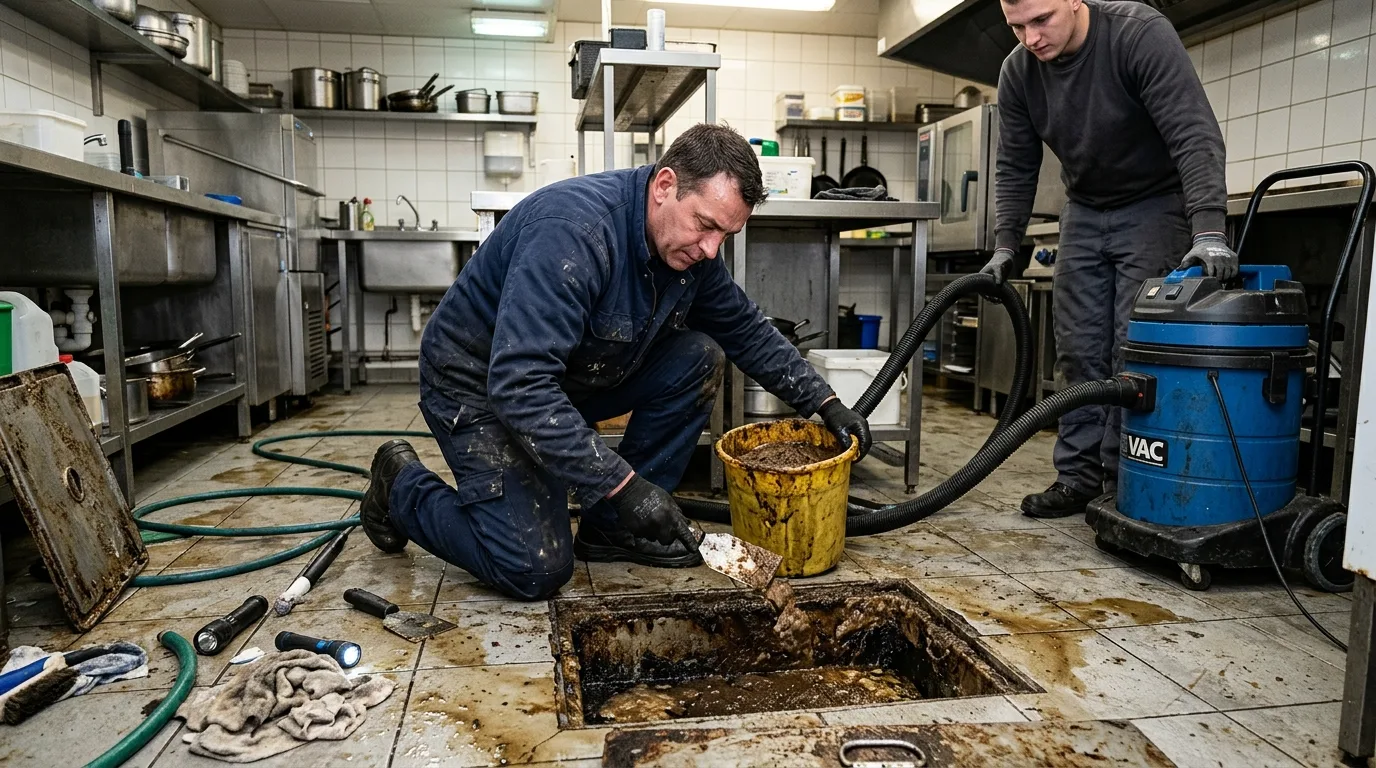
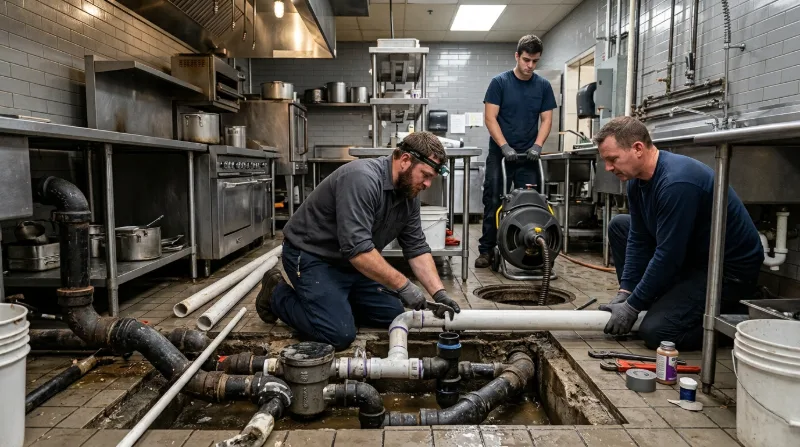
Restaurants, hotels & kitchens
Commercial drains run on a schedule or they run out of luck
A blocked line in a house is an inconvenience. A blocked grease line in a working kitchen closes the kitchen, and along the Beach Boulevard corridor that can mean a full dining room turned away mid-service.
Commercial drain work is therefore planned work wherever possible. Lines are jetted on an interval matched to the volume they carry, interceptors are serviced before they surcharge, and the work is scheduled overnight or before opening so it never lands during service. Reactive clearing is available around the clock, but it is the expensive way to run a kitchen.
- Scheduled jetting intervals for kitchen waste and grease lines, matched to actual volume
- Grease interceptor and floor sink service, with the line verified afterwards by camera
- Stack and riser blockages in multi-story and multi-tenant buildings, isolated by zone
- Overnight and pre-open windows so drain work never interrupts service hours
Set Up a Maintenance Interval
Facility managers: a jetting schedule costs less than one emergency closure.
Questions we get on these calls
Drain cleaning questions
Standard drain clearing is priced per line and you hear the number before any machine comes off the truck. The variables are which line it is, whether there is accessible cleanout access or the plumber has to work through a fixture or roof vent, and whether the job needs cabling or jetting. Camera inspection is separate and worth it on repeat blockages. What you should not accept is an hourly meter running on an undefined job, ask for the flat price for that line up front.
A plunger is fine and often works on a toilet or a single slow fixture. Chemical drain openers are worth avoiding: they rarely clear anything more than hair, they sit in standing water generating heat, they attack older cast iron and rubber seals, and they make the line hazardous for whoever opens it next. If you have already used one, tell the plumber on the phone so they arrive with protection and know what is in the pipe.
Because the problem is probably the pipe, not the debris. A blockage that recurs at a predictable interval and at the same distance down the line usually means a defect at that spot: root intrusion at a joint, a bellied section holding standing water, an offset joint, or cast iron scaled down to a fraction of its diameter. A cable clears the symptom every time and fixes none of that. A camera run identifies the cause and lets you spend money once rather than annually.
Cabling runs a rotating steel cable with a cutting head down the pipe. It is fast, works in small branch lines, and cuts through obstructions and root masses, but it makes a hole through the blockage rather than cleaning the pipe wall. Hydro jetting uses water at high pressure to scour the full circumference of the pipe, removing grease coating and flushing debris out. For a grease-lined kitchen line or a main that keeps blocking, jetting is usually the answer; for a solid obstruction in a small branch, cabling is.
It can, on the wrong pipe, which is why the sequence matters. Deteriorated clay, heavily scaled cast iron and lines with existing structural defects should not be jetted blind. On an older Buena Park property with an unknown main line, the correct order is camera first, then jet if the pipe is sound. Any plumber proposing to jet a sixty-year-old lateral without having looked at it should be asked what they expect to find, and why they are confident.
That the main line is restricted, and you should treat it as urgent. When the shared line out to the street is partly blocked, every fixture in the building drains against the restriction, and water sent down one drain surfaces at the lowest opening, usually a downstairs shower, tub or floor drain. Stop using water entirely and get the main cleared. This is also the pattern that precedes an actual sewage backup, which is a health matter rather than a plumbing inconvenience.
Both point at air rather than water. A gurgle means the drainage system is pulling air through a trap seal because the vent is restricted or the line is partly blocked. Sewer odor indoors usually means a trap has lost its water seal, through siphoning, evaporation in a rarely used fixture, or the same venting problem. The fix is often clearing the vent or the line rather than the drain itself, and a plumber will check the vent stack on the roof as part of the diagnosis.
Yes, and they are the single most common cause of avoidable toilet and branch line blockages we see. They do not break down in the way toilet paper does, so they catch on any imperfection, root or scale in the pipe and then collect everything that follows. The same applies to cotton products, dental floss, paper towels and cat litter. In older cast iron and clay lines with rough interior surfaces, wipes find something to hang on almost immediately.
A cleanout is an accessible capped access point into your drainage system, usually at ground level near the building line, and having one makes every future main line service faster, cleaner and cheaper, the machine works from outside and the mess stays outside. Plenty of older Buena Park properties either never had one or have had it paved over or buried under landscaping. Installing one is a modest job, and it is worth asking about while a plumber is already on site for something else.
On a sound pipe with a normal household, clearing a blockage should hold for years. If it returns within weeks or months, the clearing was not the problem, either the pipe wall is still coated and needs scouring, or there is a structural defect creating the blockage repeatedly. Use the interval as diagnostic information: a line that blocks annually is telling you something specific, and a camera run will usually name it in under an hour.
Book a Drain Visit
Tell us which fixtures are affected and whether it has happened before, that decides cable or jetter.
Related work
Where drain calls lead next
Most blockages end at the clearing. The ones that do not usually end up here.
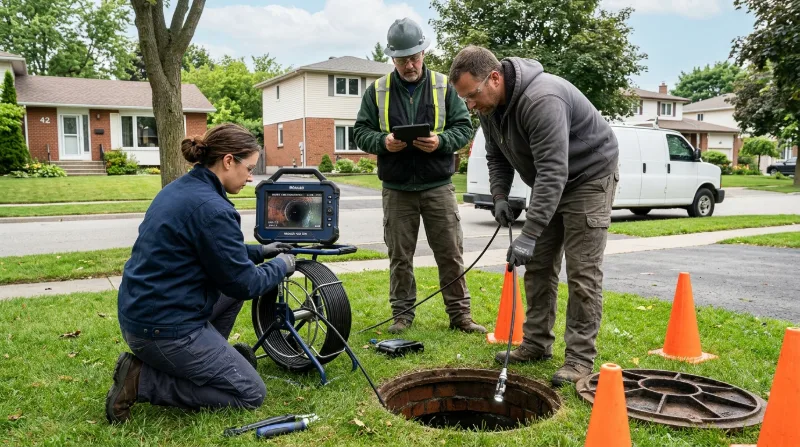
Sewer Camera Inspection
The reason behind a blockage that keeps coming back at the same distance.
Camera work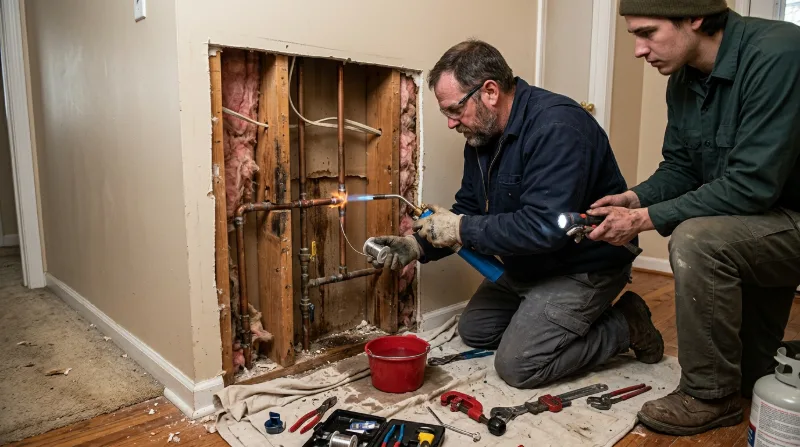
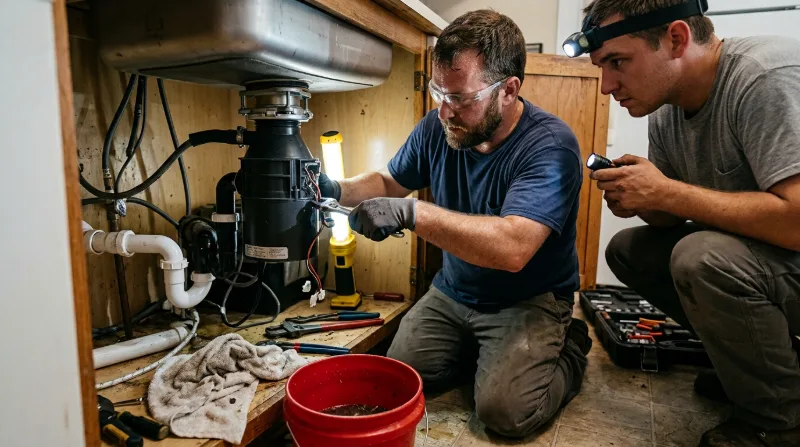
Garbage Disposal Repair
Jams and leaks at the flange, and disposals that keep tripping their reset.
DisposalsCleared and verified
Open the line, then find out why it closed
Anyone can get water moving again. The visit worth paying for tells you whether it will stay that way.
Arrange Same-Day Drain Service
Residential and commercial drains across Buena Park, Fullerton, Anaheim, Cypress, La Palma and Cerritos.